Oh, Christmas Tree!
The Set Up
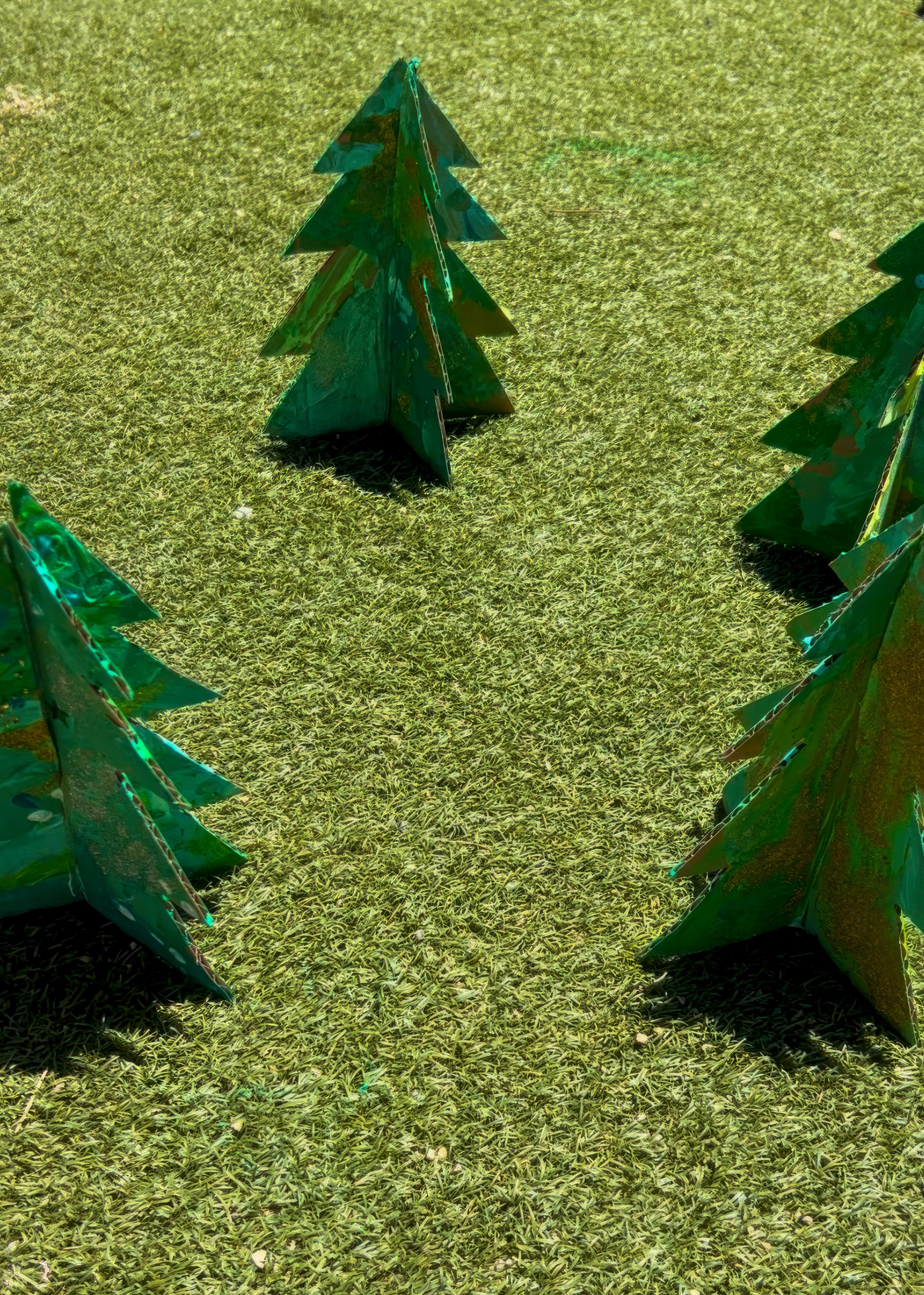
Cardboard trees are one of the easiest ways to get proper Christmas energy into a room, without turning it into a craft chaos situation. They stand tall, they look brilliant grouped together, and they give kids a big surface to paint without needing a “perfect” drawing.
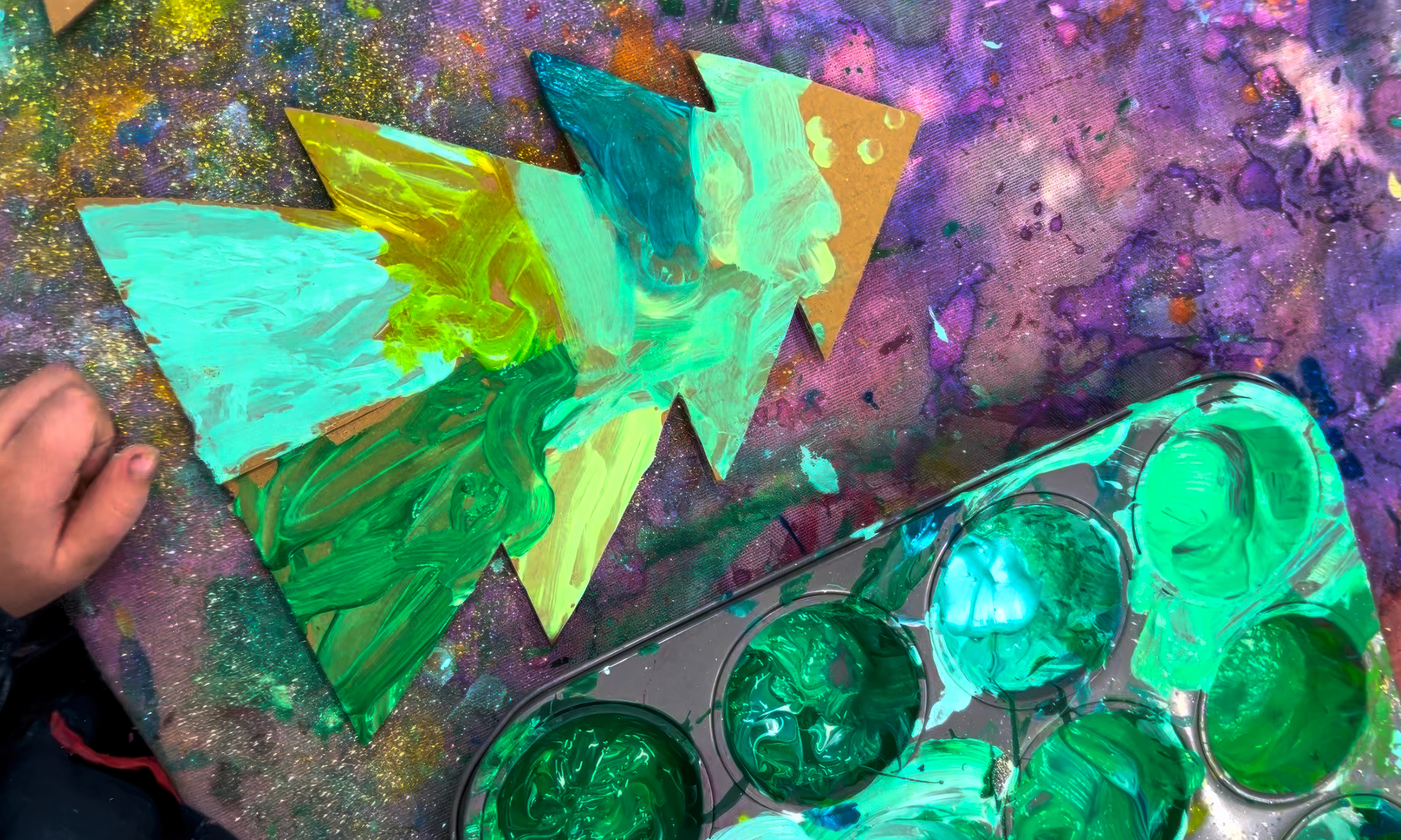
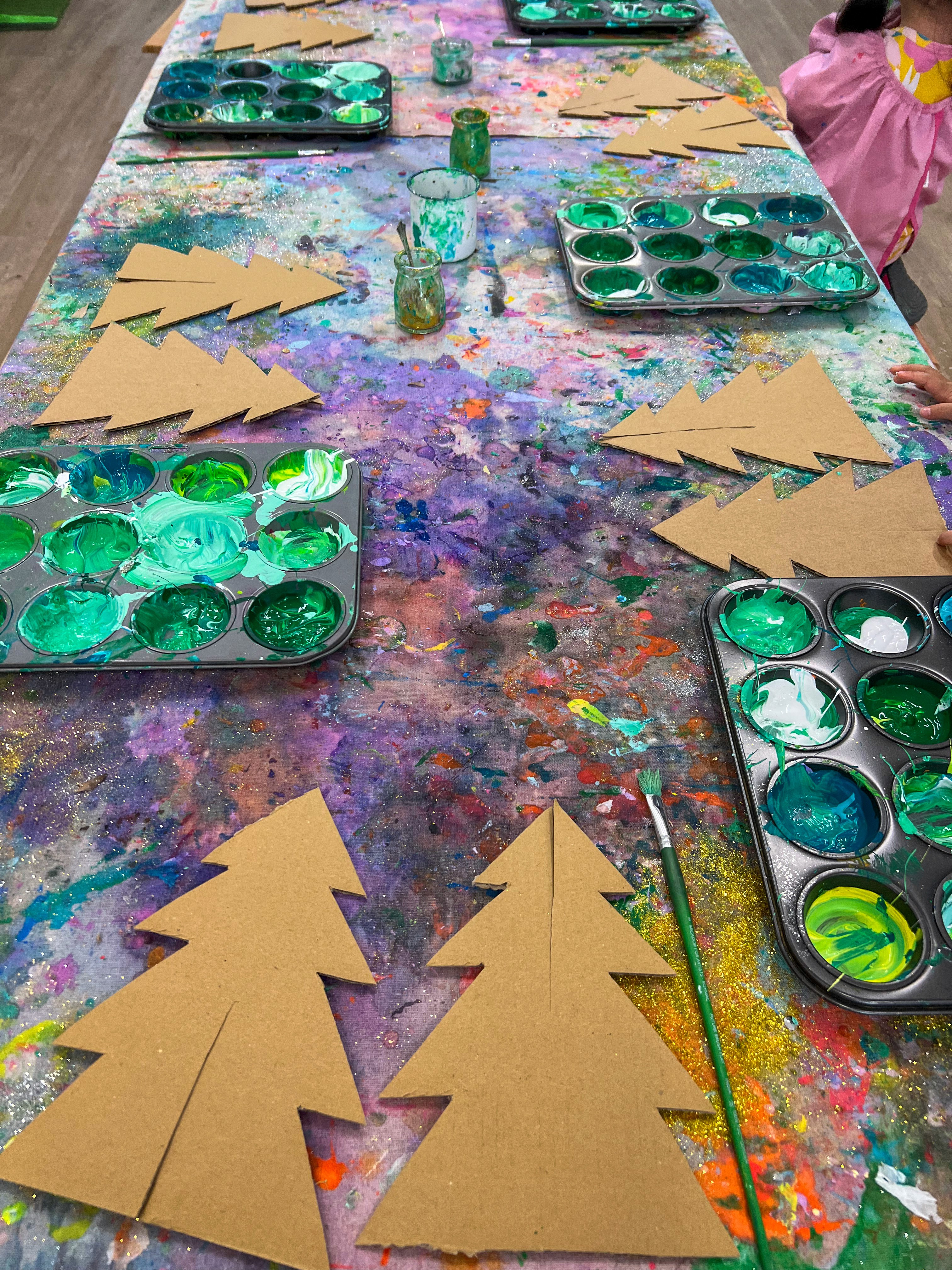
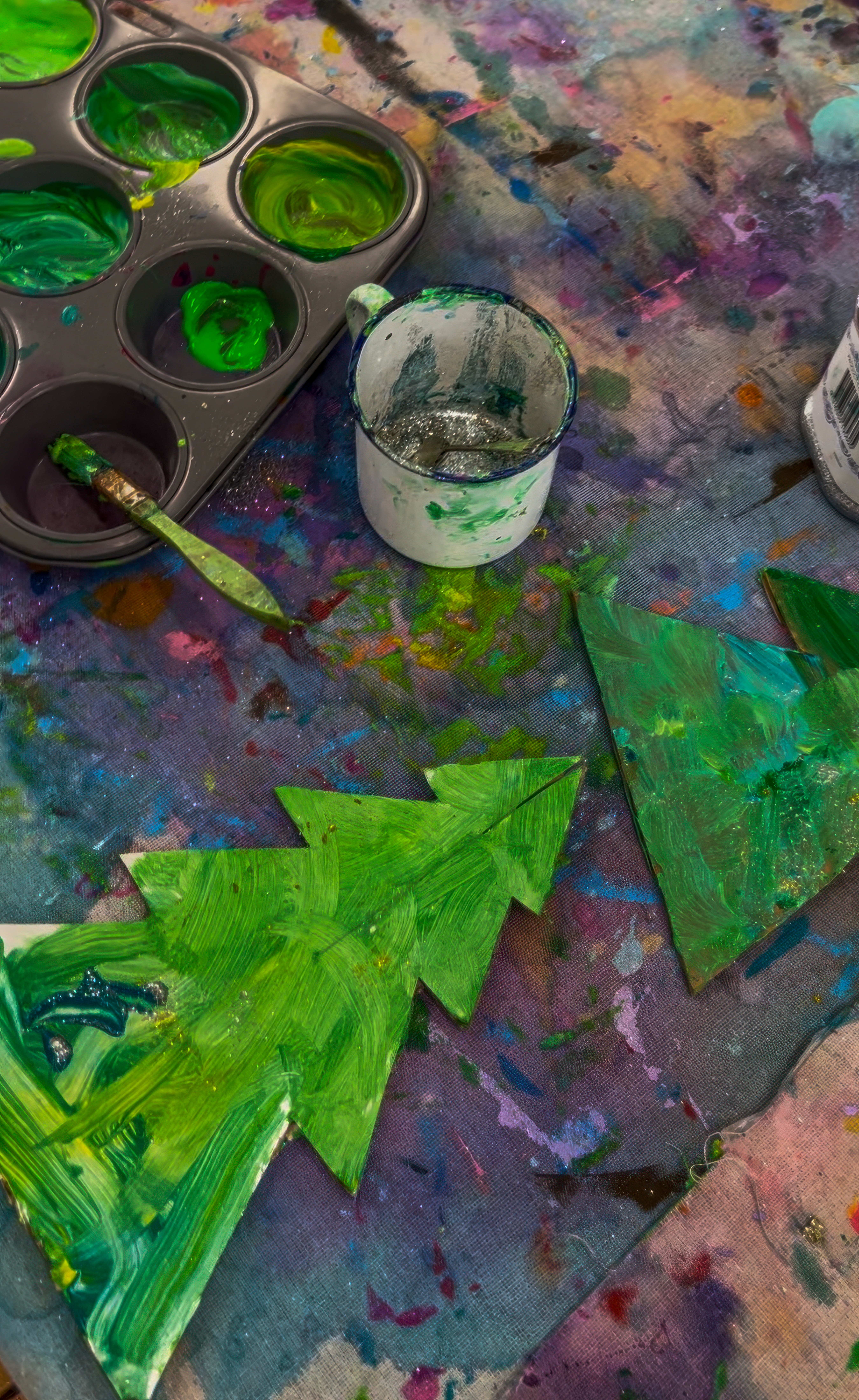
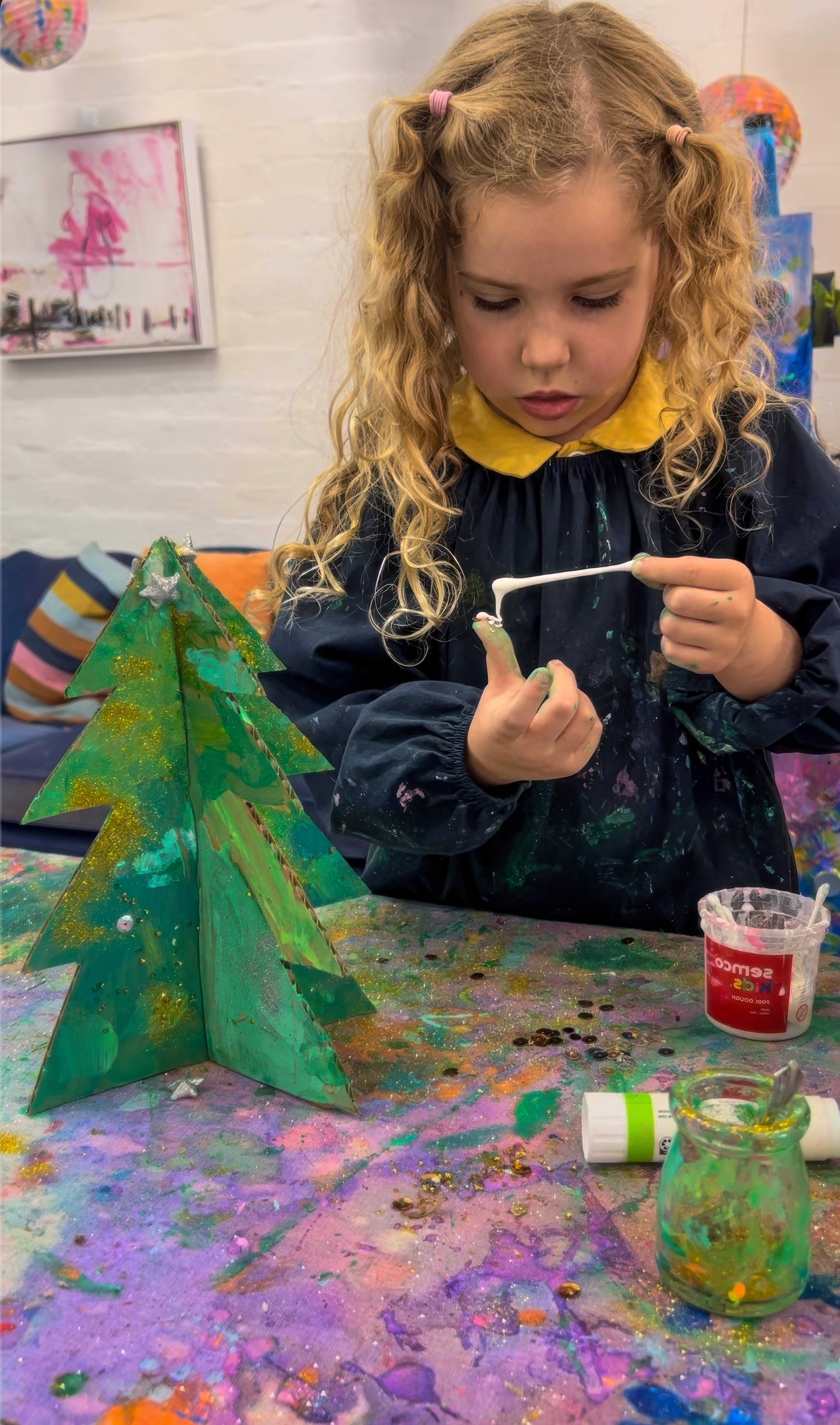
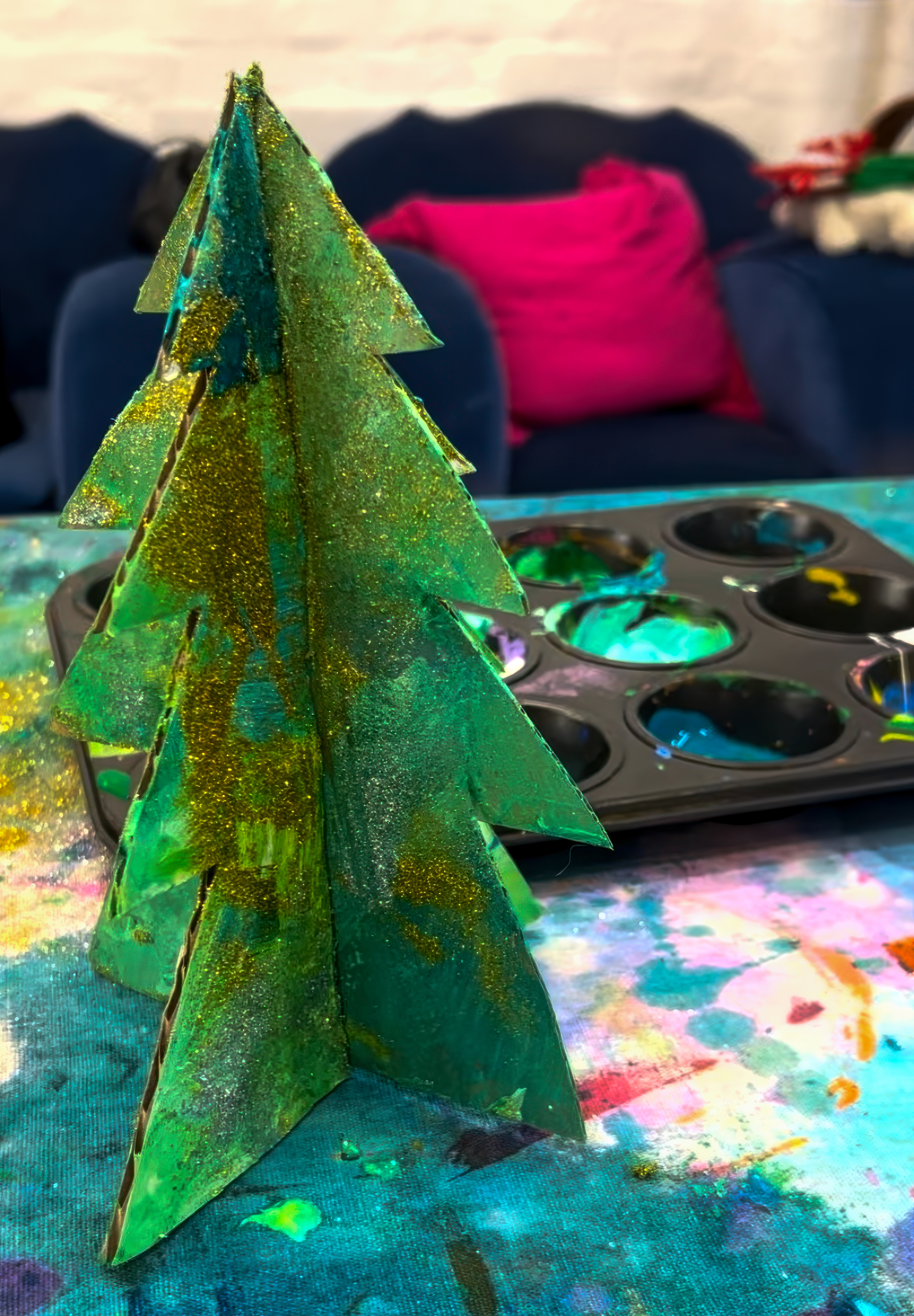
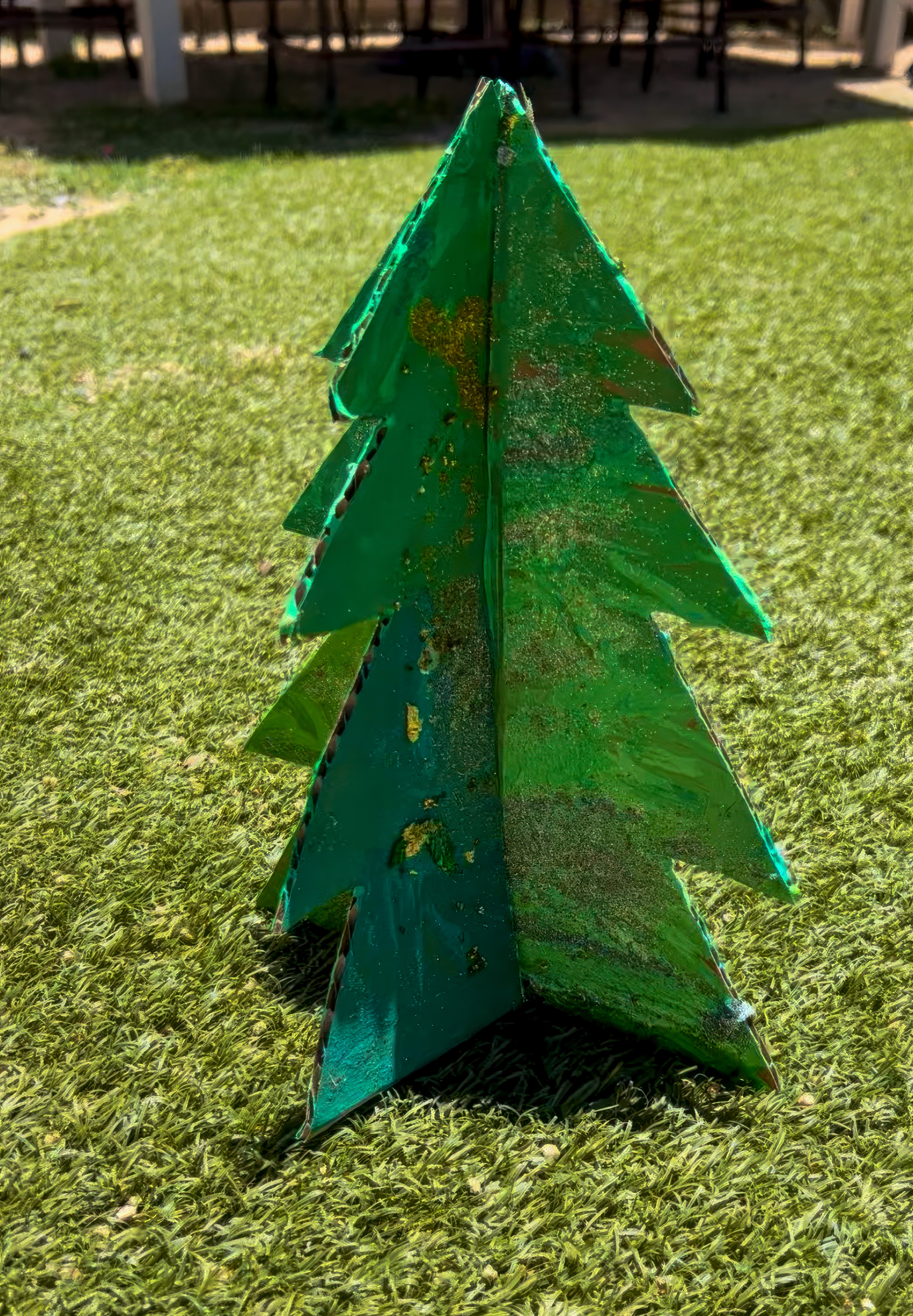
If you can source cardboard yarn cones, they are ideal. They already have the right taper, they are sturdy, and they sit happily on a table. If you don't have cones, cut two identical tree shapes from thick cardboard. Add a slit from the top down on one tree, and a matching slit from the bottom up on the other. Slot them together and you have a standing tree. Ta-da!
Set out paint in a range of greens plus a few surprise options, because real trees are never one flat colour. White is non negotiable for mixing and for highlights. A small amount of black helps older kids explore shade without turning everything muddy. Glitter is optional, but honestly, it is Christmas!
The Making
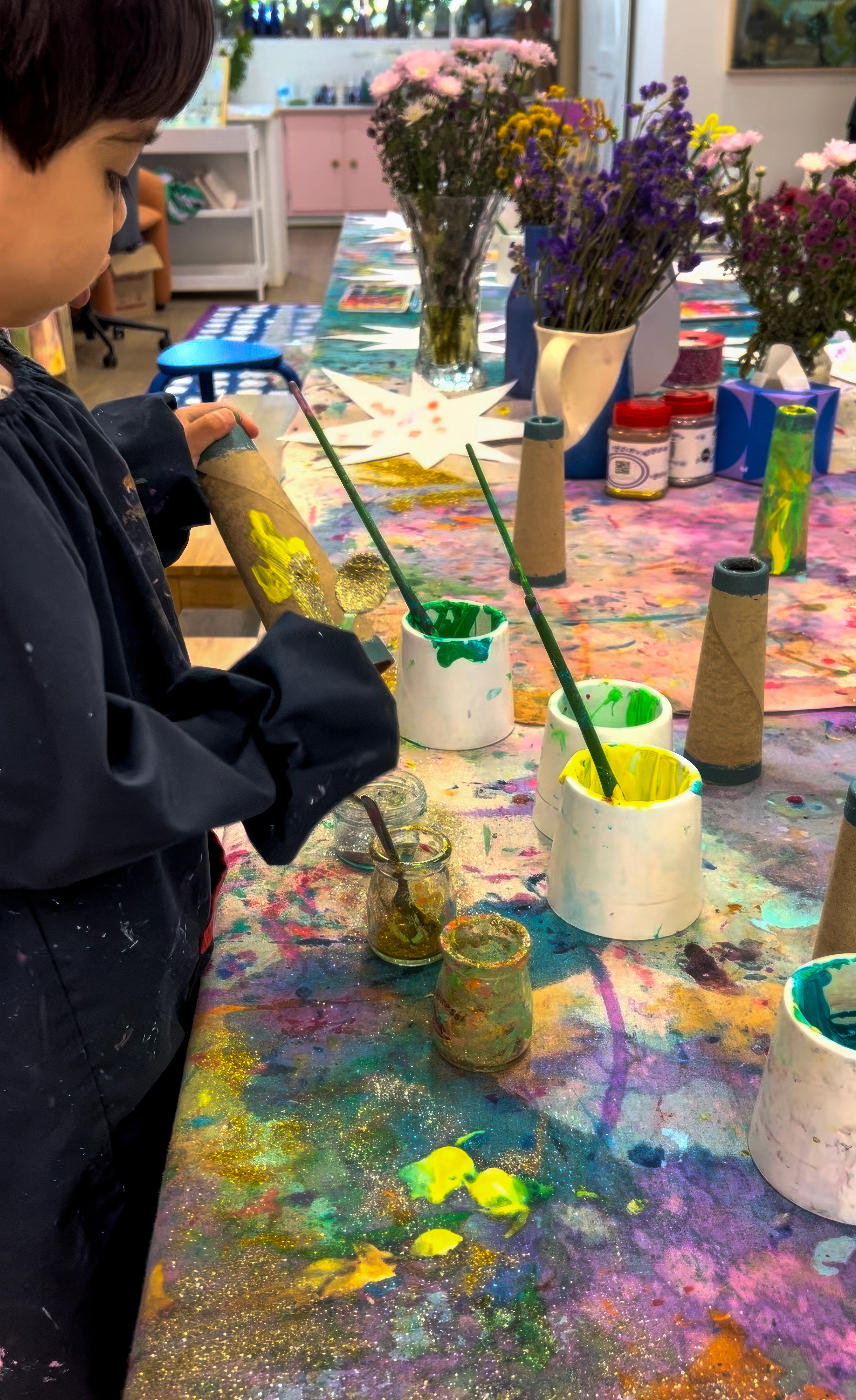
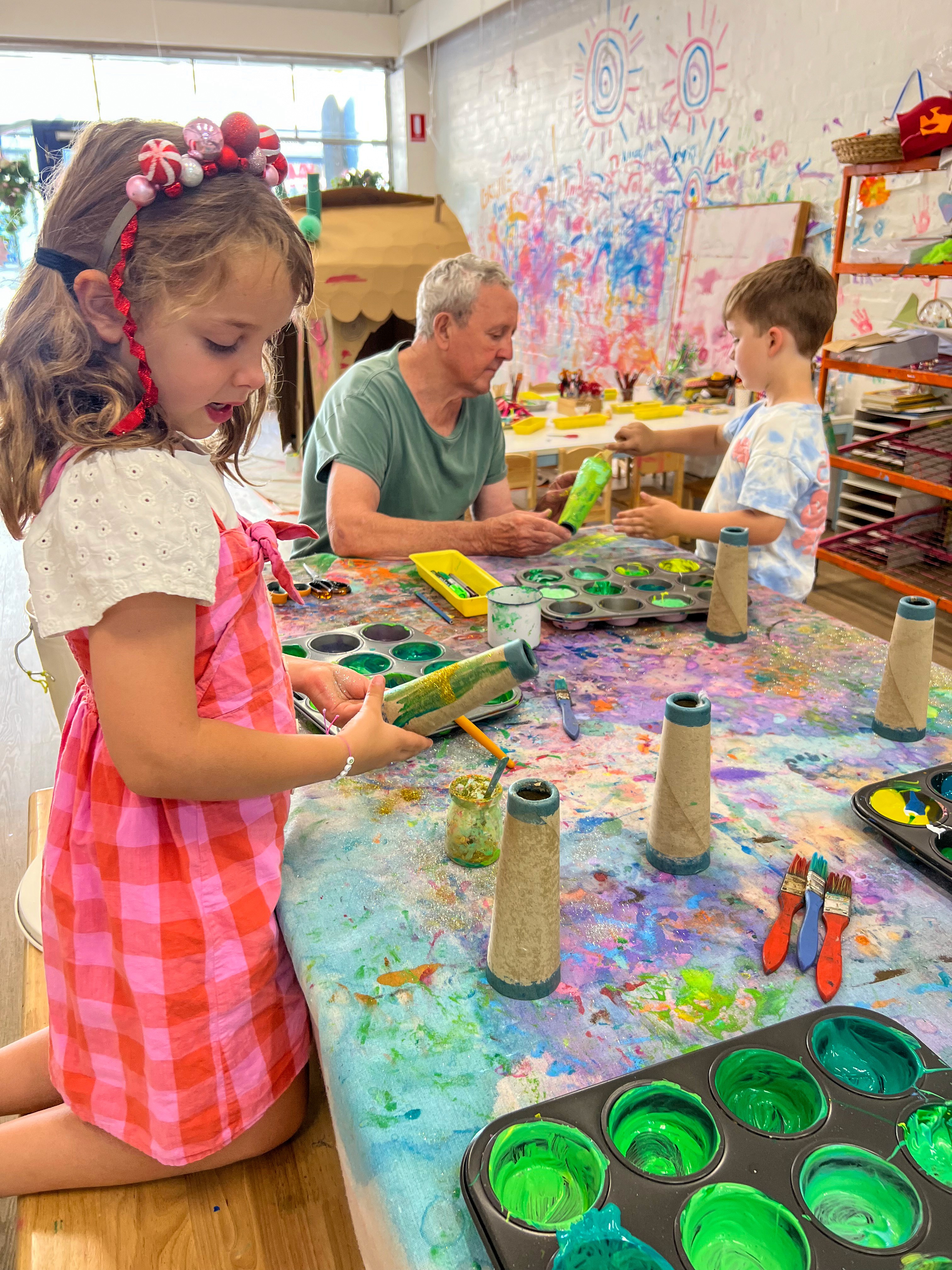
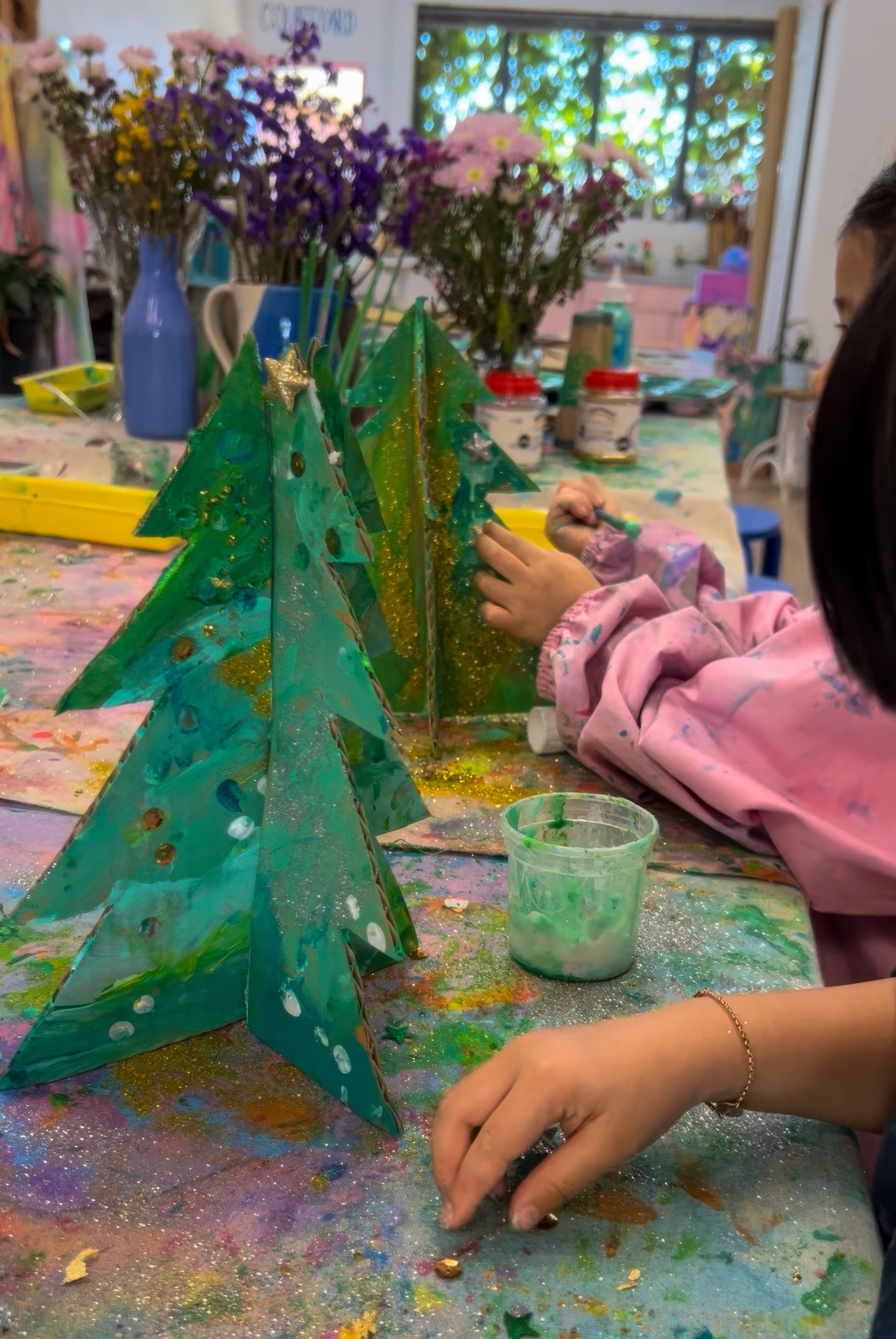
Start with paint! Broad strokes and patterns and blocks of colour. While the paint is still wet, sprinkle on glitter or sparkles so they really stick.
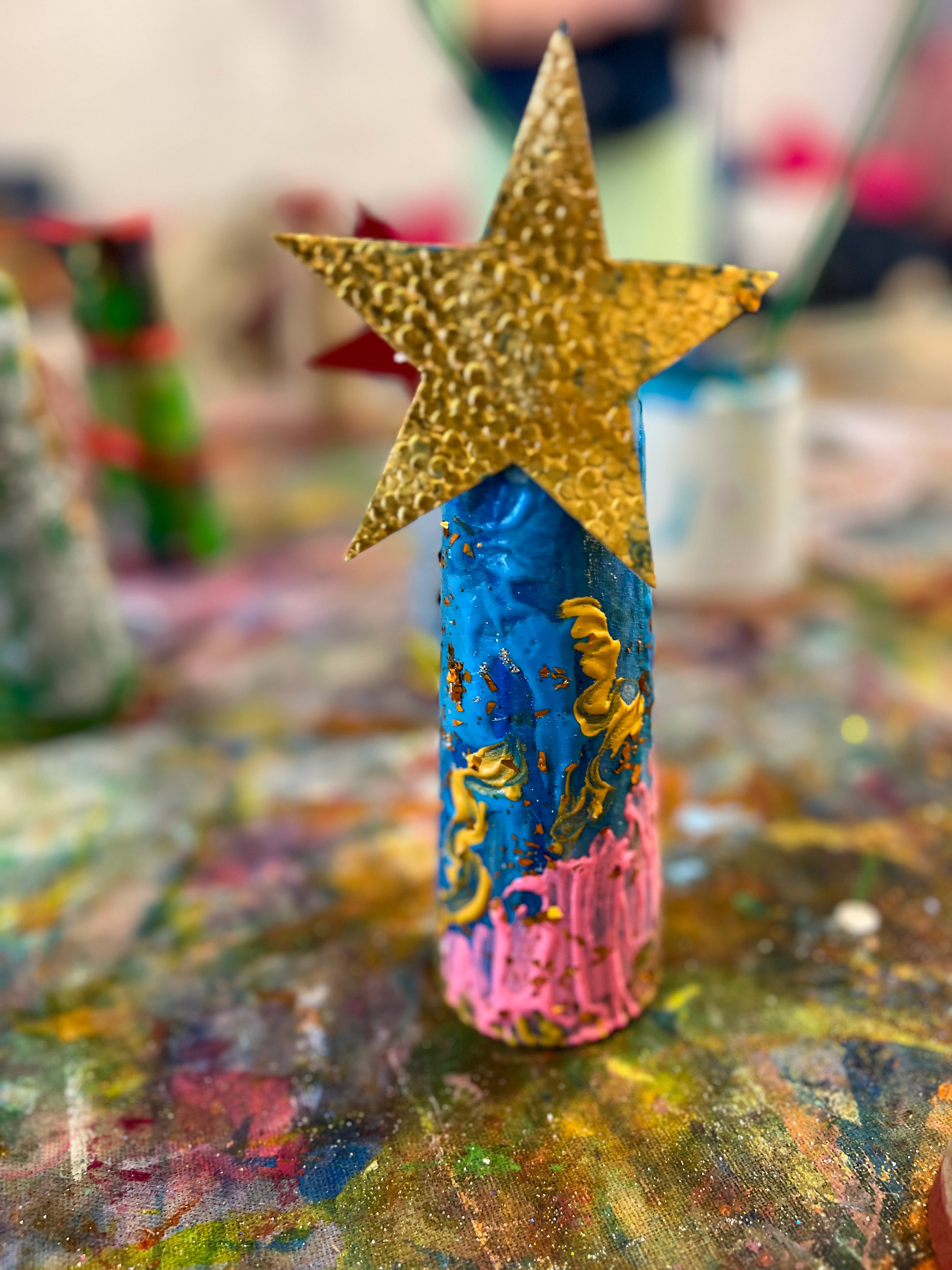
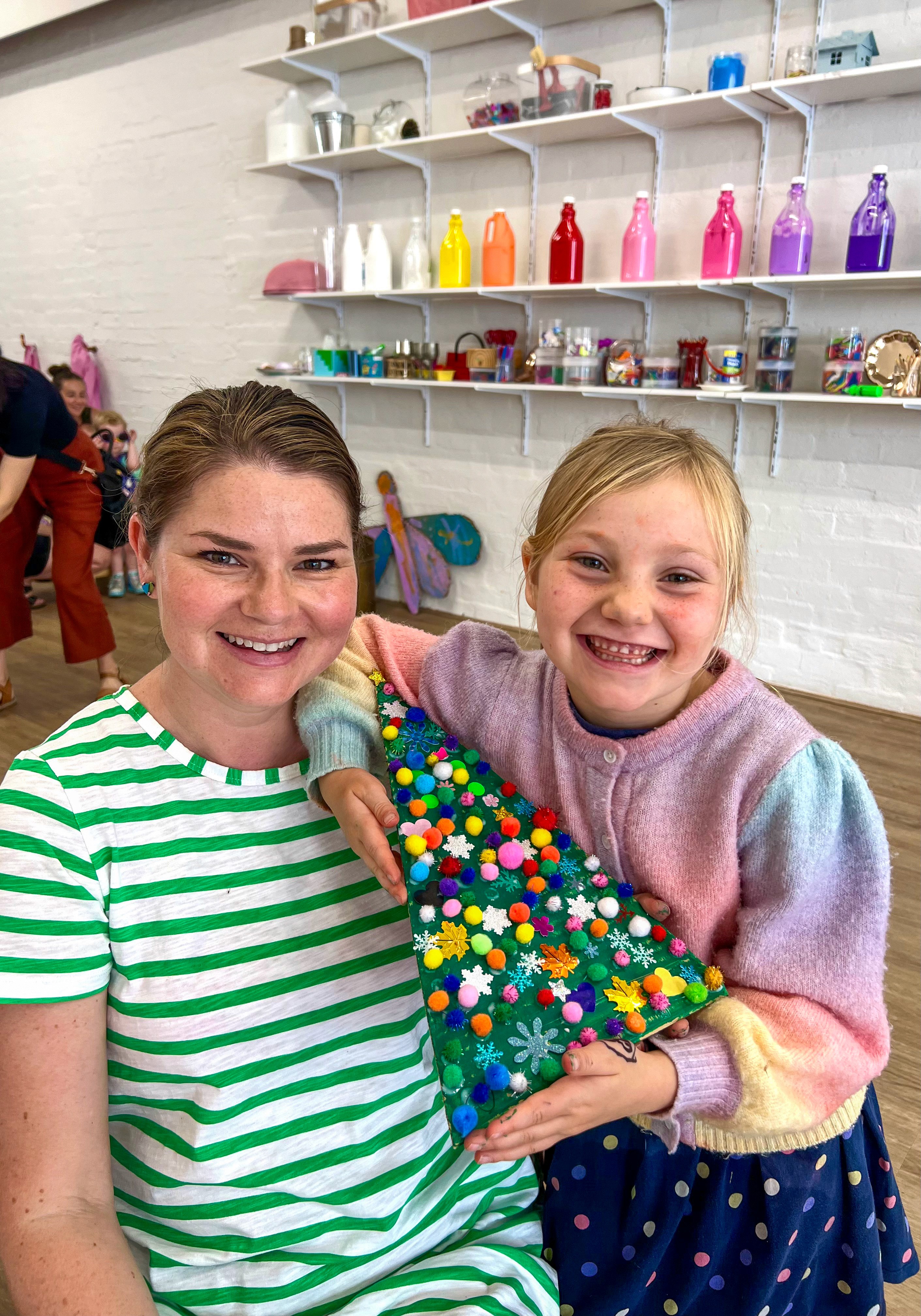
Once the trees are dry enough to handle it's time to decorate (just like the real thing!). Wire gets wrapped and bent. Beads slide on. Stars get added to the top. This is a great moment to talk about balance and structure so that if something tips, kids adjust. If it leans, they problem solve.
Artist Study: Paul Klee
Paul Klee was a Swiss artist working in the early 1900s. He returned to trees again and again throughout his work, but never as something to copy or get “right.” His trees are built slowly through colour, pattern, and repeated marks. Nature was a huge influence for him, especially gardens, landscapes, and trees.
What’s interesting for kids is that Klee wasn’t painting leaves or branches. He was building a structure through layers. Colour next to colour. Shape stacked on shape. Texture doing the work.
It’s a great reminder that a tree doesn’t need to look realistic to feel complete! It can be abstract, decorative, messy, joyful, and bold. Exactly like the ones that start to appear when kids are given time, colour, and permission to experiment.
Materials
Cardboard yarn cones or thick cardboard for cut out trees
Poster paint or paint sticks
White paint for mixing and highlights
Optional black paint for shade
Brushes, sponges, rollers
Glitter
Florist wire
Beads
Cardstock for stars
Scissors
Hot glue for attaching stars and wire (optional)
Back to Top
Oh, Christmas Tree!
Bookmark
Sculpture
The Set Up
Cardboard trees are one of the easiest ways to get proper Christmas energy into a room, without turning it into a craft chaos situation. They stand tall, they look brilliant grouped together, and they give kids a big surface to paint without needing a “perfect” drawing.
If you can source cardboard yarn cones, they are ideal. They already have the right taper, they are sturdy, and they sit happily on a table. If you don't have cones, cut two identical tree shapes from thick cardboard. Add a slit from the top down on one tree, and a matching slit from the bottom up on the other. Slot them together and you have a standing tree. Ta-da!
Set out paint in a range of greens plus a few surprise options, because real trees are never one flat colour. White is non negotiable for mixing and for highlights. A small amount of black helps older kids explore shade without turning everything muddy. Glitter is optional, but honestly, it is Christmas!
The Making
Start with paint! Broad strokes and patterns and blocks of colour. While the paint is still wet, sprinkle on glitter or sparkles so they really stick.
Once the trees are dry enough to handle it's time to decorate (just like the real thing!). Wire gets wrapped and bent. Beads slide on. Stars get added to the top. This is a great moment to talk about balance and structure so that if something tips, kids adjust. If it leans, they problem solve.
Artist Study: Paul Klee
Paul Klee was a Swiss artist working in the early 1900s. He returned to trees again and again throughout his work, but never as something to copy or get “right.” His trees are built slowly through colour, pattern, and repeated marks. Nature was a huge influence for him, especially gardens, landscapes, and trees.
What’s interesting for kids is that Klee wasn’t painting leaves or branches. He was building a structure through layers. Colour next to colour. Shape stacked on shape. Texture doing the work.
It’s a great reminder that a tree doesn’t need to look realistic to feel complete! It can be abstract, decorative, messy, joyful, and bold. Exactly like the ones that start to appear when kids are given time, colour, and permission to experiment.
Materials
Cardboard yarn cones or thick cardboard for cut out trees
Poster paint or paint sticks
White paint for mixing and highlights
Optional black paint for shade
Brushes, sponges, rollers
Glitter
Florist wire
Beads
Cardstock for stars
Scissors
Hot glue for attaching stars and wire (optional)
Back to Top
Add this to your favourites
Add this to your favourites
Thoughts?
Would love to hear if youv'e tried this or have any ideas on how to make it even better!