

ARTFUL EXPERIENCES
Flying Through Space
A cardboard rocket big enough to climb inside
Bookmark
Installations
The Set Up
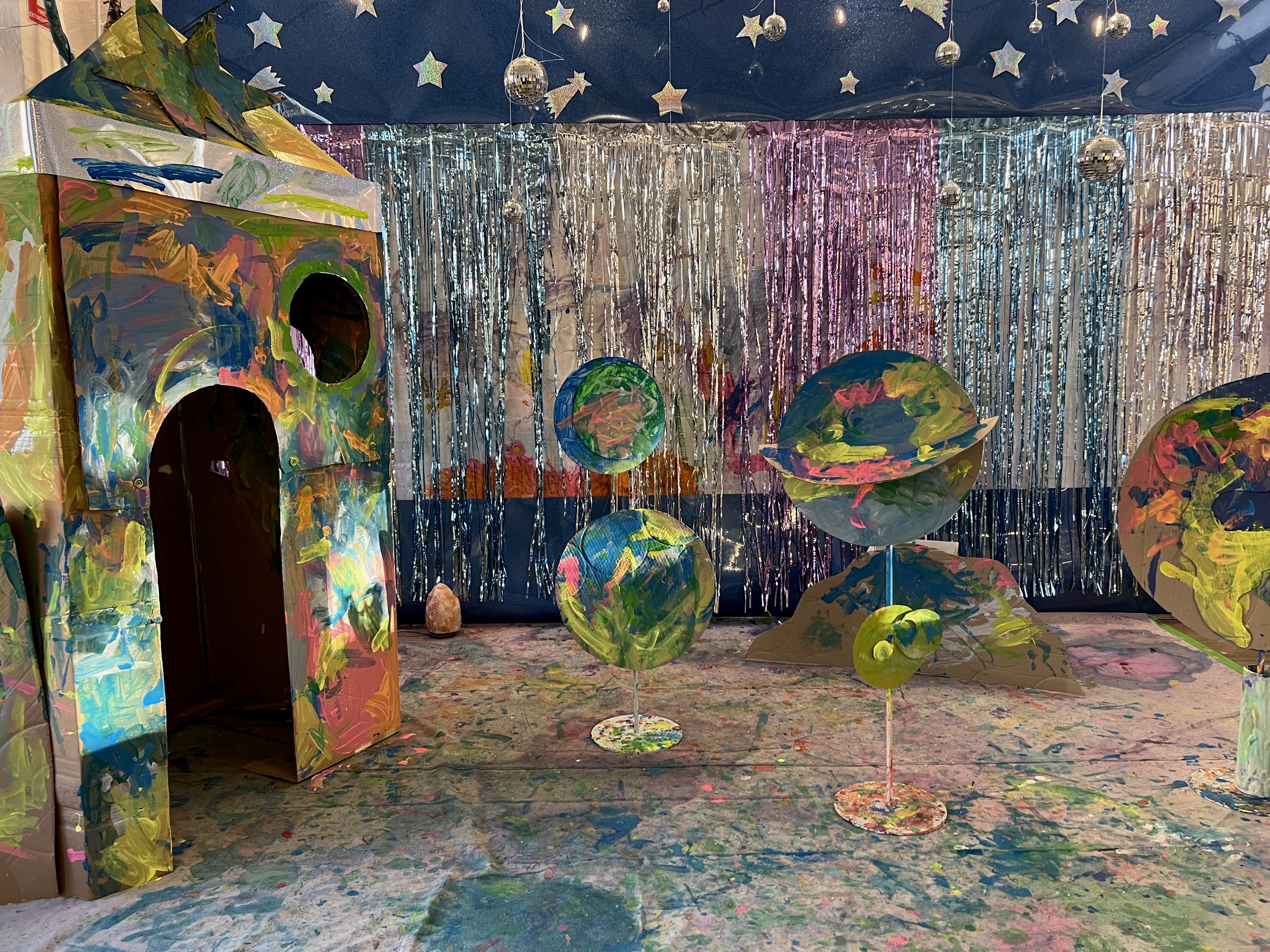
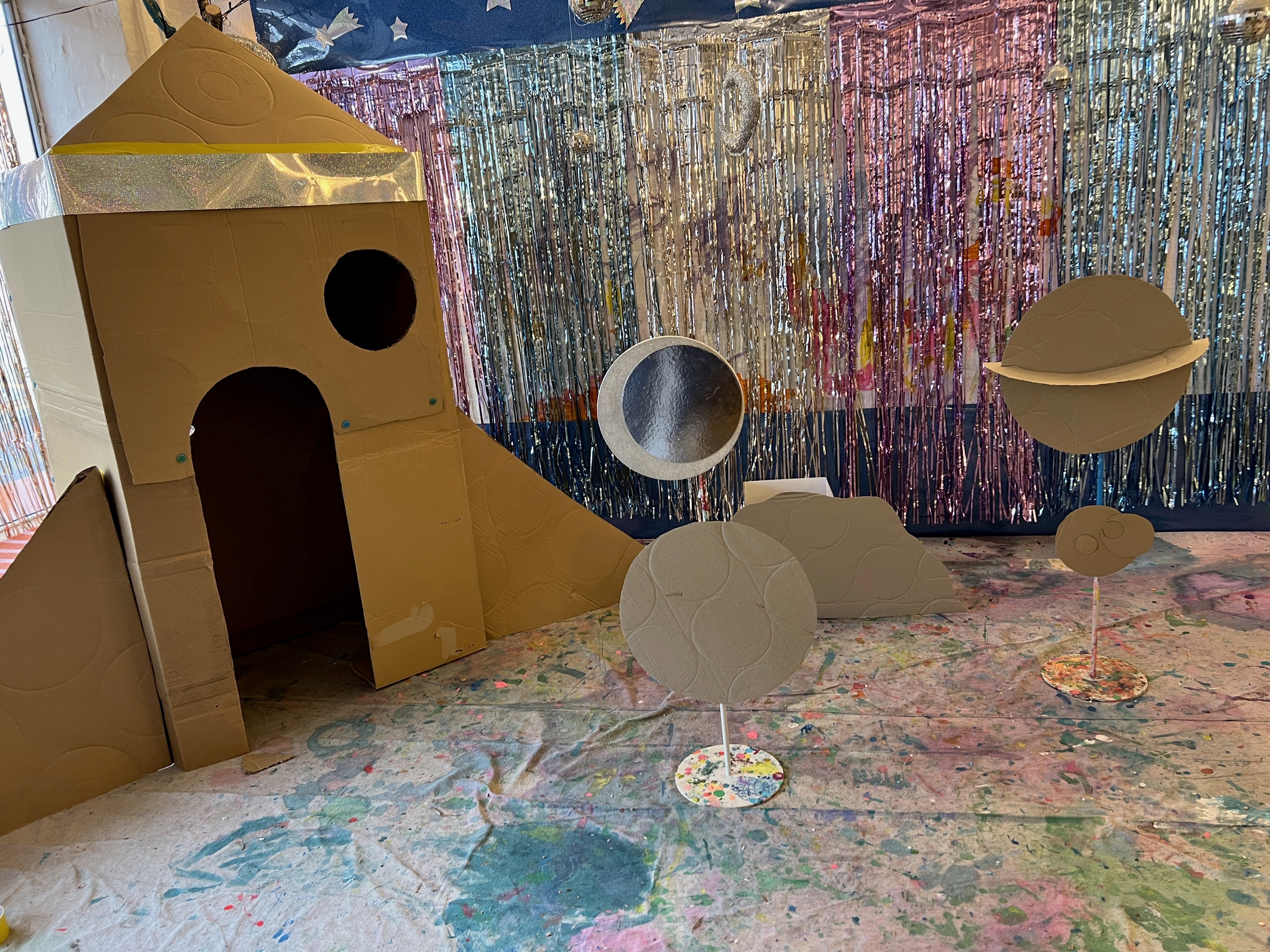
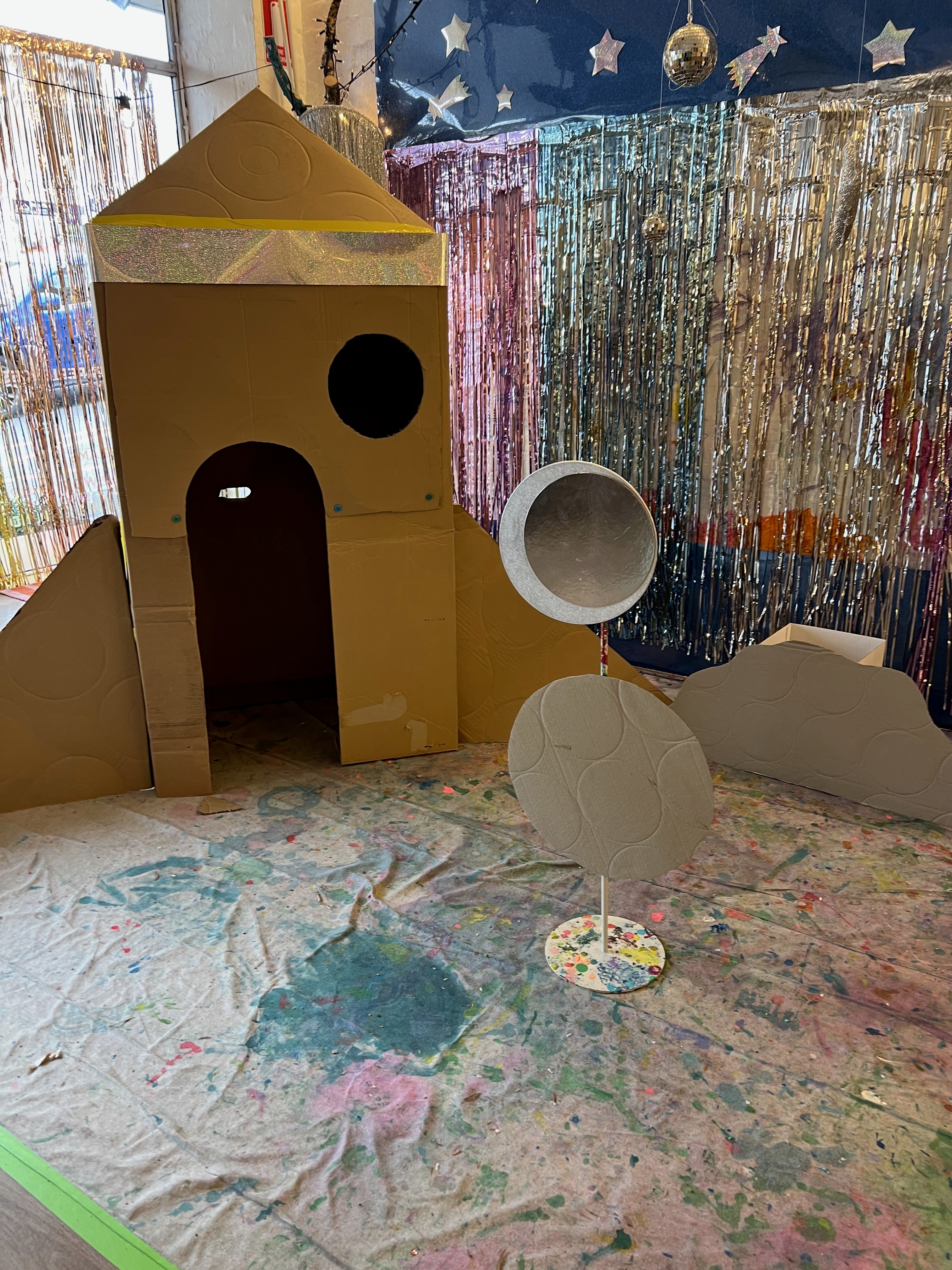
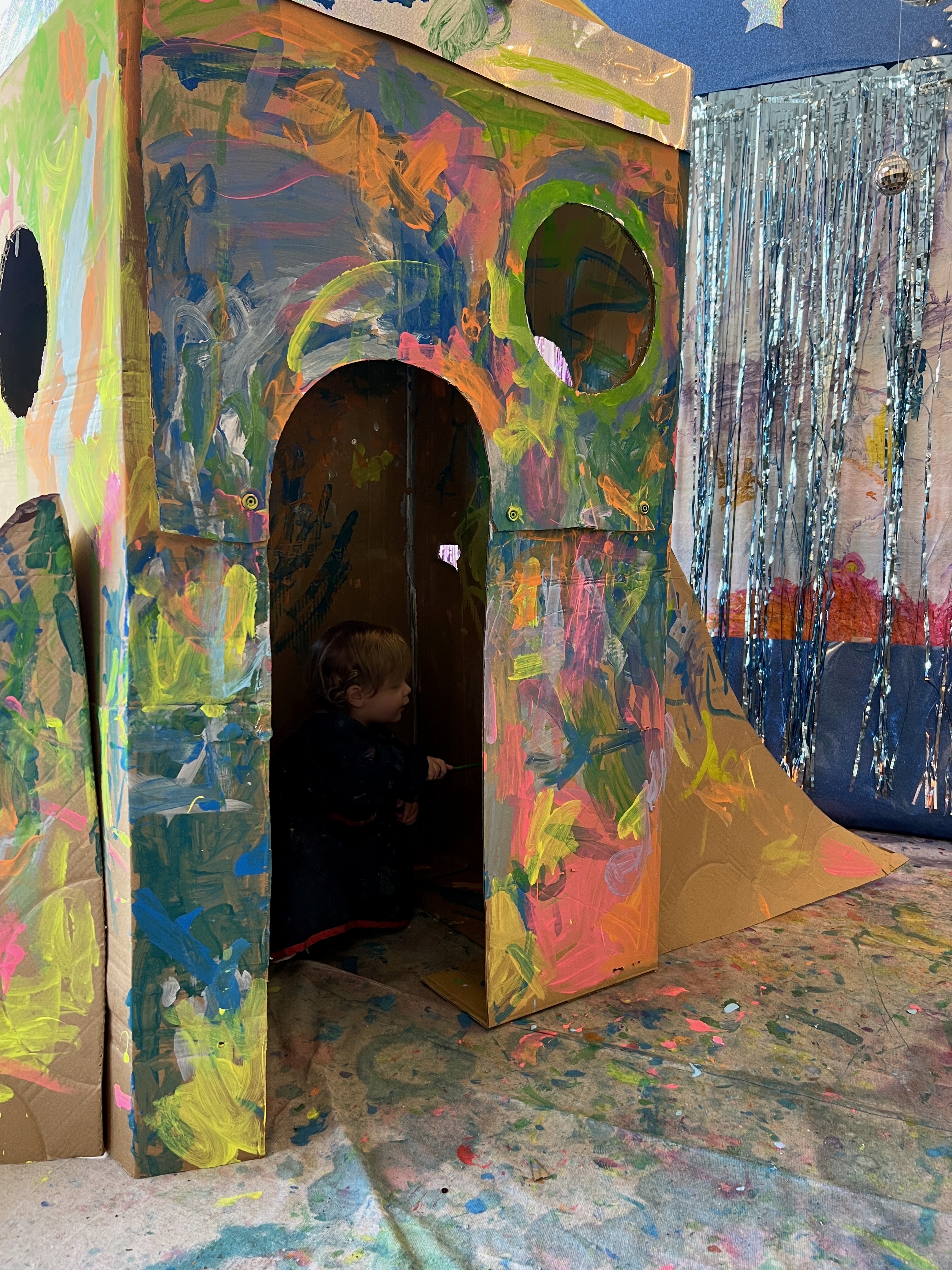
We are so lucky at Smudge to back directly onto a panel beater. For this theme I wandered over one afternoon and asked if they had any enormous car part boxes going spare. They did. The biggest cardboard box we've ever had in the studio. Big enough for a five-year-old to stand up inside with plenty of head room.
If you don't have a friendly panel beater next door, any appliance boxes would work beautifully. Ask out the back of a white goods store, they're usually more than happy to give them away. Fridges, washing machines, and dishwashers are your best bet for rocket-sized cardboard.
Cut a doorway on one side and a round porthole window on the other. Leave the top flaps long so you can fold them into a pointed nose. Don't worry about the shape being perfect. A slightly wobbly cardboard rocket has far more charm than a precise one, and kids don't care about engineering accuracy, they care about whether they can climb inside.
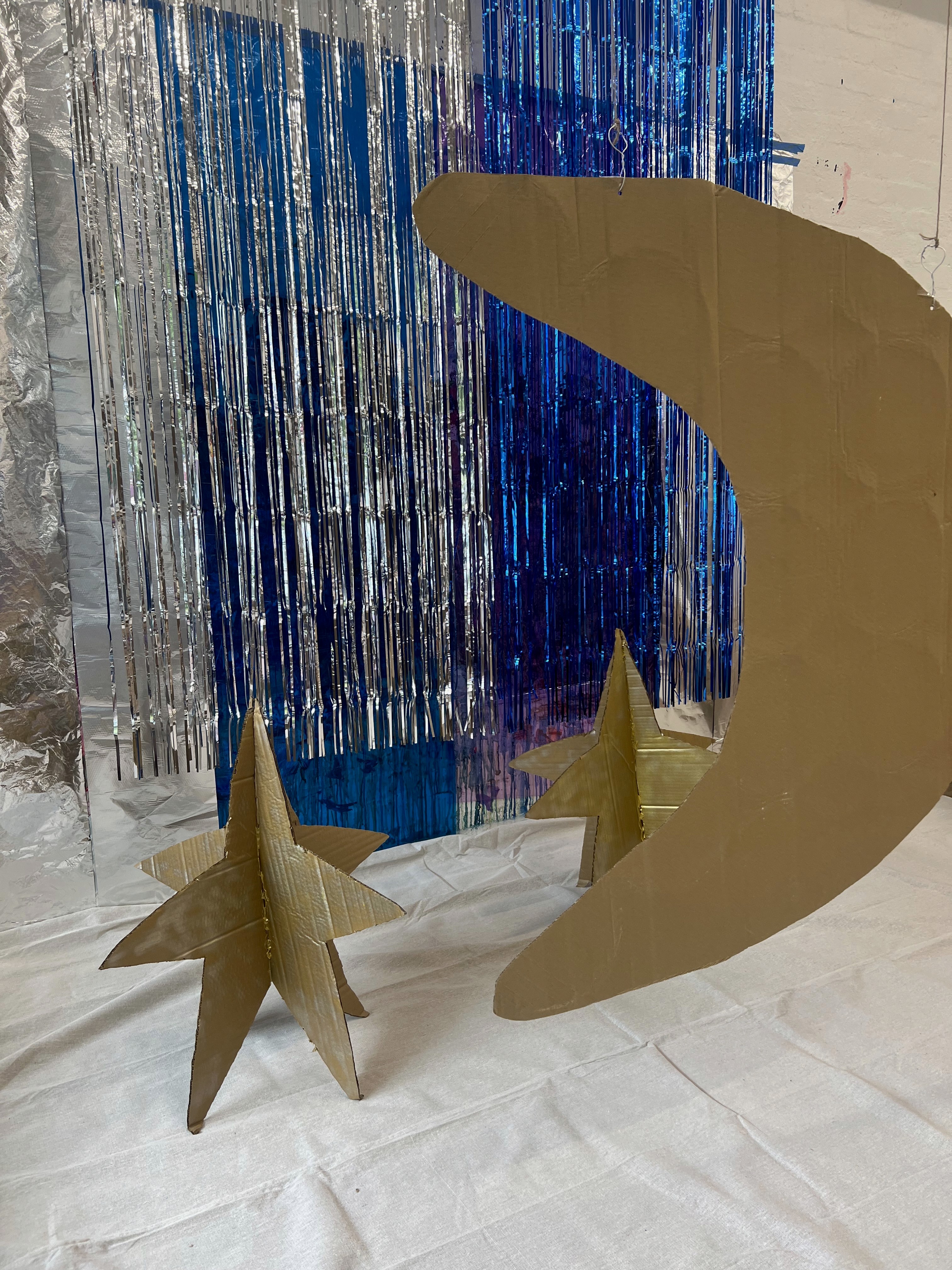
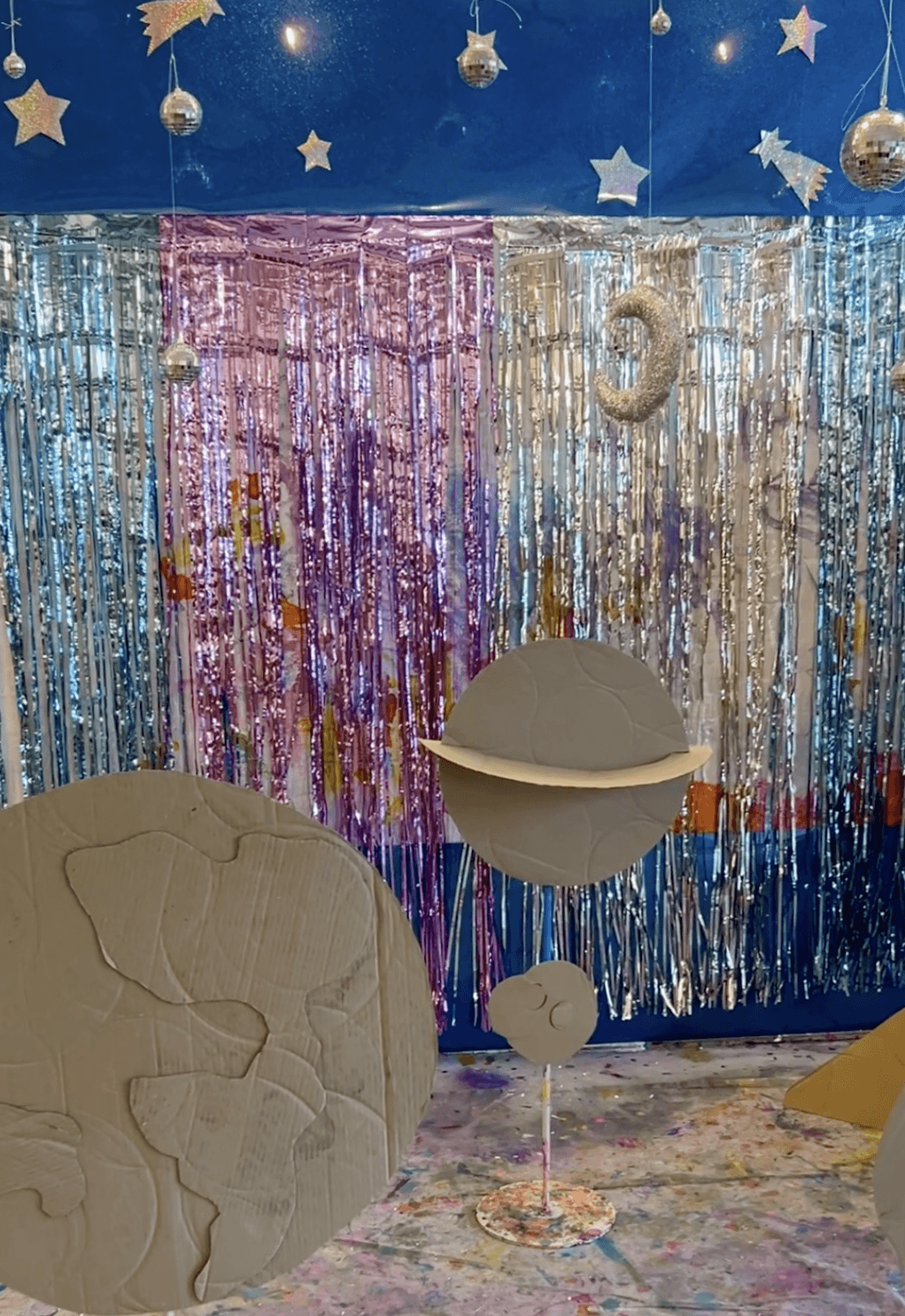
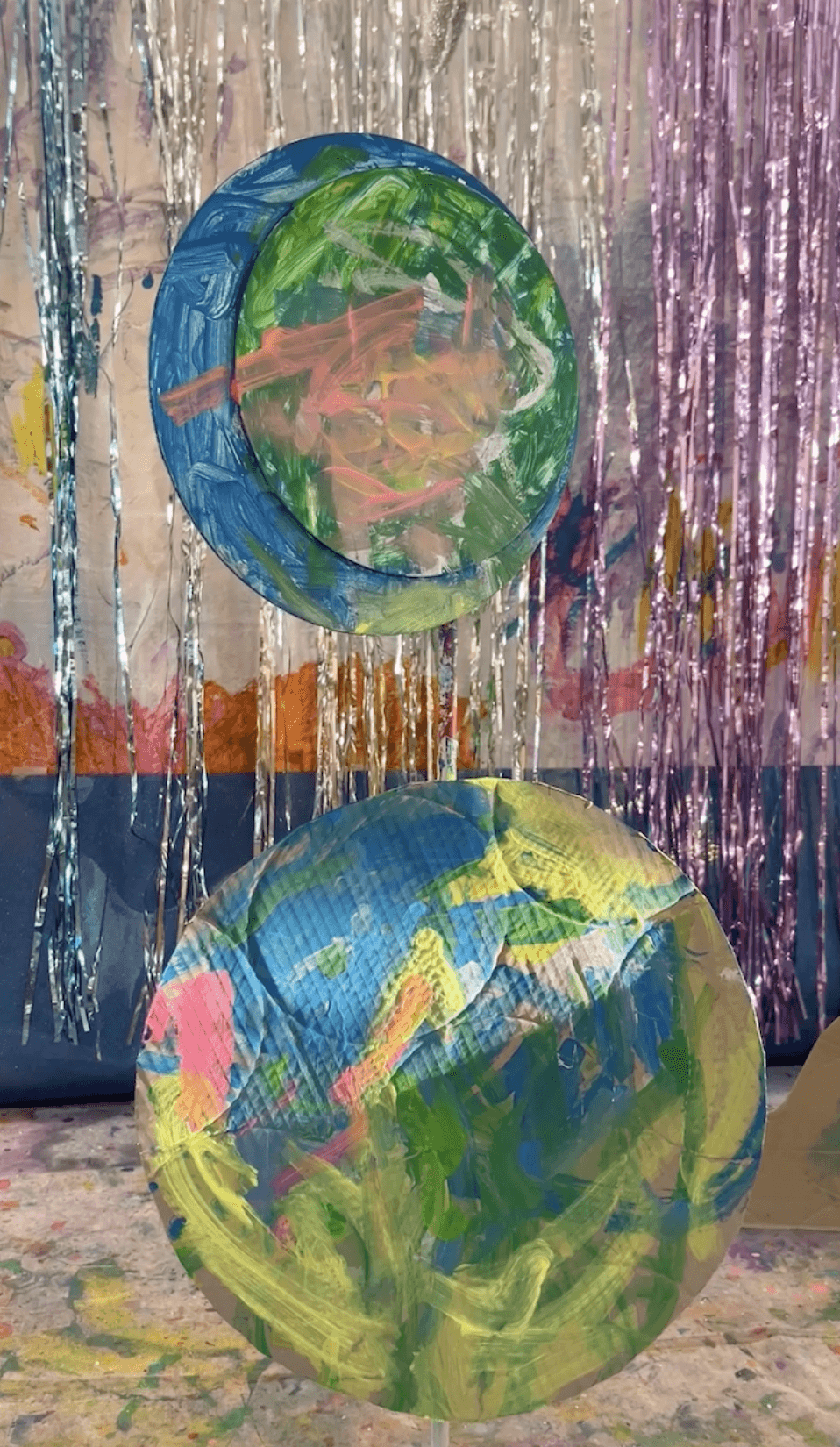
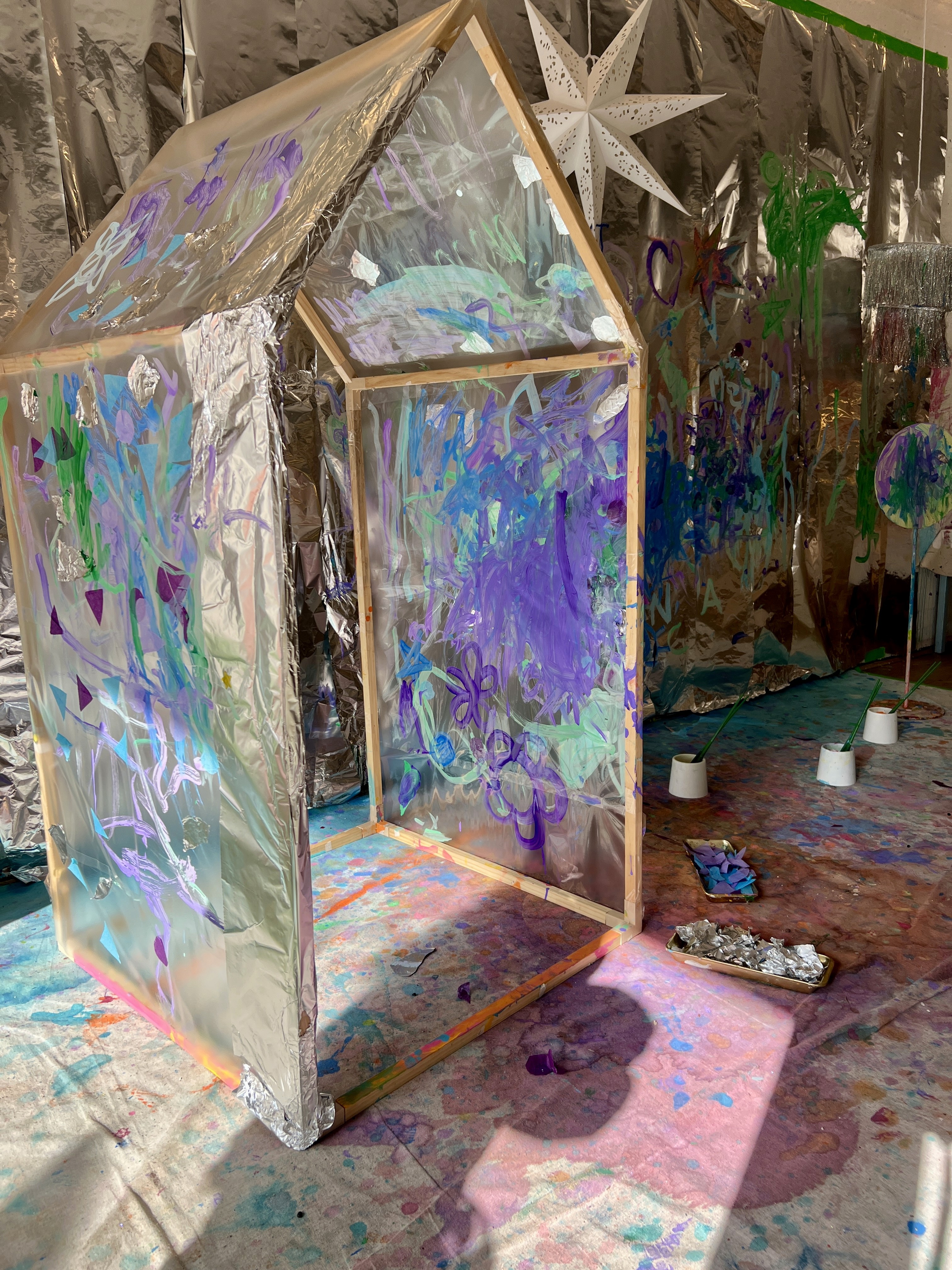
The other half of this installation is the backdrop. We taped metallic foil directly to the wall, the cheap party-supply kind that comes on a roll in silver and blue. Paint on foil is its own kind of gorgeous. It has a wet-looking sheen and the brush makes an incredible crinkly sound that kids cannot get enough of. Layer hanging foil tinsel curtains (party shop, about $8 each) from the ceiling, cut giant stars and cardboard planets to stand against the wall or hang from the ceiling on fishing line, and string fairy lights through the whole thing for a bit of a glow.
The Making
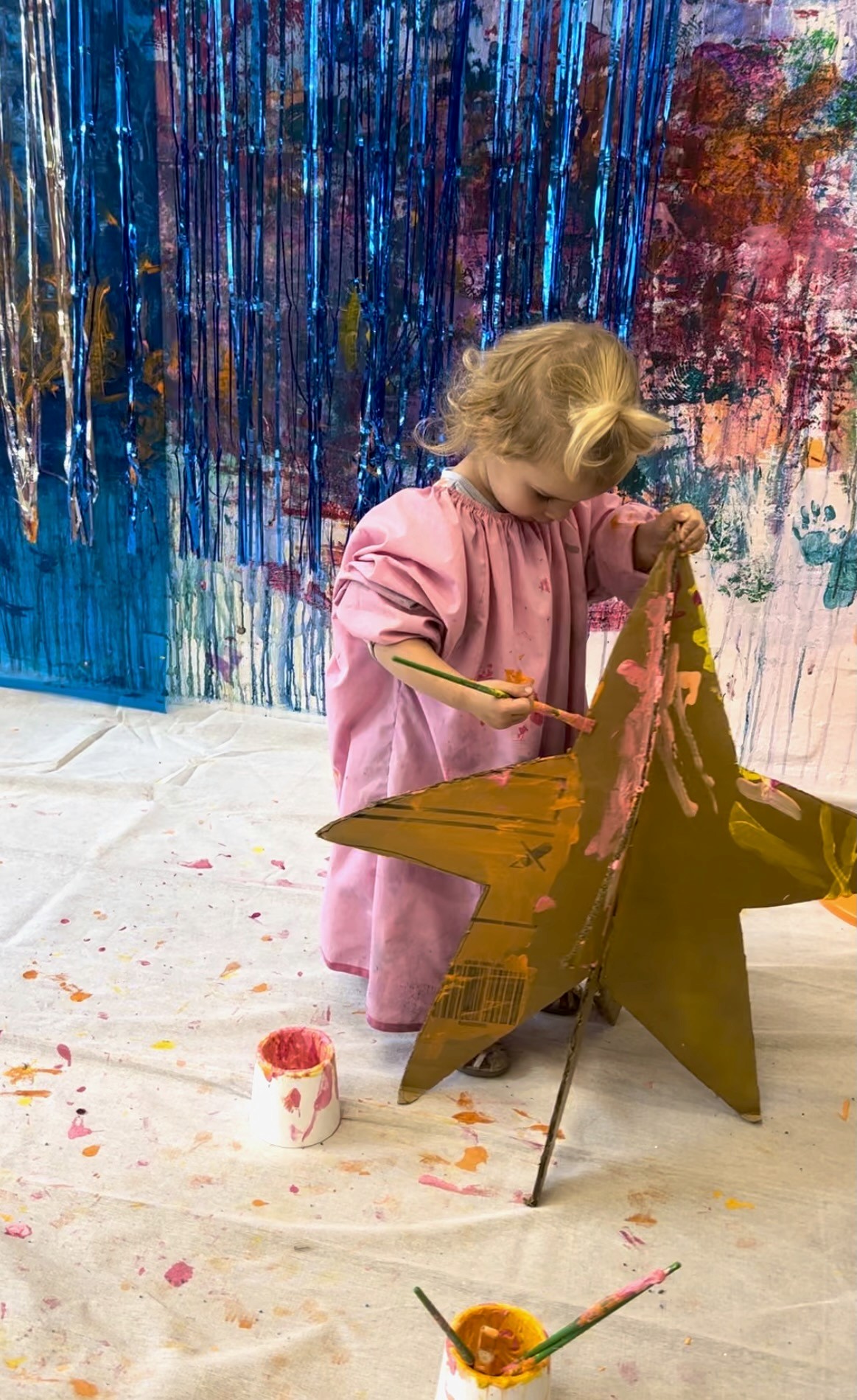
The rocket becomes a whole ecosystem of its own within about five minutes of being in the studio. Kids climb inside, pilot it, paint the outside, add details, poke their heads out the porthole window. Someone always tries to fit three people in. Someone else always decides the rocket needs more windows.
The wall painting is where the most gorgeous layering happens. Bright paints pushed across foil create these slick streaked skies that actually look like the swirling colours of a galaxy. Add oil pastels on top once the paint has dried for sharper detail, and flick a bit of metallic poster paint with a splatter brush for far-away stars. The whole backdrop builds up across the week as new artists add their layer.
Smudge Tip: Photograph the installation every afternoon before you leave. It changes so much day to day, and that progression is gorgeous for your socials and for sharing with families at the end of the week.
Variations
If you don't have space for a full-size rocket, smaller cardboard boxes work (shoe boxes, tissue boxes, cereal boxes) and kids can paint and assemble their own mini rocket to take home.
Materials
One enormous cardboard box (panel beaters, appliance stores, furniture stores)
Cardboard scissors or MakeDo chompsaw (adults only for the big cuts)
Metallic foil rolls for the wall (silver and blue party foil)
Hanging foil tinsel curtains
Cardboard off-cuts for planets and stars
Fishing line or string
Fairy lights (battery-operated is easiest)
Poster paints in deep blues, purples, magentas
Big brushes, rollers, splatter brushes
Metallic poster paint in gold and silver
Back to Top
Flying Through Space
A cardboard rocket big enough to climb inside
Bookmark
Installations
The Set Up
We are so lucky at Smudge to back directly onto a panel beater. For this theme I wandered over one afternoon and asked if they had any enormous car part boxes going spare. They did. The biggest cardboard box we've ever had in the studio. Big enough for a five-year-old to stand up inside with plenty of head room.
If you don't have a friendly panel beater next door, any appliance boxes would work beautifully. Ask out the back of a white goods store, they're usually more than happy to give them away. Fridges, washing machines, and dishwashers are your best bet for rocket-sized cardboard.
Cut a doorway on one side and a round porthole window on the other. Leave the top flaps long so you can fold them into a pointed nose. Don't worry about the shape being perfect. A slightly wobbly cardboard rocket has far more charm than a precise one, and kids don't care about engineering accuracy, they care about whether they can climb inside.
The other half of this installation is the backdrop. We taped metallic foil directly to the wall, the cheap party-supply kind that comes on a roll in silver and blue. Paint on foil is its own kind of gorgeous. It has a wet-looking sheen and the brush makes an incredible crinkly sound that kids cannot get enough of. Layer hanging foil tinsel curtains (party shop, about $8 each) from the ceiling, cut giant stars and cardboard planets to stand against the wall or hang from the ceiling on fishing line, and string fairy lights through the whole thing for a bit of a glow.
The Making
The rocket becomes a whole ecosystem of its own within about five minutes of being in the studio. Kids climb inside, pilot it, paint the outside, add details, poke their heads out the porthole window. Someone always tries to fit three people in. Someone else always decides the rocket needs more windows.
The wall painting is where the most gorgeous layering happens. Bright paints pushed across foil create these slick streaked skies that actually look like the swirling colours of a galaxy. Add oil pastels on top once the paint has dried for sharper detail, and flick a bit of metallic poster paint with a splatter brush for far-away stars. The whole backdrop builds up across the week as new artists add their layer.
Smudge Tip: Photograph the installation every afternoon before you leave. It changes so much day to day, and that progression is gorgeous for your socials and for sharing with families at the end of the week.
Variations
If you don't have space for a full-size rocket, smaller cardboard boxes work (shoe boxes, tissue boxes, cereal boxes) and kids can paint and assemble their own mini rocket to take home.
Materials
One enormous cardboard box (panel beaters, appliance stores, furniture stores)
Cardboard scissors or MakeDo chompsaw (adults only for the big cuts)
Metallic foil rolls for the wall (silver and blue party foil)
Hanging foil tinsel curtains
Cardboard off-cuts for planets and stars
Fishing line or string
Fairy lights (battery-operated is easiest)
Poster paints in deep blues, purples, magentas
Big brushes, rollers, splatter brushes
Metallic poster paint in gold and silver
Back to Top
Flying Through Space
A cardboard rocket big enough to climb inside
Bookmark
Installations
The Set Up
We are so lucky at Smudge to back directly onto a panel beater. For this theme I wandered over one afternoon and asked if they had any enormous car part boxes going spare. They did. The biggest cardboard box we've ever had in the studio. Big enough for a five-year-old to stand up inside with plenty of head room.
If you don't have a friendly panel beater next door, any appliance boxes would work beautifully. Ask out the back of a white goods store, they're usually more than happy to give them away. Fridges, washing machines, and dishwashers are your best bet for rocket-sized cardboard.
Cut a doorway on one side and a round porthole window on the other. Leave the top flaps long so you can fold them into a pointed nose. Don't worry about the shape being perfect. A slightly wobbly cardboard rocket has far more charm than a precise one, and kids don't care about engineering accuracy, they care about whether they can climb inside.
The other half of this installation is the backdrop. We taped metallic foil directly to the wall, the cheap party-supply kind that comes on a roll in silver and blue. Paint on foil is its own kind of gorgeous. It has a wet-looking sheen and the brush makes an incredible crinkly sound that kids cannot get enough of. Layer hanging foil tinsel curtains (party shop, about $8 each) from the ceiling, cut giant stars and cardboard planets to stand against the wall or hang from the ceiling on fishing line, and string fairy lights through the whole thing for a bit of a glow.
The Making
The rocket becomes a whole ecosystem of its own within about five minutes of being in the studio. Kids climb inside, pilot it, paint the outside, add details, poke their heads out the porthole window. Someone always tries to fit three people in. Someone else always decides the rocket needs more windows.
The wall painting is where the most gorgeous layering happens. Bright paints pushed across foil create these slick streaked skies that actually look like the swirling colours of a galaxy. Add oil pastels on top once the paint has dried for sharper detail, and flick a bit of metallic poster paint with a splatter brush for far-away stars. The whole backdrop builds up across the week as new artists add their layer.
Smudge Tip: Photograph the installation every afternoon before you leave. It changes so much day to day, and that progression is gorgeous for your socials and for sharing with families at the end of the week.
Variations
If you don't have space for a full-size rocket, smaller cardboard boxes work (shoe boxes, tissue boxes, cereal boxes) and kids can paint and assemble their own mini rocket to take home.
Materials
One enormous cardboard box (panel beaters, appliance stores, furniture stores)
Cardboard scissors or MakeDo chompsaw (adults only for the big cuts)
Metallic foil rolls for the wall (silver and blue party foil)
Hanging foil tinsel curtains
Cardboard off-cuts for planets and stars
Fishing line or string
Fairy lights (battery-operated is easiest)
Poster paints in deep blues, purples, magentas
Big brushes, rollers, splatter brushes
Metallic poster paint in gold and silver
Back to Top
Galaxy Paintings
Liquid watercolour, rock salt, and a bit of magic
Bookmark
Painting & Drawing
The Set Up
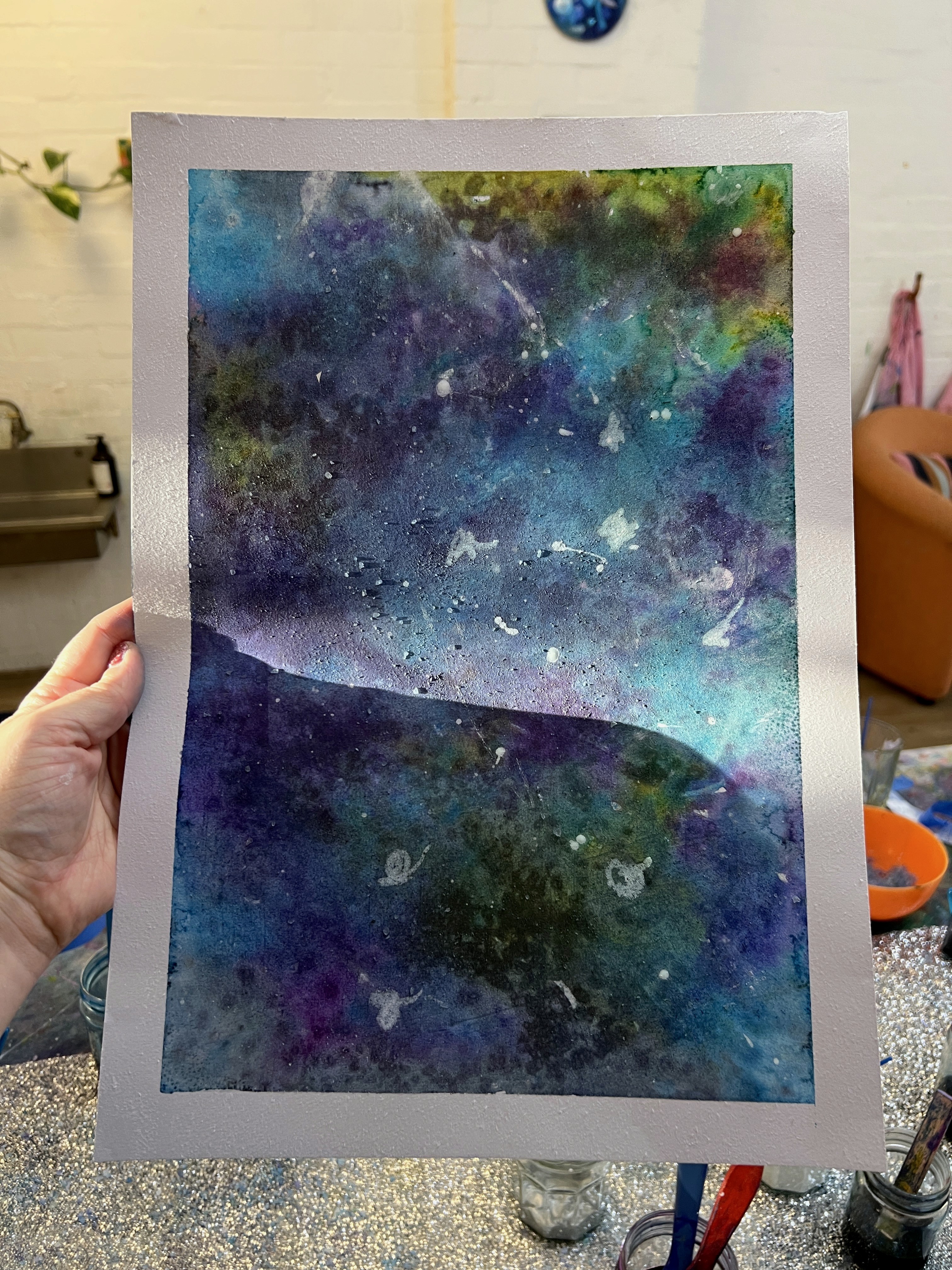
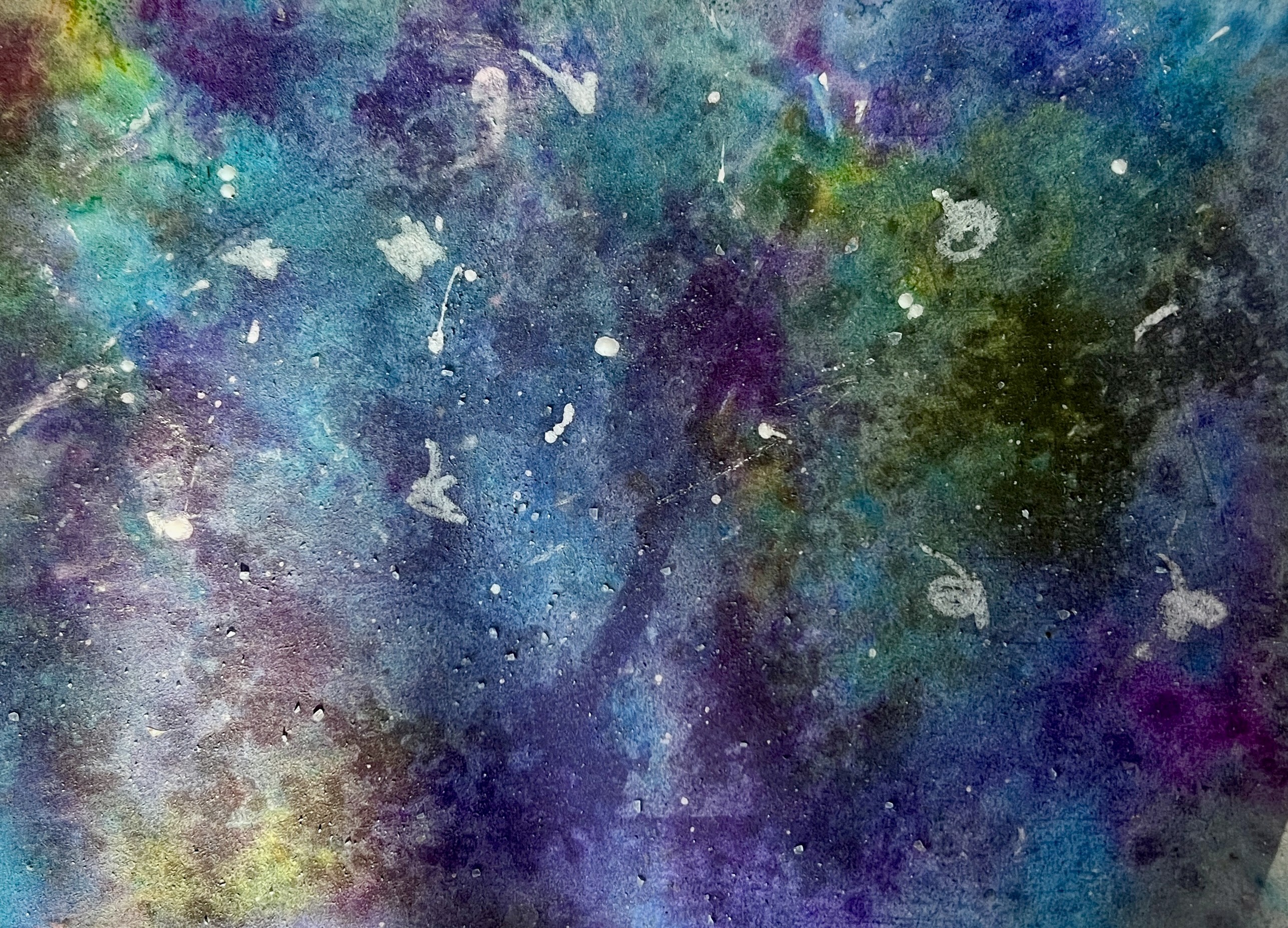
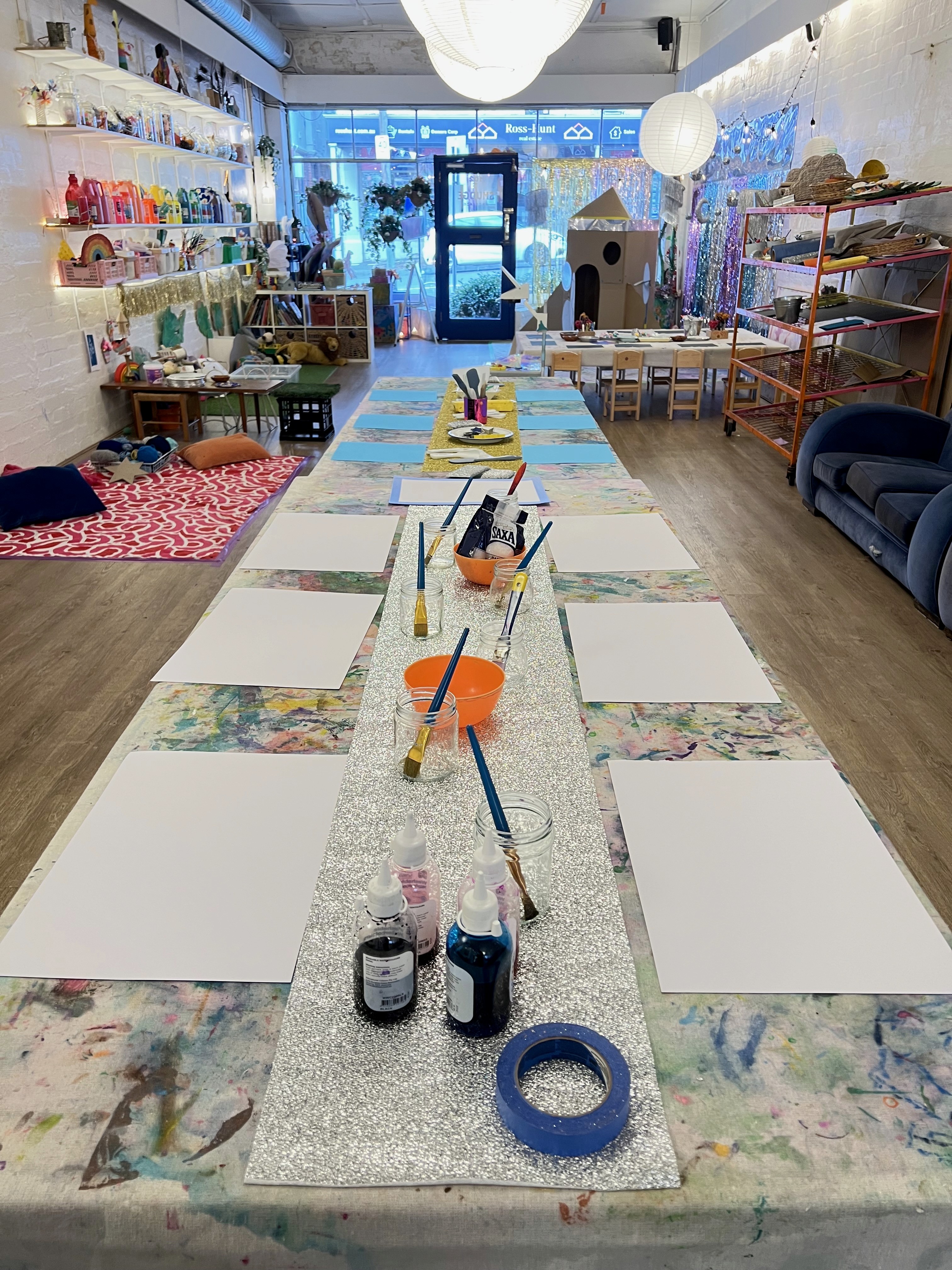
This is one of my most favourite processes in the whole studio. It blends science and art and you never quite know where the materials are going to take it. The short version: painter's tape around the edge of watercolour paper, liquid watercolour flooded across the middle, rock salt scattered while everything is still wet, left to dry, then layered with white splatter stars.
Start with a decent heavyweight paper. Watercolour paper at 200gsm or higher is ideal because it won't buckle when you really soak it. Run painter's tape around all four edges of the paper to create a clean white border. This small step turns the finished piece from a paint blob into a gorgeous framed-looking galaxy, and the reveal when the tape peels off at the end is one of the best moments in the studio.
Lay out liquid watercolours in droppers and small jars. We use liquid watercolours, which are absolutely brilliant, concentrated pigment, a little goes a long way. Go deep: navy, teal, purple, magenta, and a hit of emerald. If you haven't used liquid watercolours before, they're not the same as food colouring or school pan watercolours. The colours are rich and saturated and they blend on wet paper in ways that feel very cosmic.
Have a container of rock salt standing by. Coarse salt, not fine table salt. The bigger the grains, the better the starburst effect.
The Making
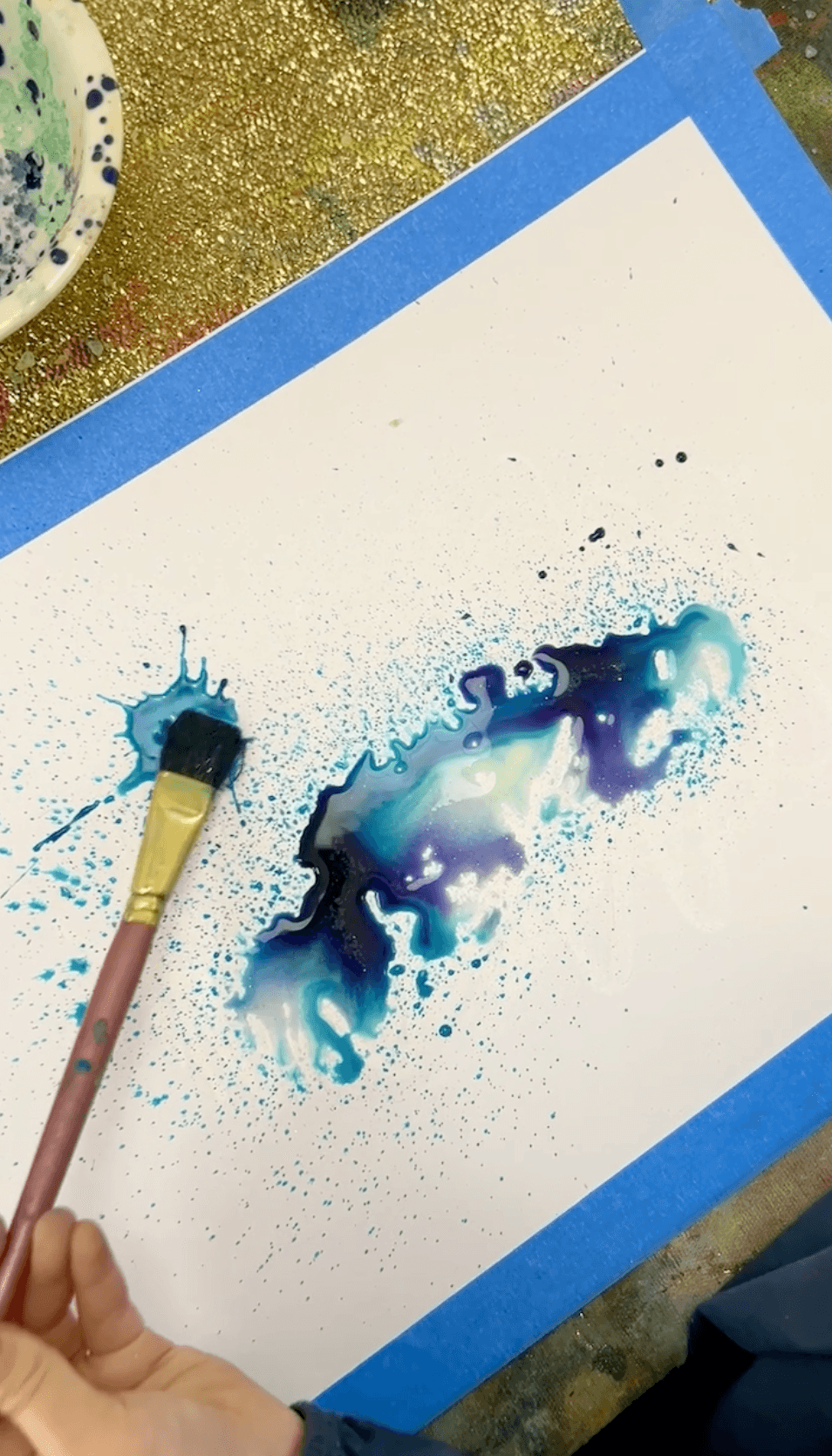
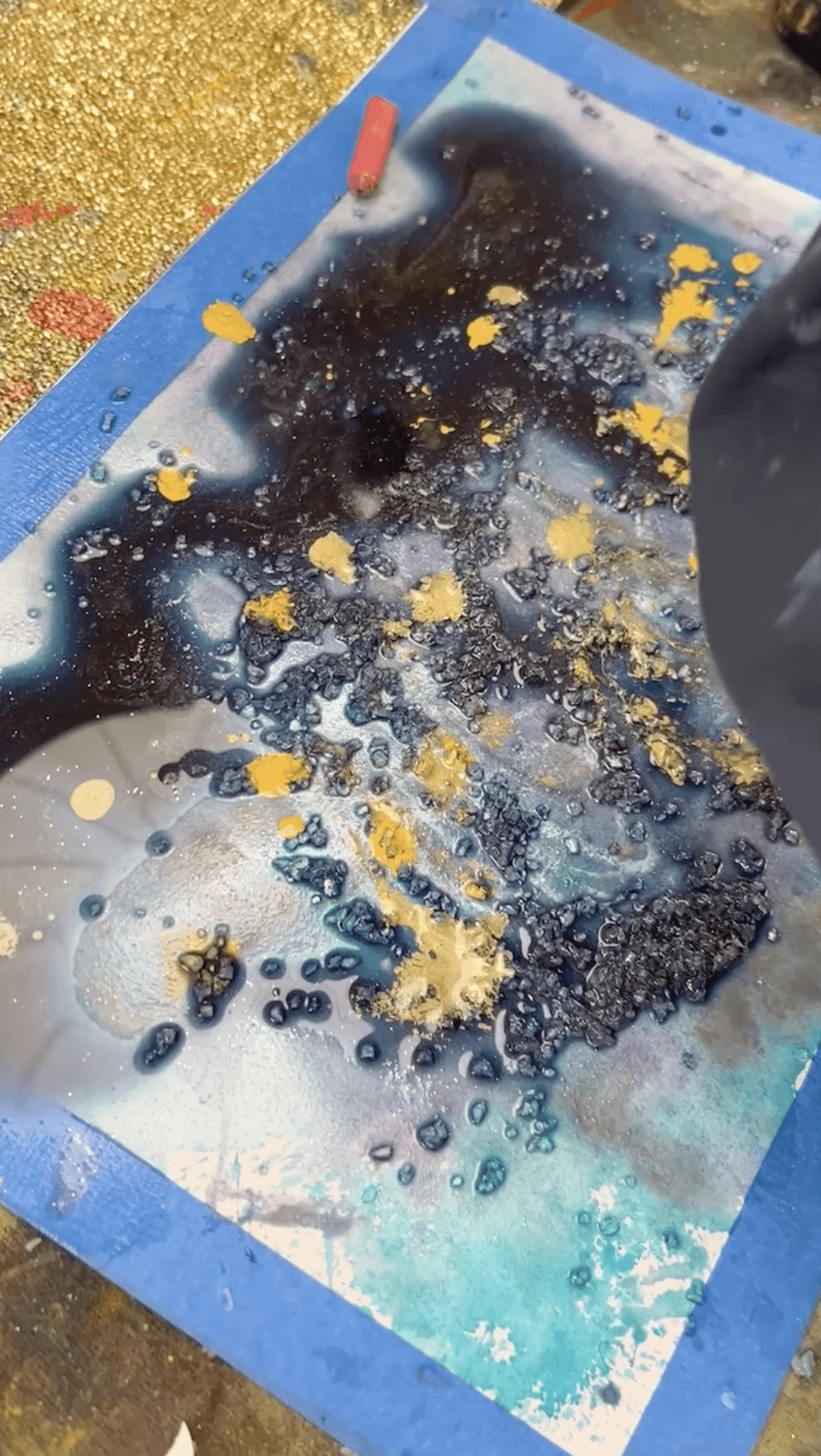
Wet the whole paper down with a clean brush first so the surface is properly saturated. Then drip colour on with pipettes or brushes, letting wet-on-wet blend itself. The colours spread and meet and form their own swirls, and this is where you stop directing and start watching. Big pools of deep blue next to magenta, a flood of teal through the middle, maybe a splash of purple at one corner.
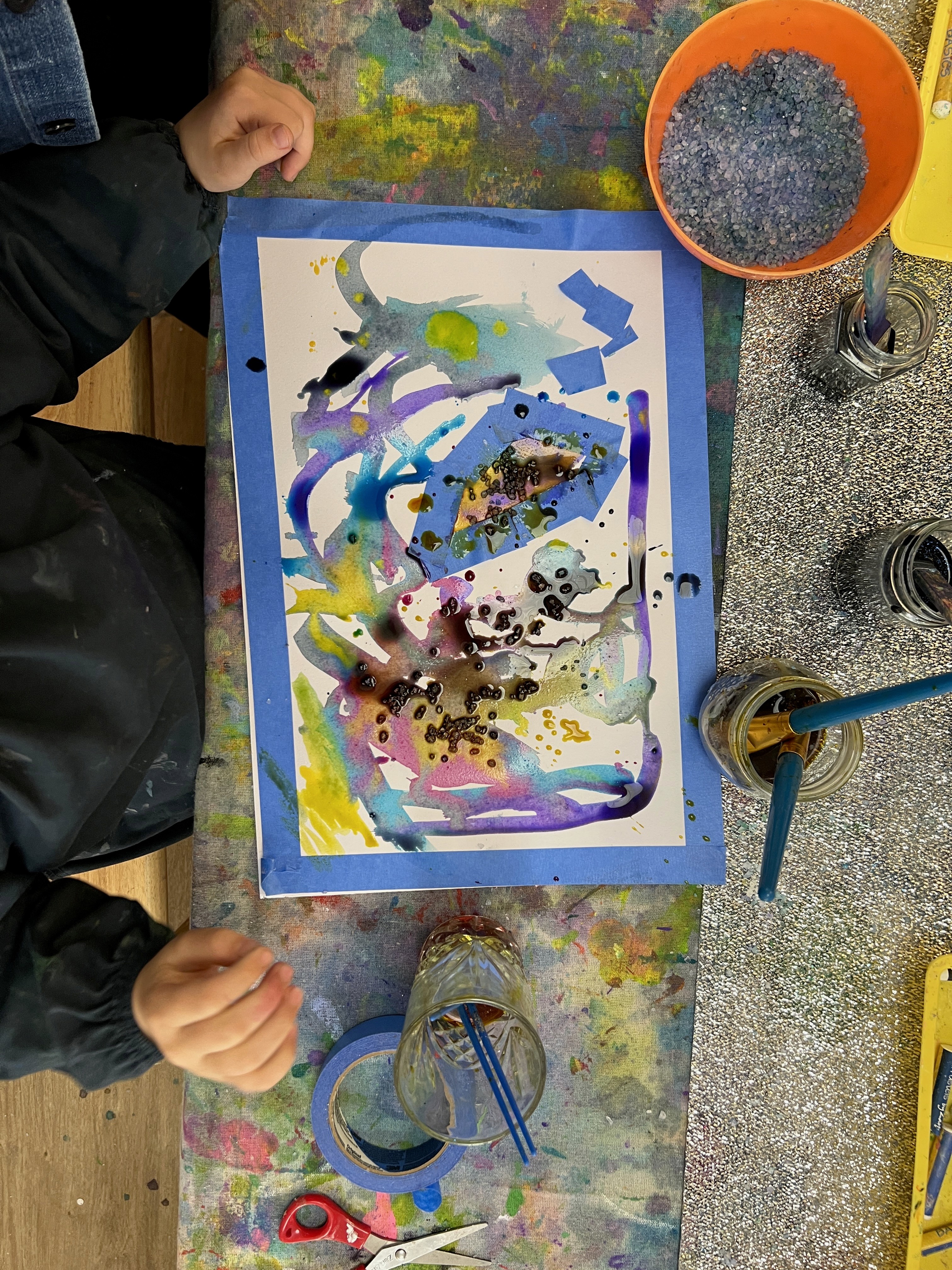
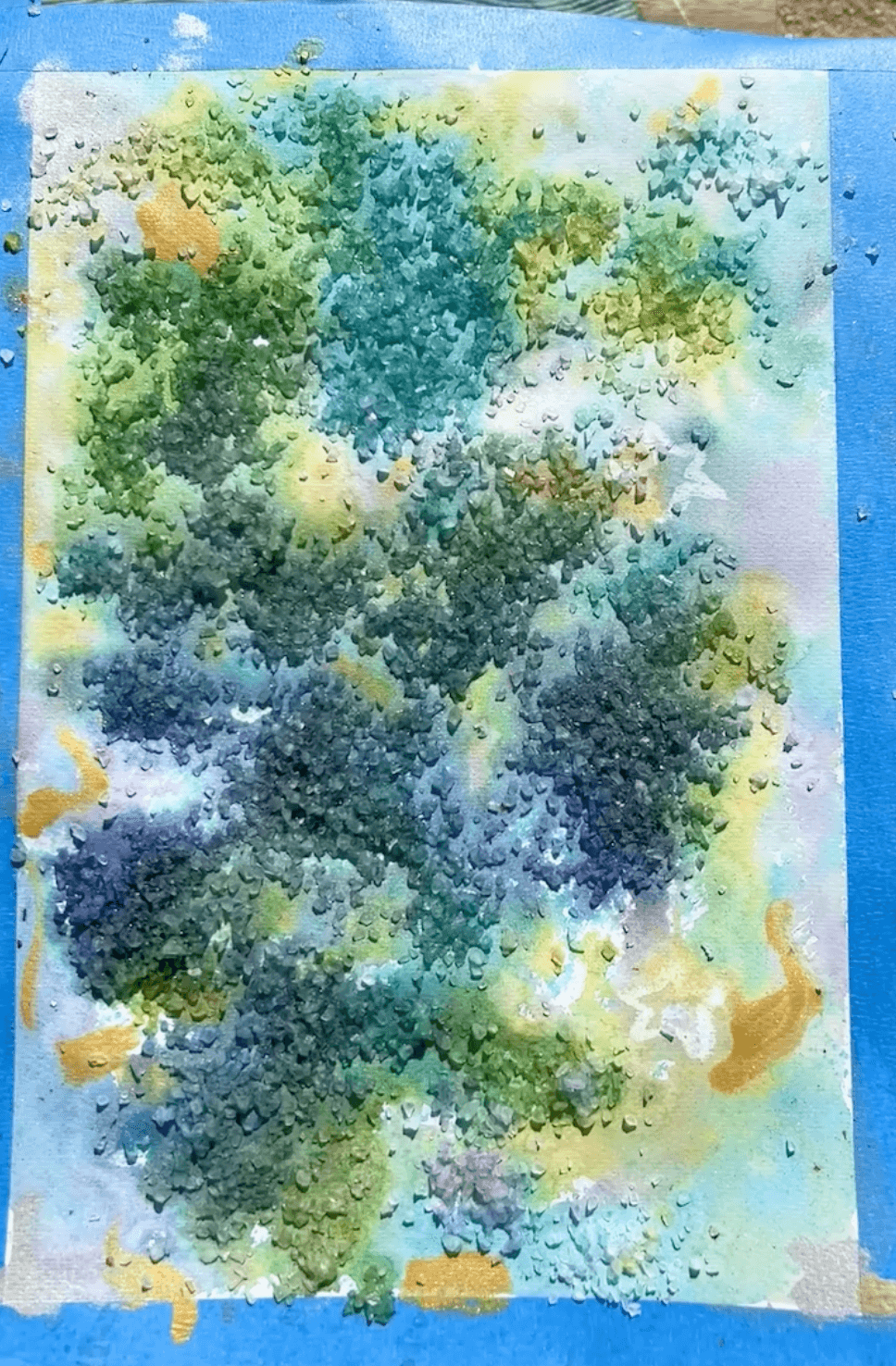
While the paint is still wet, scatter rock salt generously across the surface. Don't be shy with it. This is the magic step. The salt pulls water toward itself and creates tiny starburst patterns as the paper dries, little crystalline explosions across the galaxy. Set the papers aside to dry completely, which takes a few hours. Resist the urge to brush the salt off until they're bone dry (if you can!).
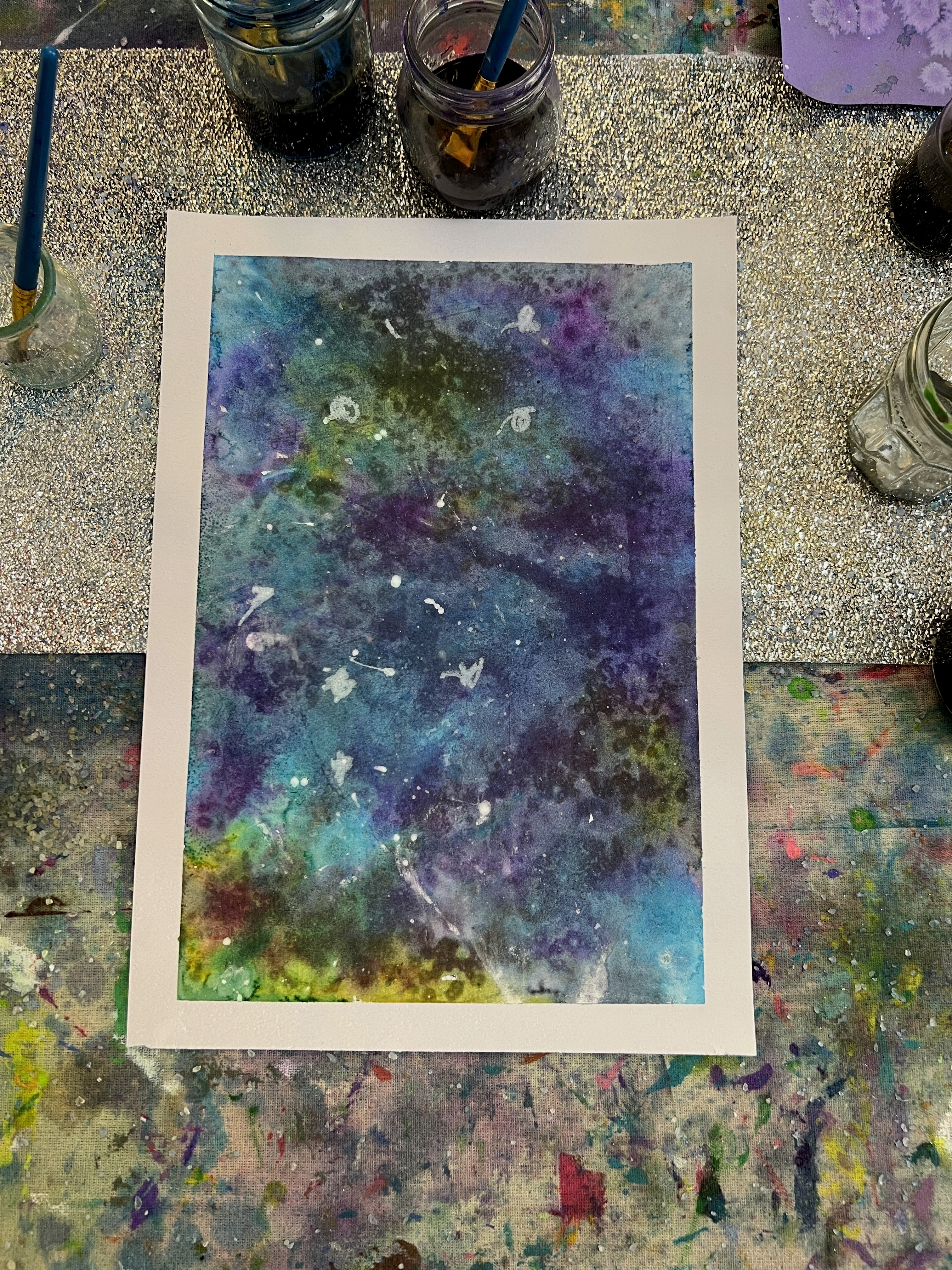
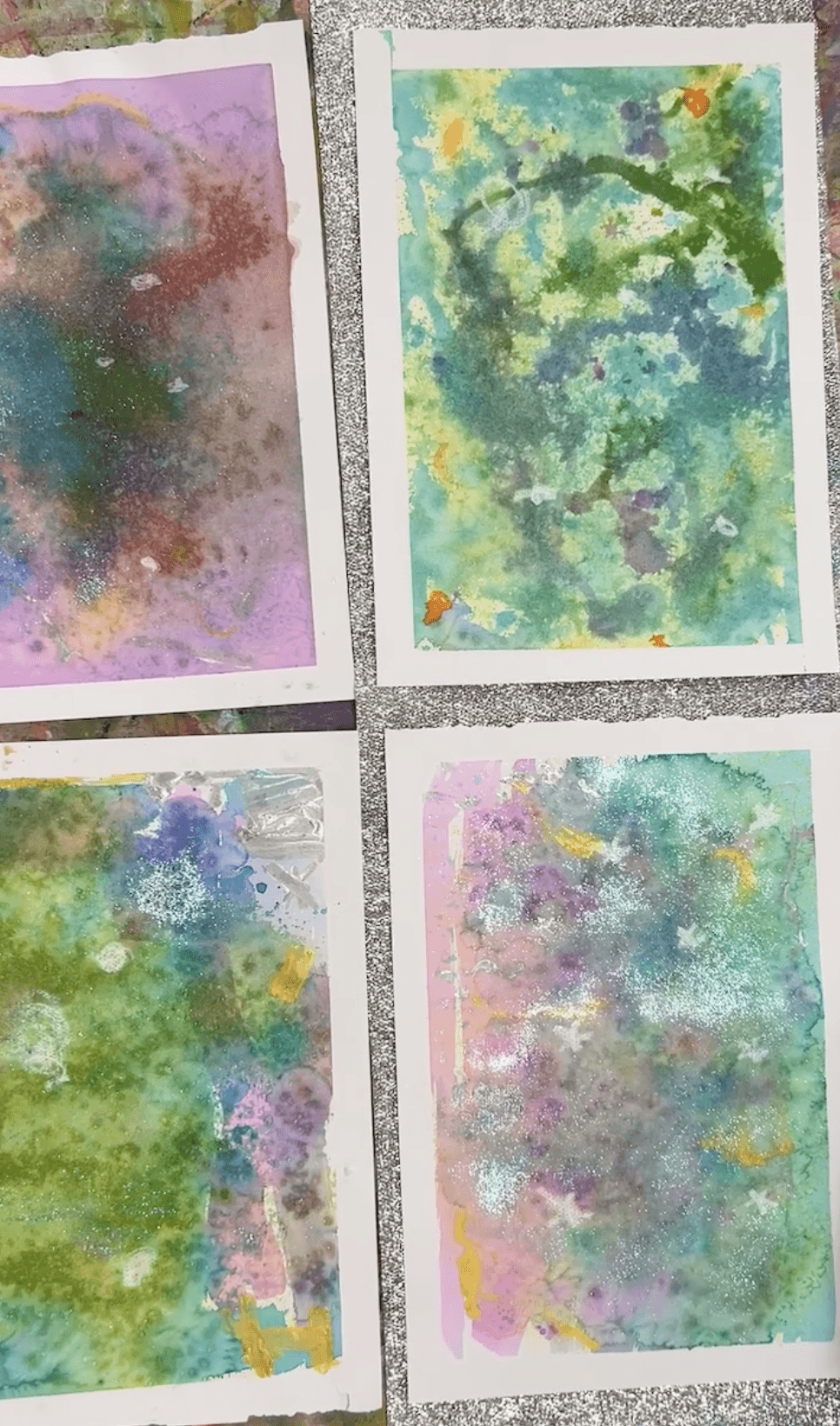
Once dry, brush the salt away. The effect is already so good. Now for the layering. Oil pastels in white, gold, and silver add little detail stars, constellations, swirls. A splatter of white poster paint flicked from an old toothbrush scatters distant stars across the whole scene. Add a few bigger star shapes in gold poster paint if you like. When everything's dry, peel the painter's tape away slowly. How satisfying is that clean white border holding all that colour in?!
Artist Study: Vija Celmins
If you haven't come across Vija Celmins, her night sky drawings are worth a long look. She spent years making the same view of stars over and over, obsessively detailed, entirely in black and white. What's beautiful about her work is how she makes something that feels infinite out of just two colours.
I adore chatting about her work with the Smudge artists (around five and up) because it invites a conversation about how you can look at the same thing your whole life and still find new and wonderful things in it.
Materials
Watercolour paper, 200gsm or higher (anything lighter will likely buckle)
Painter's tape, low-tack so it peels cleanly
EC liquid watercolours in navy, teal, purple, magenta, emerald
Rock salt (coarse, not fine table salt)
Pipettes and small brushes
Oil pastels in white, gold, and silver
Poster paint in white, gold, and silver
Old toothbrushes for splattering
Jars of clean water
Gallery
Back to Top
Galaxy Paintings
Liquid watercolour, rock salt, and a bit of magic
Bookmark
Painting & Drawing
The Set Up
This is one of my most favourite processes in the whole studio. It blends science and art and you never quite know where the materials are going to take it. The short version: painter's tape around the edge of watercolour paper, liquid watercolour flooded across the middle, rock salt scattered while everything is still wet, left to dry, then layered with white splatter stars.
Start with a decent heavyweight paper. Watercolour paper at 200gsm or higher is ideal because it won't buckle when you really soak it. Run painter's tape around all four edges of the paper to create a clean white border. This small step turns the finished piece from a paint blob into a gorgeous framed-looking galaxy, and the reveal when the tape peels off at the end is one of the best moments in the studio.
Lay out liquid watercolours in droppers and small jars. We use liquid watercolours, which are absolutely brilliant, concentrated pigment, a little goes a long way. Go deep: navy, teal, purple, magenta, and a hit of emerald. If you haven't used liquid watercolours before, they're not the same as food colouring or school pan watercolours. The colours are rich and saturated and they blend on wet paper in ways that feel very cosmic.
Have a container of rock salt standing by. Coarse salt, not fine table salt. The bigger the grains, the better the starburst effect.
The Making
Wet the whole paper down with a clean brush first so the surface is properly saturated. Then drip colour on with pipettes or brushes, letting wet-on-wet blend itself. The colours spread and meet and form their own swirls, and this is where you stop directing and start watching. Big pools of deep blue next to magenta, a flood of teal through the middle, maybe a splash of purple at one corner.
While the paint is still wet, scatter rock salt generously across the surface. Don't be shy with it. This is the magic step. The salt pulls water toward itself and creates tiny starburst patterns as the paper dries, little crystalline explosions across the galaxy. Set the papers aside to dry completely, which takes a few hours. Resist the urge to brush the salt off until they're bone dry (if you can!).
Once dry, brush the salt away. The effect is already so good. Now for the layering. Oil pastels in white, gold, and silver add little detail stars, constellations, swirls. A splatter of white poster paint flicked from an old toothbrush scatters distant stars across the whole scene. Add a few bigger star shapes in gold poster paint if you like. When everything's dry, peel the painter's tape away slowly. How satisfying is that clean white border holding all that colour in?!
Artist Study: Vija Celmins
If you haven't come across Vija Celmins, her night sky drawings are worth a long look. She spent years making the same view of stars over and over, obsessively detailed, entirely in black and white. What's beautiful about her work is how she makes something that feels infinite out of just two colours.
I adore chatting about her work with the Smudge artists (around five and up) because it invites a conversation about how you can look at the same thing your whole life and still find new and wonderful things in it.
Materials
Watercolour paper, 200gsm or higher (anything lighter will likely buckle)
Painter's tape, low-tack so it peels cleanly
EC liquid watercolours in navy, teal, purple, magenta, emerald
Rock salt (coarse, not fine table salt)
Pipettes and small brushes
Oil pastels in white, gold, and silver
Poster paint in white, gold, and silver
Old toothbrushes for splattering
Jars of clean water
Gallery
Back to Top
Galaxy Paintings
Liquid watercolour, rock salt, and a bit of magic
Bookmark
Painting & Drawing
The Set Up
This is one of my most favourite processes in the whole studio. It blends science and art and you never quite know where the materials are going to take it. The short version: painter's tape around the edge of watercolour paper, liquid watercolour flooded across the middle, rock salt scattered while everything is still wet, left to dry, then layered with white splatter stars.
Start with a decent heavyweight paper. Watercolour paper at 200gsm or higher is ideal because it won't buckle when you really soak it. Run painter's tape around all four edges of the paper to create a clean white border. This small step turns the finished piece from a paint blob into a gorgeous framed-looking galaxy, and the reveal when the tape peels off at the end is one of the best moments in the studio.
Lay out liquid watercolours in droppers and small jars. We use liquid watercolours, which are absolutely brilliant, concentrated pigment, a little goes a long way. Go deep: navy, teal, purple, magenta, and a hit of emerald. If you haven't used liquid watercolours before, they're not the same as food colouring or school pan watercolours. The colours are rich and saturated and they blend on wet paper in ways that feel very cosmic.
Have a container of rock salt standing by. Coarse salt, not fine table salt. The bigger the grains, the better the starburst effect.
The Making
Wet the whole paper down with a clean brush first so the surface is properly saturated. Then drip colour on with pipettes or brushes, letting wet-on-wet blend itself. The colours spread and meet and form their own swirls, and this is where you stop directing and start watching. Big pools of deep blue next to magenta, a flood of teal through the middle, maybe a splash of purple at one corner.
While the paint is still wet, scatter rock salt generously across the surface. Don't be shy with it. This is the magic step. The salt pulls water toward itself and creates tiny starburst patterns as the paper dries, little crystalline explosions across the galaxy. Set the papers aside to dry completely, which takes a few hours. Resist the urge to brush the salt off until they're bone dry (if you can!).
Once dry, brush the salt away. The effect is already so good. Now for the layering. Oil pastels in white, gold, and silver add little detail stars, constellations, swirls. A splatter of white poster paint flicked from an old toothbrush scatters distant stars across the whole scene. Add a few bigger star shapes in gold poster paint if you like. When everything's dry, peel the painter's tape away slowly. How satisfying is that clean white border holding all that colour in?!
Artist Study: Vija Celmins
If you haven't come across Vija Celmins, her night sky drawings are worth a long look. She spent years making the same view of stars over and over, obsessively detailed, entirely in black and white. What's beautiful about her work is how she makes something that feels infinite out of just two colours.
I adore chatting about her work with the Smudge artists (around five and up) because it invites a conversation about how you can look at the same thing your whole life and still find new and wonderful things in it.
Materials
Watercolour paper, 200gsm or higher (anything lighter will likely buckle)
Painter's tape, low-tack so it peels cleanly
EC liquid watercolours in navy, teal, purple, magenta, emerald
Rock salt (coarse, not fine table salt)
Pipettes and small brushes
Oil pastels in white, gold, and silver
Poster paint in white, gold, and silver
Old toothbrushes for splattering
Jars of clean water
Gallery
Back to Top
The Cosmic Sensory Play
Black beans, tiny astronauts, and stars that glow
Bookmark
Sensory Play
The Set Up
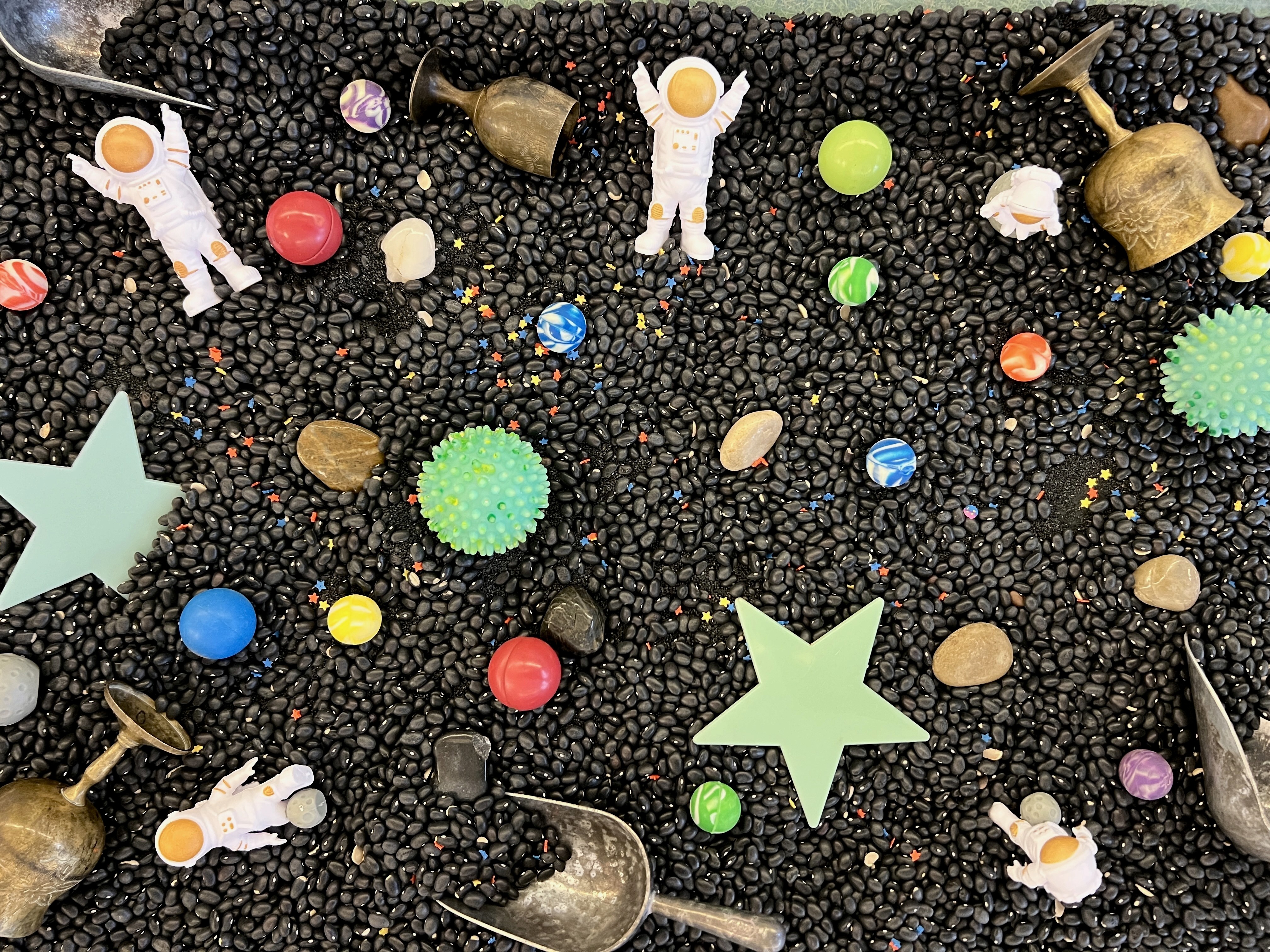
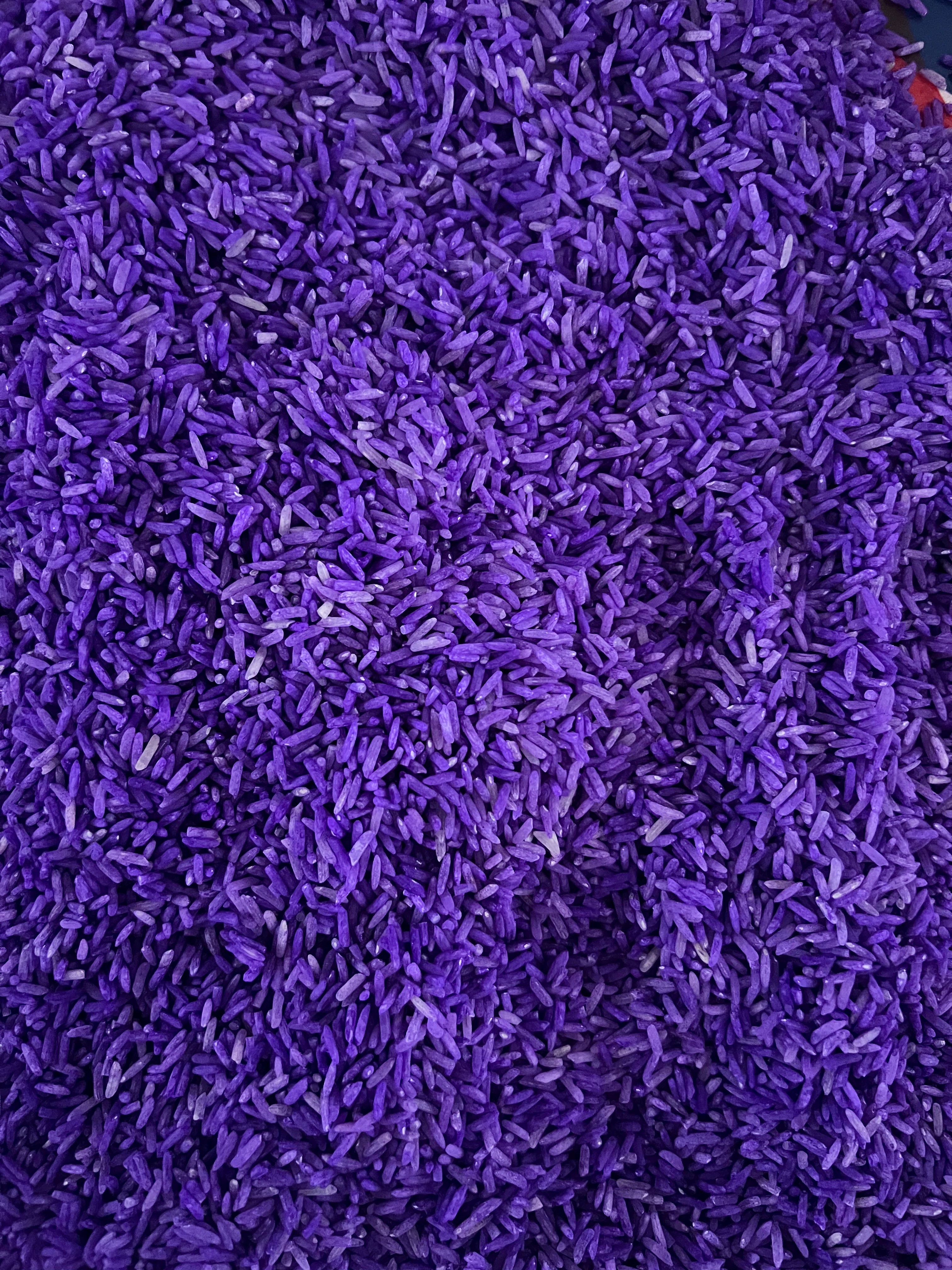
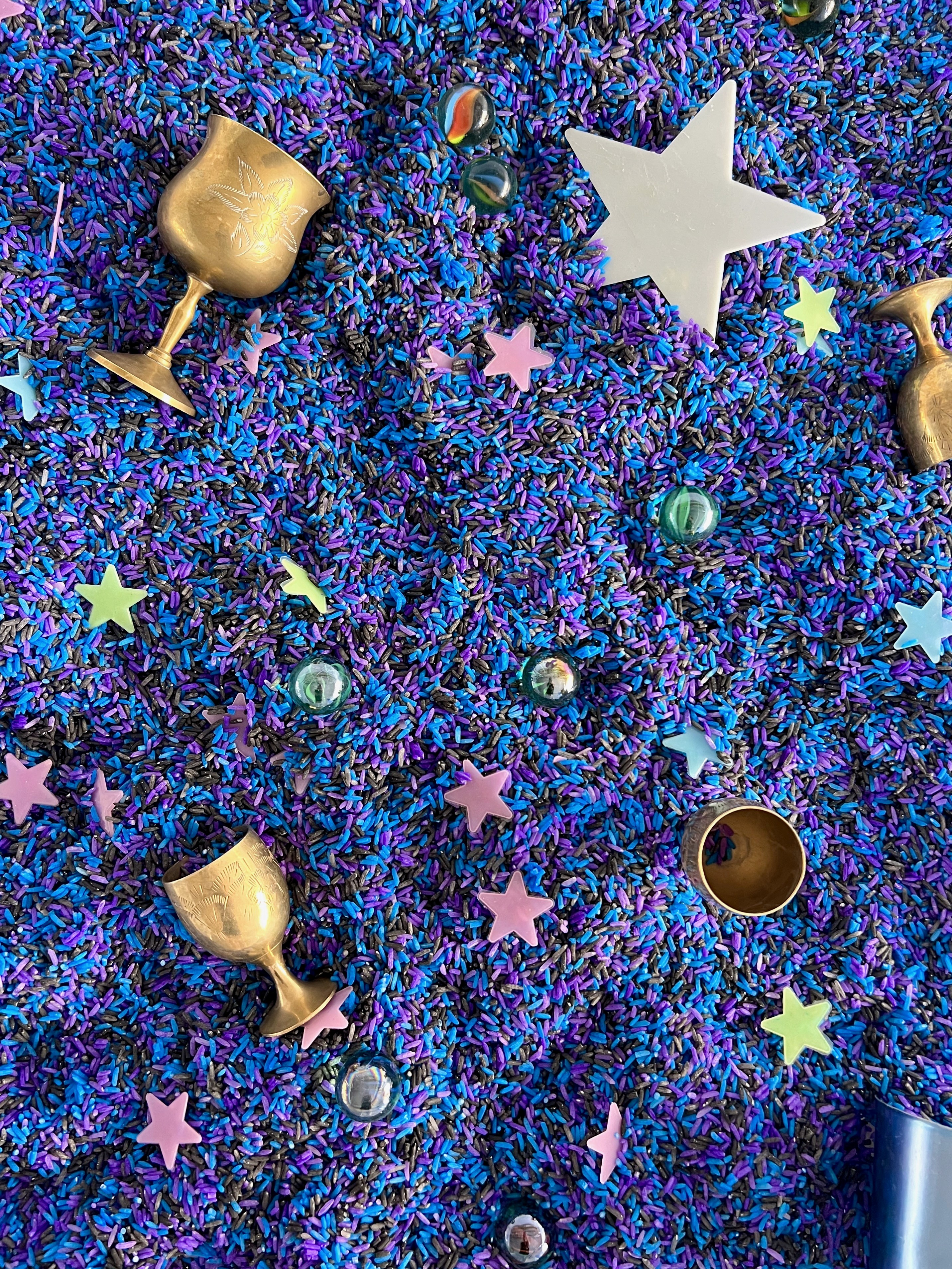
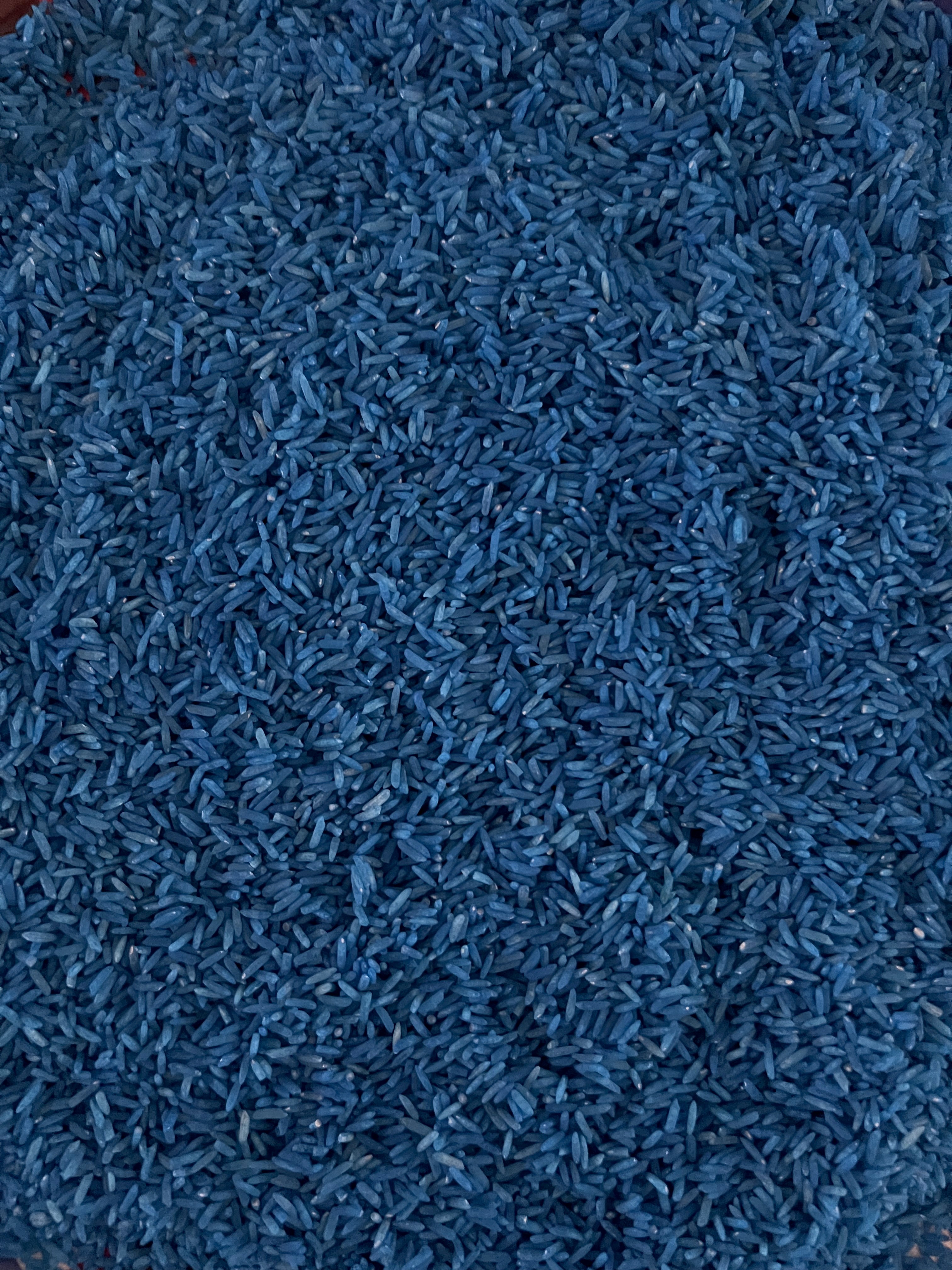
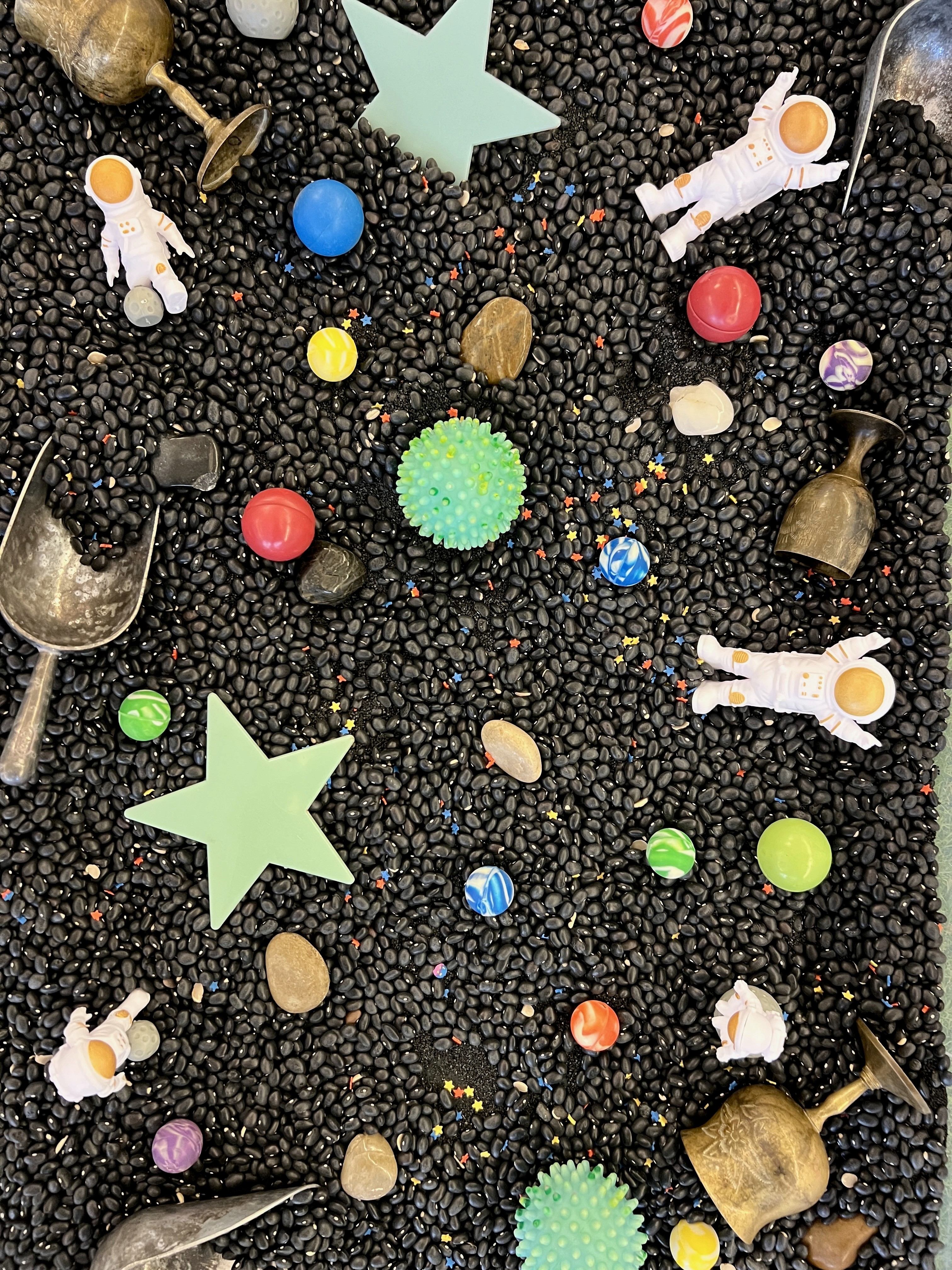
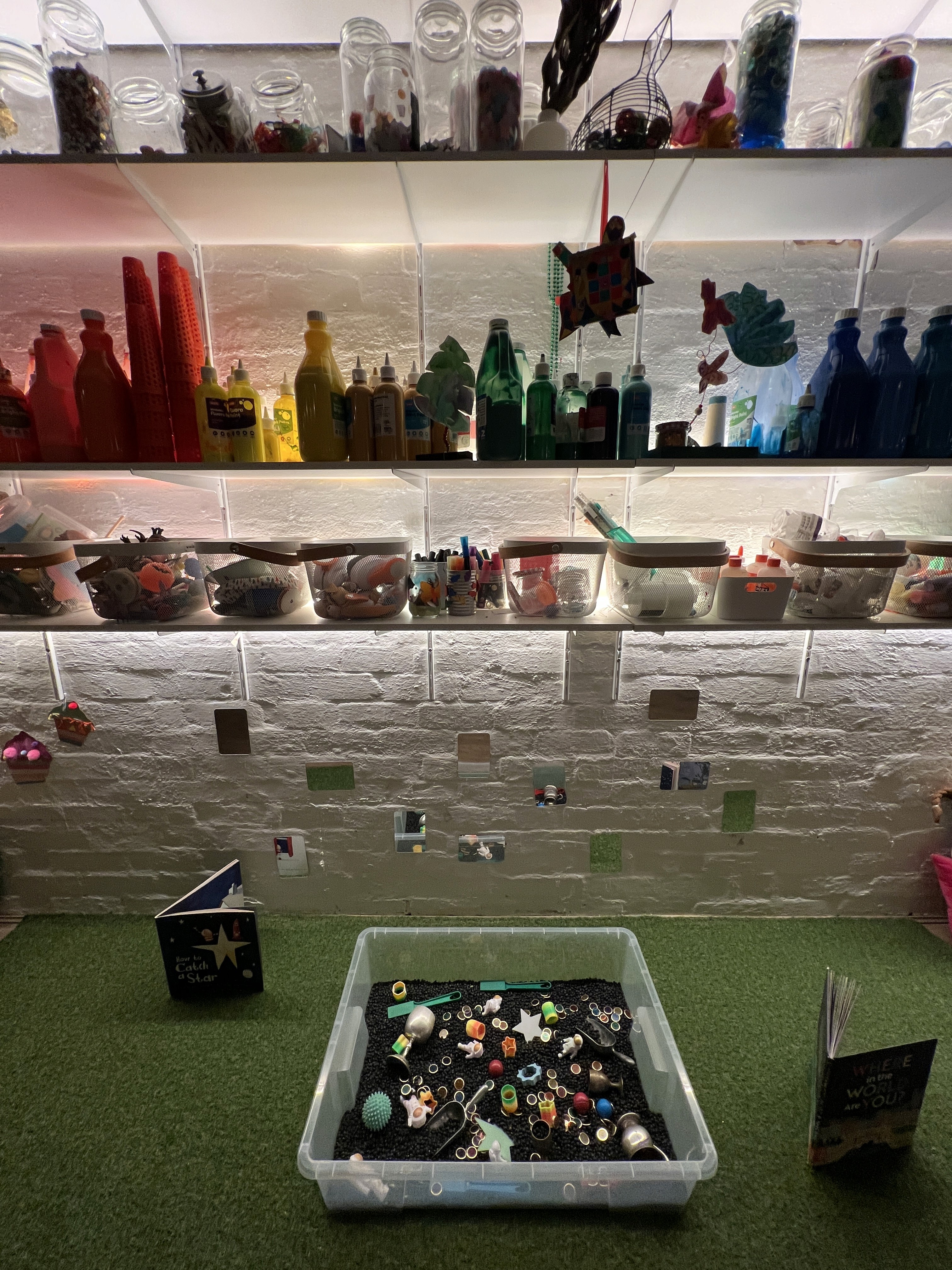
A low tray or tub on a very low table, or sitting directly on the floor, so even the tiniest artists can reach in. The base is black beans (cheap, gorgeous, make a beautiful sound when they're scooped) with a generous scatter of milky-way coloured rice through them. The contrast of that deep black with pops of colour is what makes this tray look like actual space.
To dye rice, pour plain white rice onto a tray, add some glugs of poster paint, stir until coated, and leave to dry for a few hours. Do a few different colours. Scattered through the black beans, they look exactly like distant stars!
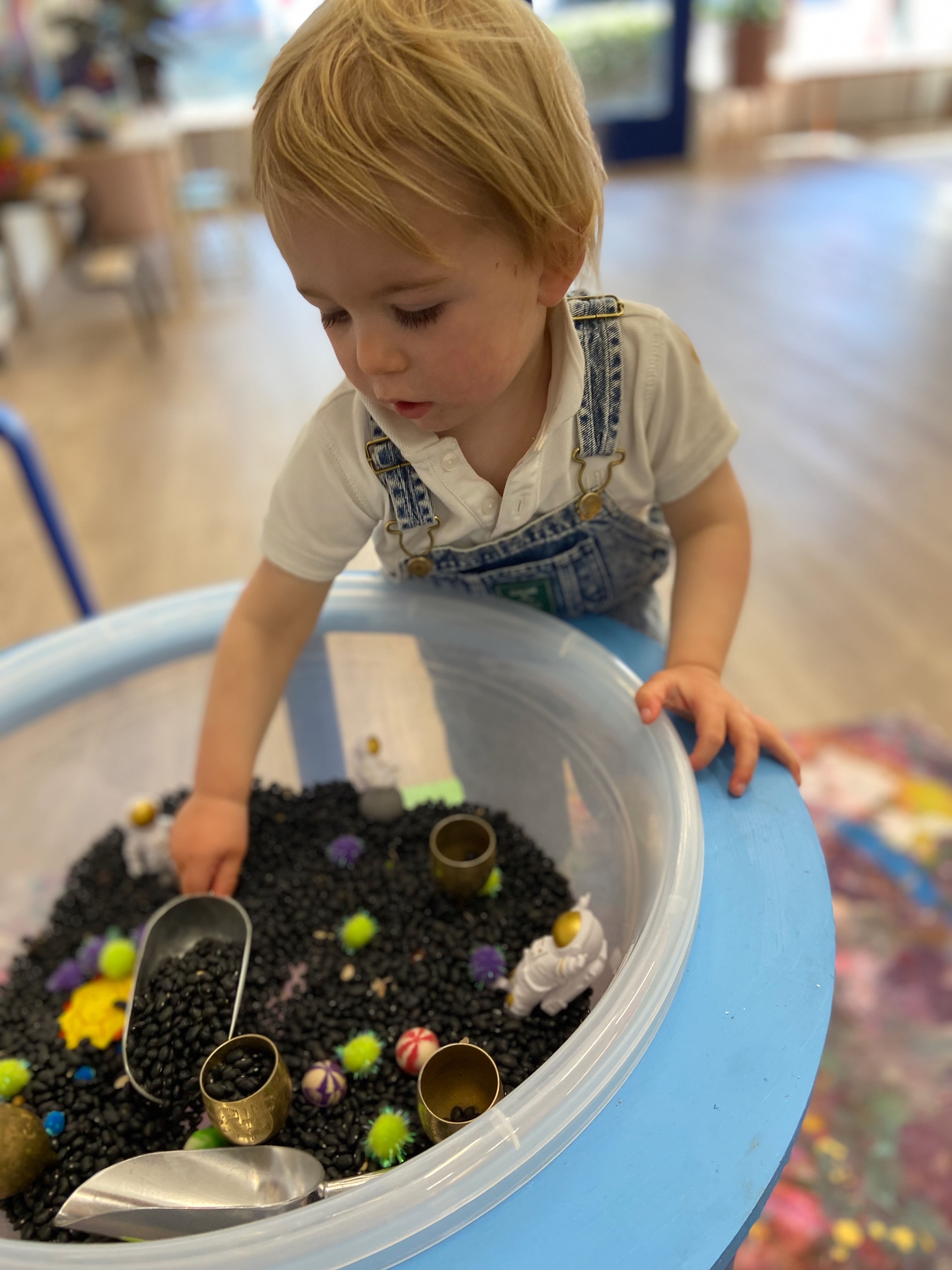
Layer in the space bits. Small plastic astronaut figurines (Kmart, Daiso, or Amazon, usually a few dollars for a pack), glow-in-the-dark plastic stars, spiky rubber balls for sensory texture, marbles including planet-patterned ones if you can find them, small pebbles as asteroids, and brass or copper goblets for pouring and scooping.
A quick note on bouncy balls: we include them for older artists because the weight feels gorgeous in the hand and they roll through the beans in satisfying ways. They're not suitable for children under three, so swap for larger wooden balls or leave them out if you have toddlers in the mix.
The Making
Sensory play doesn't need direction because it's the materials that tell the story. Astronauts get tucked into bean craters, planets get sorted by colour, scoops get filled and emptied and filled again. We had a three-year-old last week who spent twenty-five minutes filling a brass goblet with beans, pouring it into a cup, pouring it back into the goblet, and then tipping the whole thing over the astronaut's head like it was raining asteroids. No narrative, no outcome. Just the entire-body absorption of a really good sensory tray!
The glow-in-the-dark stars are a surprise hit. If you dim the studio or move the tray into a shadier corner for five minutes, they actually glow, and the whole tray takes on a different quality entirely.
Include scoops, small cups, tongs, and tiny baskets for sorting. Refresh the tray mid-week if it starts looking flat. Fluff the beans, rearrange the astronauts, add a few new bits. Five minutes of restyling and it feels brand new.
Variations
Use deep purple and navy dyed rice as the main base for a softer, dreamier take.
If food-based sensory isn't right for your space, black aquarium gravel works beautifully as an alternative base. Heavier than beans, so it stays in the tray more.
Materials
Low tub or tray
Black beans (enough to fill the base generously)
Rainbow coloured rice (dyed with vinegar and food colouring, dried overnight)
Plastic astronaut figurines (Kmart, Daiso, Amazon)
Glow-in-the-dark plastic stars
Spiky rubber sensory balls
Marbles (planet-patterned ones if you can find them)
Small pebbles or aquarium rocks
Brass or copper goblets, tin cups, metal scoops
Large foam or cardboard stars
Tongs, small cups, tiny baskets
Wooden balls (for under-threes, in place of bouncy balls)
Back to Top
The Cosmic Sensory Play
Black beans, tiny astronauts, and stars that glow
Bookmark
Sensory Play
The Set Up
A low tray or tub on a very low table, or sitting directly on the floor, so even the tiniest artists can reach in. The base is black beans (cheap, gorgeous, make a beautiful sound when they're scooped) with a generous scatter of milky-way coloured rice through them. The contrast of that deep black with pops of colour is what makes this tray look like actual space.
To dye rice, pour plain white rice onto a tray, add some glugs of poster paint, stir until coated, and leave to dry for a few hours. Do a few different colours. Scattered through the black beans, they look exactly like distant stars!
Layer in the space bits. Small plastic astronaut figurines (Kmart, Daiso, or Amazon, usually a few dollars for a pack), glow-in-the-dark plastic stars, spiky rubber balls for sensory texture, marbles including planet-patterned ones if you can find them, small pebbles as asteroids, and brass or copper goblets for pouring and scooping.
A quick note on bouncy balls: we include them for older artists because the weight feels gorgeous in the hand and they roll through the beans in satisfying ways. They're not suitable for children under three, so swap for larger wooden balls or leave them out if you have toddlers in the mix.
The Making
Sensory play doesn't need direction because it's the materials that tell the story. Astronauts get tucked into bean craters, planets get sorted by colour, scoops get filled and emptied and filled again. We had a three-year-old last week who spent twenty-five minutes filling a brass goblet with beans, pouring it into a cup, pouring it back into the goblet, and then tipping the whole thing over the astronaut's head like it was raining asteroids. No narrative, no outcome. Just the entire-body absorption of a really good sensory tray!
The glow-in-the-dark stars are a surprise hit. If you dim the studio or move the tray into a shadier corner for five minutes, they actually glow, and the whole tray takes on a different quality entirely.
Include scoops, small cups, tongs, and tiny baskets for sorting. Refresh the tray mid-week if it starts looking flat. Fluff the beans, rearrange the astronauts, add a few new bits. Five minutes of restyling and it feels brand new.
Variations
Use deep purple and navy dyed rice as the main base for a softer, dreamier take.
If food-based sensory isn't right for your space, black aquarium gravel works beautifully as an alternative base. Heavier than beans, so it stays in the tray more.
Materials
Low tub or tray
Black beans (enough to fill the base generously)
Rainbow coloured rice (dyed with vinegar and food colouring, dried overnight)
Plastic astronaut figurines (Kmart, Daiso, Amazon)
Glow-in-the-dark plastic stars
Spiky rubber sensory balls
Marbles (planet-patterned ones if you can find them)
Small pebbles or aquarium rocks
Brass or copper goblets, tin cups, metal scoops
Large foam or cardboard stars
Tongs, small cups, tiny baskets
Wooden balls (for under-threes, in place of bouncy balls)
Back to Top
The Cosmic Sensory Play
Black beans, tiny astronauts, and stars that glow
Bookmark
Sensory Play
The Set Up
A low tray or tub on a very low table, or sitting directly on the floor, so even the tiniest artists can reach in. The base is black beans (cheap, gorgeous, make a beautiful sound when they're scooped) with a generous scatter of milky-way coloured rice through them. The contrast of that deep black with pops of colour is what makes this tray look like actual space.
To dye rice, pour plain white rice onto a tray, add some glugs of poster paint, stir until coated, and leave to dry for a few hours. Do a few different colours. Scattered through the black beans, they look exactly like distant stars!
Layer in the space bits. Small plastic astronaut figurines (Kmart, Daiso, or Amazon, usually a few dollars for a pack), glow-in-the-dark plastic stars, spiky rubber balls for sensory texture, marbles including planet-patterned ones if you can find them, small pebbles as asteroids, and brass or copper goblets for pouring and scooping.
A quick note on bouncy balls: we include them for older artists because the weight feels gorgeous in the hand and they roll through the beans in satisfying ways. They're not suitable for children under three, so swap for larger wooden balls or leave them out if you have toddlers in the mix.
The Making
Sensory play doesn't need direction because it's the materials that tell the story. Astronauts get tucked into bean craters, planets get sorted by colour, scoops get filled and emptied and filled again. We had a three-year-old last week who spent twenty-five minutes filling a brass goblet with beans, pouring it into a cup, pouring it back into the goblet, and then tipping the whole thing over the astronaut's head like it was raining asteroids. No narrative, no outcome. Just the entire-body absorption of a really good sensory tray!
The glow-in-the-dark stars are a surprise hit. If you dim the studio or move the tray into a shadier corner for five minutes, they actually glow, and the whole tray takes on a different quality entirely.
Include scoops, small cups, tongs, and tiny baskets for sorting. Refresh the tray mid-week if it starts looking flat. Fluff the beans, rearrange the astronauts, add a few new bits. Five minutes of restyling and it feels brand new.
Variations
Use deep purple and navy dyed rice as the main base for a softer, dreamier take.
If food-based sensory isn't right for your space, black aquarium gravel works beautifully as an alternative base. Heavier than beans, so it stays in the tray more.
Materials
Low tub or tray
Black beans (enough to fill the base generously)
Rainbow coloured rice (dyed with vinegar and food colouring, dried overnight)
Plastic astronaut figurines (Kmart, Daiso, Amazon)
Glow-in-the-dark plastic stars
Spiky rubber sensory balls
Marbles (planet-patterned ones if you can find them)
Small pebbles or aquarium rocks
Brass or copper goblets, tin cups, metal scoops
Large foam or cardboard stars
Tongs, small cups, tiny baskets
Wooden balls (for under-threes, in place of bouncy balls)
Back to Top
Moon Landing Dioramas
A whole tiny world in a cake box
Bookmark
Sculpture
The Set Up
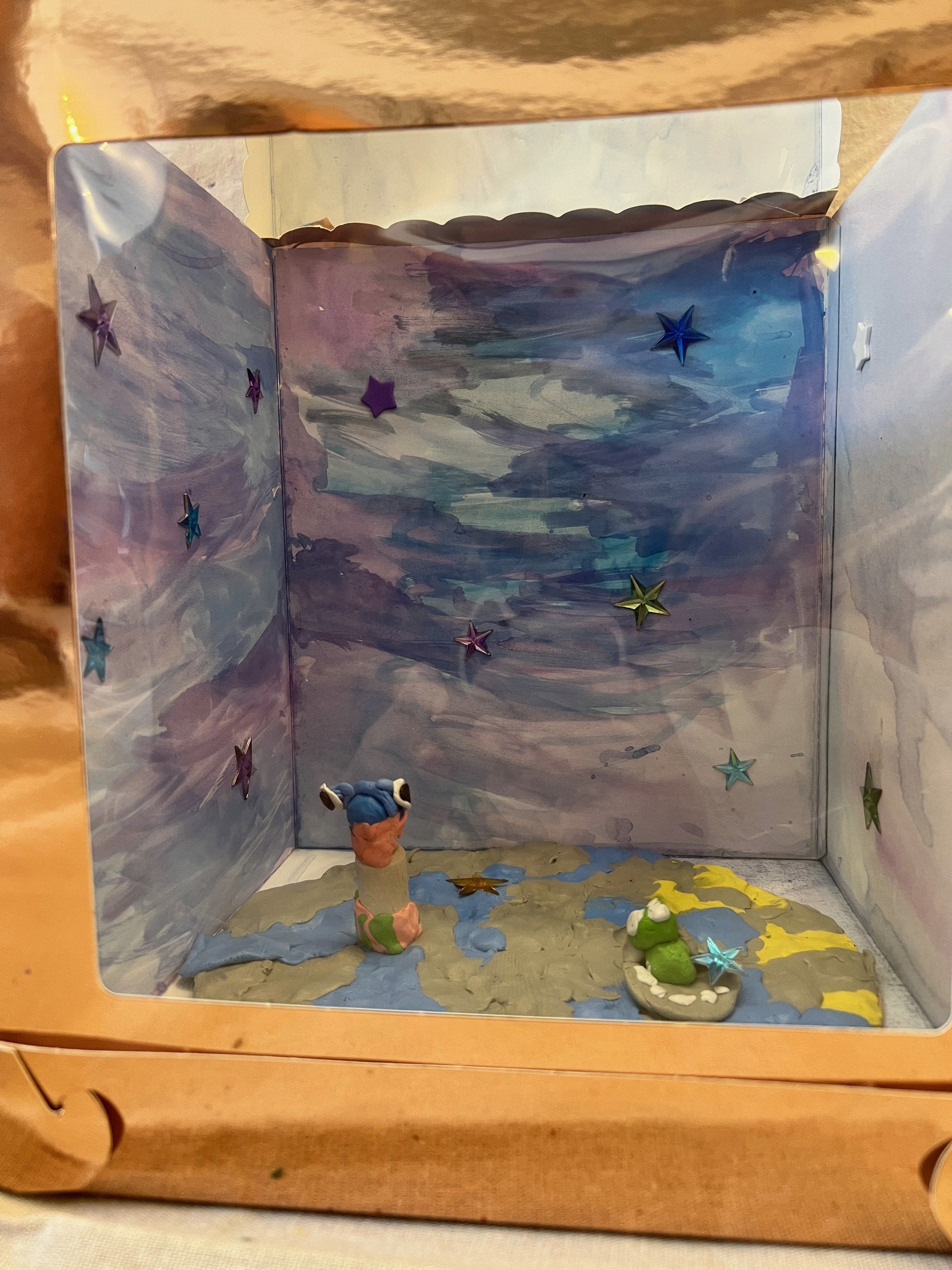
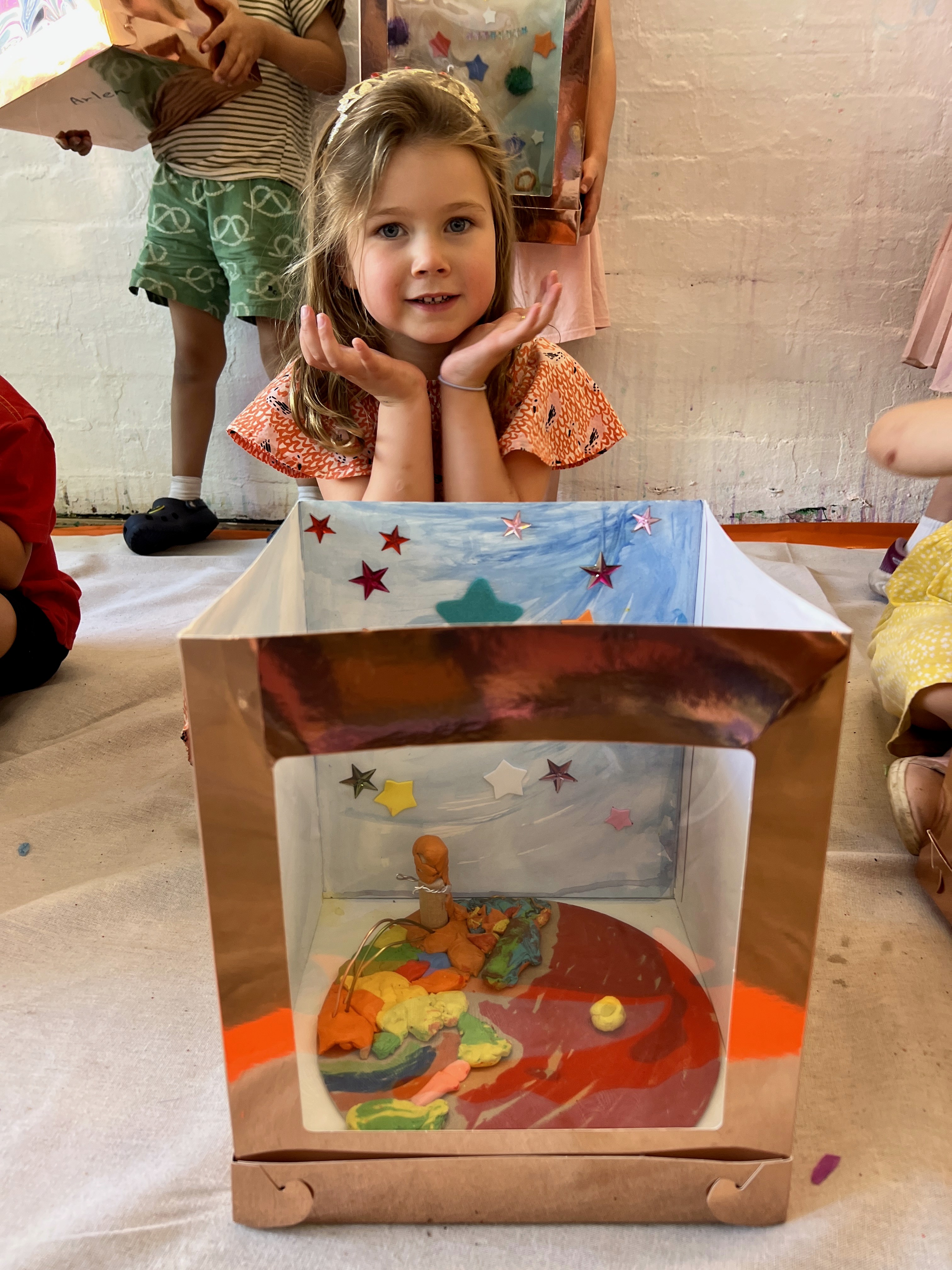
Cake boxes are the best! The tall clear-windowed ones from your local craft or party supply store. The rose gold foil ones are particularly gorgeous (and not too expensive). The clear panel at the front turns every finished diorama into a tiny scene you can look right into.
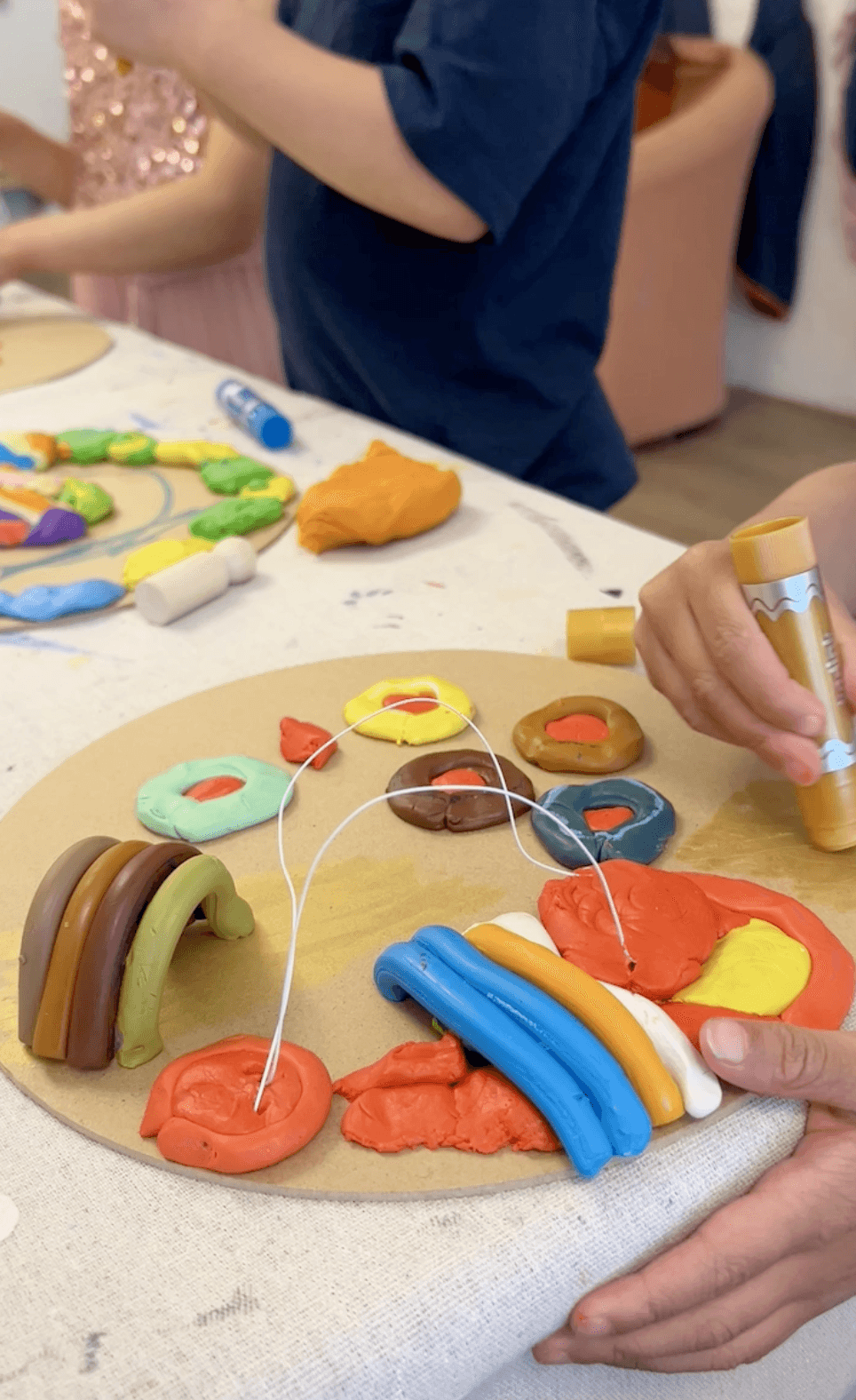
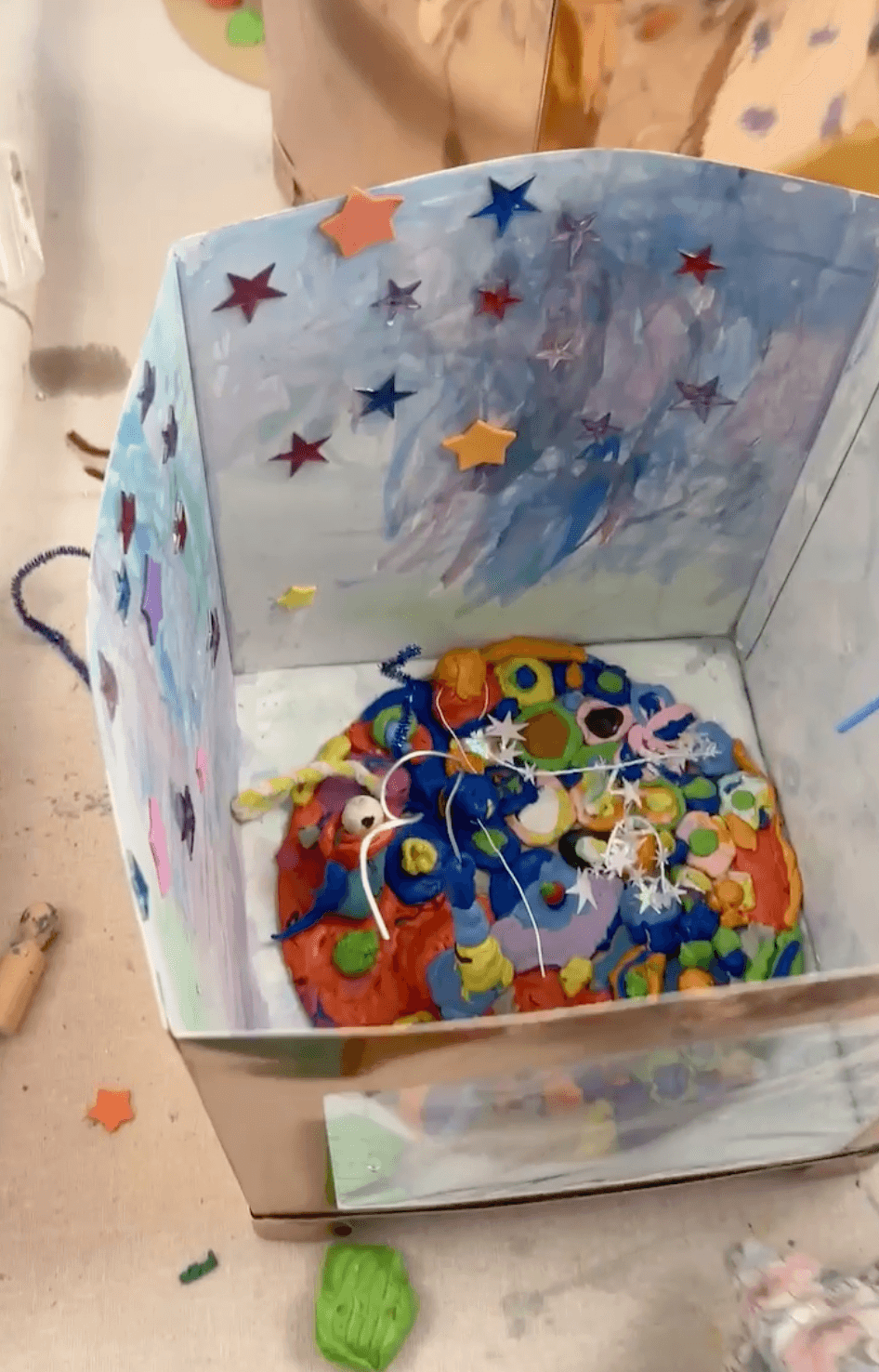
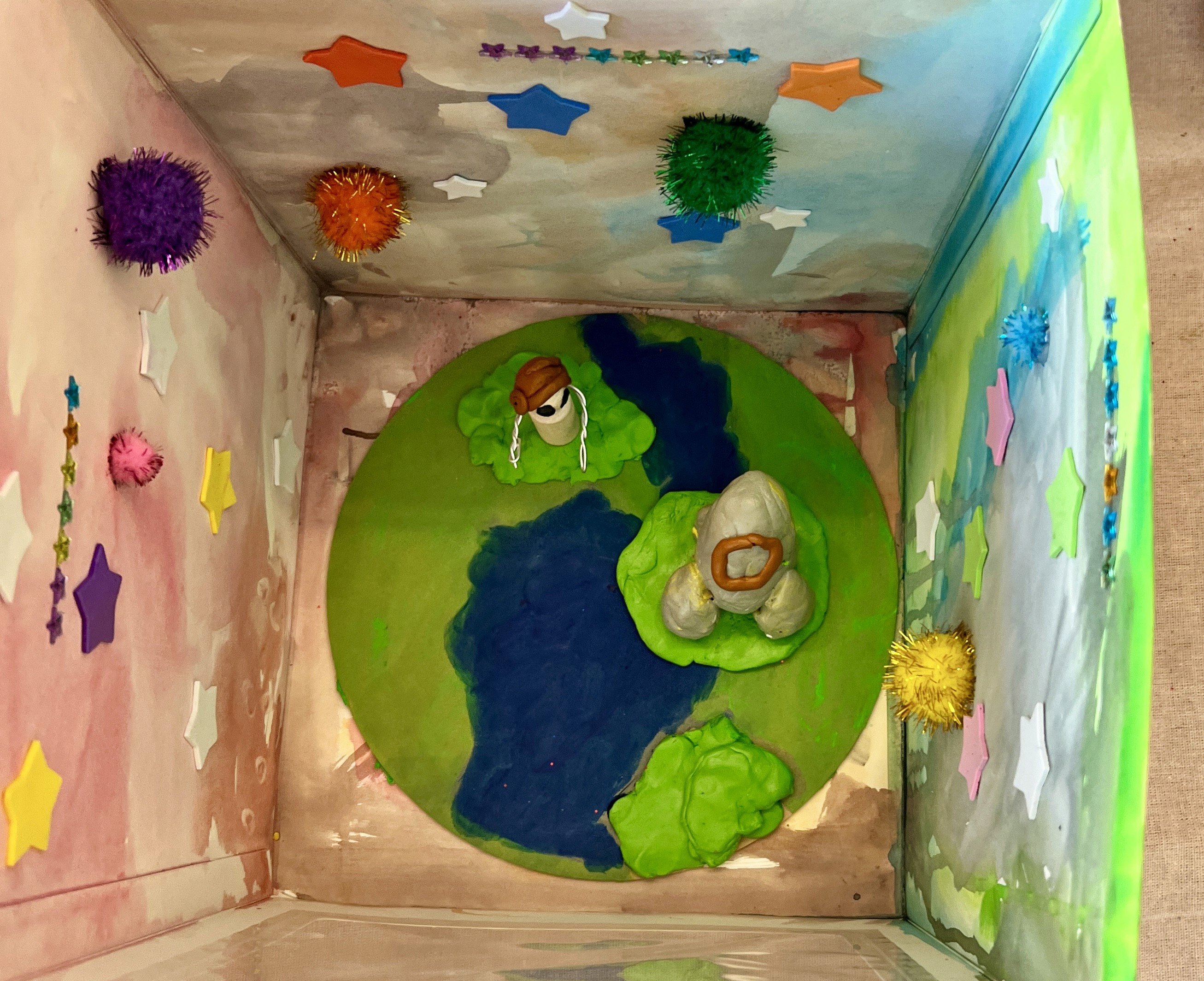
Inside each box, a generous mound of plasticine becomes the moon / asteroid / planet surface. Press and squish and poke at it so it has craters and ridges. The texture is half the charm, and plasticine is brilliant for this because it never fully hardens, so artists can keep reshaping it as they go. Offer small tools for pressing: bottle caps make perfect round craters, skewers make fine lines, thumbs and knuckles make the big dents.
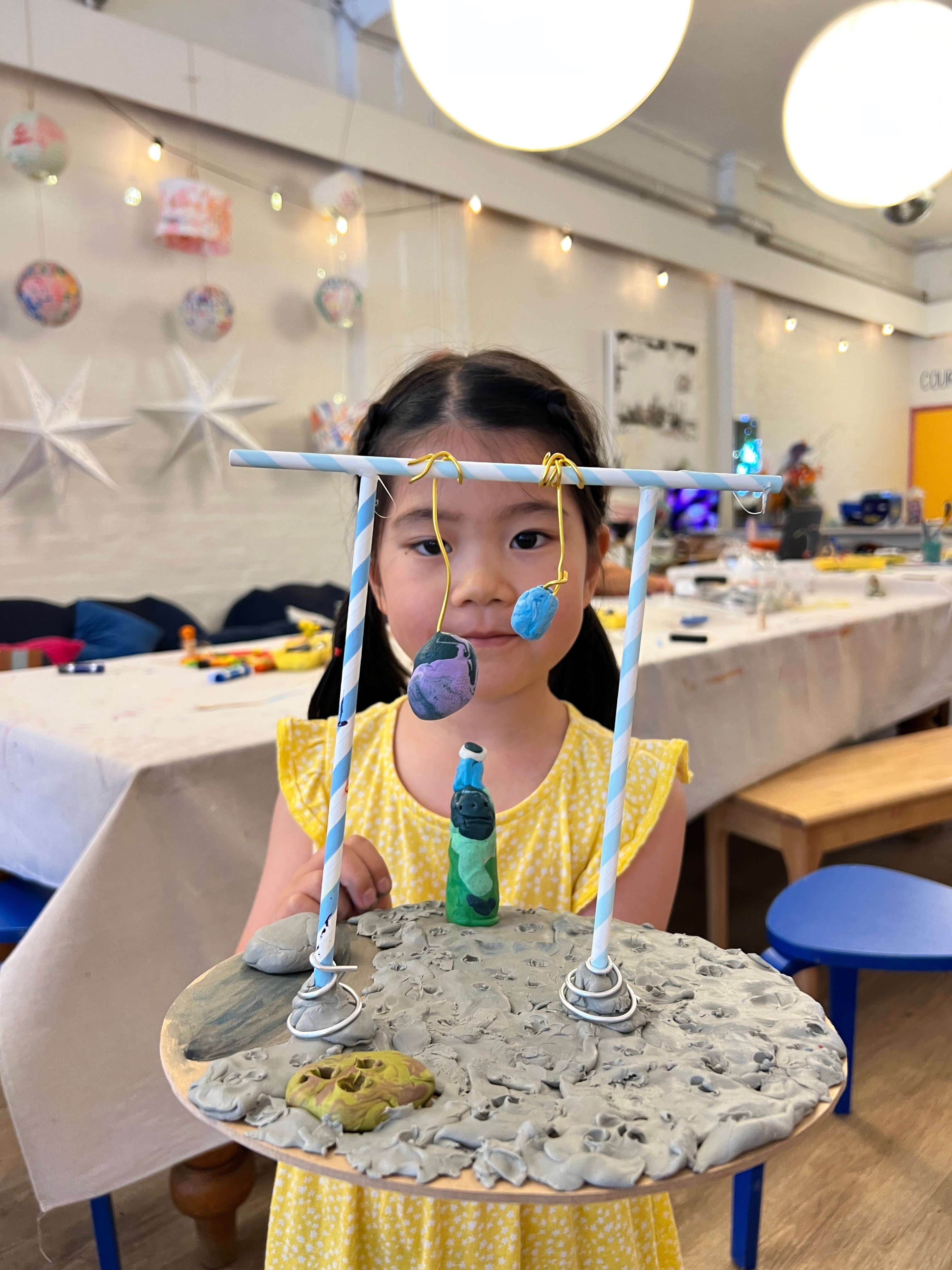
Set out paper straws in patterns (we used blue and white striped and pink striped), small plastic astronaut figurines, and little painted clay balls or wooden beads as planets. Thin copper wire or yellow thread lets artists hang planets from the straws so they dangle mid-diorama like orbiting moons. Star stickers around the rim of the clear window finish it off.
The Making
The building of a whole tiny world inside a box is one of those processes kids completely disappear into.
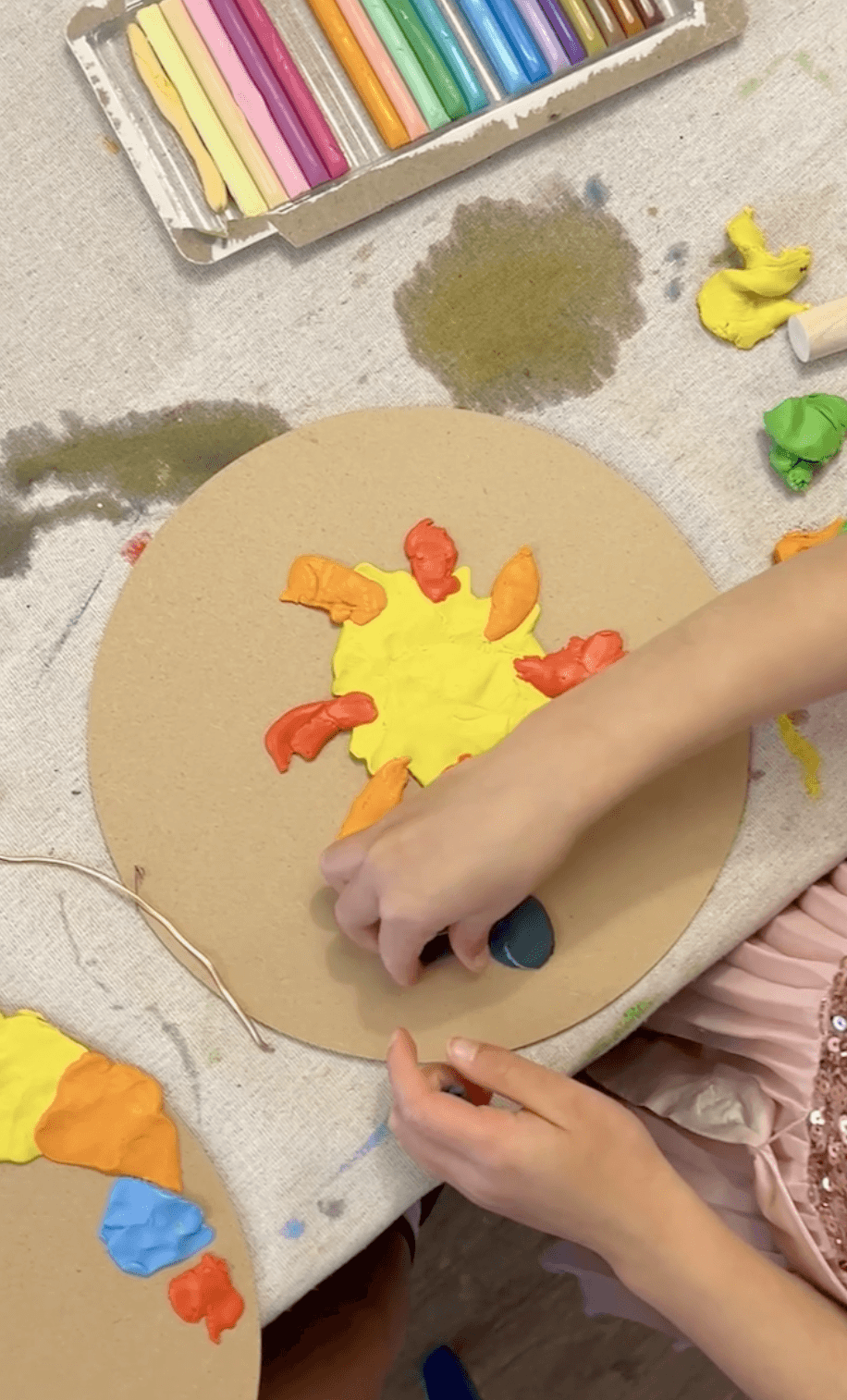
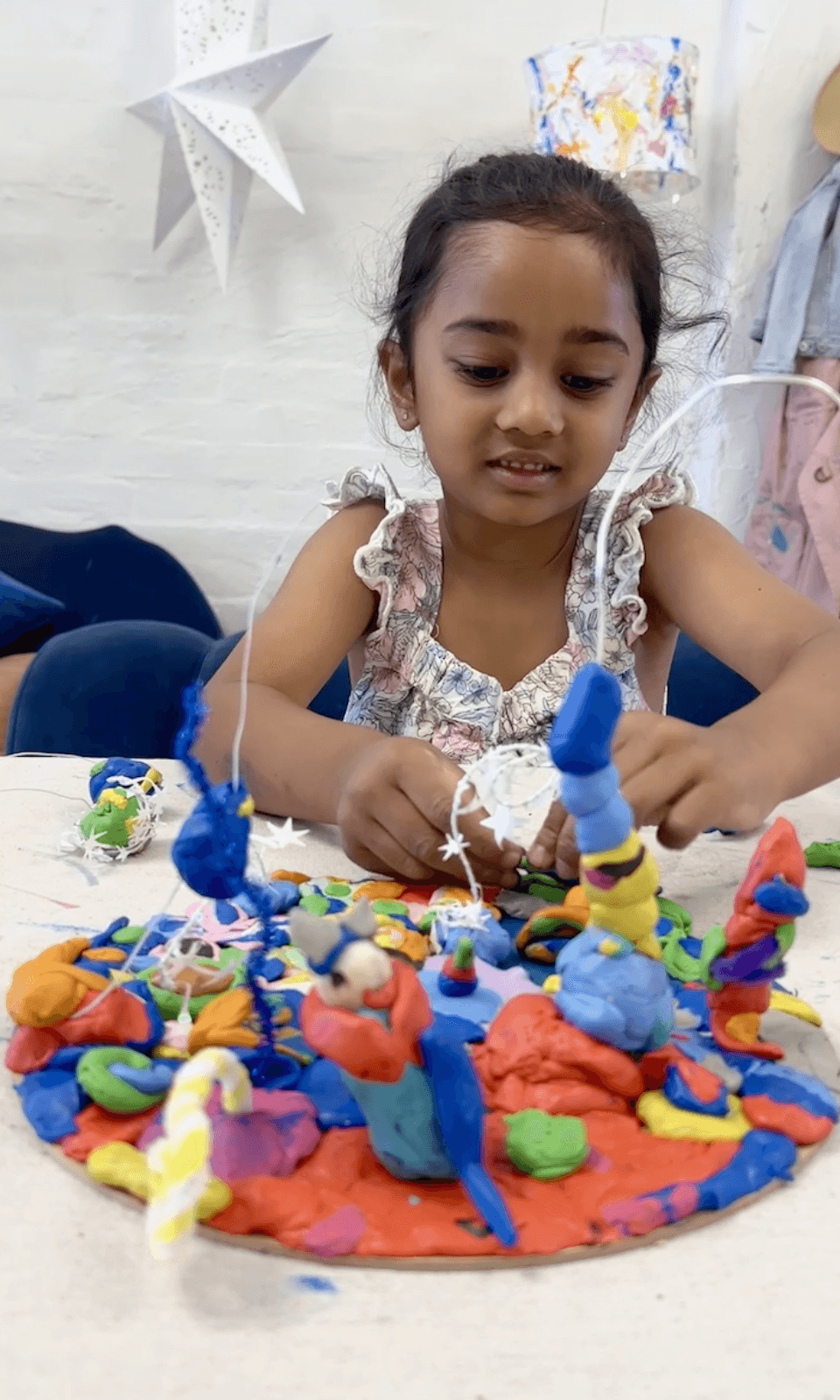
I recommend having a cardboard or plywood circle base that can be moved in and out of the box as it's easier for little hands. They can use paint sticks and press the plasticine into the base, add their alien or astronaut (usually leaving a tiny footprint trail behind them), and then start constructing the above-moon part with the straws or skewers.
We've also added things to the 'roof' of the box so they hang and sway.
The best part is watching kids work out how to balance the hanging planets so they don't all slide to one end. There's actual physics happening, and it's the kind of problem-solving that feels like play (because it is!).
It's incredible what their creative minds come up with; a martian surface in deep red plasticine or a watery blue planet with sequins scattered across and a gas giant built from layered swirling colours of plasticine.
These are the pieces parents genuinely cannot believe their child made. The combination of the cake box frame, the grey moon surface, and the dangling planets makes them look like something from a museum gift shop.
Materials
Cake boxes with clear windows (rose gold or copper from Spotlight, Lincraft, or party stores)
Plasticine (generous amount per diorama)
Paint Sticks or oil pastels
Small tools for pressing craters: bottle caps, skewers, straws
Paper straws in patterns
Plastic astronaut figurines
Small wooden beads or painted clay balls for planets
Thin copper wire or yellow thread
Star stickers and metallic stickers
Toothpicks and paper scraps for flags
Gallery
Back to Top
Moon Landing Dioramas
A whole tiny world in a cake box
Bookmark
Sculpture
The Set Up
Cake boxes are the best! The tall clear-windowed ones from your local craft or party supply store. The rose gold foil ones are particularly gorgeous (and not too expensive). The clear panel at the front turns every finished diorama into a tiny scene you can look right into.
Inside each box, a generous mound of plasticine becomes the moon / asteroid / planet surface. Press and squish and poke at it so it has craters and ridges. The texture is half the charm, and plasticine is brilliant for this because it never fully hardens, so artists can keep reshaping it as they go. Offer small tools for pressing: bottle caps make perfect round craters, skewers make fine lines, thumbs and knuckles make the big dents.
Set out paper straws in patterns (we used blue and white striped and pink striped), small plastic astronaut figurines, and little painted clay balls or wooden beads as planets. Thin copper wire or yellow thread lets artists hang planets from the straws so they dangle mid-diorama like orbiting moons. Star stickers around the rim of the clear window finish it off.
The Making
The building of a whole tiny world inside a box is one of those processes kids completely disappear into.
I recommend having a cardboard or plywood circle base that can be moved in and out of the box as it's easier for little hands. They can use paint sticks and press the plasticine into the base, add their alien or astronaut (usually leaving a tiny footprint trail behind them), and then start constructing the above-moon part with the straws or skewers.
We've also added things to the 'roof' of the box so they hang and sway.
The best part is watching kids work out how to balance the hanging planets so they don't all slide to one end. There's actual physics happening, and it's the kind of problem-solving that feels like play (because it is!).
It's incredible what their creative minds come up with; a martian surface in deep red plasticine or a watery blue planet with sequins scattered across and a gas giant built from layered swirling colours of plasticine.
These are the pieces parents genuinely cannot believe their child made. The combination of the cake box frame, the grey moon surface, and the dangling planets makes them look like something from a museum gift shop.
Materials
Cake boxes with clear windows (rose gold or copper from Spotlight, Lincraft, or party stores)
Plasticine (generous amount per diorama)
Paint Sticks or oil pastels
Small tools for pressing craters: bottle caps, skewers, straws
Paper straws in patterns
Plastic astronaut figurines
Small wooden beads or painted clay balls for planets
Thin copper wire or yellow thread
Star stickers and metallic stickers
Toothpicks and paper scraps for flags
Gallery
Back to Top
Moon Landing Dioramas
A whole tiny world in a cake box
Bookmark
Sculpture
The Set Up
Cake boxes are the best! The tall clear-windowed ones from your local craft or party supply store. The rose gold foil ones are particularly gorgeous (and not too expensive). The clear panel at the front turns every finished diorama into a tiny scene you can look right into.
Inside each box, a generous mound of plasticine becomes the moon / asteroid / planet surface. Press and squish and poke at it so it has craters and ridges. The texture is half the charm, and plasticine is brilliant for this because it never fully hardens, so artists can keep reshaping it as they go. Offer small tools for pressing: bottle caps make perfect round craters, skewers make fine lines, thumbs and knuckles make the big dents.
Set out paper straws in patterns (we used blue and white striped and pink striped), small plastic astronaut figurines, and little painted clay balls or wooden beads as planets. Thin copper wire or yellow thread lets artists hang planets from the straws so they dangle mid-diorama like orbiting moons. Star stickers around the rim of the clear window finish it off.
The Making
The building of a whole tiny world inside a box is one of those processes kids completely disappear into.
I recommend having a cardboard or plywood circle base that can be moved in and out of the box as it's easier for little hands. They can use paint sticks and press the plasticine into the base, add their alien or astronaut (usually leaving a tiny footprint trail behind them), and then start constructing the above-moon part with the straws or skewers.
We've also added things to the 'roof' of the box so they hang and sway.
The best part is watching kids work out how to balance the hanging planets so they don't all slide to one end. There's actual physics happening, and it's the kind of problem-solving that feels like play (because it is!).
It's incredible what their creative minds come up with; a martian surface in deep red plasticine or a watery blue planet with sequins scattered across and a gas giant built from layered swirling colours of plasticine.
These are the pieces parents genuinely cannot believe their child made. The combination of the cake box frame, the grey moon surface, and the dangling planets makes them look like something from a museum gift shop.
Materials
Cake boxes with clear windows (rose gold or copper from Spotlight, Lincraft, or party stores)
Plasticine (generous amount per diorama)
Paint Sticks or oil pastels
Small tools for pressing craters: bottle caps, skewers, straws
Paper straws in patterns
Plastic astronaut figurines
Small wooden beads or painted clay balls for planets
Thin copper wire or yellow thread
Star stickers and metallic stickers
Toothpicks and paper scraps for flags
Gallery
Back to Top
Marbled Milky Way
One of the most satisfying processes on earth
Bookmark
Print Making
The Set Up
Marbling is one of those processes that feels like actual magic every single time, no matter how many times you've done it. For this theme we used a proper marbling kit, the Jupitearth one from Amazon, though any kids' marbling kit works the same way. The short version: thickened water, paints that float on top, a swirl with a skewer, dip the paper down, peel it back up. Gorgeous galaxy print.
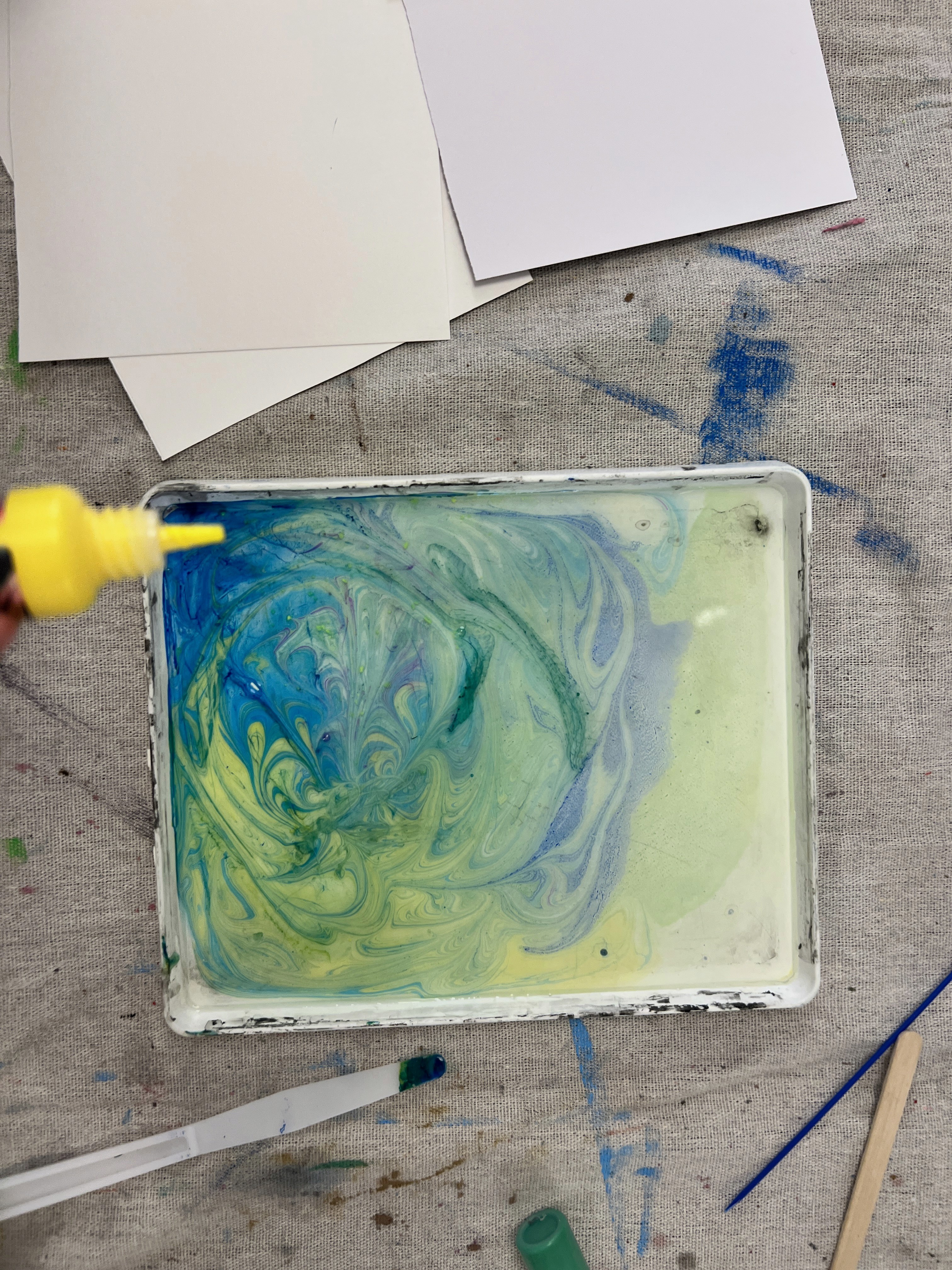
Set up a shallow tray for each artist, or one larger tray to share. Mix the marbling solution to the packet instructions (usually a powder stirred into warm water, left to sit for a few hours to thicken). Once it's ready the water will feel slightly gel-like, not watery. That thickness is what holds the paint on the surface.
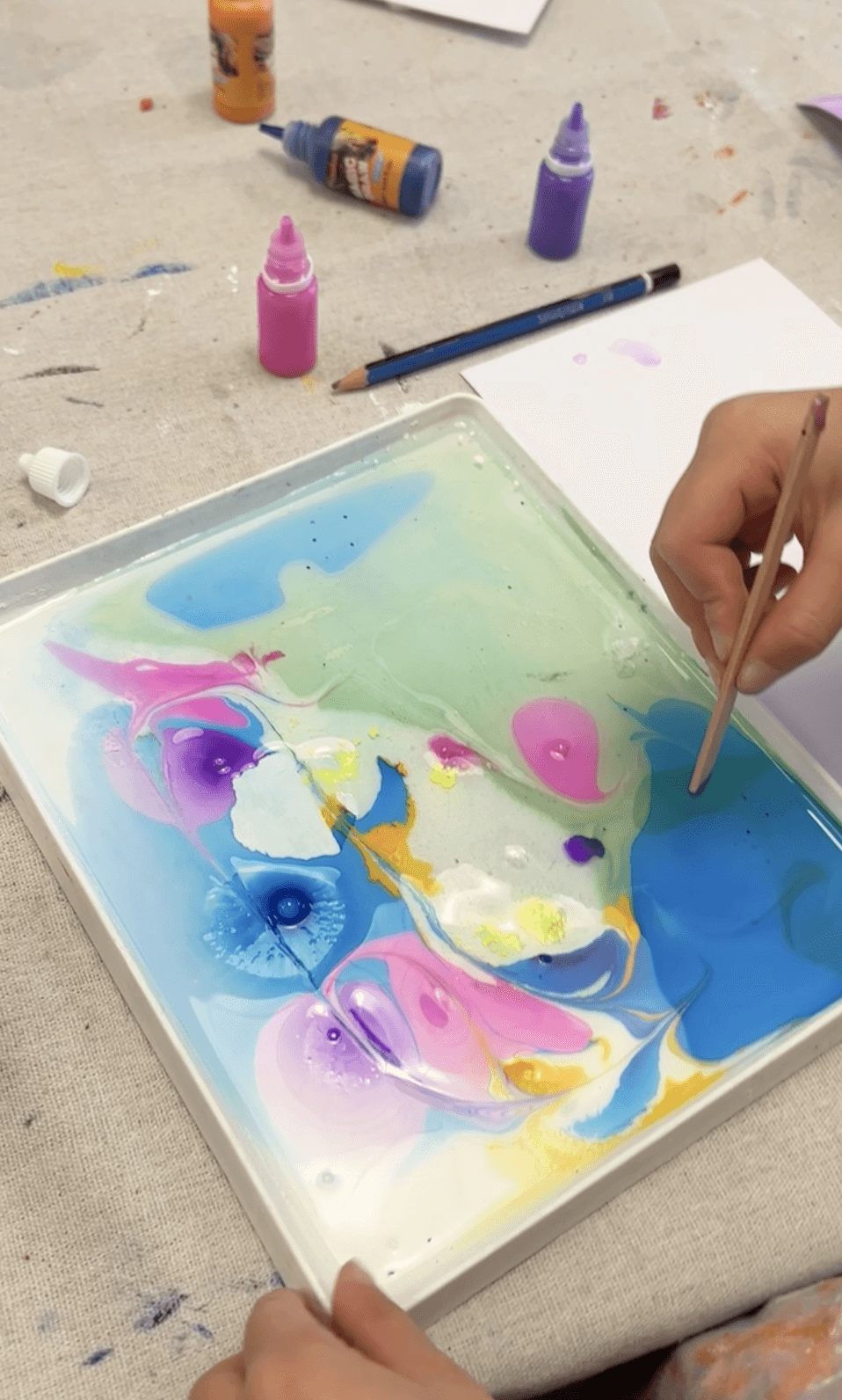
Lay out the marbling paints in deep space colours: navy, purple, magenta, teal, plus a hit of silver or gold if your kit has metallics. Give each artist a skewer or chopstick for swirling, and a stack of heavyweight cardstock or watercolour paper.
The Making
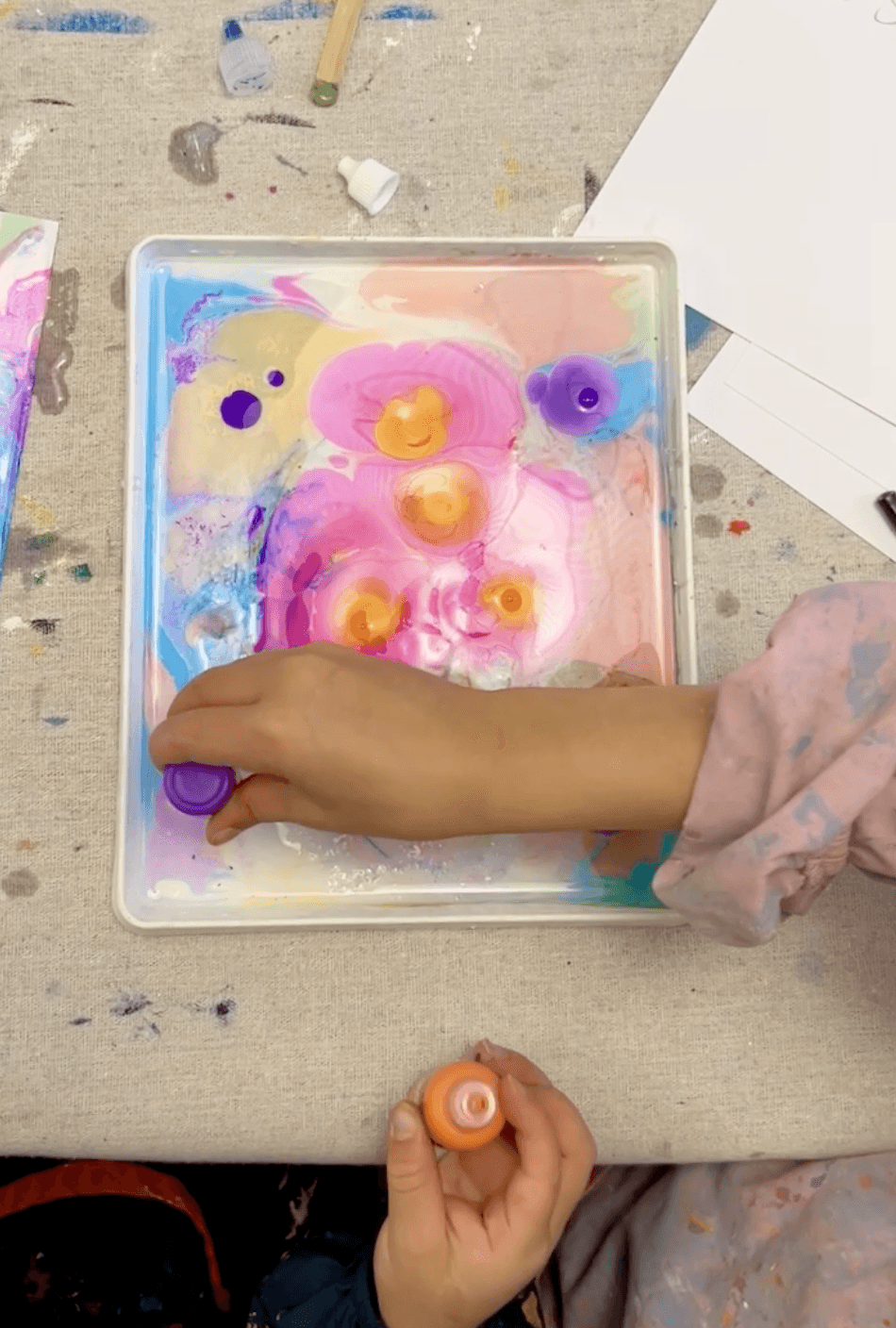
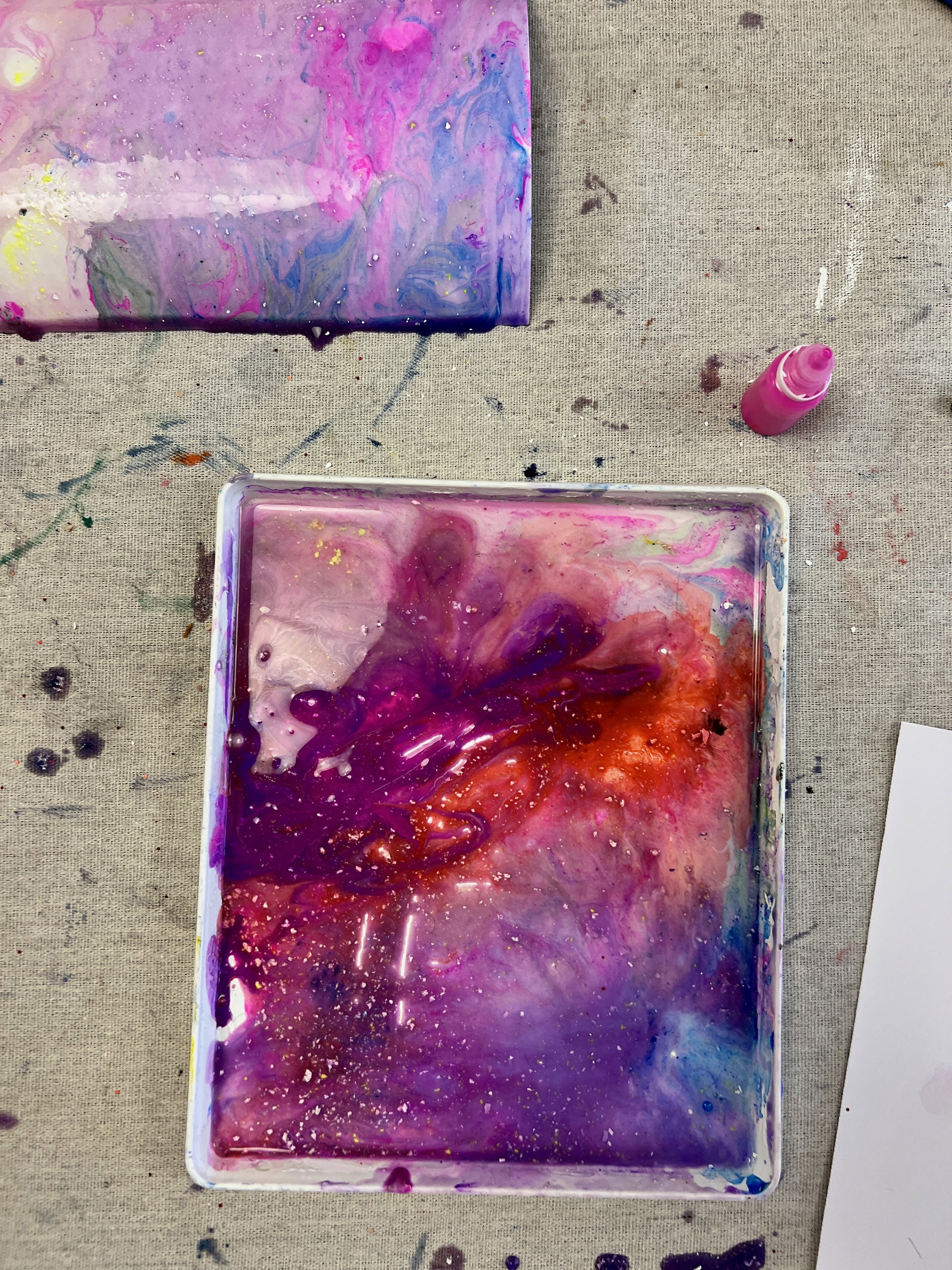
Drop paint onto the surface of the thickened water. The drops spread into discs. Add a second colour, then a third. Swirl gently with the skewer to create spirals and ripples. This is where kids lose themselves, because every swirl is completely different and every combination creates something new.
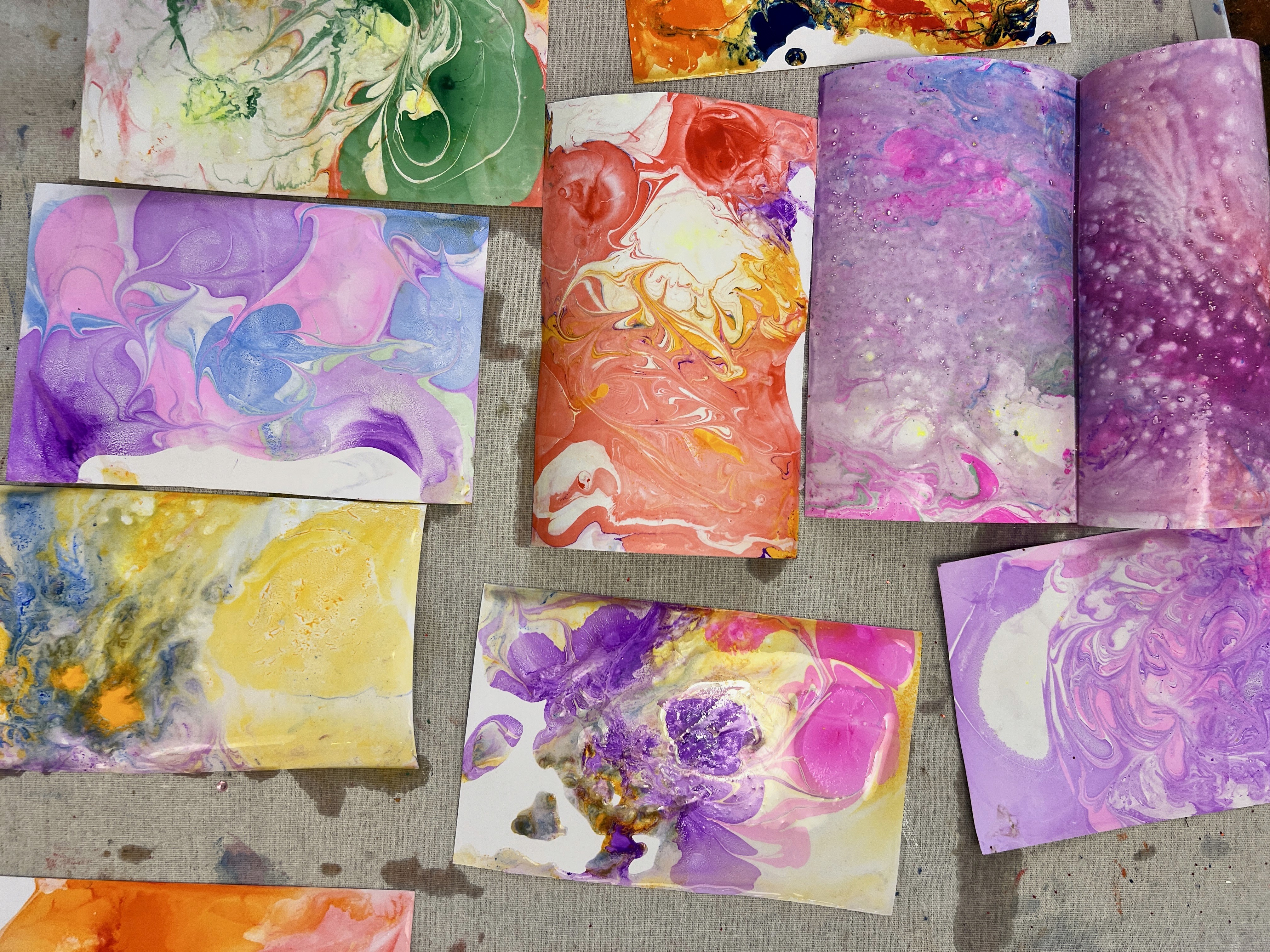
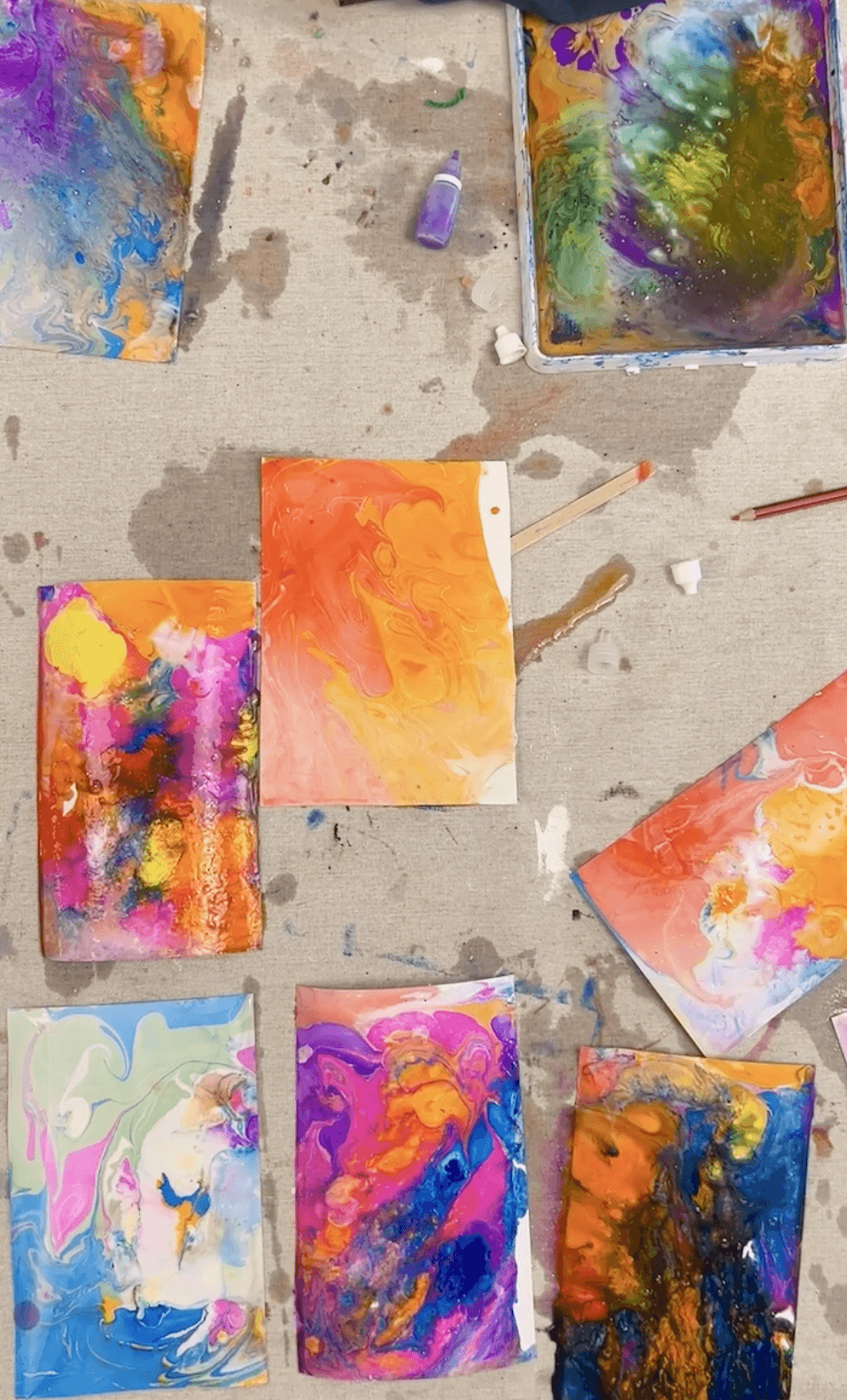
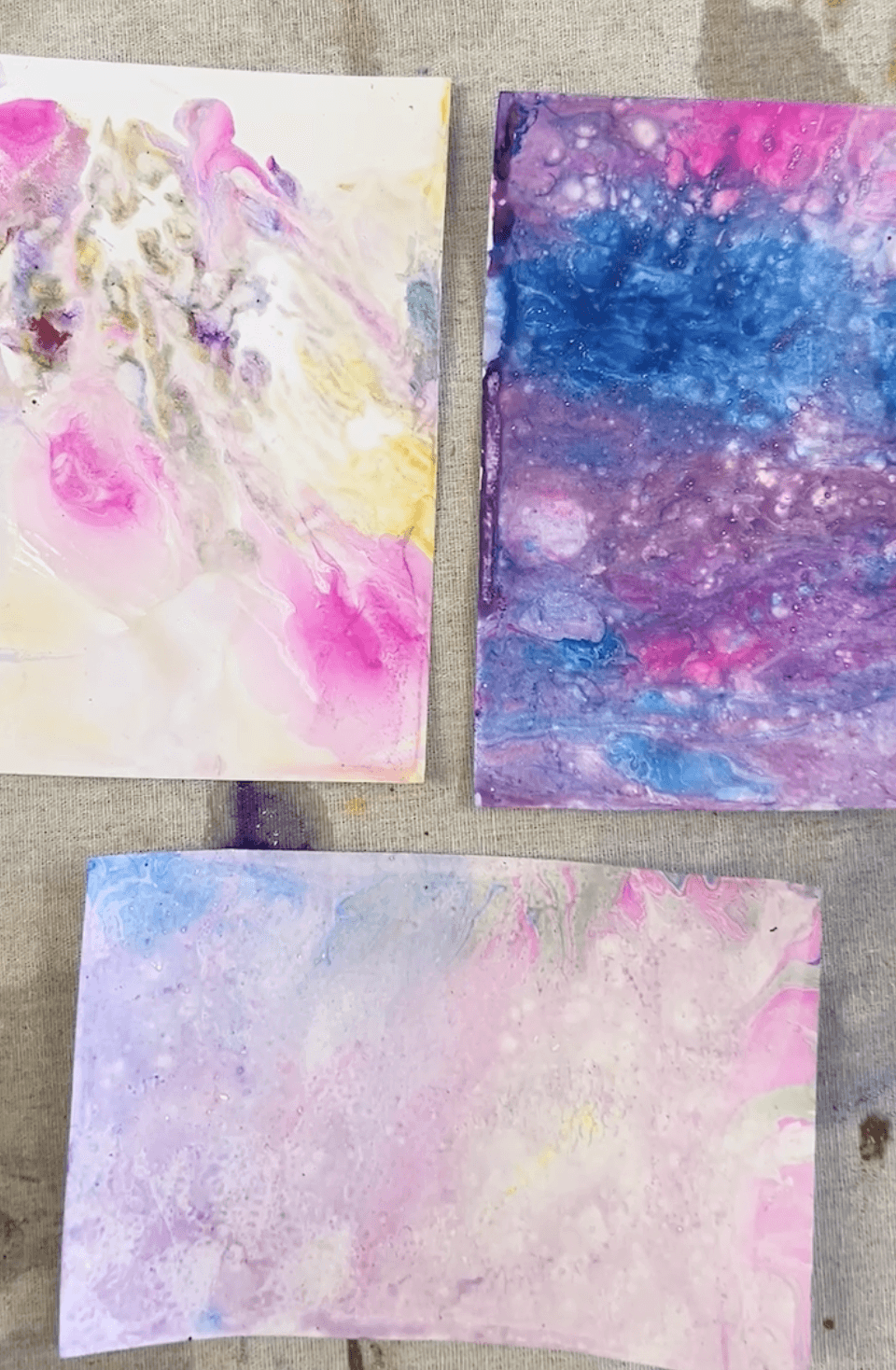
When the pattern looks right, dip the paper disc face-down onto the surface for just a second, then lift it away. The paint transfers onto the paper in exactly the pattern from the tray, and the reveal as the disc comes up is always a bit of a gasp. Set the marbled discs aside to dry on newspaper.
Between prints, skim the surface of the tray gently with a scrap of paper to lift off the residual paint. You can do this three or four times before needing to refresh the solution.
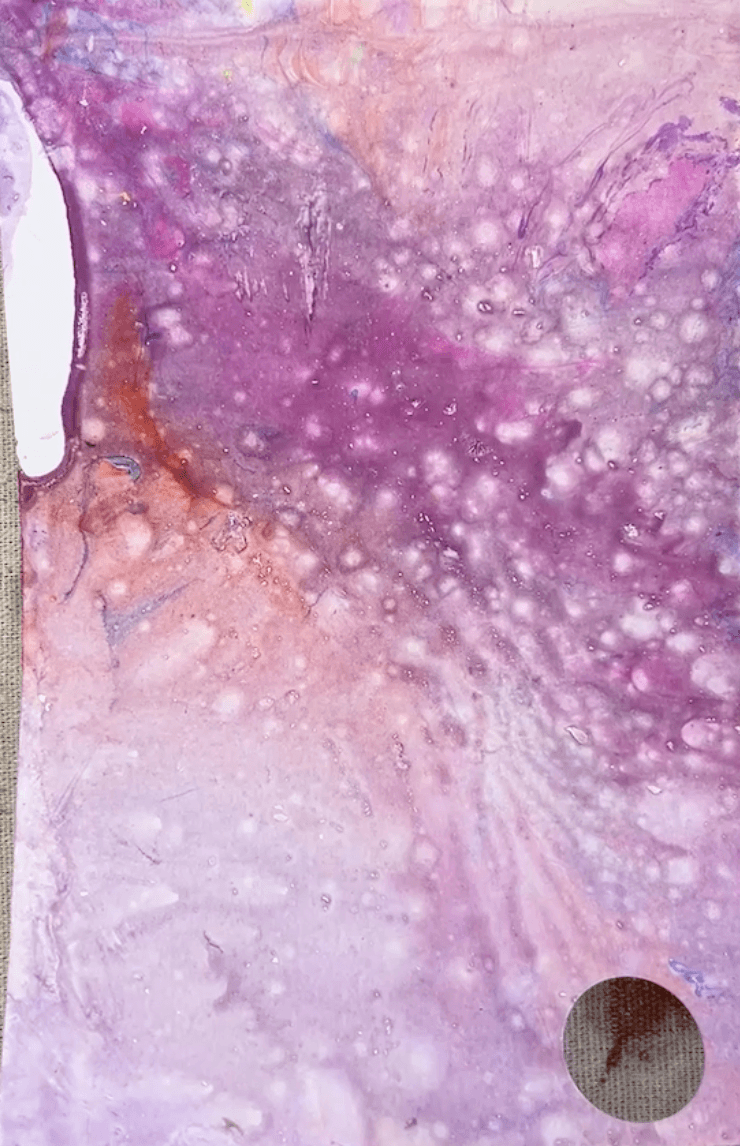
Each finished disc looks like its own tiny planet. Thicker swirls look like gas giants, gentler ones look like soft atmospheric planets, metallic ones look like they're made of stardust. Build up a whole collection and string them into a mobile, or hold them back for the Deep Space Collage activity coming up next (which uses them brilliantly).
Smudge Tip: Run Marbled Galaxies first thing in the morning so the prints have all day to dry, then pull them out for Deep Space Collage in the afternoon. There's a lovely sense of continuity when artists use their own morning prints in their afternoon piece.
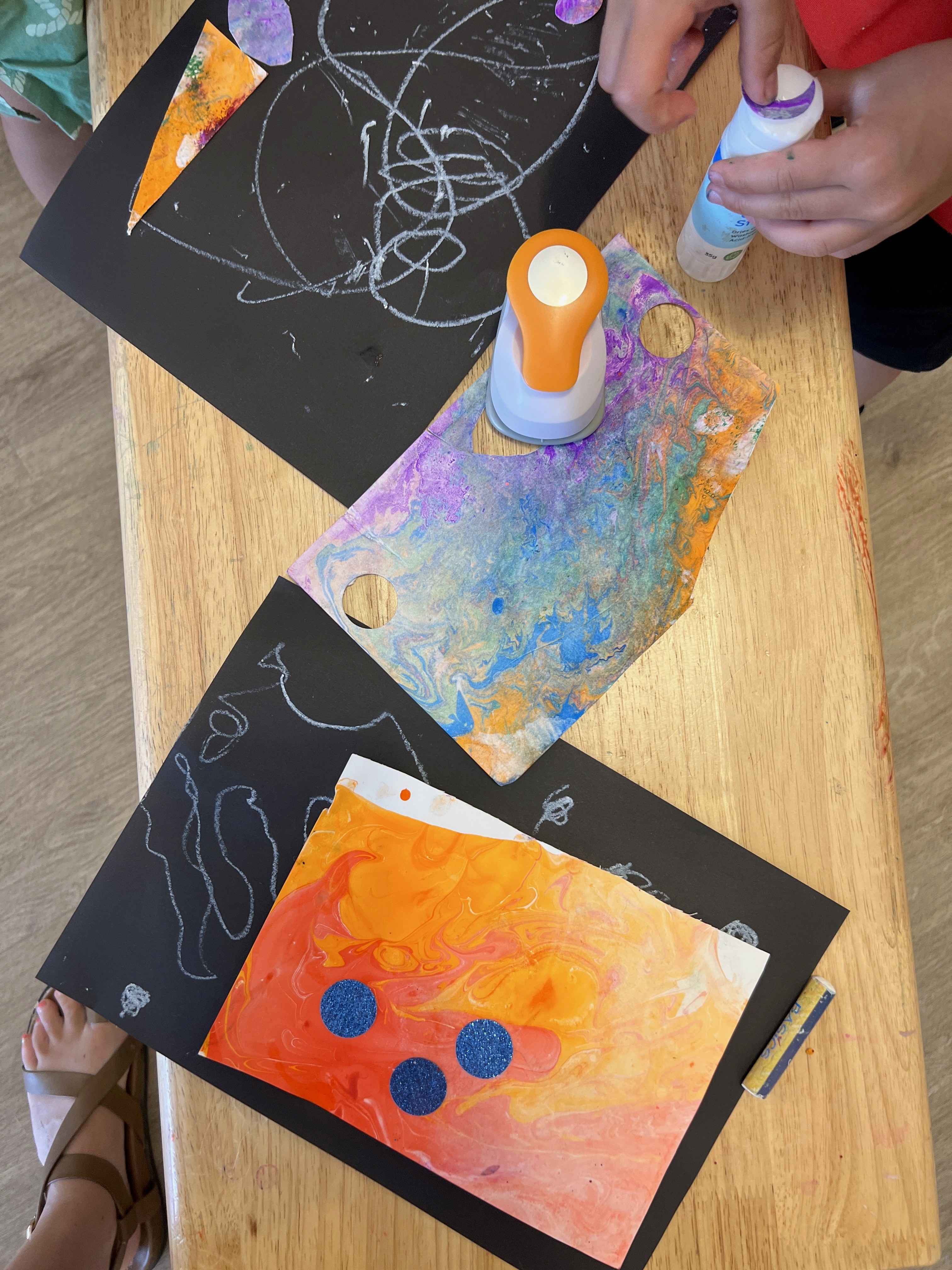
Once it's dry, you can cut into planet shapes. Fiskars circle hole punches are brilliant for this if you'd rather not cut by hand. They come in a range of sizes, and they mean you can punch out perfect planet discs in seconds.
Variations
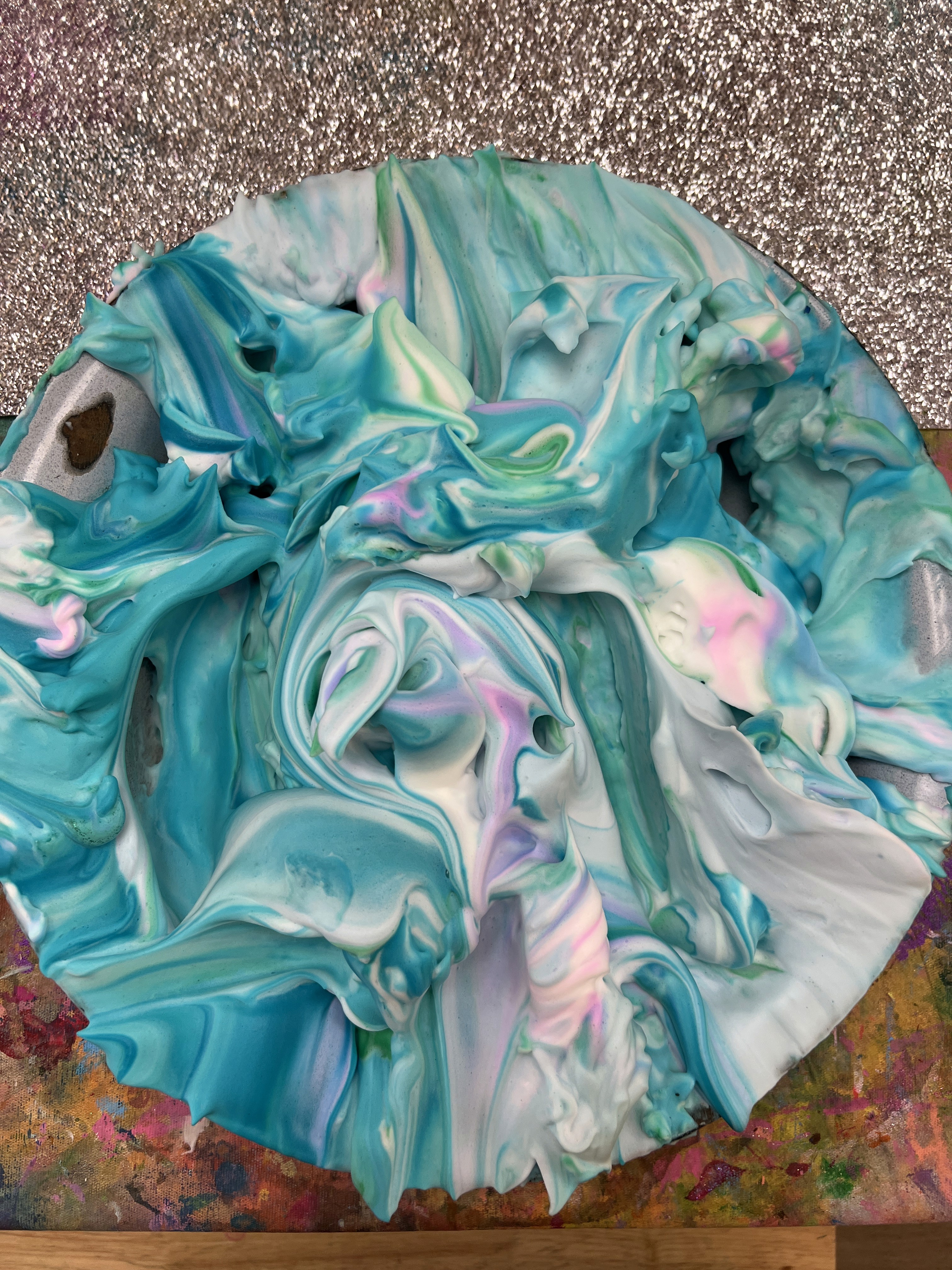
If the marbling kit isn't an option, shaving foam marbling works almost as well. Spread shaving foam in a flat layer on a tray, drop liquid watercolour across the surface, swirl gently with a skewer, press paper down, and scrape the foam off with a flat edge. Messier, cheaper, equally gorgeous!
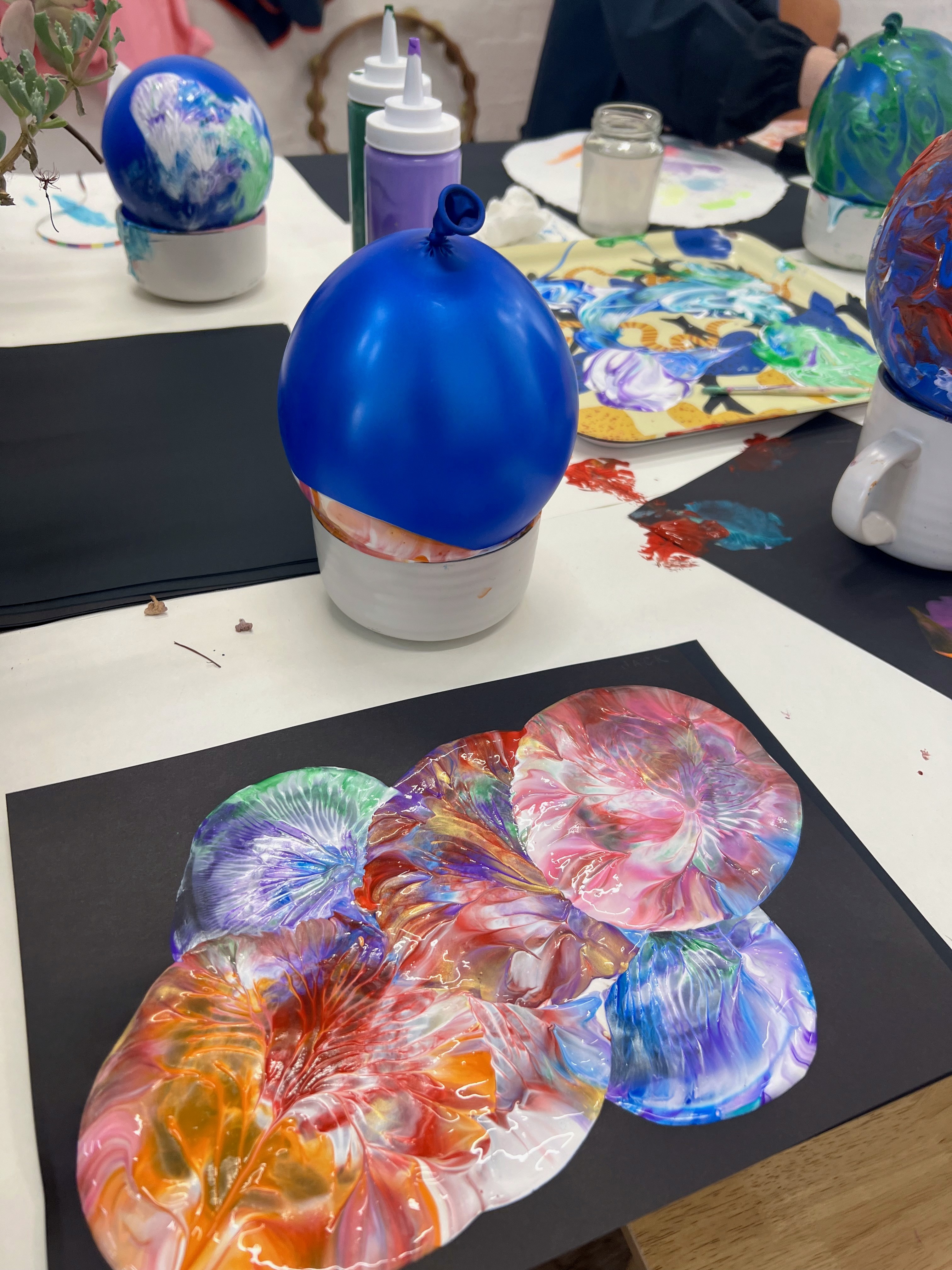
Print with small balloons and swirls of paint and colour!
Materials
Kids' marbling kit (Jupitearth from Amazon is what we used, any similar kit works)
Shallow tray for mixing
Heavyweight cardstock or 200gsm+ watercolour paper
Fiskars circle hole punches in various sizes
Skewers or chopsticks for swirling
Scrap paper for skimming between prints
Shaving foam and liquid watercolour (for foam marbling variation)
Gallery
Back to Top
Marbled Milky Way
One of the most satisfying processes on earth
Bookmark
Print Making
The Set Up
Marbling is one of those processes that feels like actual magic every single time, no matter how many times you've done it. For this theme we used a proper marbling kit, the Jupitearth one from Amazon, though any kids' marbling kit works the same way. The short version: thickened water, paints that float on top, a swirl with a skewer, dip the paper down, peel it back up. Gorgeous galaxy print.
Set up a shallow tray for each artist, or one larger tray to share. Mix the marbling solution to the packet instructions (usually a powder stirred into warm water, left to sit for a few hours to thicken). Once it's ready the water will feel slightly gel-like, not watery. That thickness is what holds the paint on the surface.
Lay out the marbling paints in deep space colours: navy, purple, magenta, teal, plus a hit of silver or gold if your kit has metallics. Give each artist a skewer or chopstick for swirling, and a stack of heavyweight cardstock or watercolour paper.
The Making
Drop paint onto the surface of the thickened water. The drops spread into discs. Add a second colour, then a third. Swirl gently with the skewer to create spirals and ripples. This is where kids lose themselves, because every swirl is completely different and every combination creates something new.
When the pattern looks right, dip the paper disc face-down onto the surface for just a second, then lift it away. The paint transfers onto the paper in exactly the pattern from the tray, and the reveal as the disc comes up is always a bit of a gasp. Set the marbled discs aside to dry on newspaper.
Between prints, skim the surface of the tray gently with a scrap of paper to lift off the residual paint. You can do this three or four times before needing to refresh the solution.
Each finished disc looks like its own tiny planet. Thicker swirls look like gas giants, gentler ones look like soft atmospheric planets, metallic ones look like they're made of stardust. Build up a whole collection and string them into a mobile, or hold them back for the Deep Space Collage activity coming up next (which uses them brilliantly).
Smudge Tip: Run Marbled Galaxies first thing in the morning so the prints have all day to dry, then pull them out for Deep Space Collage in the afternoon. There's a lovely sense of continuity when artists use their own morning prints in their afternoon piece.
Once it's dry, you can cut into planet shapes. Fiskars circle hole punches are brilliant for this if you'd rather not cut by hand. They come in a range of sizes, and they mean you can punch out perfect planet discs in seconds.
Variations
If the marbling kit isn't an option, shaving foam marbling works almost as well. Spread shaving foam in a flat layer on a tray, drop liquid watercolour across the surface, swirl gently with a skewer, press paper down, and scrape the foam off with a flat edge. Messier, cheaper, equally gorgeous!
Print with small balloons and swirls of paint and colour!
Materials
Kids' marbling kit (Jupitearth from Amazon is what we used, any similar kit works)
Shallow tray for mixing
Heavyweight cardstock or 200gsm+ watercolour paper
Fiskars circle hole punches in various sizes
Skewers or chopsticks for swirling
Scrap paper for skimming between prints
Shaving foam and liquid watercolour (for foam marbling variation)
Gallery
Back to Top
Marbled Milky Way
One of the most satisfying processes on earth
Bookmark
Print Making
The Set Up
Marbling is one of those processes that feels like actual magic every single time, no matter how many times you've done it. For this theme we used a proper marbling kit, the Jupitearth one from Amazon, though any kids' marbling kit works the same way. The short version: thickened water, paints that float on top, a swirl with a skewer, dip the paper down, peel it back up. Gorgeous galaxy print.
Set up a shallow tray for each artist, or one larger tray to share. Mix the marbling solution to the packet instructions (usually a powder stirred into warm water, left to sit for a few hours to thicken). Once it's ready the water will feel slightly gel-like, not watery. That thickness is what holds the paint on the surface.
Lay out the marbling paints in deep space colours: navy, purple, magenta, teal, plus a hit of silver or gold if your kit has metallics. Give each artist a skewer or chopstick for swirling, and a stack of heavyweight cardstock or watercolour paper.
The Making
Drop paint onto the surface of the thickened water. The drops spread into discs. Add a second colour, then a third. Swirl gently with the skewer to create spirals and ripples. This is where kids lose themselves, because every swirl is completely different and every combination creates something new.
When the pattern looks right, dip the paper disc face-down onto the surface for just a second, then lift it away. The paint transfers onto the paper in exactly the pattern from the tray, and the reveal as the disc comes up is always a bit of a gasp. Set the marbled discs aside to dry on newspaper.
Between prints, skim the surface of the tray gently with a scrap of paper to lift off the residual paint. You can do this three or four times before needing to refresh the solution.
Each finished disc looks like its own tiny planet. Thicker swirls look like gas giants, gentler ones look like soft atmospheric planets, metallic ones look like they're made of stardust. Build up a whole collection and string them into a mobile, or hold them back for the Deep Space Collage activity coming up next (which uses them brilliantly).
Smudge Tip: Run Marbled Galaxies first thing in the morning so the prints have all day to dry, then pull them out for Deep Space Collage in the afternoon. There's a lovely sense of continuity when artists use their own morning prints in their afternoon piece.
Once it's dry, you can cut into planet shapes. Fiskars circle hole punches are brilliant for this if you'd rather not cut by hand. They come in a range of sizes, and they mean you can punch out perfect planet discs in seconds.
Variations
If the marbling kit isn't an option, shaving foam marbling works almost as well. Spread shaving foam in a flat layer on a tray, drop liquid watercolour across the surface, swirl gently with a skewer, press paper down, and scrape the foam off with a flat edge. Messier, cheaper, equally gorgeous!
Print with small balloons and swirls of paint and colour!
Materials
Kids' marbling kit (Jupitearth from Amazon is what we used, any similar kit works)
Shallow tray for mixing
Heavyweight cardstock or 200gsm+ watercolour paper
Fiskars circle hole punches in various sizes
Skewers or chopsticks for swirling
Scrap paper for skimming between prints
Shaving foam and liquid watercolour (for foam marbling variation)
Gallery
Back to Top
Deep Space Collage
Black skies and shimmery planets
Bookmark
Collage
The Set Up
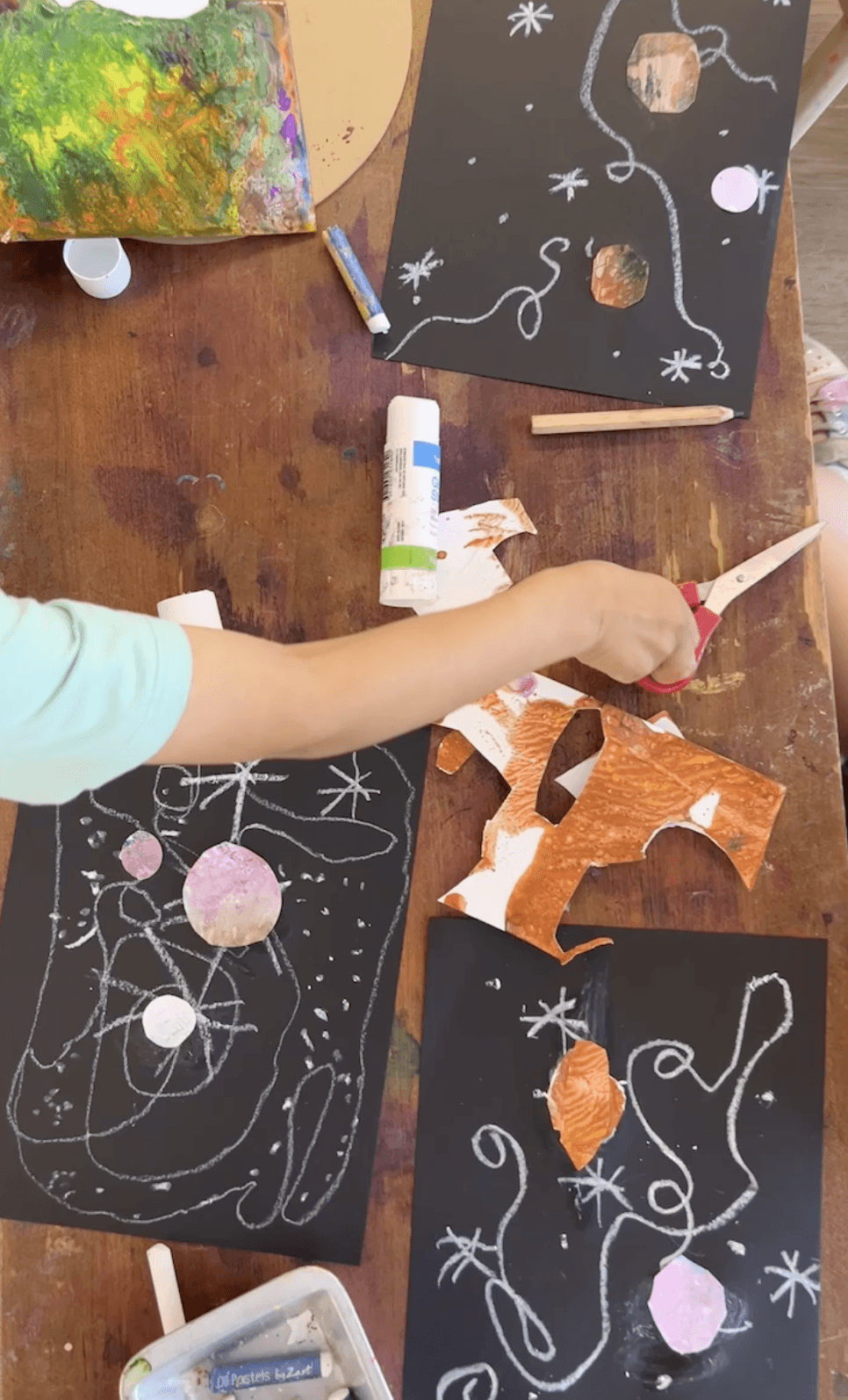
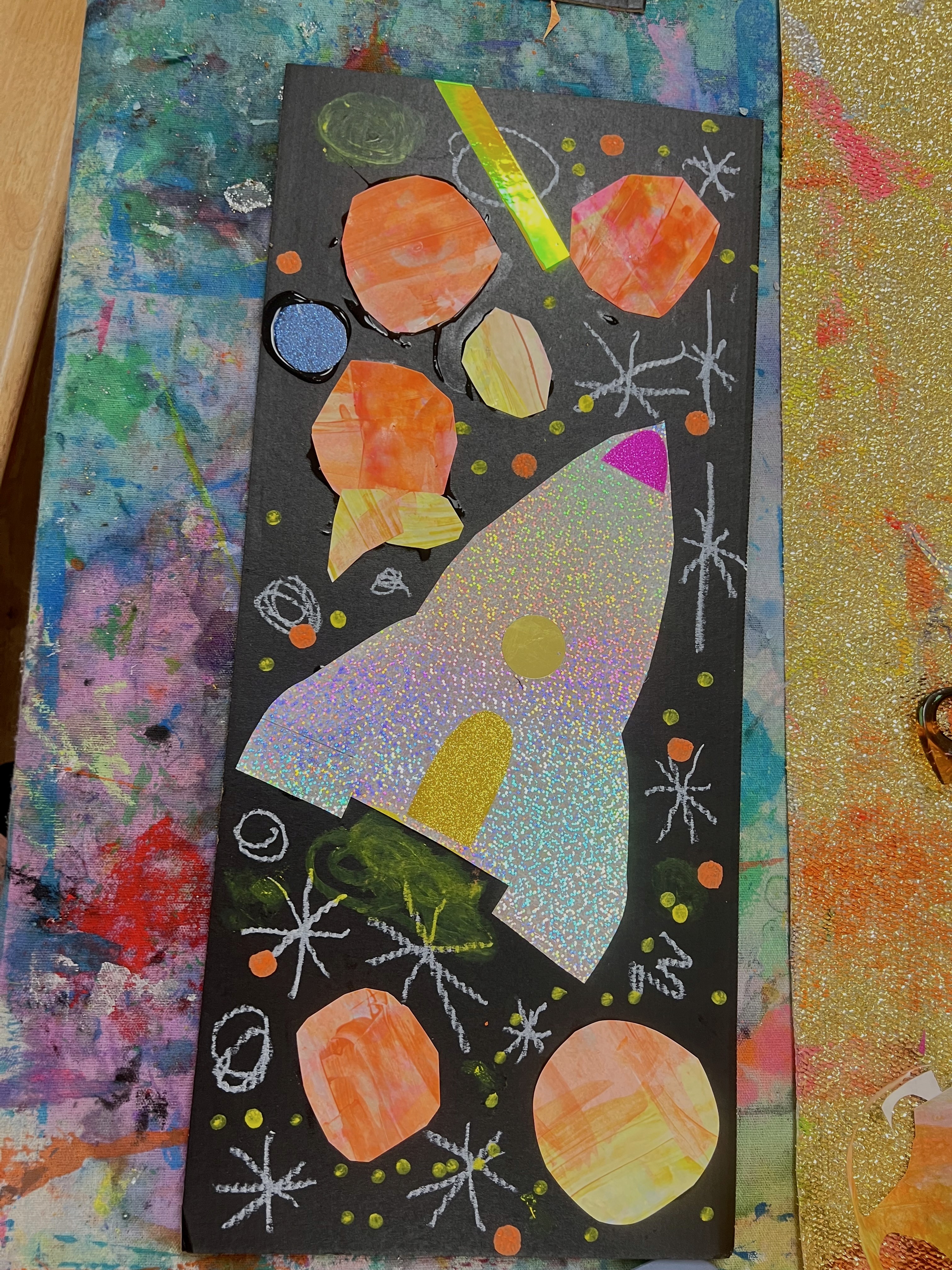
Start with a base of deep black cardstock or heavy black paper. Lay out a whole spread of planet materials. The marbled discs from the previous activity are perfect for this, but any painted or patterned papers from the offcuts drawer work too. Shaving-foam-marbled paper, drippy painted papers, old Modern Mosaics pieces. Anything with colour and texture.
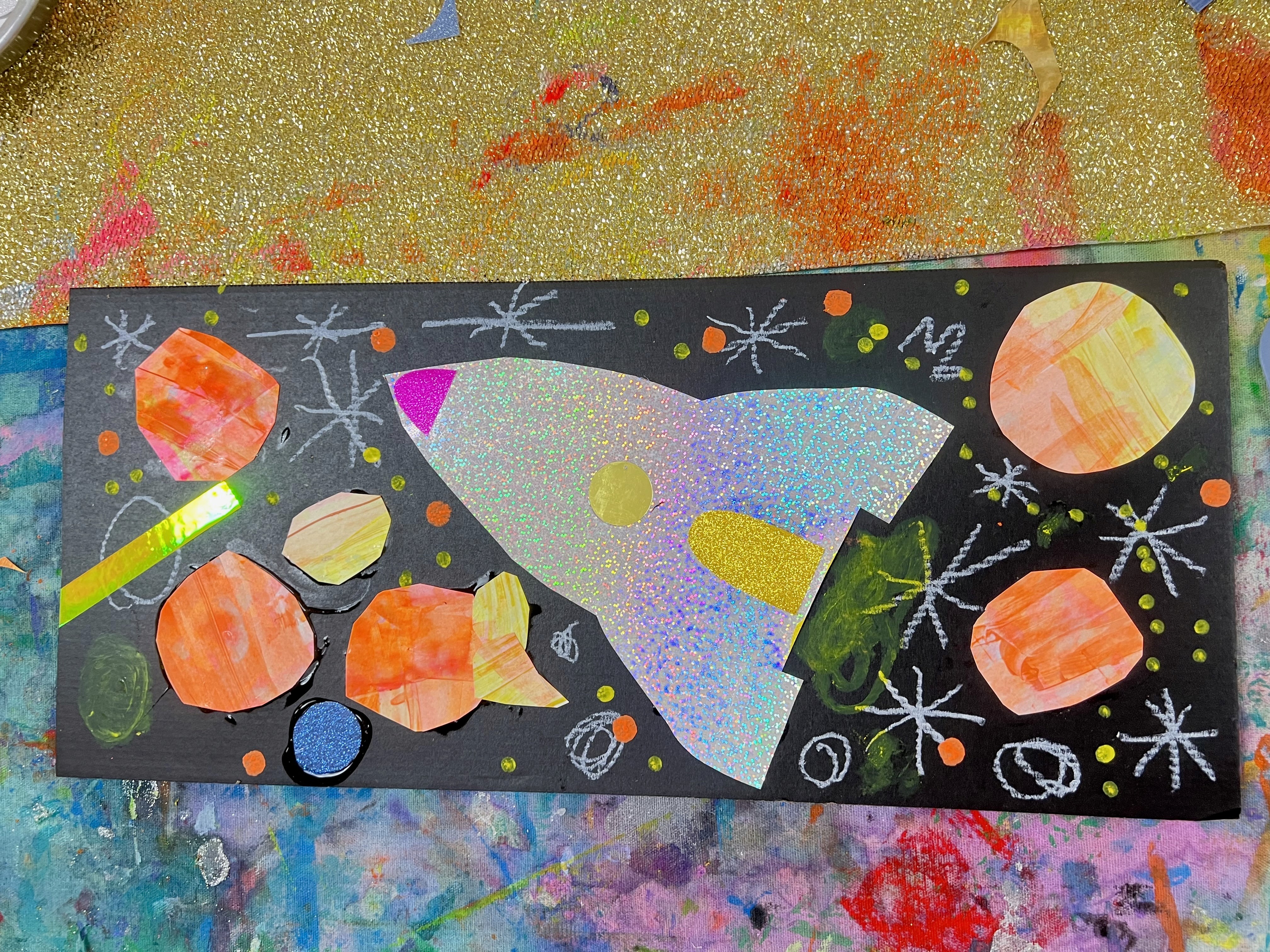
Fiskars circle hole punches come out again here to punch perfect planet shapes, or let artists free-hand any size they like with scissors. Large planet, small planet, ringed planet, crescent planet. The variety is what makes the final scene feel rich.
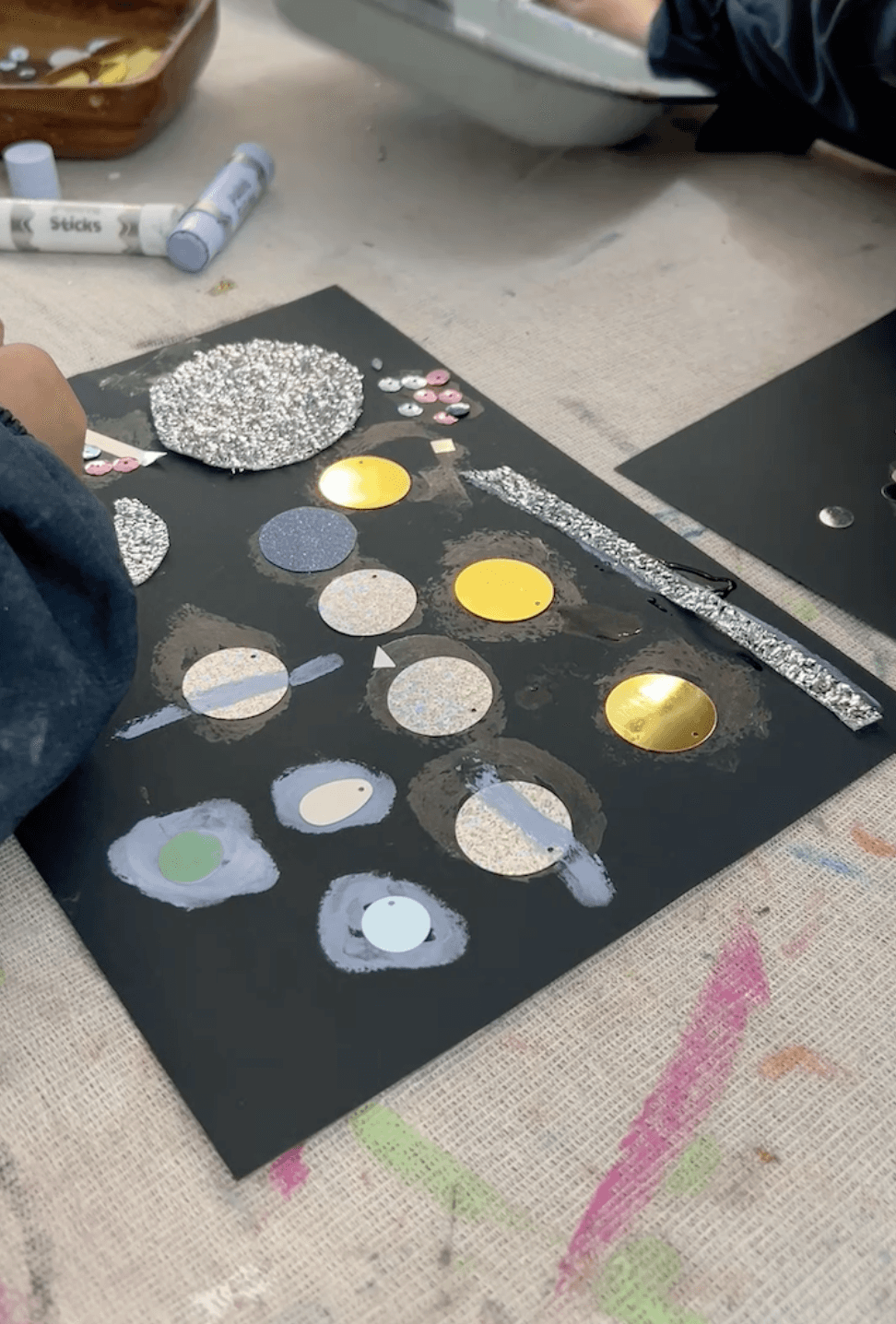
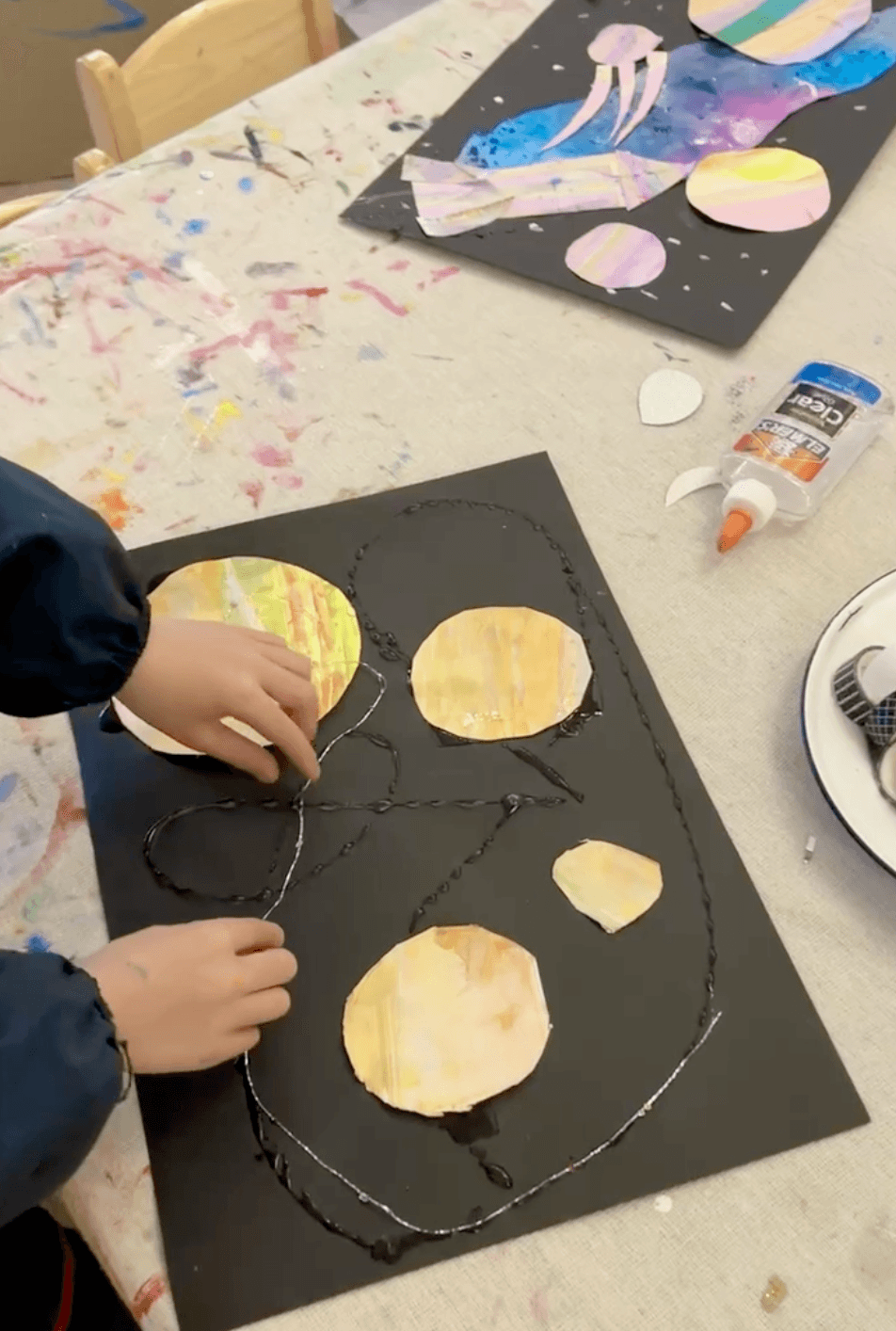
Alongside the planets, lay out shiny foil squares, iridescent cellophane scraps, fabric off-cuts in silver and gold, metallic stickers, sequins, gemstones, and white oil pastels or chalk for drawing stars and constellations directly onto the black base. Have a glue stick and PVA both ready. The glue stick is faster for flat paper pieces, the PVA holds the heavier bits like sequins and stones.
The Making
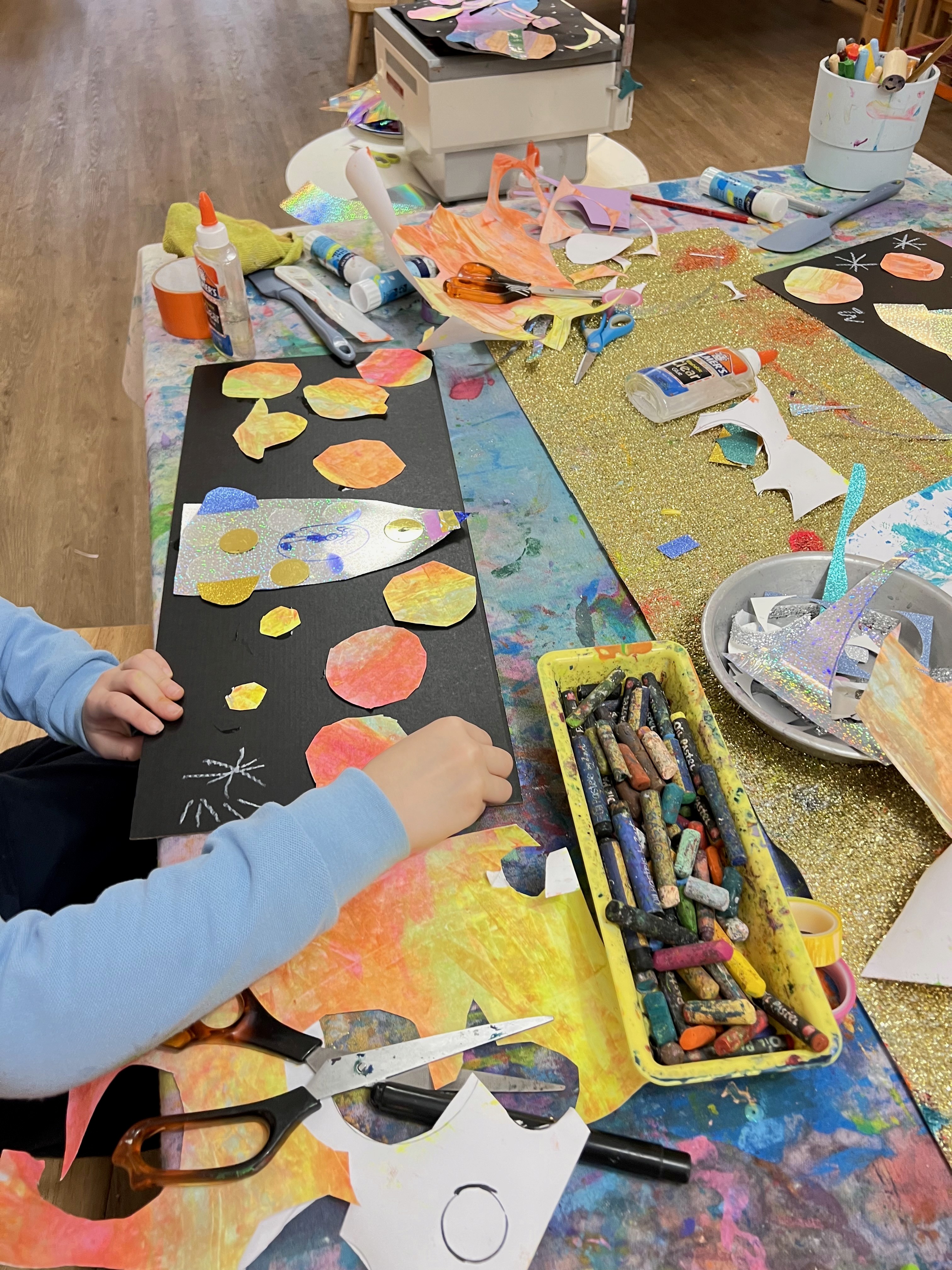
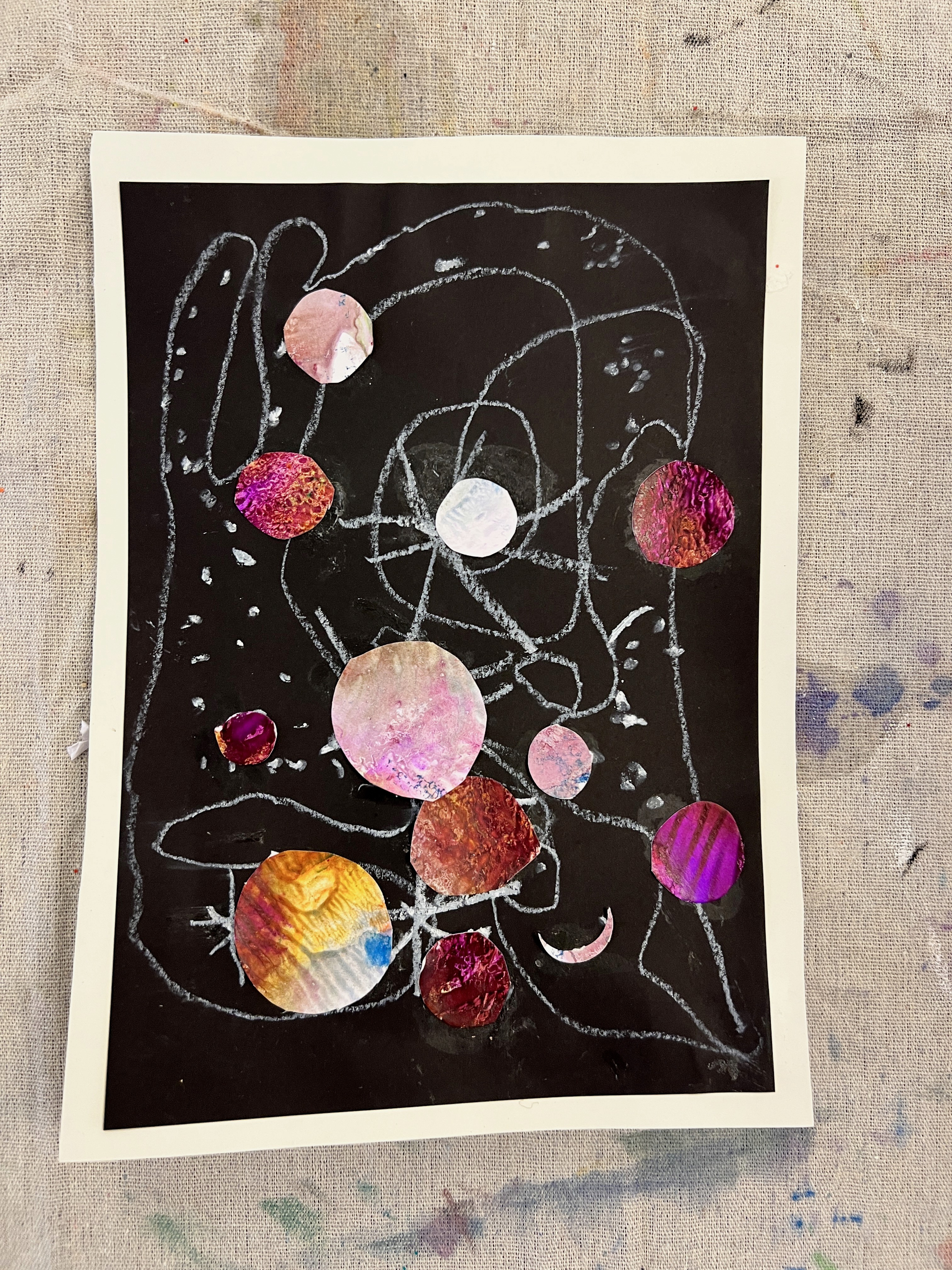
Composition is the whole experience! Arranging planets across the black sky, moving them around, swapping bigger for smaller, adding and removing until the whole thing feels balanced. There's no wrong layout. Some pages end up completely full. Others leave great stretches of empty black, which somehow looks the most like real space.
Once the planets are placed and glued down, the gorgeous details come next. White chalk or oil pastel for constellations drawn between the planets, little X-shaped stars scattered across the sky, a sprinkle of silver sequins as distant stars. Strips of iridescent cellophane or foil across the middle become shooting stars or a nebula streak. Gold fabric off-cuts become star clusters. The finished pieces look like gallery work, especially if you hang them against a white wall to dry (the contrast is unbelievable!).
Variations
Go three-dimensional. Instead of a flat collage, build the scene into a shadow box or a shoebox for a layered diorama effect. Planets on different levels of depth, the foil of a nebula streak catching real light.
Swap the black base for a deep navy or midnight blue for a slightly softer take. Works beautifully if you want a dreamier feel rather than deep-space intensity.
Materials
Black cardstock or heavy black paper
Marbled paper discs (saved from Marbled Milky Ways)
Shaving-foam-marbled paper or saved painted papers
Fiskars circle hole punches in various sizes
Scissors
Shiny foil, iridescent cellophane, metallic paper
Fabric off-cuts in silver and gold
Metallic stickers, sequins, gemstones
White oil pastels, white chalk, silver gel pens
Glue sticks and PVA
Gallery
Back to Top
Deep Space Collage
Black skies and shimmery planets
Bookmark
Collage
The Set Up
Start with a base of deep black cardstock or heavy black paper. Lay out a whole spread of planet materials. The marbled discs from the previous activity are perfect for this, but any painted or patterned papers from the offcuts drawer work too. Shaving-foam-marbled paper, drippy painted papers, old Modern Mosaics pieces. Anything with colour and texture.
Fiskars circle hole punches come out again here to punch perfect planet shapes, or let artists free-hand any size they like with scissors. Large planet, small planet, ringed planet, crescent planet. The variety is what makes the final scene feel rich.
Alongside the planets, lay out shiny foil squares, iridescent cellophane scraps, fabric off-cuts in silver and gold, metallic stickers, sequins, gemstones, and white oil pastels or chalk for drawing stars and constellations directly onto the black base. Have a glue stick and PVA both ready. The glue stick is faster for flat paper pieces, the PVA holds the heavier bits like sequins and stones.
The Making
Composition is the whole experience! Arranging planets across the black sky, moving them around, swapping bigger for smaller, adding and removing until the whole thing feels balanced. There's no wrong layout. Some pages end up completely full. Others leave great stretches of empty black, which somehow looks the most like real space.
Once the planets are placed and glued down, the gorgeous details come next. White chalk or oil pastel for constellations drawn between the planets, little X-shaped stars scattered across the sky, a sprinkle of silver sequins as distant stars. Strips of iridescent cellophane or foil across the middle become shooting stars or a nebula streak. Gold fabric off-cuts become star clusters. The finished pieces look like gallery work, especially if you hang them against a white wall to dry (the contrast is unbelievable!).
Variations
Go three-dimensional. Instead of a flat collage, build the scene into a shadow box or a shoebox for a layered diorama effect. Planets on different levels of depth, the foil of a nebula streak catching real light.
Swap the black base for a deep navy or midnight blue for a slightly softer take. Works beautifully if you want a dreamier feel rather than deep-space intensity.
Materials
Black cardstock or heavy black paper
Marbled paper discs (saved from Marbled Milky Ways)
Shaving-foam-marbled paper or saved painted papers
Fiskars circle hole punches in various sizes
Scissors
Shiny foil, iridescent cellophane, metallic paper
Fabric off-cuts in silver and gold
Metallic stickers, sequins, gemstones
White oil pastels, white chalk, silver gel pens
Glue sticks and PVA
Gallery
Back to Top
Deep Space Collage
Black skies and shimmery planets
Bookmark
Collage
The Set Up
Start with a base of deep black cardstock or heavy black paper. Lay out a whole spread of planet materials. The marbled discs from the previous activity are perfect for this, but any painted or patterned papers from the offcuts drawer work too. Shaving-foam-marbled paper, drippy painted papers, old Modern Mosaics pieces. Anything with colour and texture.
Fiskars circle hole punches come out again here to punch perfect planet shapes, or let artists free-hand any size they like with scissors. Large planet, small planet, ringed planet, crescent planet. The variety is what makes the final scene feel rich.
Alongside the planets, lay out shiny foil squares, iridescent cellophane scraps, fabric off-cuts in silver and gold, metallic stickers, sequins, gemstones, and white oil pastels or chalk for drawing stars and constellations directly onto the black base. Have a glue stick and PVA both ready. The glue stick is faster for flat paper pieces, the PVA holds the heavier bits like sequins and stones.
The Making
Composition is the whole experience! Arranging planets across the black sky, moving them around, swapping bigger for smaller, adding and removing until the whole thing feels balanced. There's no wrong layout. Some pages end up completely full. Others leave great stretches of empty black, which somehow looks the most like real space.
Once the planets are placed and glued down, the gorgeous details come next. White chalk or oil pastel for constellations drawn between the planets, little X-shaped stars scattered across the sky, a sprinkle of silver sequins as distant stars. Strips of iridescent cellophane or foil across the middle become shooting stars or a nebula streak. Gold fabric off-cuts become star clusters. The finished pieces look like gallery work, especially if you hang them against a white wall to dry (the contrast is unbelievable!).
Variations
Go three-dimensional. Instead of a flat collage, build the scene into a shadow box or a shoebox for a layered diorama effect. Planets on different levels of depth, the foil of a nebula streak catching real light.
Swap the black base for a deep navy or midnight blue for a slightly softer take. Works beautifully if you want a dreamier feel rather than deep-space intensity.
Materials
Black cardstock or heavy black paper
Marbled paper discs (saved from Marbled Milky Ways)
Shaving-foam-marbled paper or saved painted papers
Fiskars circle hole punches in various sizes
Scissors
Shiny foil, iridescent cellophane, metallic paper
Fabric off-cuts in silver and gold
Metallic stickers, sequins, gemstones
White oil pastels, white chalk, silver gel pens
Glue sticks and PVA
Gallery
Back to Top
Starry Water Play
Coloured water, floating stars, and bio glitter
Bookmark
Sensory Play
The Set Up
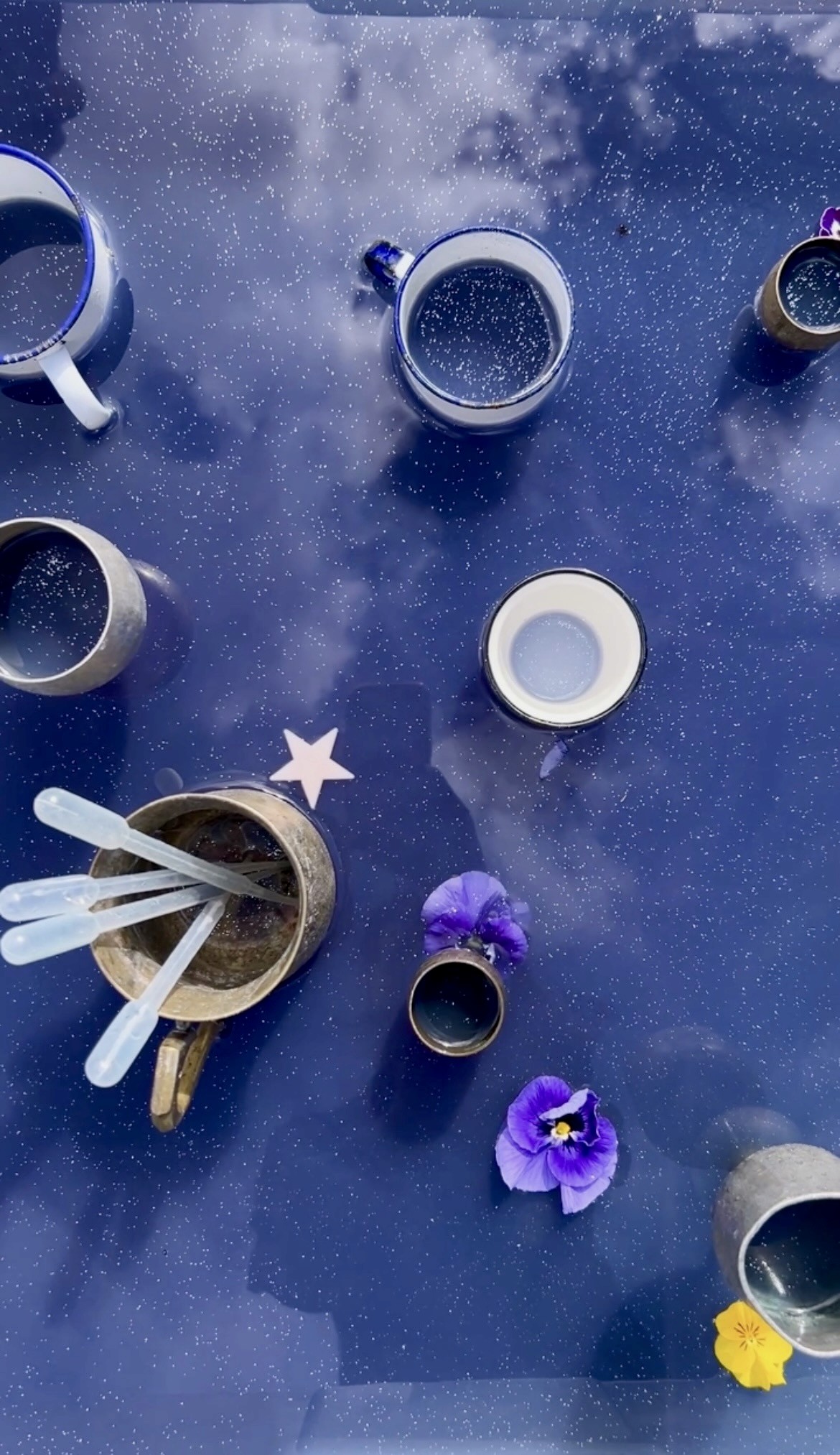
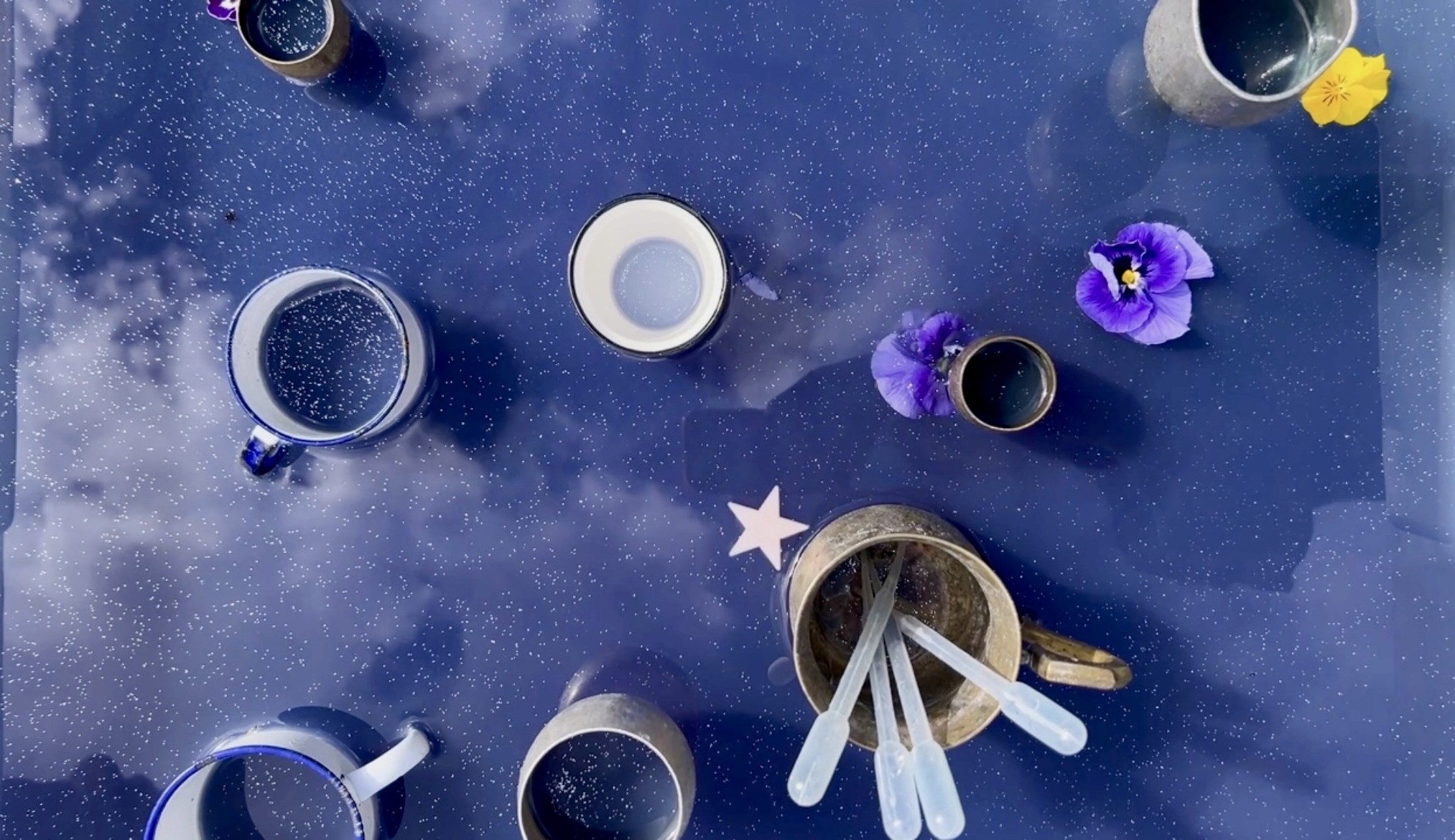
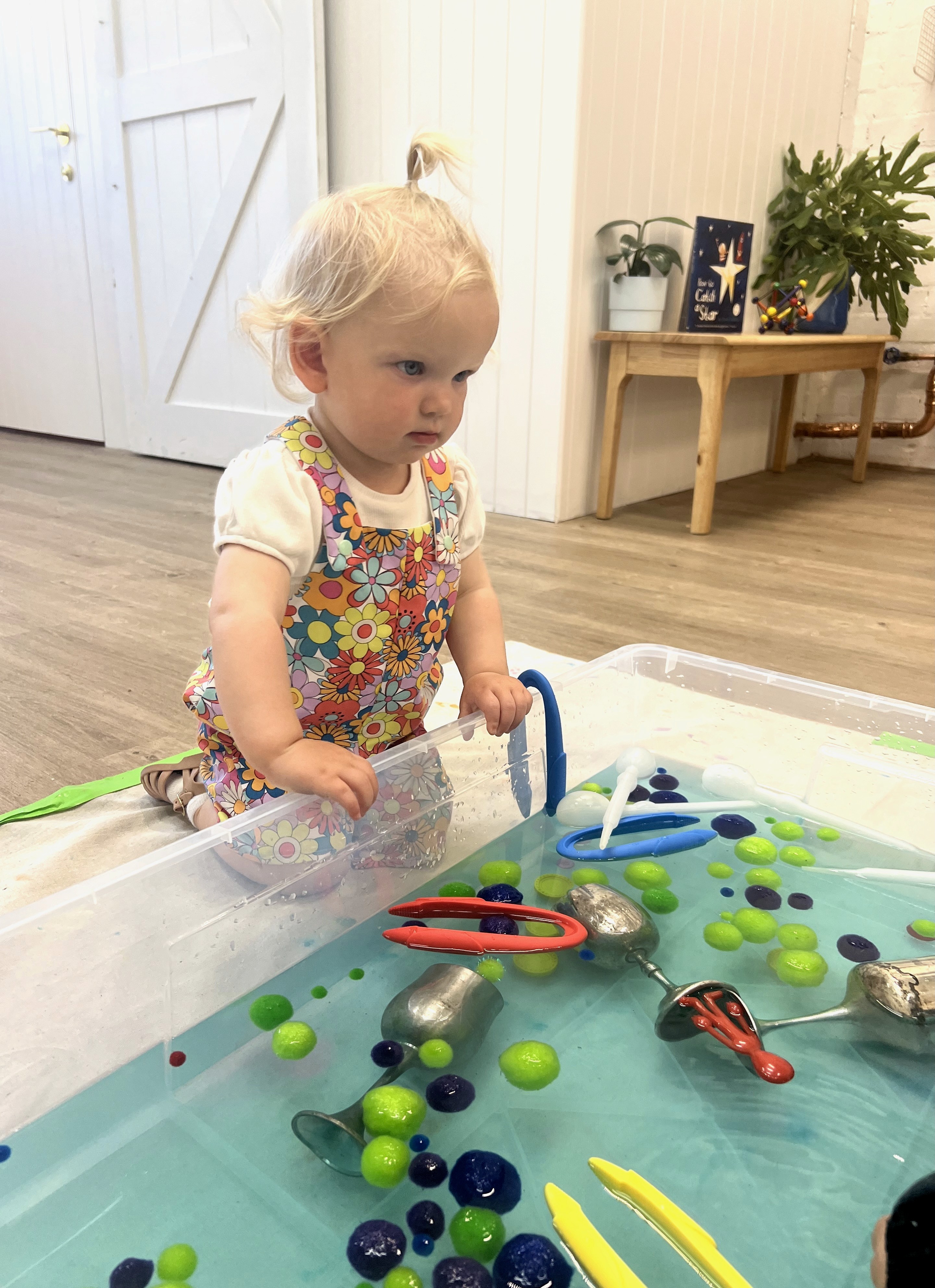
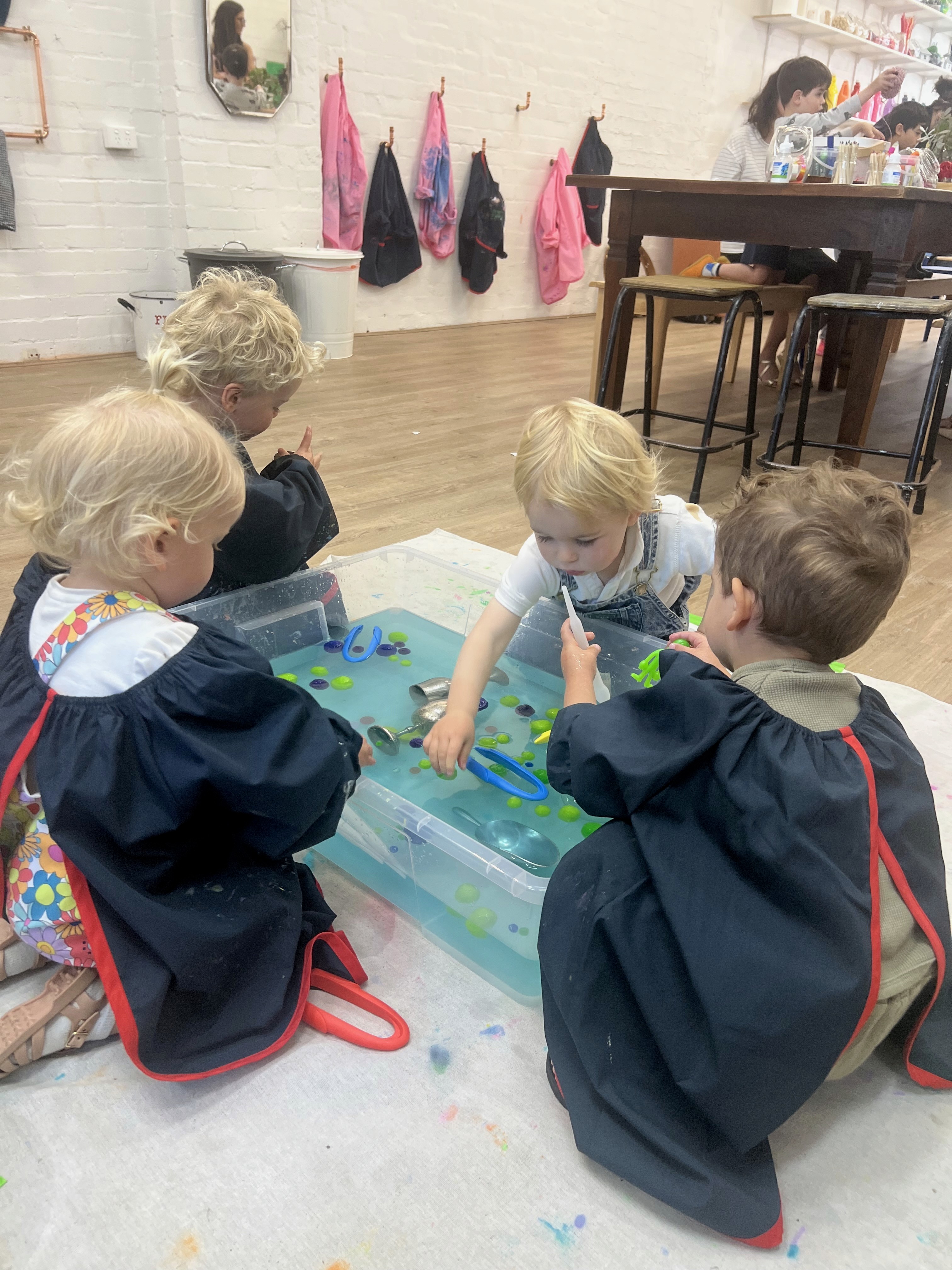
A clear tub, big enough for several artists to reach in at once. Fill with water and add liquid watercolour in deep blue, purple, or teal. A few drops is enough. The water stays translucent so you can see everything floating through it. This is EC liquid watercolour again, brilliant for this because the colour is intense and it rinses out of clothes far better than food dye.
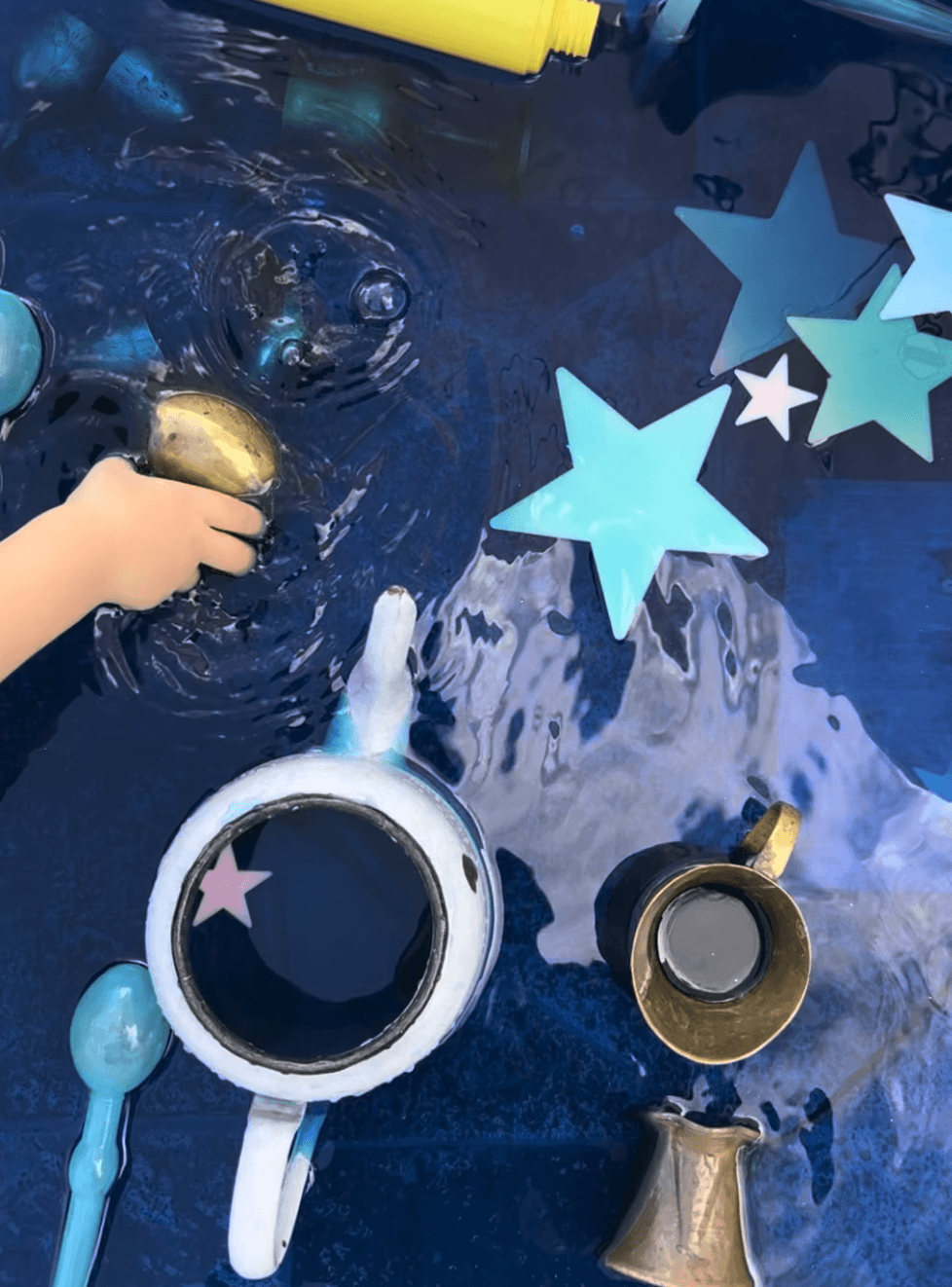
Float glow-in-the-dark plastic stars across the surface. They bob around on the water like little constellations drifting past. Add a sprinkle of bio glitter for sparkle; we use bio glitter specifically because it breaks down properly and doesn't leave microplastics in the water or on the artists' hands. Silver and gold are the dreamiest I think!
Offer cups, small jugs, brass goblets, funnels, tongs, and ladles for scooping and pouring. Set the tub on the floor or a low table, outdoors or with a splash mat underneath if inside.
The Making
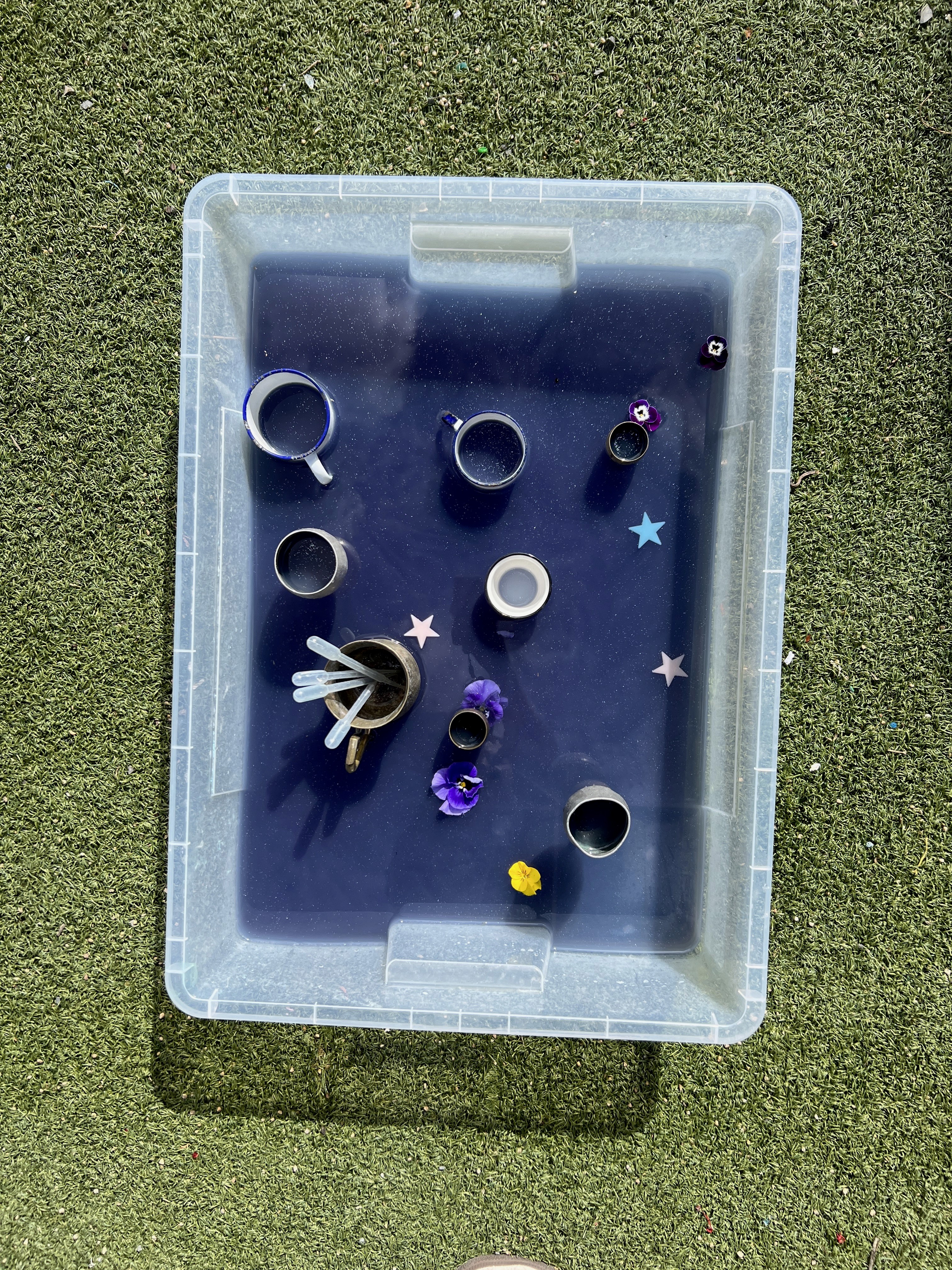
Water play is endlessly absorbing. Pouring colour from one cup to another, watching the bio glitter swirl, chasing stars around the surface with a ladle. We had one artist spend her entire session carefully scooping single stars out of the water, lining them up on a tea towel to "dry", and then tipping them back in and starting again. That was the whole play and it was perfect!
The colour-mixing moment is gorgeous. Start with just blue water, then invite artists to add drops of purple or teal with pipettes and watch the colour spread and shift through the tub. The way coloured water moves through coloured water is its own kind of magic, and there's real colour theory happening in front of them in three dimensions.
Variations
Run this in a shallow mirror tray on a low table. The reflection under the stars doubles the whole effect and it feels gorgeously magical.
Try ice cubes with tiny glow stars frozen inside them. Drop them into the coloured water and watch the stars appear as the ice melts. A good one for a warm day.
Materials
Clear tub or large shallow container
Water
EC liquid watercolour in deep blue, purple, or teal
Glow-in-the-dark plastic stars
Bio glitter in silver and gold (breaks down properly, won't pollute)
Small cups, jugs, brass goblets, funnels, tongs, ladles
Pipettes / droppers for adding extra colour
Mirror tray (for variation)
Ice-cube trays (for variation)
Back to Top
Starry Water Play
Coloured water, floating stars, and bio glitter
Bookmark
Sensory Play
The Set Up
A clear tub, big enough for several artists to reach in at once. Fill with water and add liquid watercolour in deep blue, purple, or teal. A few drops is enough. The water stays translucent so you can see everything floating through it. This is EC liquid watercolour again, brilliant for this because the colour is intense and it rinses out of clothes far better than food dye.
Float glow-in-the-dark plastic stars across the surface. They bob around on the water like little constellations drifting past. Add a sprinkle of bio glitter for sparkle; we use bio glitter specifically because it breaks down properly and doesn't leave microplastics in the water or on the artists' hands. Silver and gold are the dreamiest I think!
Offer cups, small jugs, brass goblets, funnels, tongs, and ladles for scooping and pouring. Set the tub on the floor or a low table, outdoors or with a splash mat underneath if inside.
The Making
Water play is endlessly absorbing. Pouring colour from one cup to another, watching the bio glitter swirl, chasing stars around the surface with a ladle. We had one artist spend her entire session carefully scooping single stars out of the water, lining them up on a tea towel to "dry", and then tipping them back in and starting again. That was the whole play and it was perfect!
The colour-mixing moment is gorgeous. Start with just blue water, then invite artists to add drops of purple or teal with pipettes and watch the colour spread and shift through the tub. The way coloured water moves through coloured water is its own kind of magic, and there's real colour theory happening in front of them in three dimensions.
Variations
Run this in a shallow mirror tray on a low table. The reflection under the stars doubles the whole effect and it feels gorgeously magical.
Try ice cubes with tiny glow stars frozen inside them. Drop them into the coloured water and watch the stars appear as the ice melts. A good one for a warm day.
Materials
Clear tub or large shallow container
Water
EC liquid watercolour in deep blue, purple, or teal
Glow-in-the-dark plastic stars
Bio glitter in silver and gold (breaks down properly, won't pollute)
Small cups, jugs, brass goblets, funnels, tongs, ladles
Pipettes / droppers for adding extra colour
Mirror tray (for variation)
Ice-cube trays (for variation)
Back to Top
Starry Water Play
Coloured water, floating stars, and bio glitter
Bookmark
Sensory Play
The Set Up
A clear tub, big enough for several artists to reach in at once. Fill with water and add liquid watercolour in deep blue, purple, or teal. A few drops is enough. The water stays translucent so you can see everything floating through it. This is EC liquid watercolour again, brilliant for this because the colour is intense and it rinses out of clothes far better than food dye.
Float glow-in-the-dark plastic stars across the surface. They bob around on the water like little constellations drifting past. Add a sprinkle of bio glitter for sparkle; we use bio glitter specifically because it breaks down properly and doesn't leave microplastics in the water or on the artists' hands. Silver and gold are the dreamiest I think!
Offer cups, small jugs, brass goblets, funnels, tongs, and ladles for scooping and pouring. Set the tub on the floor or a low table, outdoors or with a splash mat underneath if inside.
The Making
Water play is endlessly absorbing. Pouring colour from one cup to another, watching the bio glitter swirl, chasing stars around the surface with a ladle. We had one artist spend her entire session carefully scooping single stars out of the water, lining them up on a tea towel to "dry", and then tipping them back in and starting again. That was the whole play and it was perfect!
The colour-mixing moment is gorgeous. Start with just blue water, then invite artists to add drops of purple or teal with pipettes and watch the colour spread and shift through the tub. The way coloured water moves through coloured water is its own kind of magic, and there's real colour theory happening in front of them in three dimensions.
Variations
Run this in a shallow mirror tray on a low table. The reflection under the stars doubles the whole effect and it feels gorgeously magical.
Try ice cubes with tiny glow stars frozen inside them. Drop them into the coloured water and watch the stars appear as the ice melts. A good one for a warm day.
Materials
Clear tub or large shallow container
Water
EC liquid watercolour in deep blue, purple, or teal
Glow-in-the-dark plastic stars
Bio glitter in silver and gold (breaks down properly, won't pollute)
Small cups, jugs, brass goblets, funnels, tongs, ladles
Pipettes / droppers for adding extra colour
Mirror tray (for variation)
Ice-cube trays (for variation)
Back to Top
Astronaut Rockets
Cardboard rockets with an astronaut hiding in the window
Bookmark
Collage
The Set Up
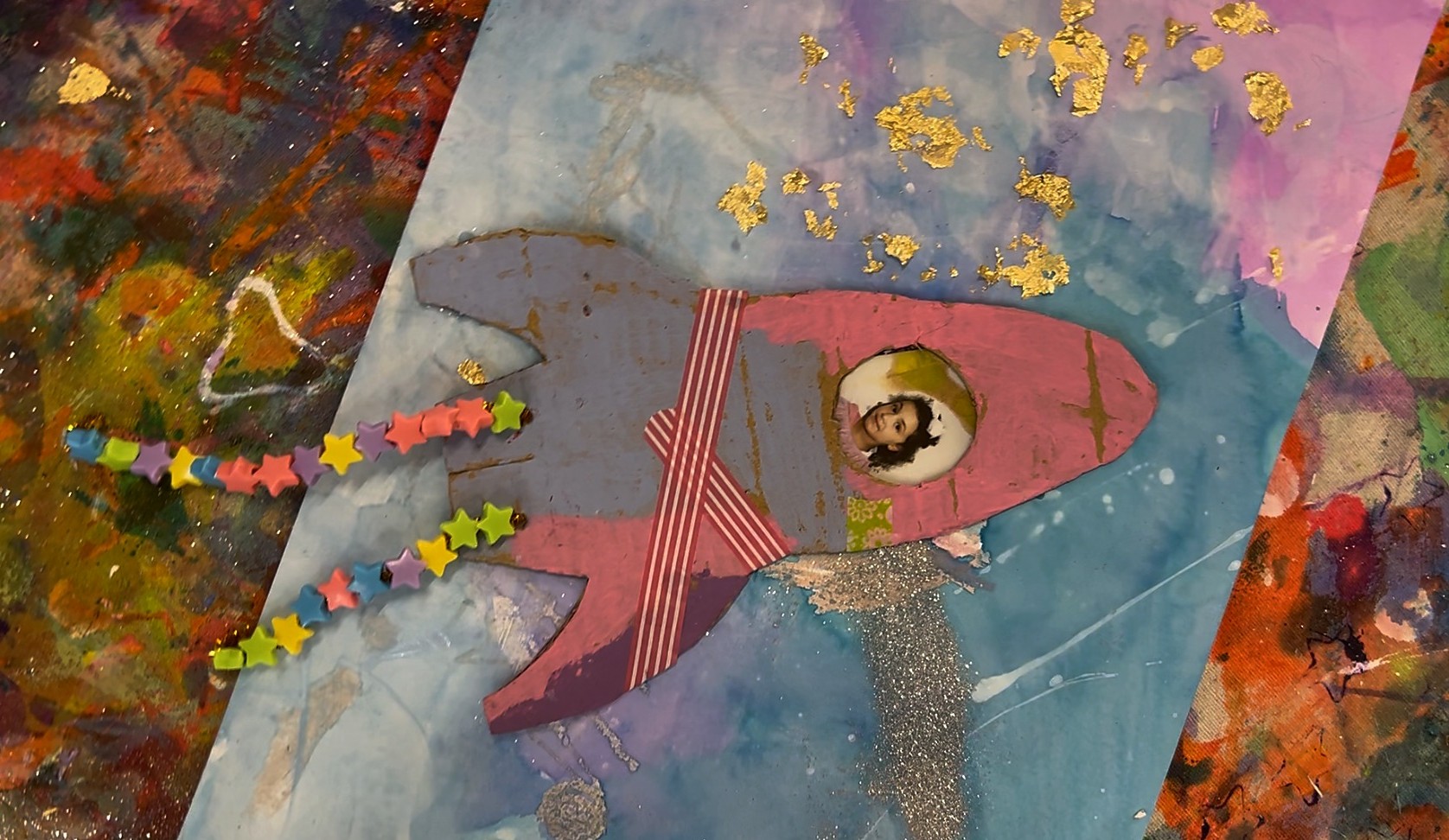
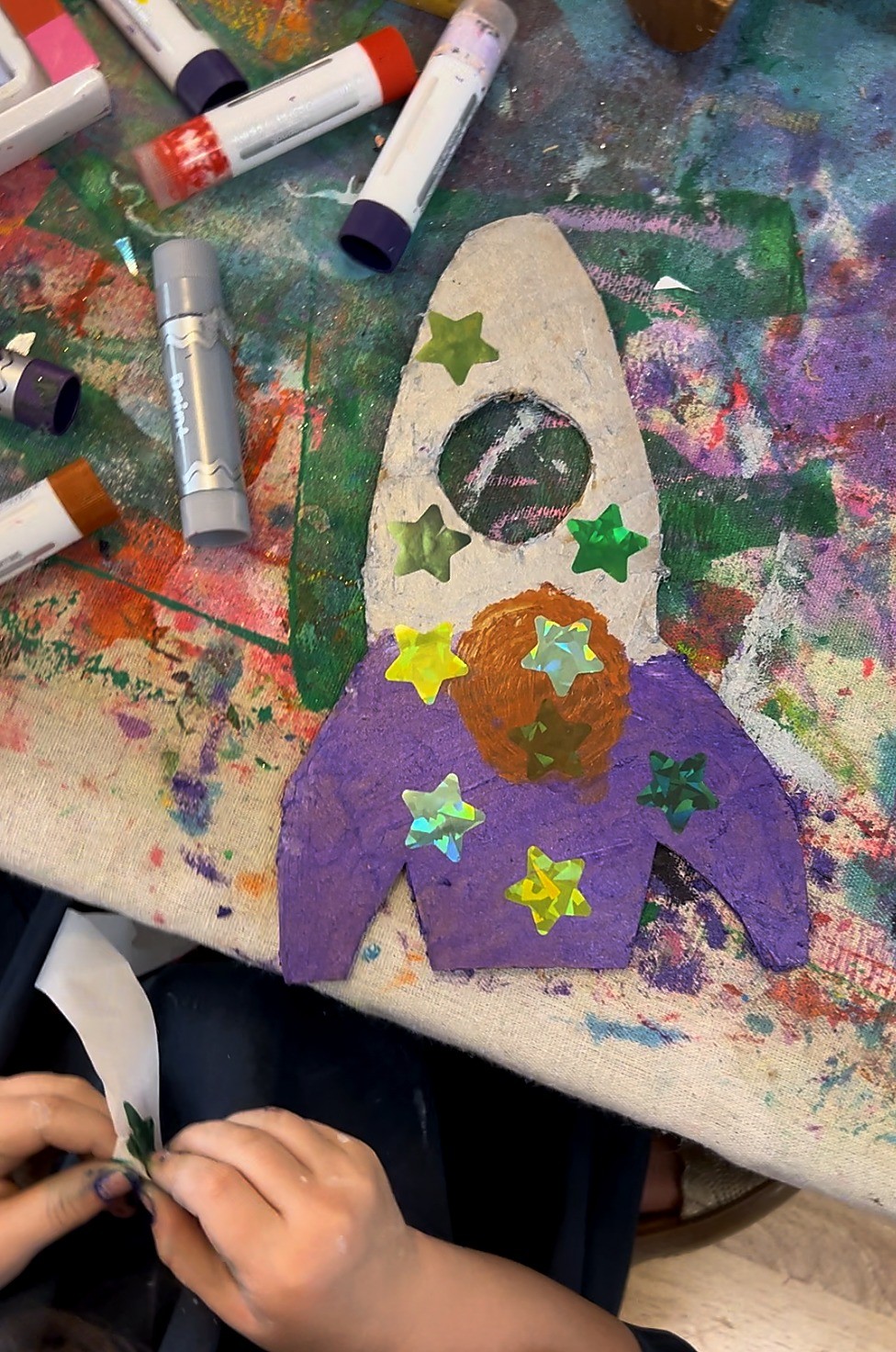
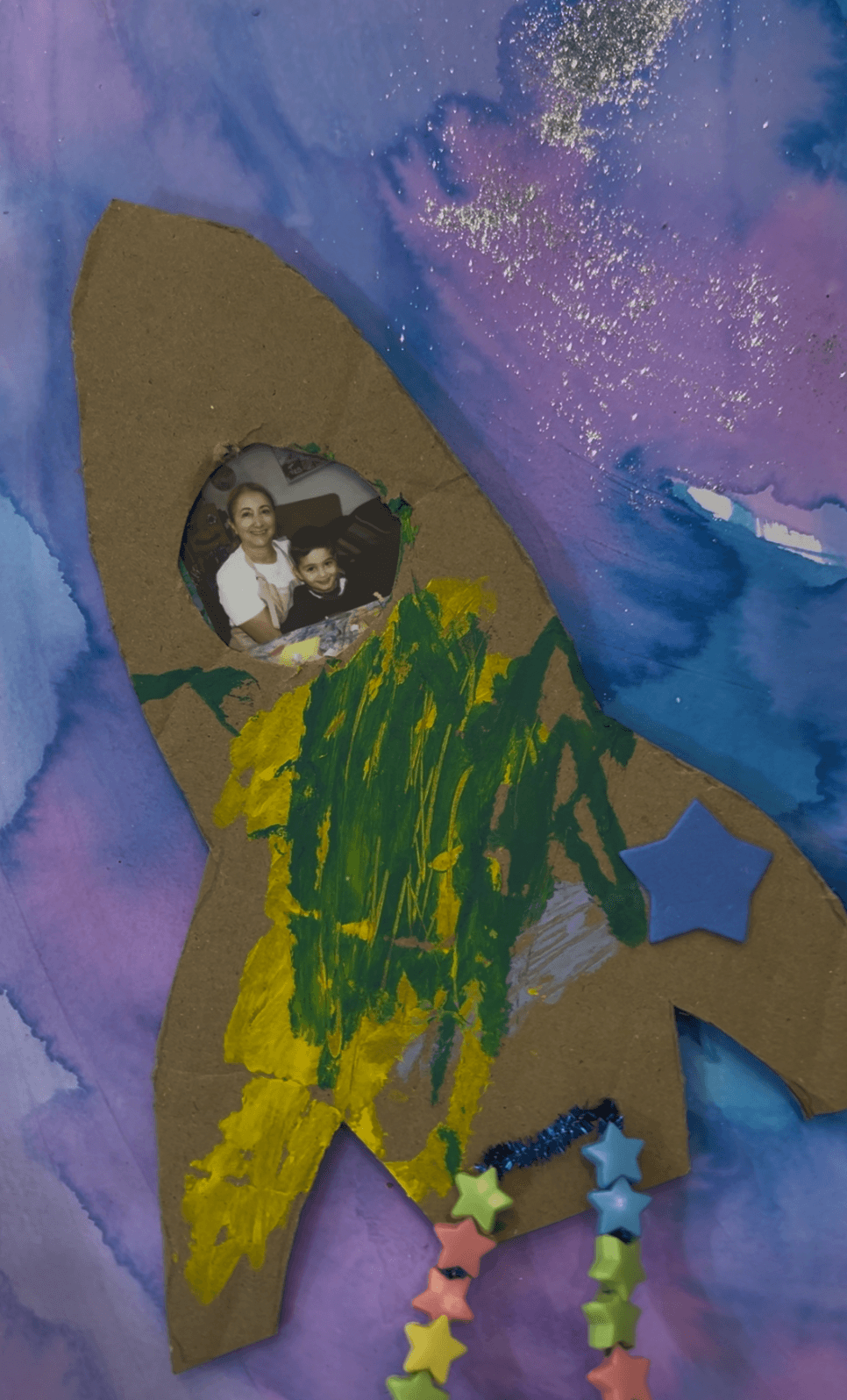
Rockets cut from thick cardboard. About 20cm tall works well. Big enough to hold a proper collage but small enough to take home easily. Cut a round porthole window out of the body of each one. That's the space where the astronaut will eventually appear.
The astronaut is the star of this piece, and there are three ways we love to do it. Take an instant polaroid of each artist on the day and slot it behind the porthole. Print photos in advance if you've asked families for them. Or invite artists to draw themselves as an astronaut on a small piece of paper with oil pastels or paint sticks. The drawn version is our favourite because there's something completely gorgeous about a four-year-old's self-portrait in a space helmet, but the polaroid version is great too.
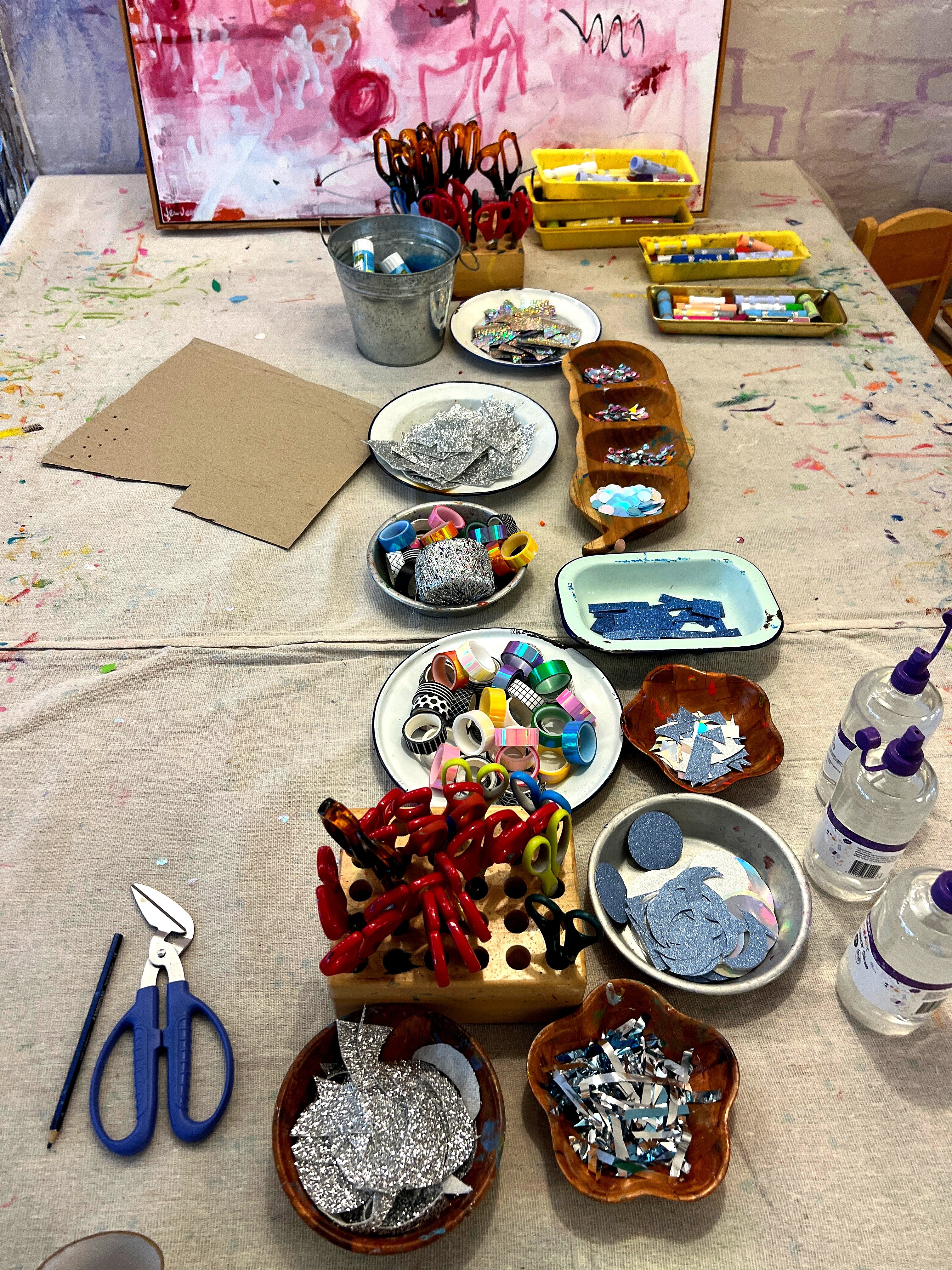
Lay out paint sticks, star stickers, holographic and metallic sticker sheets, pipe cleaners, tissue paper, beads, and sequins. We use paint sticks rather than liquid paint for these because cardboard doesn't love moisture and paint sticks dry instantly. Have scissors, glue sticks and PVA glue ready.
The Making
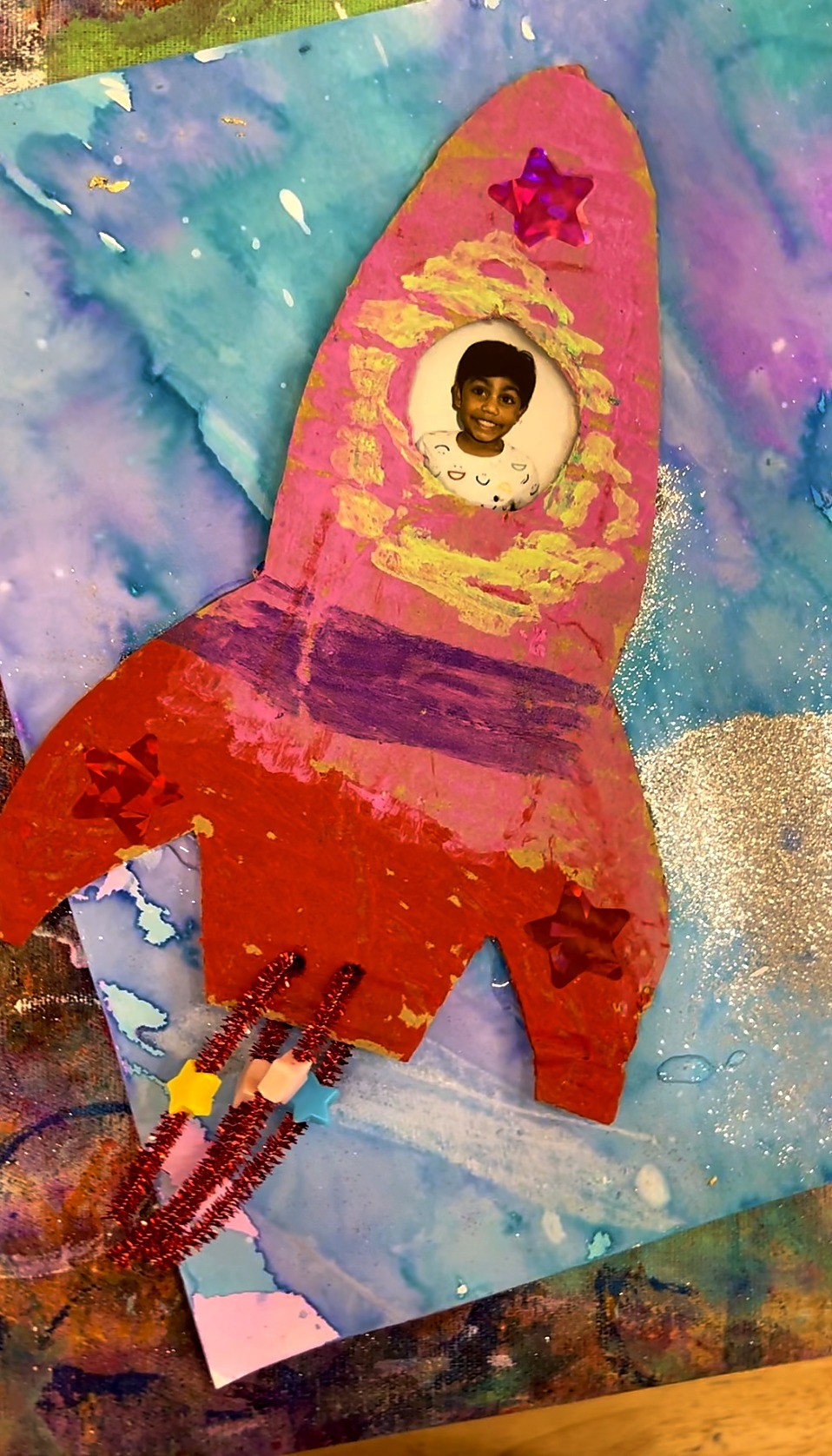
The decorating is where the personalities really come through. One rocket ended up covered in pink holographic stickers with silver pipe cleaners exploding out the base like fireworks. The artist had wrapped each pipe cleaner individually with beads so every single "flame" was different. She worked on it for almost a half-hour without looking up.
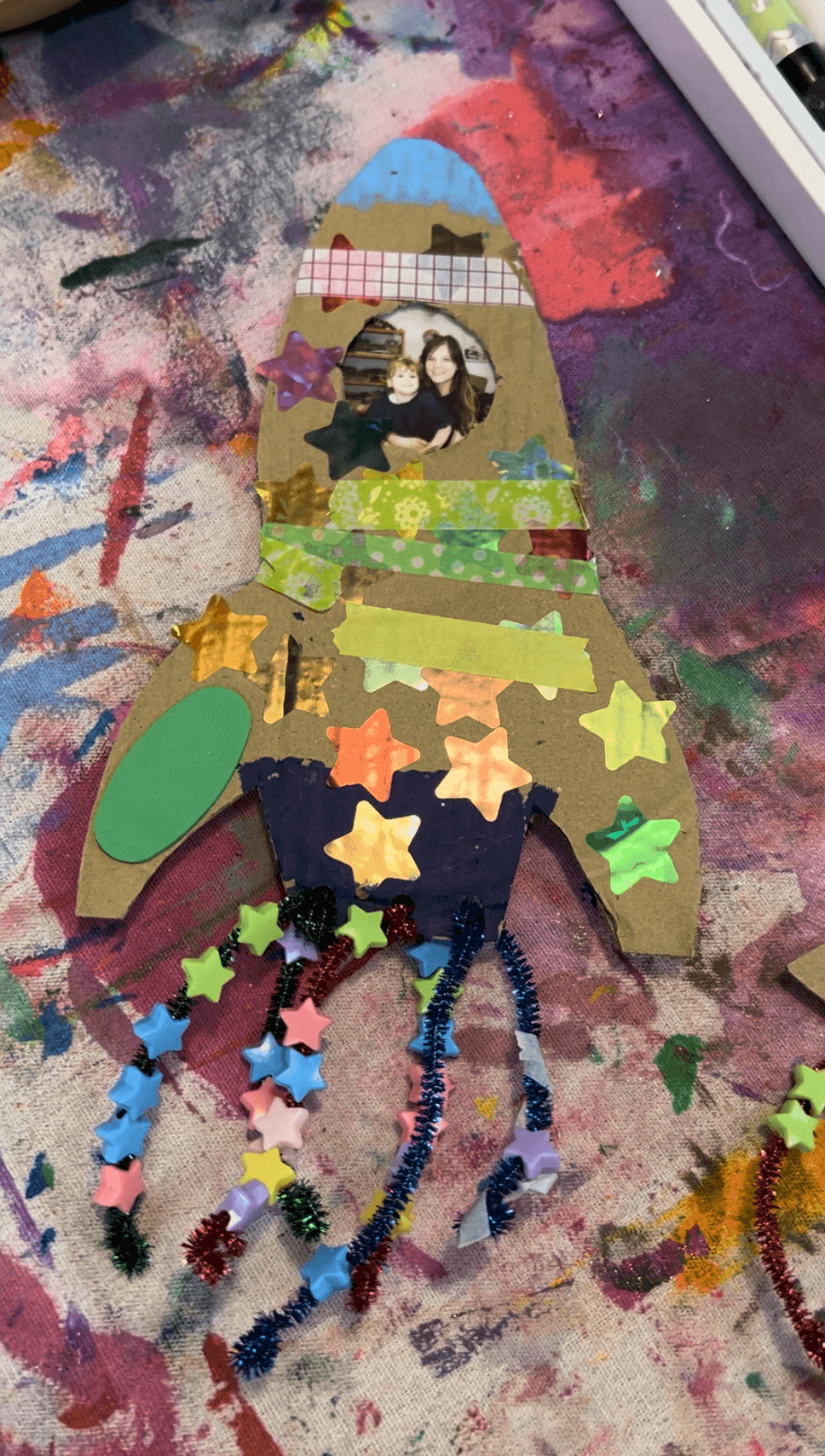
Pipe cleaners twisted together at the base of the rocket become the flames coming out of the thrusters, and this is the bit kids get really into. Red, orange, yellow, pink, blue. Twist them tight or leave them wild. Thread beads down them so the flames look like they're sparking.
When the decorating is done, glue or tape the portrait / photo behind the porthole window. The best!
Variations
Skip the porthole and make the whole astronaut the focal point. Big cardboard astronaut body shapes that artists decorate with their own features, spacesuit details, name badges.
Turn it into a family piece by having everyone in the family draw themselves as an astronaut (little siblings, parents, the dog) and pop them all behind portholes in a larger rocket with multiple windows.
Materials
Thick cardboard rockets, around 20cm tall, with a porthole pre-cut
Instant camera and polaroid film, or printed photos, or paper and oil pastels for self-portraits
Paint sticks
Star stickers, holographic stickers, metallic stickers
Pipe cleaners in fire colours (red, orange, yellow, pink, blue)
Beads for threading
Tissue paper and sequins
PVA glue or glue sticks
Scissors
Masking tape
Back to Top
Astronaut Rockets
Cardboard rockets with an astronaut hiding in the window
Bookmark
Collage
The Set Up
Rockets cut from thick cardboard. About 20cm tall works well. Big enough to hold a proper collage but small enough to take home easily. Cut a round porthole window out of the body of each one. That's the space where the astronaut will eventually appear.
The astronaut is the star of this piece, and there are three ways we love to do it. Take an instant polaroid of each artist on the day and slot it behind the porthole. Print photos in advance if you've asked families for them. Or invite artists to draw themselves as an astronaut on a small piece of paper with oil pastels or paint sticks. The drawn version is our favourite because there's something completely gorgeous about a four-year-old's self-portrait in a space helmet, but the polaroid version is great too.
Lay out paint sticks, star stickers, holographic and metallic sticker sheets, pipe cleaners, tissue paper, beads, and sequins. We use paint sticks rather than liquid paint for these because cardboard doesn't love moisture and paint sticks dry instantly. Have scissors, glue sticks and PVA glue ready.
The Making
The decorating is where the personalities really come through. One rocket ended up covered in pink holographic stickers with silver pipe cleaners exploding out the base like fireworks. The artist had wrapped each pipe cleaner individually with beads so every single "flame" was different. She worked on it for almost a half-hour without looking up.
Pipe cleaners twisted together at the base of the rocket become the flames coming out of the thrusters, and this is the bit kids get really into. Red, orange, yellow, pink, blue. Twist them tight or leave them wild. Thread beads down them so the flames look like they're sparking.
When the decorating is done, glue or tape the portrait / photo behind the porthole window. The best!
Variations
Skip the porthole and make the whole astronaut the focal point. Big cardboard astronaut body shapes that artists decorate with their own features, spacesuit details, name badges.
Turn it into a family piece by having everyone in the family draw themselves as an astronaut (little siblings, parents, the dog) and pop them all behind portholes in a larger rocket with multiple windows.
Materials
Thick cardboard rockets, around 20cm tall, with a porthole pre-cut
Instant camera and polaroid film, or printed photos, or paper and oil pastels for self-portraits
Paint sticks
Star stickers, holographic stickers, metallic stickers
Pipe cleaners in fire colours (red, orange, yellow, pink, blue)
Beads for threading
Tissue paper and sequins
PVA glue or glue sticks
Scissors
Masking tape
Back to Top
Astronaut Rockets
Cardboard rockets with an astronaut hiding in the window
Bookmark
Collage
The Set Up
Rockets cut from thick cardboard. About 20cm tall works well. Big enough to hold a proper collage but small enough to take home easily. Cut a round porthole window out of the body of each one. That's the space where the astronaut will eventually appear.
The astronaut is the star of this piece, and there are three ways we love to do it. Take an instant polaroid of each artist on the day and slot it behind the porthole. Print photos in advance if you've asked families for them. Or invite artists to draw themselves as an astronaut on a small piece of paper with oil pastels or paint sticks. The drawn version is our favourite because there's something completely gorgeous about a four-year-old's self-portrait in a space helmet, but the polaroid version is great too.
Lay out paint sticks, star stickers, holographic and metallic sticker sheets, pipe cleaners, tissue paper, beads, and sequins. We use paint sticks rather than liquid paint for these because cardboard doesn't love moisture and paint sticks dry instantly. Have scissors, glue sticks and PVA glue ready.
The Making
The decorating is where the personalities really come through. One rocket ended up covered in pink holographic stickers with silver pipe cleaners exploding out the base like fireworks. The artist had wrapped each pipe cleaner individually with beads so every single "flame" was different. She worked on it for almost a half-hour without looking up.
Pipe cleaners twisted together at the base of the rocket become the flames coming out of the thrusters, and this is the bit kids get really into. Red, orange, yellow, pink, blue. Twist them tight or leave them wild. Thread beads down them so the flames look like they're sparking.
When the decorating is done, glue or tape the portrait / photo behind the porthole window. The best!
Variations
Skip the porthole and make the whole astronaut the focal point. Big cardboard astronaut body shapes that artists decorate with their own features, spacesuit details, name badges.
Turn it into a family piece by having everyone in the family draw themselves as an astronaut (little siblings, parents, the dog) and pop them all behind portholes in a larger rocket with multiple windows.
Materials
Thick cardboard rockets, around 20cm tall, with a porthole pre-cut
Instant camera and polaroid film, or printed photos, or paper and oil pastels for self-portraits
Paint sticks
Star stickers, holographic stickers, metallic stickers
Pipe cleaners in fire colours (red, orange, yellow, pink, blue)
Beads for threading
Tissue paper and sequins
PVA glue or glue sticks
Scissors
Masking tape
Back to Top