

ARTFUL EXPERIENCES
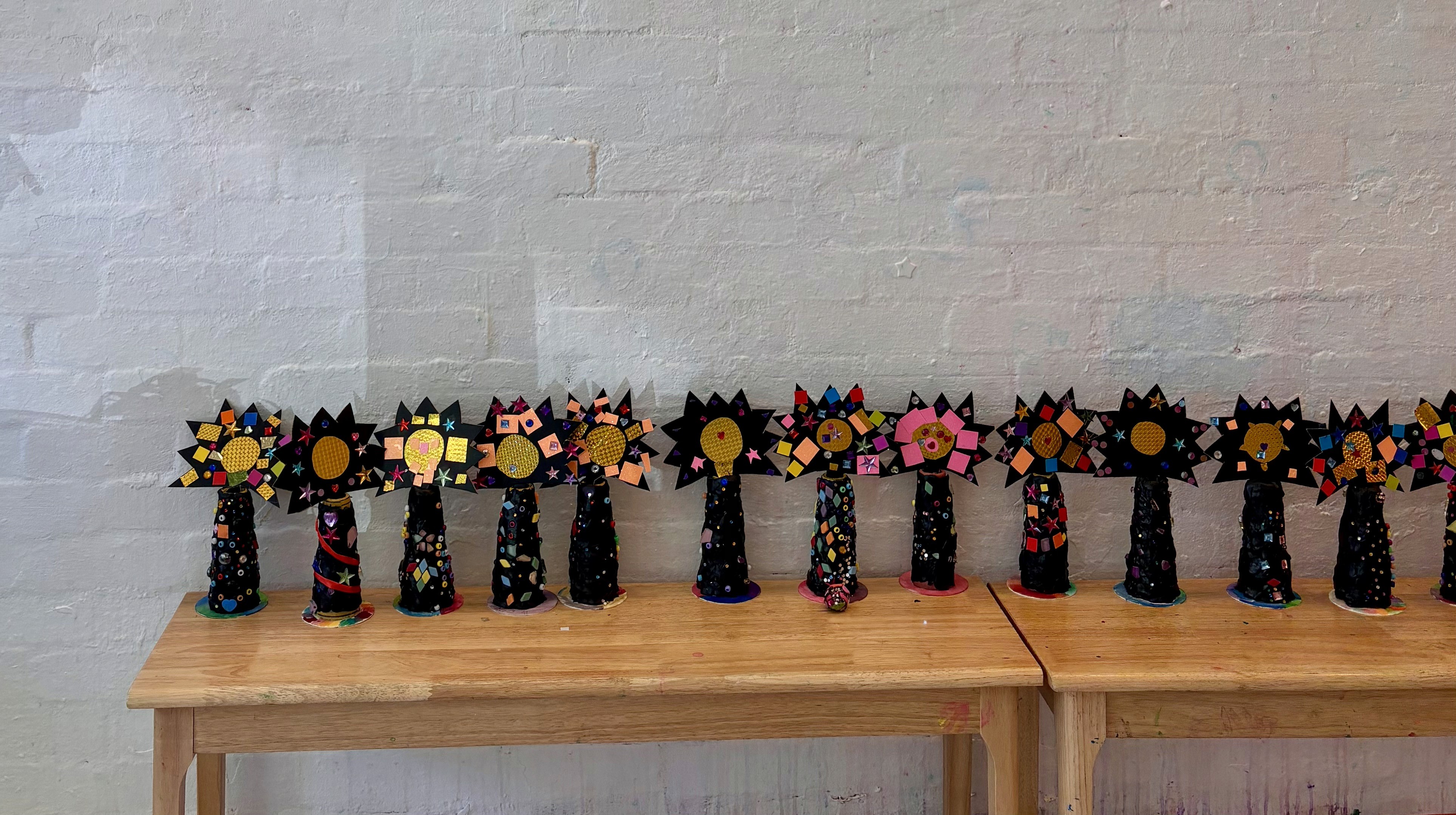
Gaudí Sun Sculptures
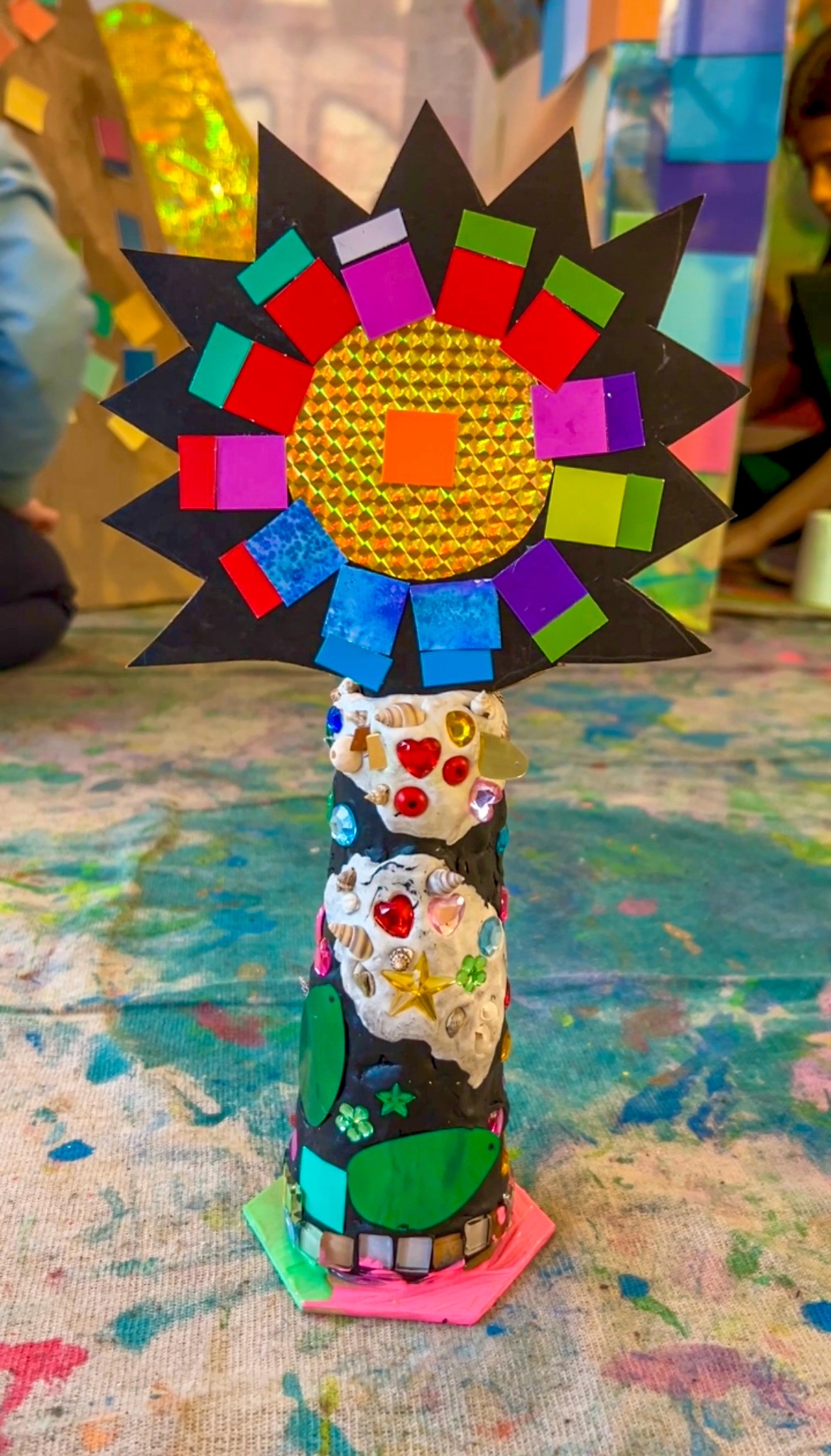
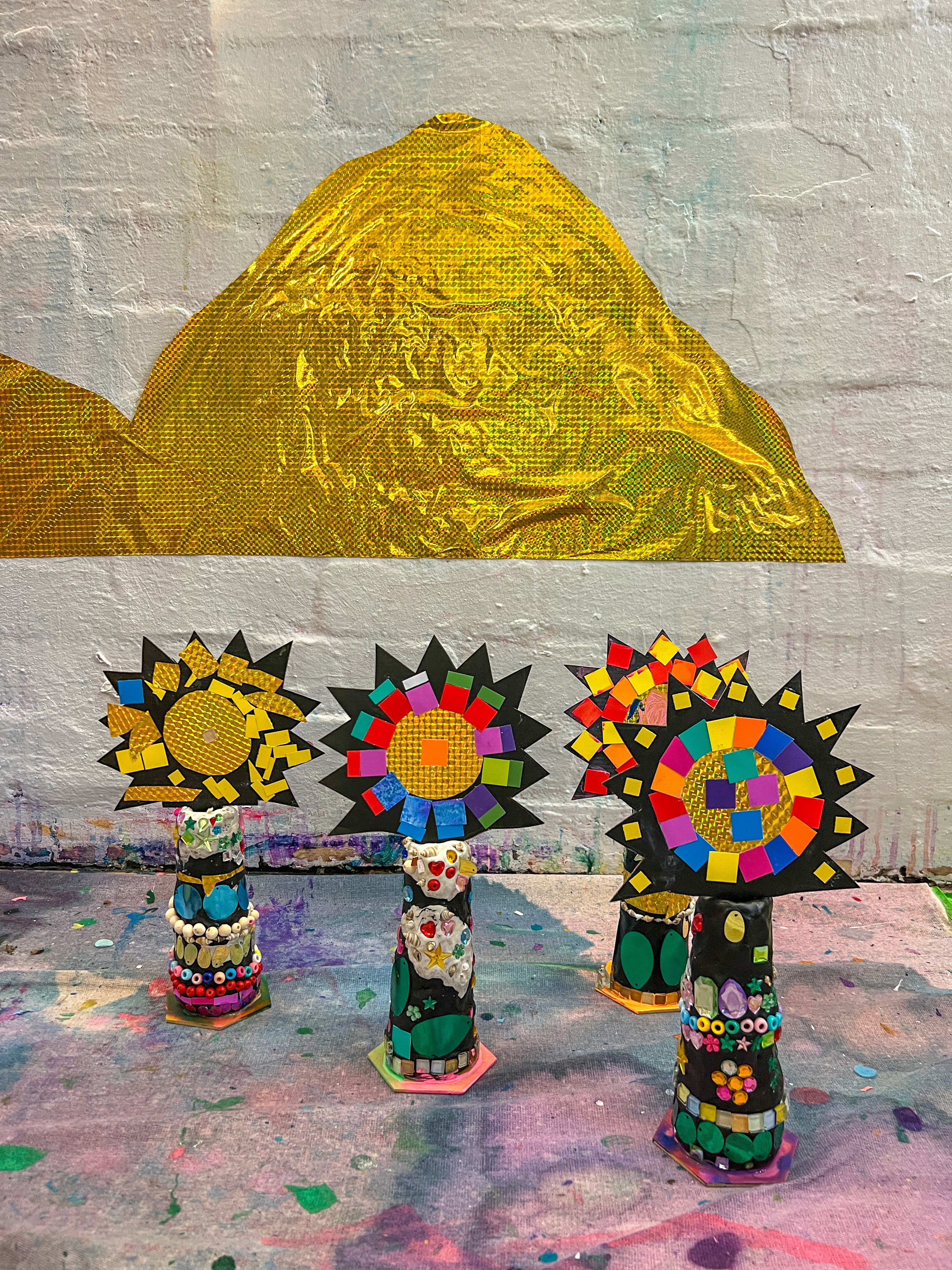
An ode to the sun, with colour popping against a dark base.
Bookmark
Sculpture
The Set Up
This one is inspired by my time in Barcelona and the way Parc Güell seems to glow in the sun. I wanted a sculpture that felt like an ode to warmth and sparkle, but still totally open ended.
We start with cardboard yarn cones. We source ours from our local reverse art truck and they are such a brilliant base for sculptures. They are sturdy, lightweight, and instantly feel like something you can transform.
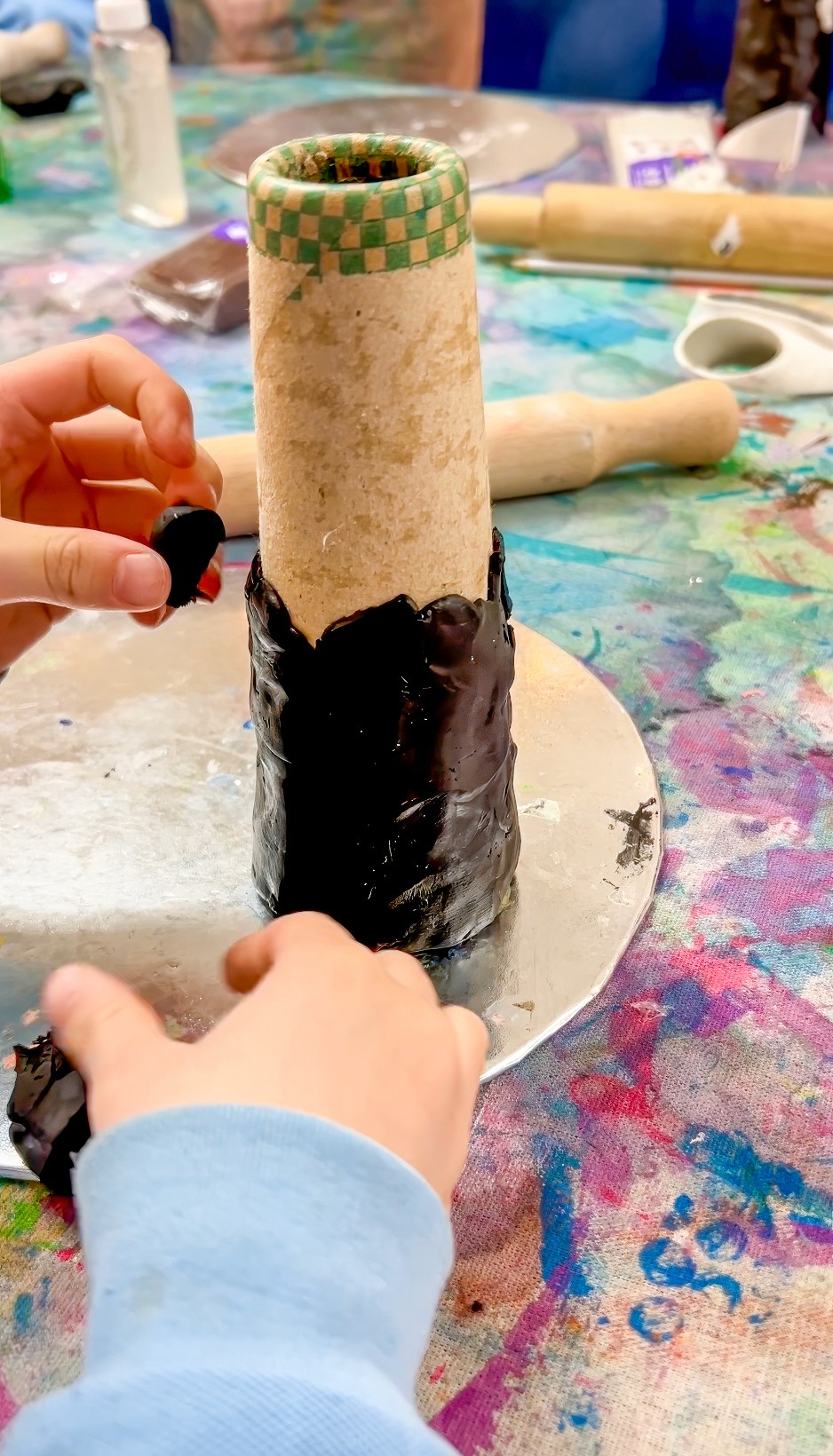
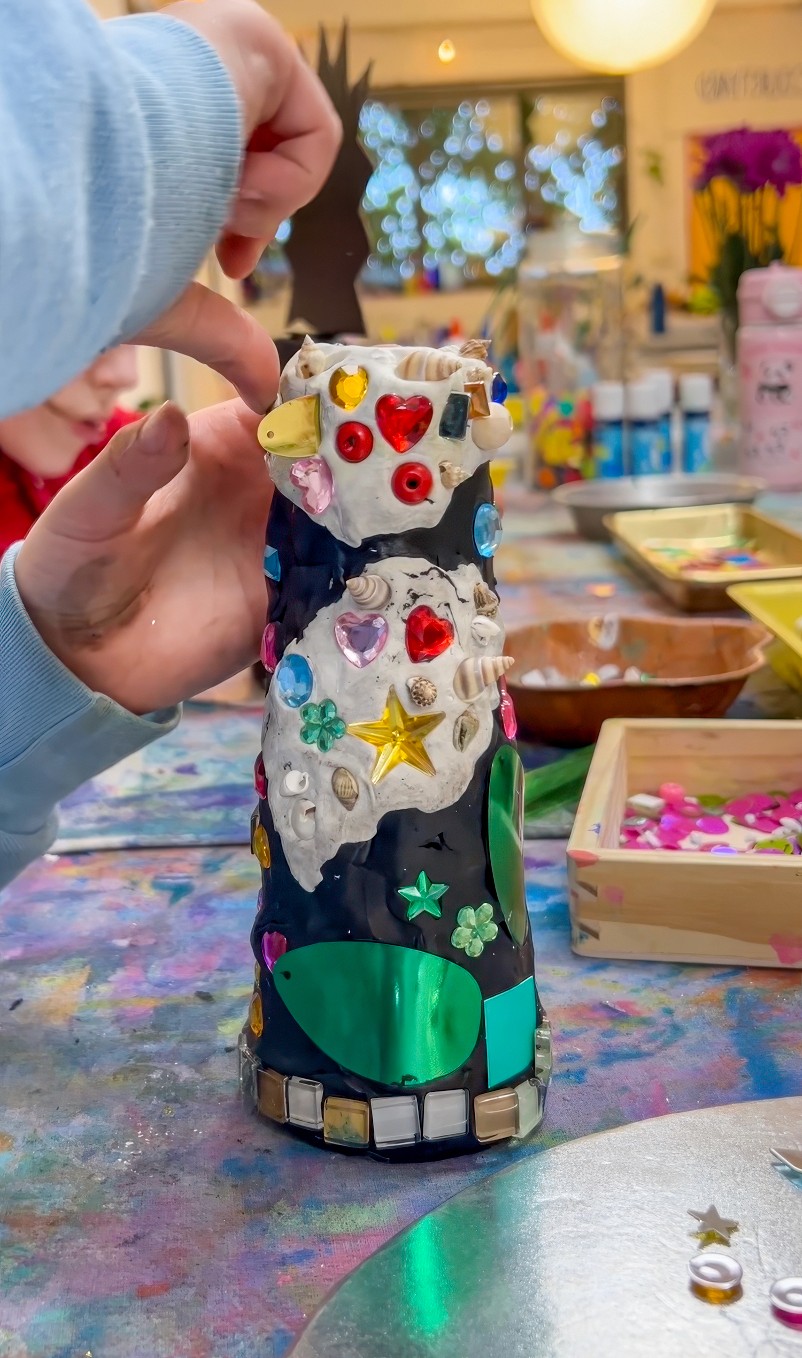
The trick that makes this version feel really Gaudí to me is using a dark plasticine base. Black is my favourite because it makes every colour pop, but truly, any deep colour works.
Warm the plasticine first. For little hands, this can be the hardest step, so I like to have it sliced into smaller chunks and ready to squish. Once it softens, it spreads beautifully.
The Making
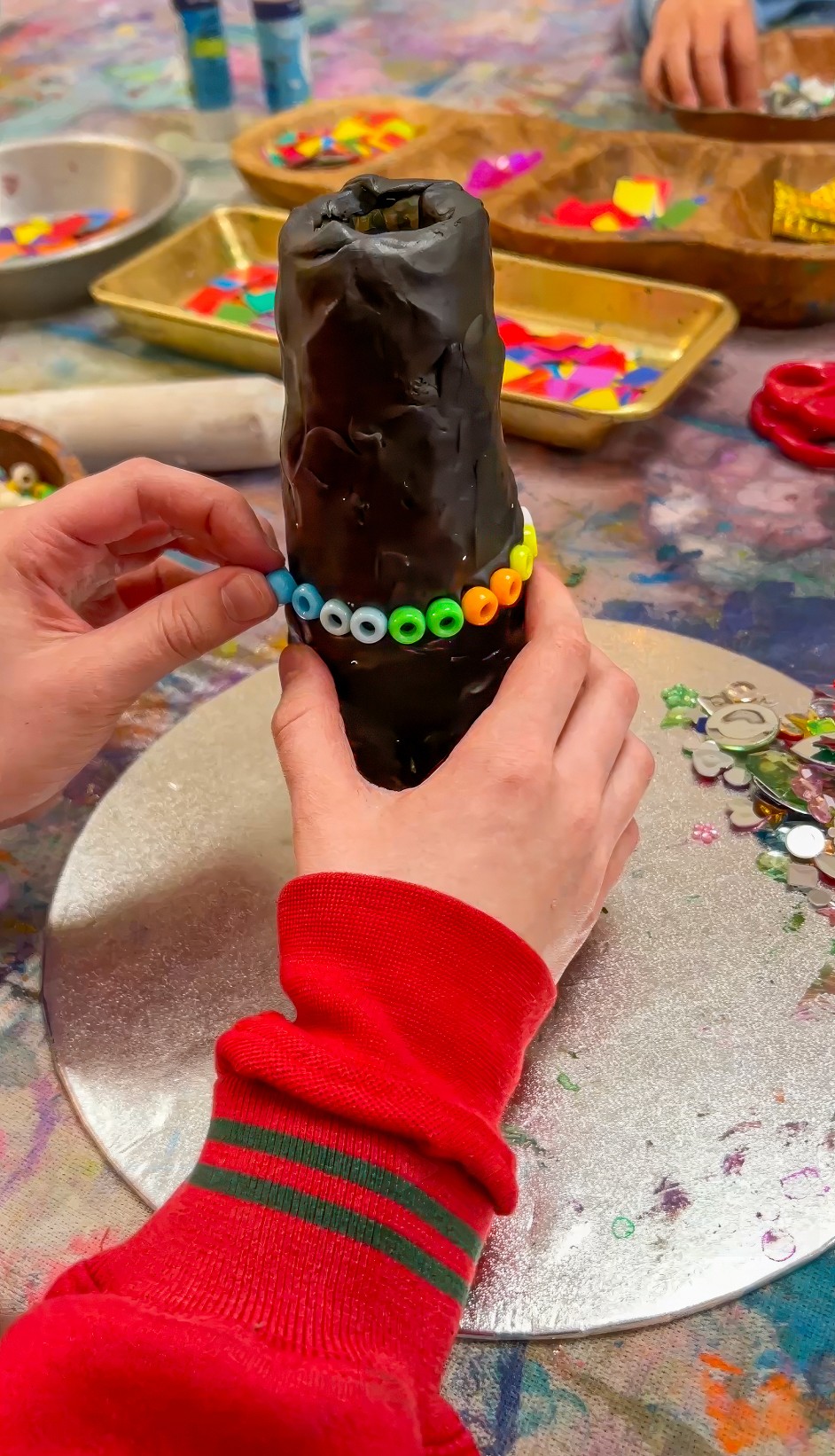
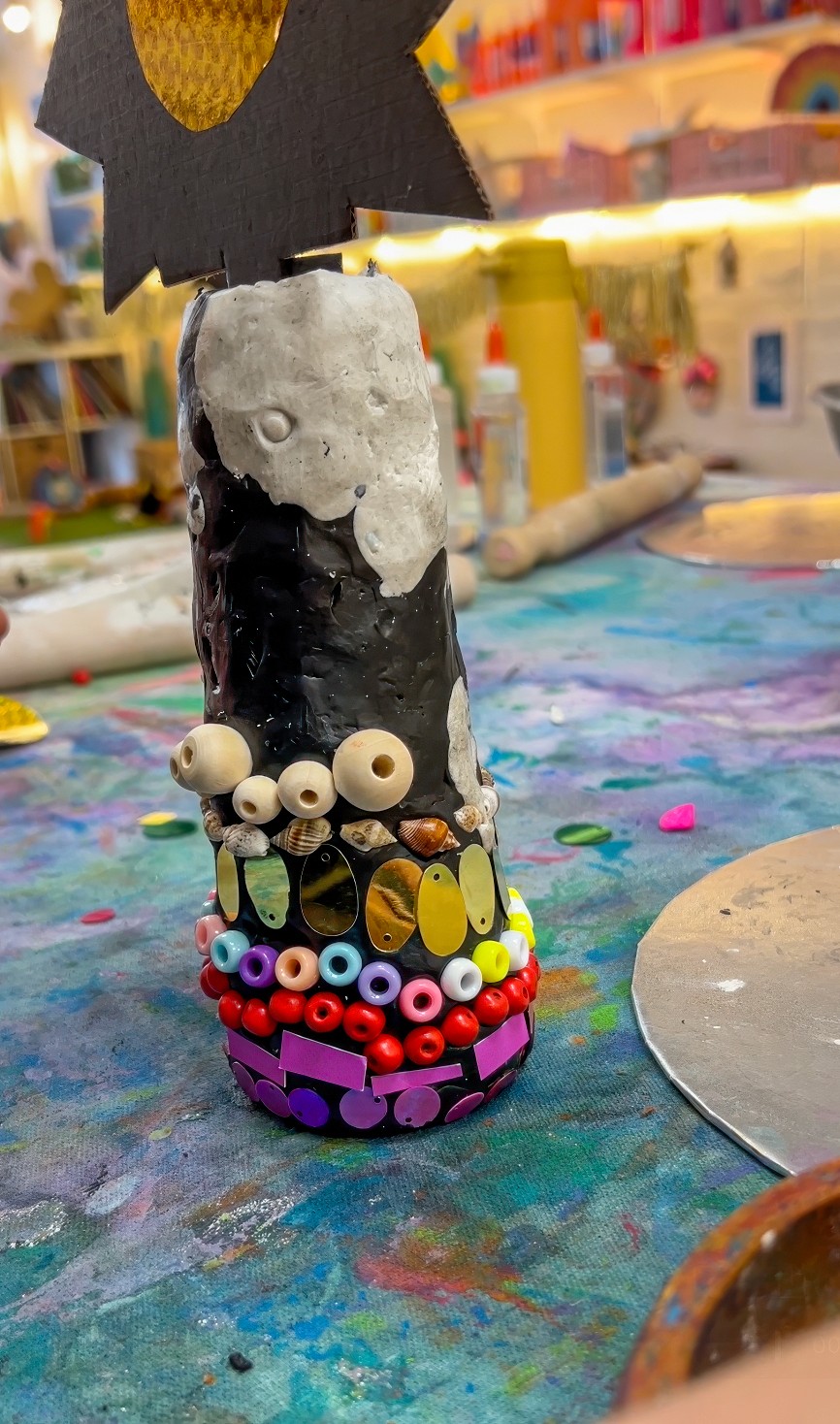
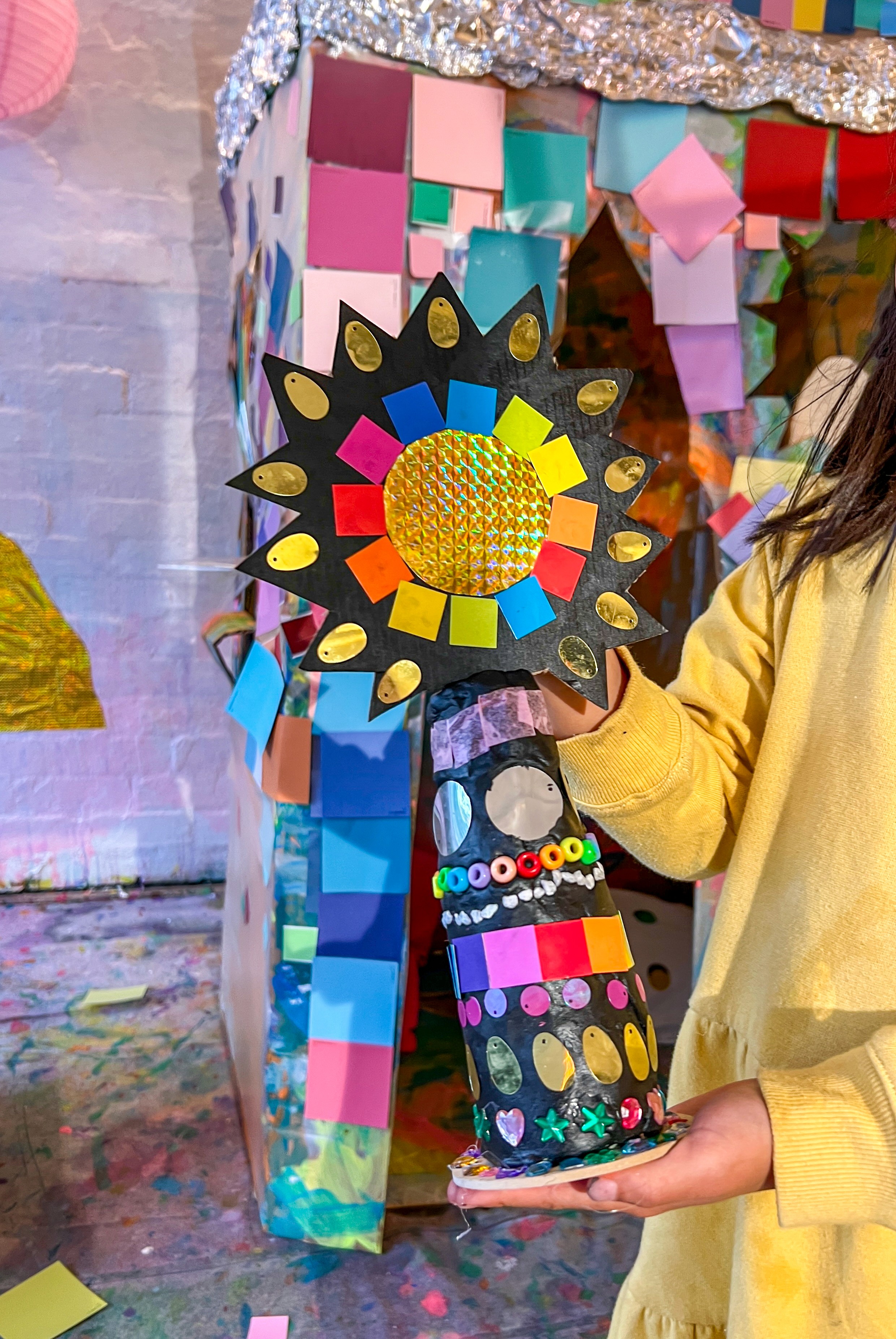
Cover the cone in plasticine, aiming for around 2cm thickness so tiles and sequins can press in securely. Then invite artists to choose their pieces and design however they like. Patterns, spirals, colour bands, totally random bursts, minimal, maximal, it all works.
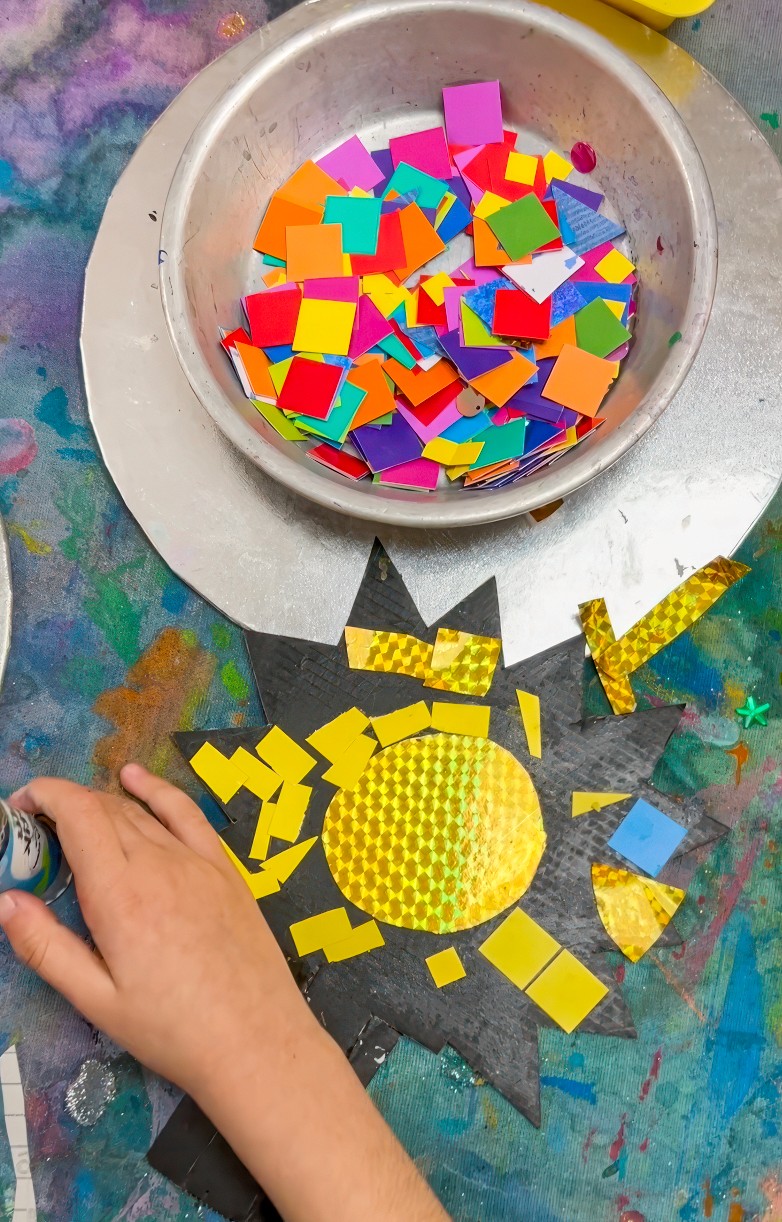
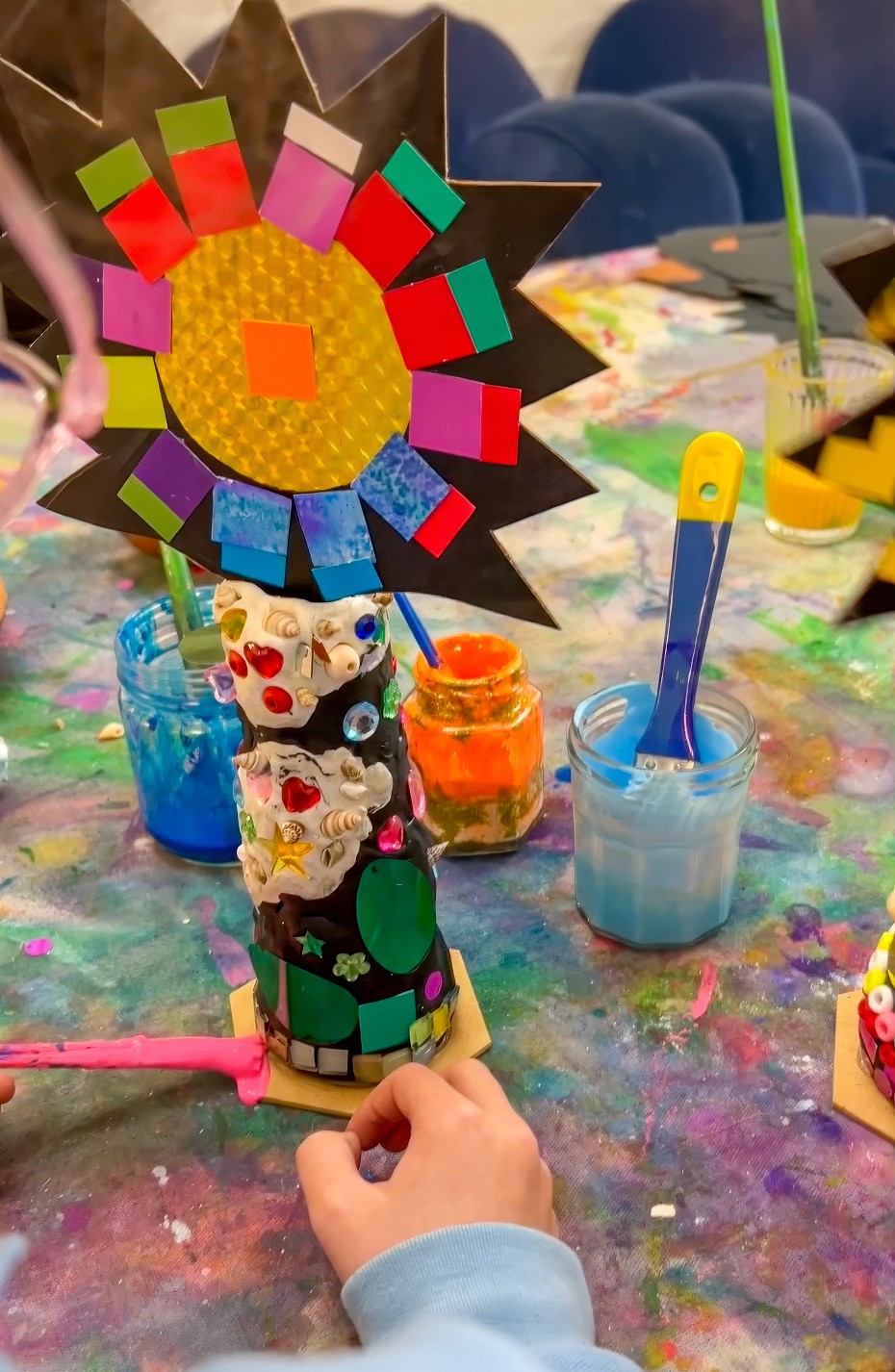
Once the cone feels finished to the artist, add the sun backing. Cut a simple sun shape from black cardboard, then collage on paper squares like tiny mosaic tiles. A gold circle or anything shiny for the centre helps bring the motif together, but it’s optional.
Hot glue the cone onto a wooden base shape (circles and hexagons work so well). Add paint stick or oil pastel details if you like, especially around the base.
Variations
Try a limited palette, all warm tones, all blues, all metallics.
Swap plasticine for air dry clay if you want a longer drying process, but plasticine is lovely because it stays workable.
Offer a mix of tiny and oversized tiles so the artists can play with scale.
Materials
• Cardboard yarn cones
• Plasticine (black or another dark base colour)
• Tiles and sequins in varied sizes
• Black cardboard (sun shape)
• Paper squares or cut paper shapes for collage
• Gold circle, gold contact paper, or any shiny scraps
• Wooden base shapes
• Hot glue gun
Back to Top
Gaudí Sun Sculptures
An ode to the sun, with colour popping against a dark base.
Bookmark
Sculpture
The Set Up
This one is inspired by my time in Barcelona and the way Parc Güell seems to glow in the sun. I wanted a sculpture that felt like an ode to warmth and sparkle, but still totally open ended.
We start with cardboard yarn cones. We source ours from our local reverse art truck and they are such a brilliant base for sculptures. They are sturdy, lightweight, and instantly feel like something you can transform.
The trick that makes this version feel really Gaudí to me is using a dark plasticine base. Black is my favourite because it makes every colour pop, but truly, any deep colour works.
Warm the plasticine first. For little hands, this can be the hardest step, so I like to have it sliced into smaller chunks and ready to squish. Once it softens, it spreads beautifully.
The Making
Cover the cone in plasticine, aiming for around 2cm thickness so tiles and sequins can press in securely. Then invite artists to choose their pieces and design however they like. Patterns, spirals, colour bands, totally random bursts, minimal, maximal, it all works.
Once the cone feels finished to the artist, add the sun backing. Cut a simple sun shape from black cardboard, then collage on paper squares like tiny mosaic tiles. A gold circle or anything shiny for the centre helps bring the motif together, but it’s optional.
Hot glue the cone onto a wooden base shape (circles and hexagons work so well). Add paint stick or oil pastel details if you like, especially around the base.
Variations
Try a limited palette, all warm tones, all blues, all metallics.
Swap plasticine for air dry clay if you want a longer drying process, but plasticine is lovely because it stays workable.
Offer a mix of tiny and oversized tiles so the artists can play with scale.
Materials
• Cardboard yarn cones
• Plasticine (black or another dark base colour)
• Tiles and sequins in varied sizes
• Black cardboard (sun shape)
• Paper squares or cut paper shapes for collage
• Gold circle, gold contact paper, or any shiny scraps
• Wooden base shapes
• Hot glue gun
Back to Top
Gaudí Sun Sculptures
An ode to the sun, with colour popping against a dark base.
Bookmark
Sculpture
The Set Up
This one is inspired by my time in Barcelona and the way Parc Güell seems to glow in the sun. I wanted a sculpture that felt like an ode to warmth and sparkle, but still totally open ended.
We start with cardboard yarn cones. We source ours from our local reverse art truck and they are such a brilliant base for sculptures. They are sturdy, lightweight, and instantly feel like something you can transform.
The trick that makes this version feel really Gaudí to me is using a dark plasticine base. Black is my favourite because it makes every colour pop, but truly, any deep colour works.
Warm the plasticine first. For little hands, this can be the hardest step, so I like to have it sliced into smaller chunks and ready to squish. Once it softens, it spreads beautifully.
The Making
Cover the cone in plasticine, aiming for around 2cm thickness so tiles and sequins can press in securely. Then invite artists to choose their pieces and design however they like. Patterns, spirals, colour bands, totally random bursts, minimal, maximal, it all works.
Once the cone feels finished to the artist, add the sun backing. Cut a simple sun shape from black cardboard, then collage on paper squares like tiny mosaic tiles. A gold circle or anything shiny for the centre helps bring the motif together, but it’s optional.
Hot glue the cone onto a wooden base shape (circles and hexagons work so well). Add paint stick or oil pastel details if you like, especially around the base.
Variations
Try a limited palette, all warm tones, all blues, all metallics.
Swap plasticine for air dry clay if you want a longer drying process, but plasticine is lovely because it stays workable.
Offer a mix of tiny and oversized tiles so the artists can play with scale.
Materials
• Cardboard yarn cones
• Plasticine (black or another dark base colour)
• Tiles and sequins in varied sizes
• Black cardboard (sun shape)
• Paper squares or cut paper shapes for collage
• Gold circle, gold contact paper, or any shiny scraps
• Wooden base shapes
• Hot glue gun
Back to Top
Smudge Sagrada Familia
A giant cardboard cathedral for collaborative mosaic play.
Bookmark
Installations
The Set Up
The Sagrada Familia is still being built, more than a century after construction began, which feels like the ultimate reminder that big creative visions can take time.
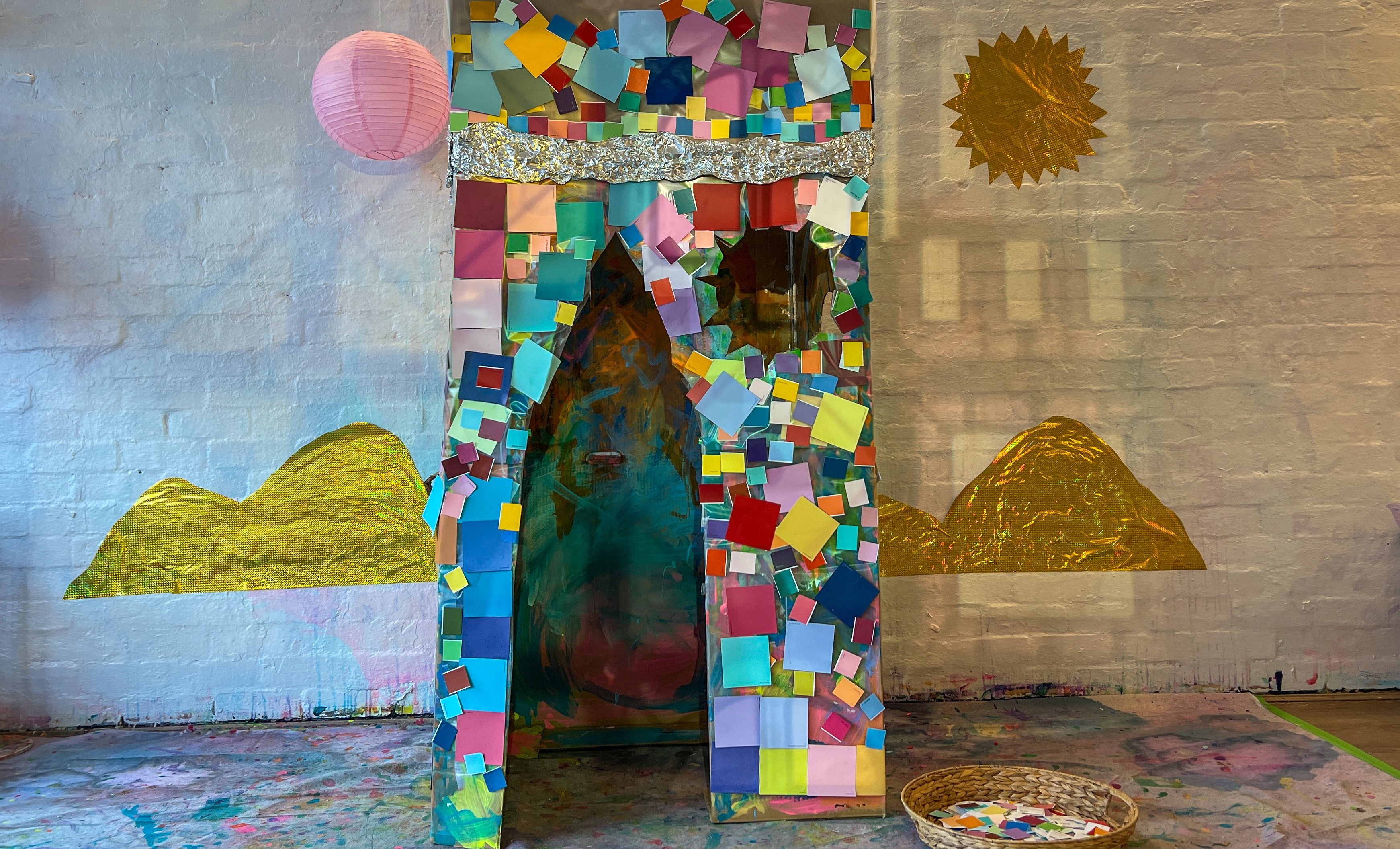
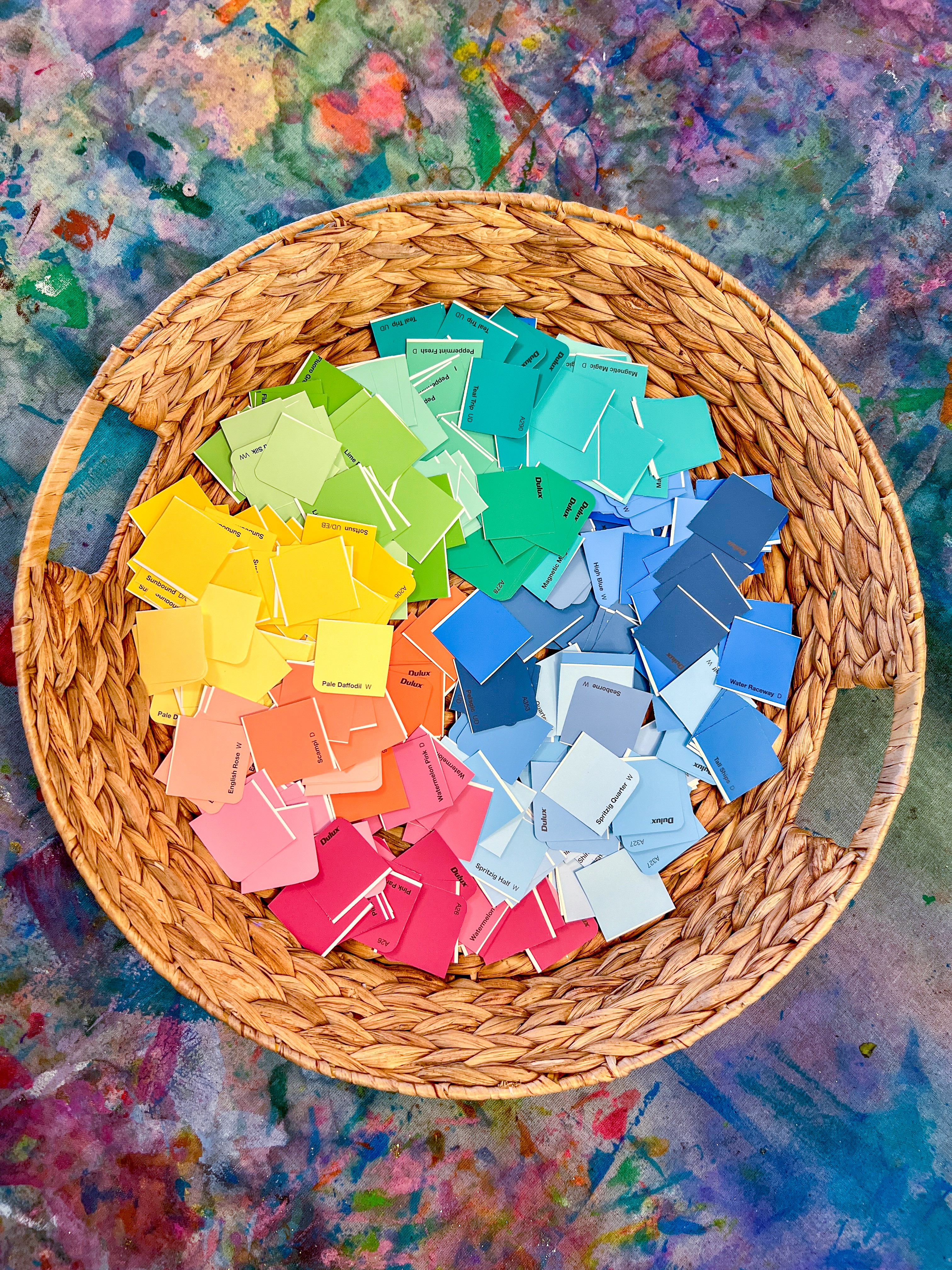
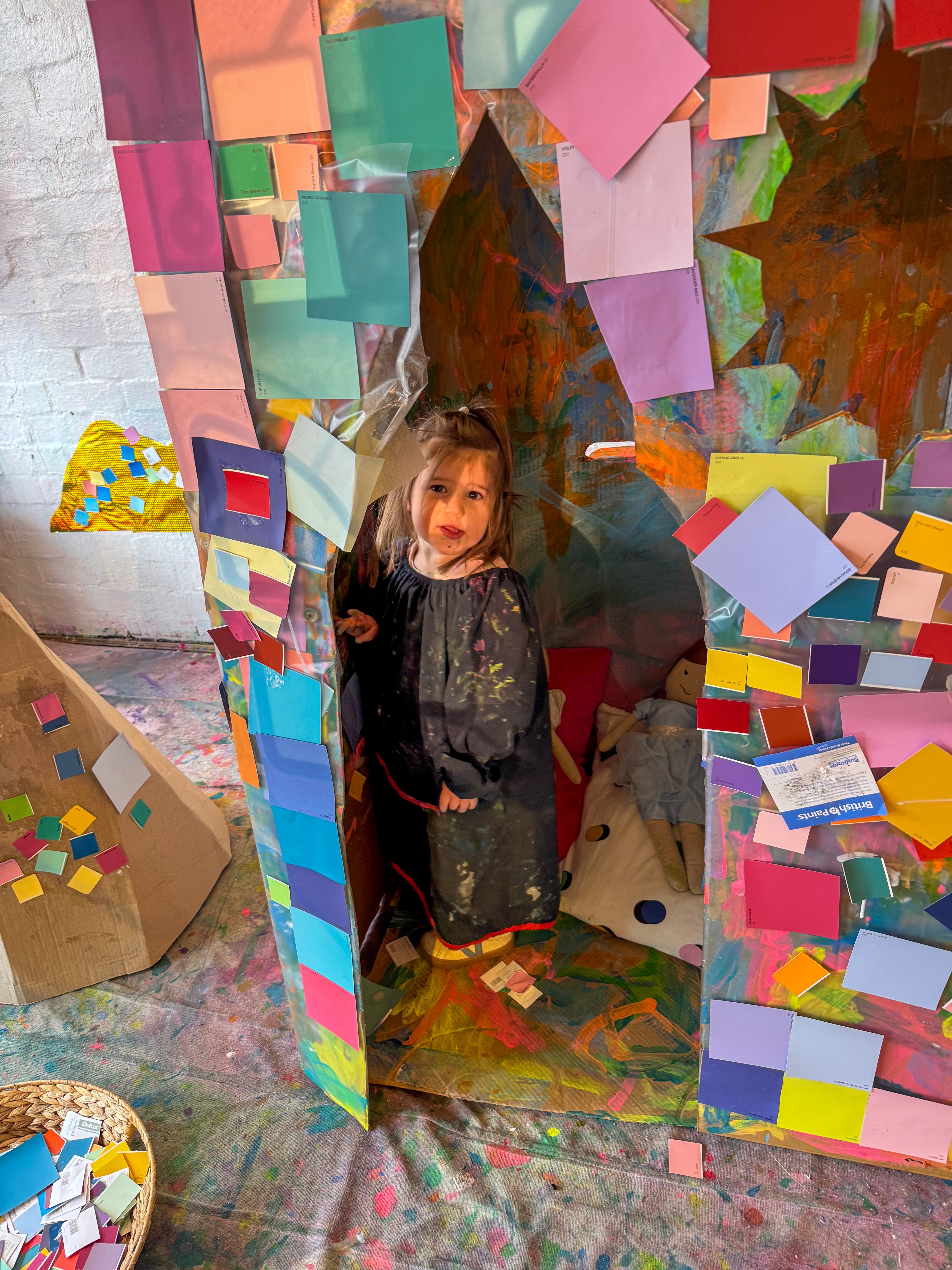
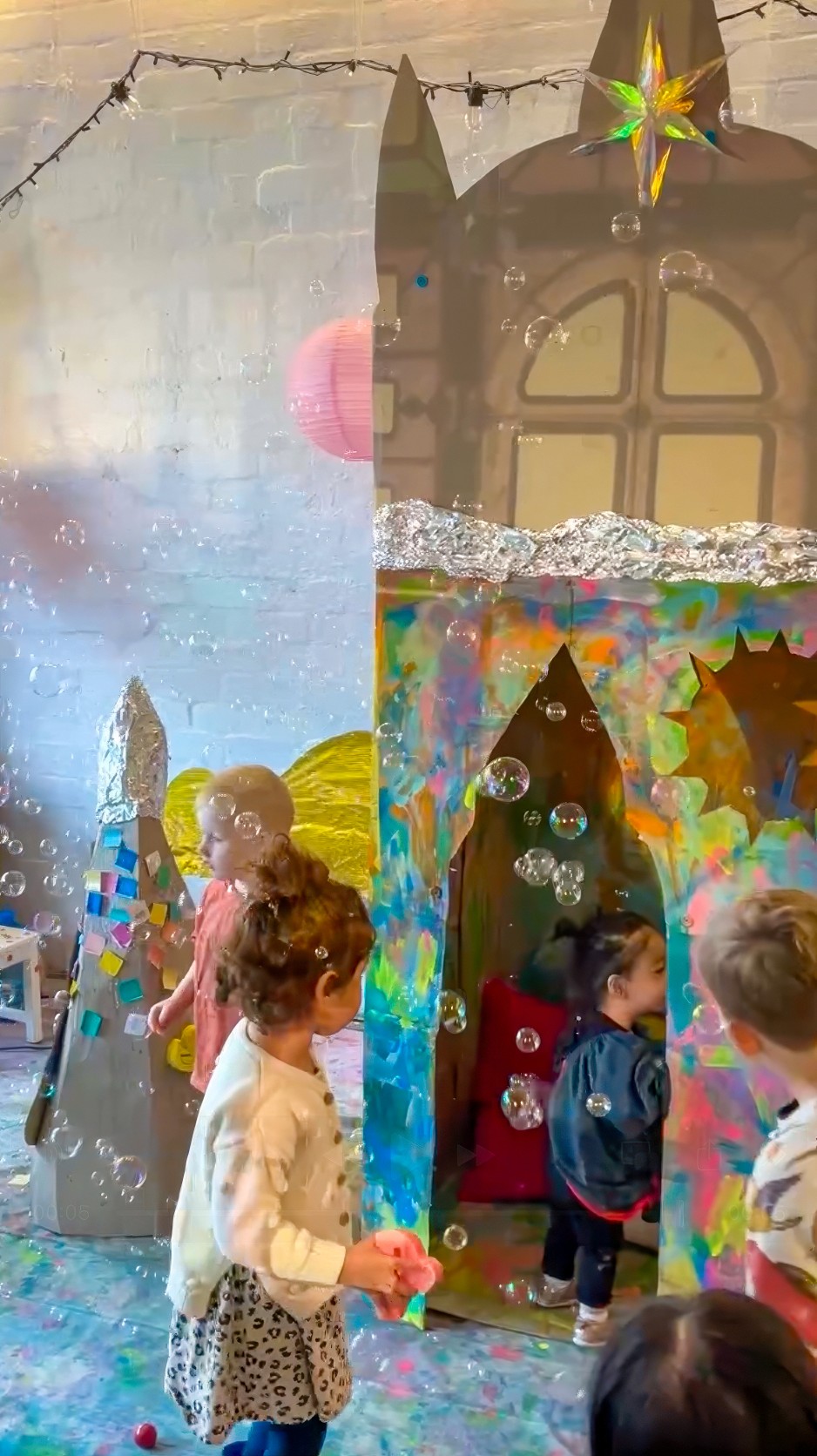
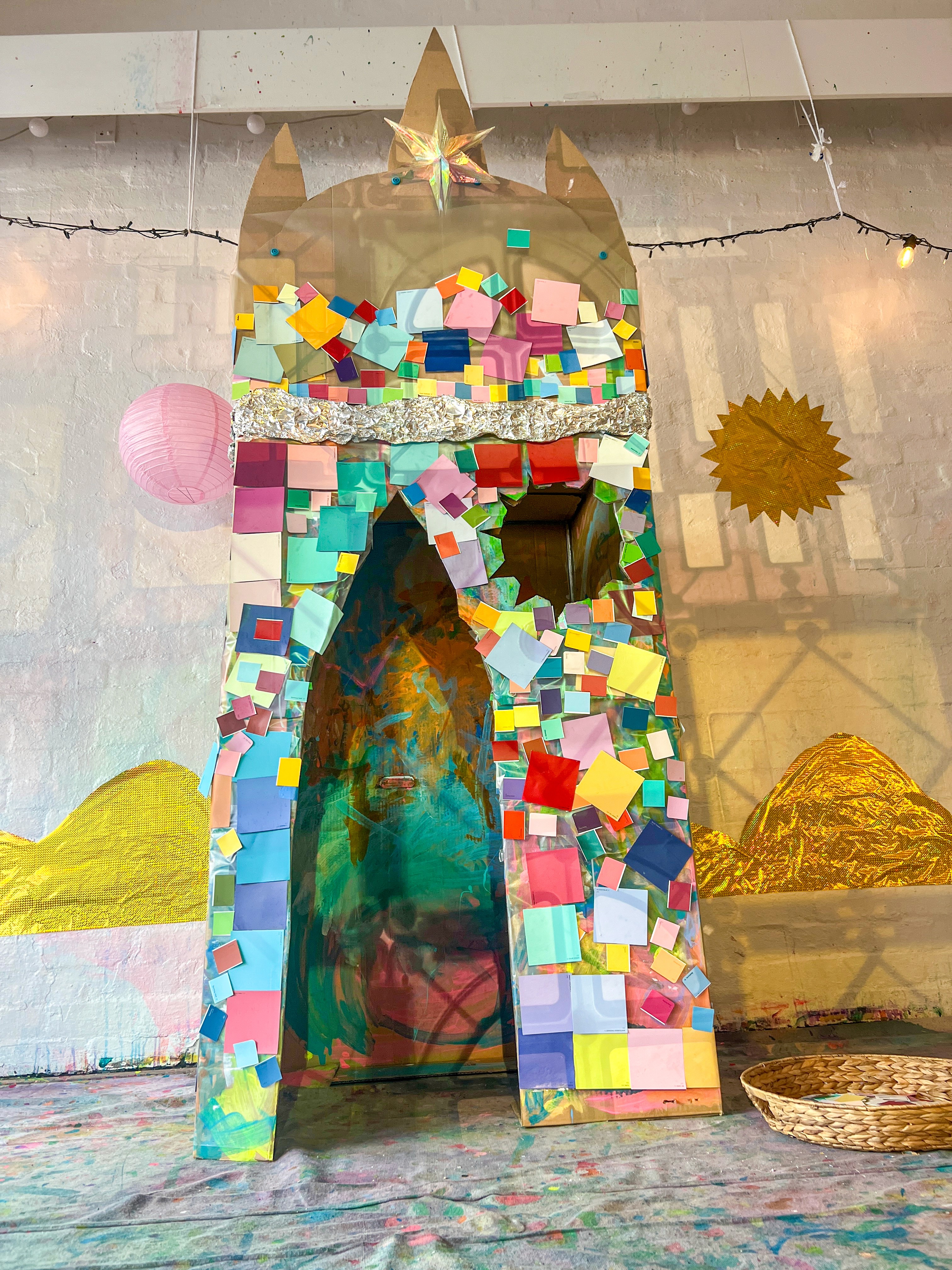
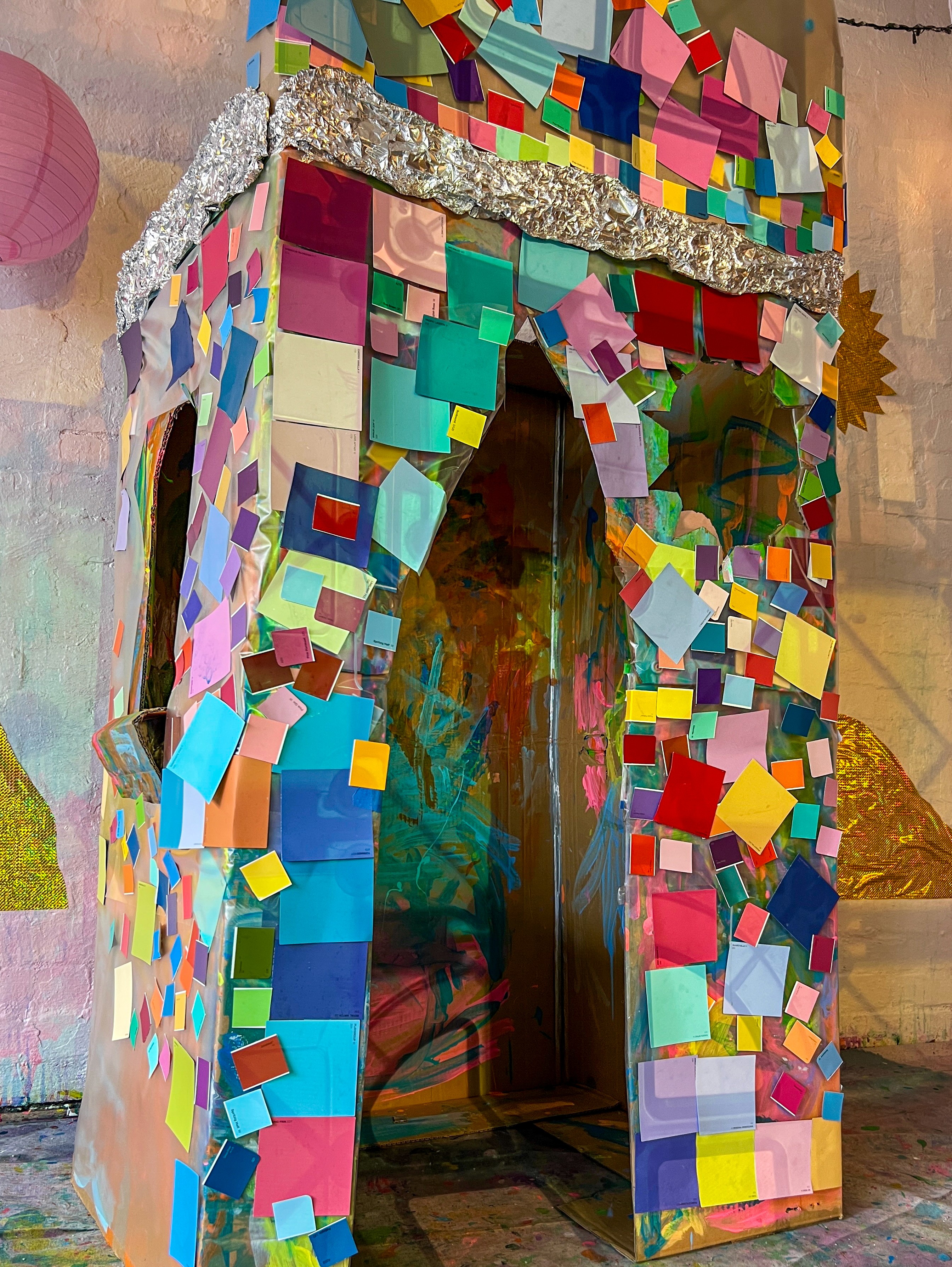
This art experience is about scale, collaboration, and letting children contribute in a way that feels immediate and satisfying. Paint swatches are perfect for this because they are already gorgeous, already curated, and kids can focus on choice and placement rather than mixing colour from scratch.
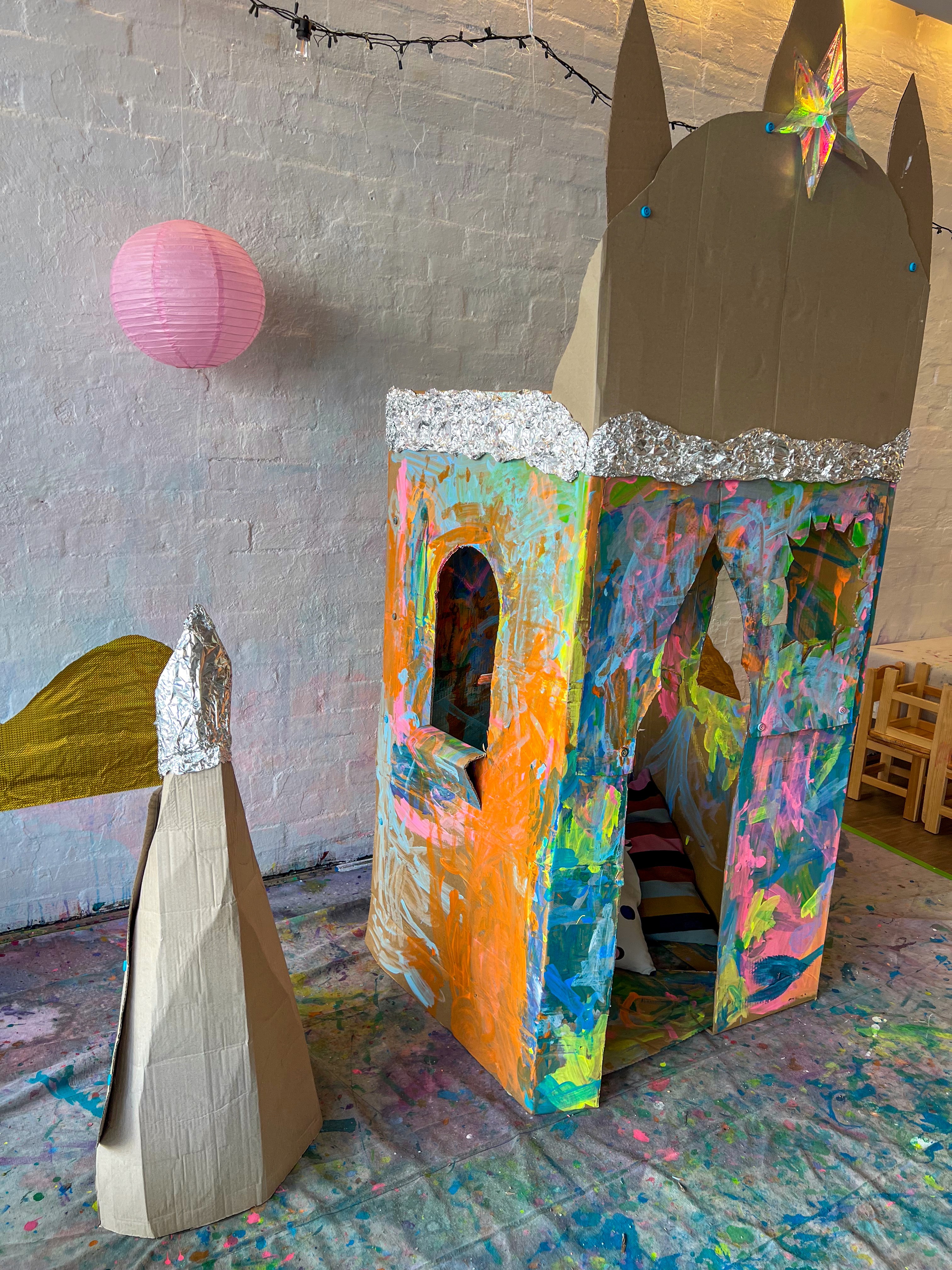
Build your cardboard “cathedral” first. We were lucky to score a huge box from the mechanic behind Smudge, and giant cardboard pieces make it so fun to create a big structure. We used Make Do screws to join pieces so it was strong and reusable, but tape or hot glue works too.
Cut out arched windows so you can bring the stained glass feeling in.
The Making
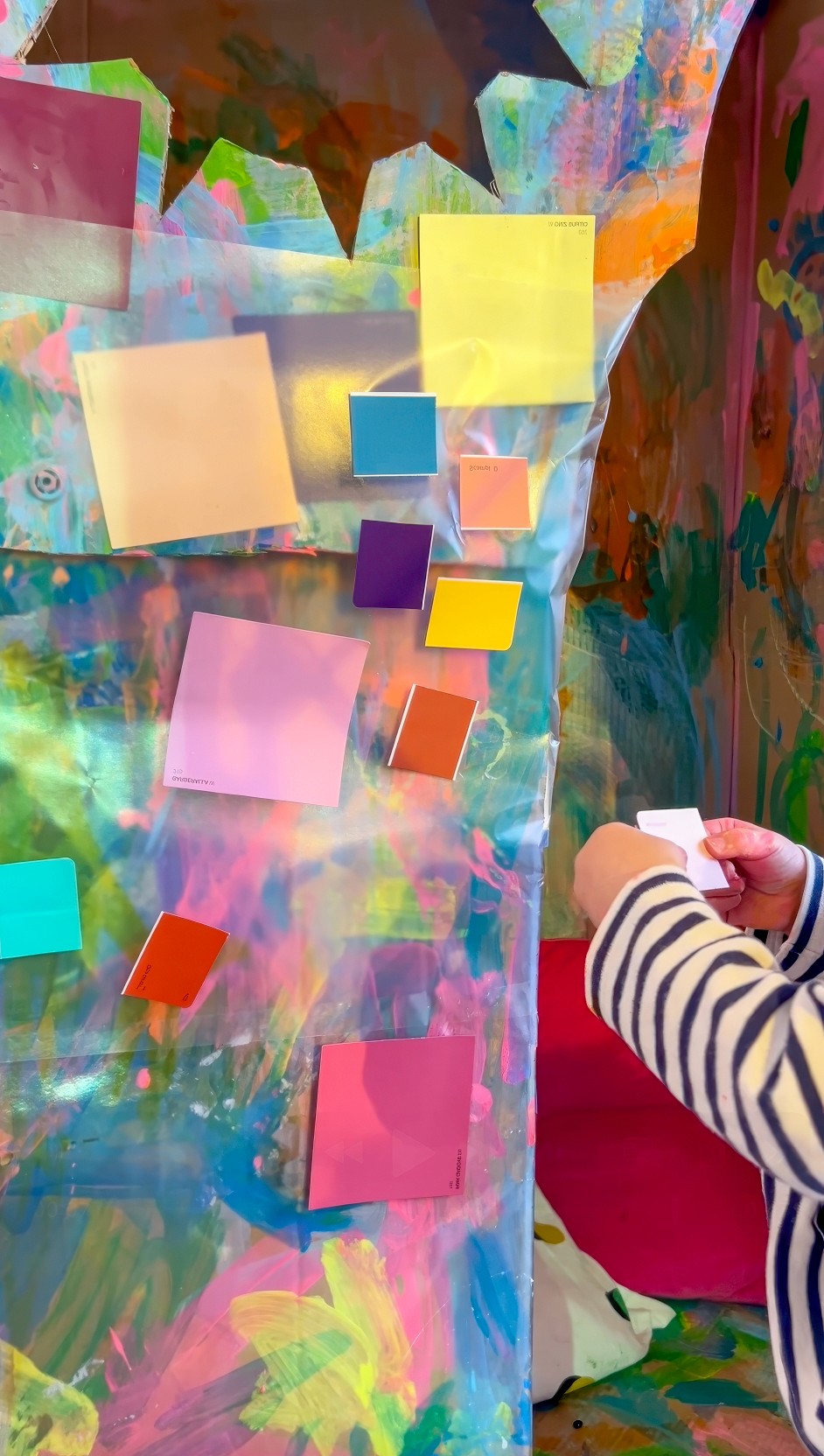
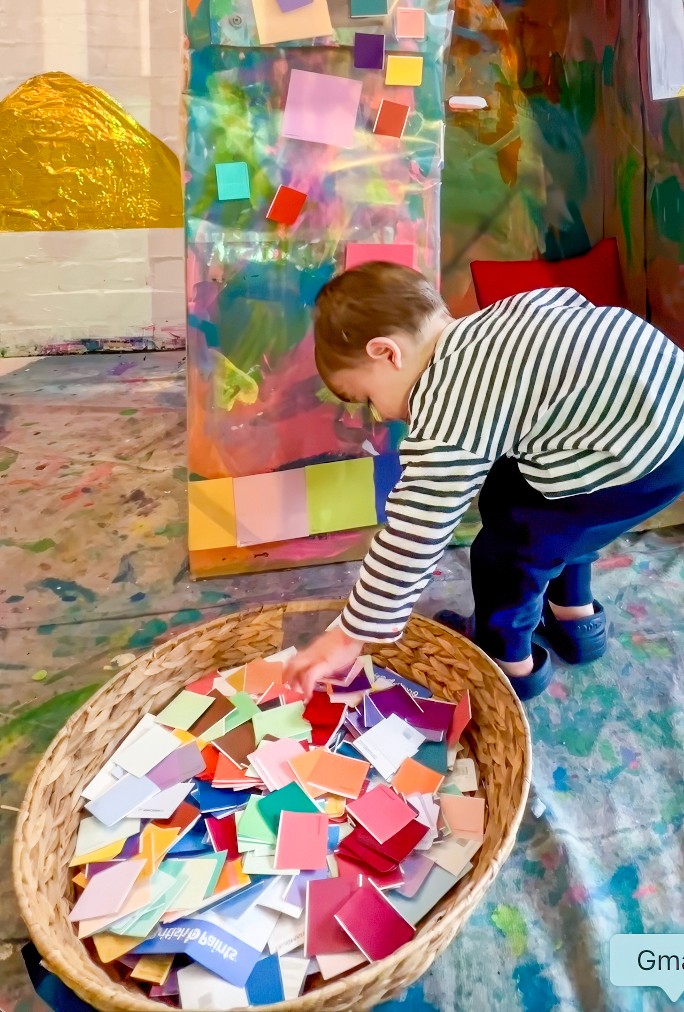
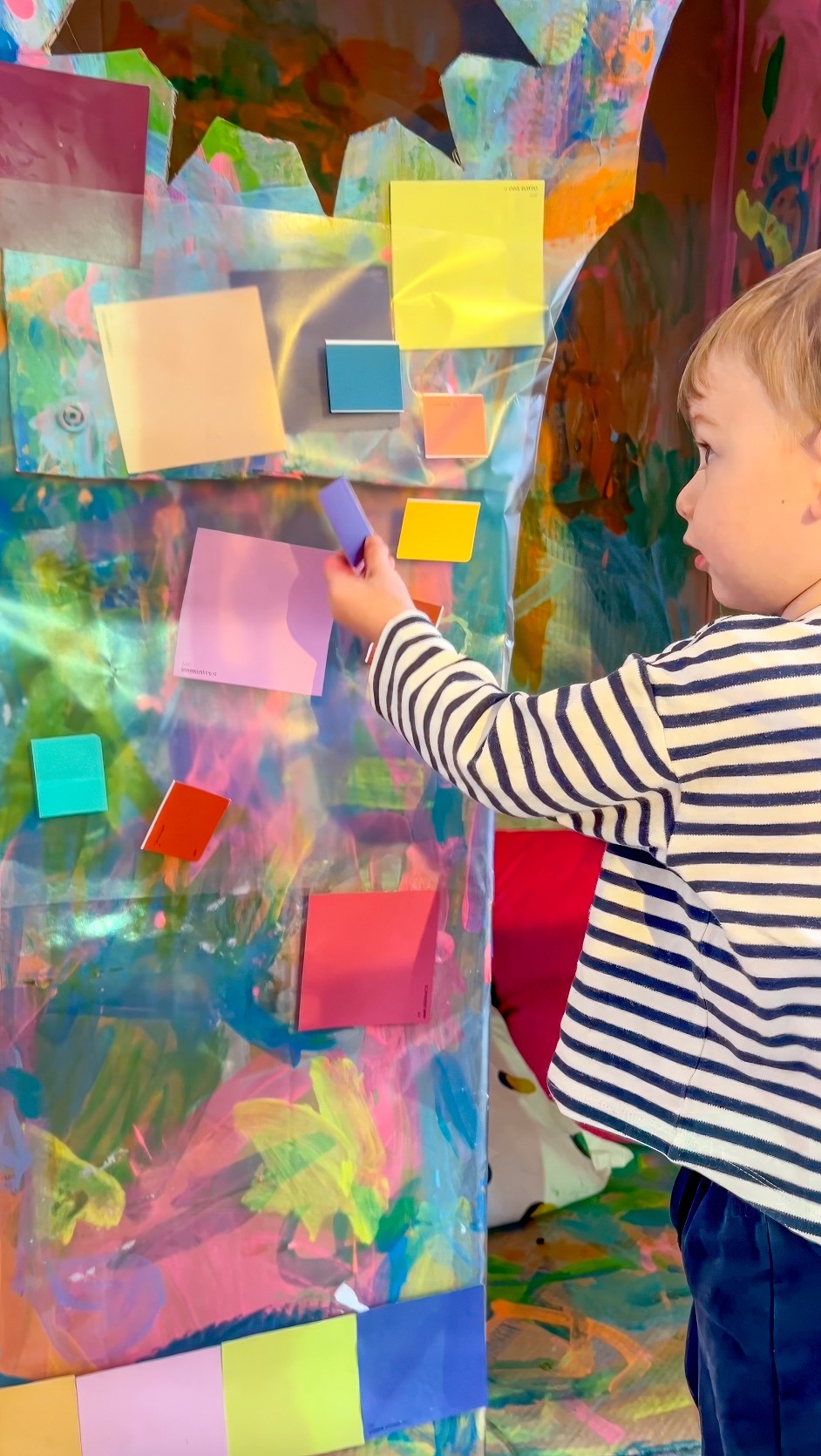
You can offer PVA glue in small pots for kids to brush and place swatches carefully. But we also love using sticky contact taped to the cardboard with the sticky side facing out. It means even the tiniest artists can pick up a swatch and slap it on, and they feel like they’re truly part of building the installation.
Sometimes we use our old projector to shine coloured light through the window shapes, or project colour onto the wall behind, as a nod to stained glass.
I love observing the choices here and supporting kids to trust their instincts and not overthink. Any colour can go anywhere! Overlapping like real tiles. Leaving gaps. Building density in one area and calm in another. It becomes this big, beautiful patchwork of personality. I think Gaudi would be very proud.
And a little Smudge secret, our cathedral was a rocket the week before for Outer Space. Using installations in multiple ways only supports imagination and problem solving. Double the love!
Variations
Make it a cubby kids can crawl into and “decorate” from inside and out.
Add a tray of mirror pieces or cellophane shapes for extra stained glass sparkle.
Limit swatches to one colour family and see what happens when the palette is constrained.
Materials
• Large cardboard pieces
• Tape, hot glue, or Make Do connectors
• Paint swatches (cut into smaller squares and rectangles)
• Contact paper (optional but amazing)
• PVA glue and brushes (optional alternative)
• Scissors or box cutter for windows
• Projector (optional)
Gallery
Back to Top
Smudge Sagrada Familia
A giant cardboard cathedral for collaborative mosaic play.
Bookmark
Installations
The Set Up
The Sagrada Familia is still being built, more than a century after construction began, which feels like the ultimate reminder that big creative visions can take time.
This art experience is about scale, collaboration, and letting children contribute in a way that feels immediate and satisfying. Paint swatches are perfect for this because they are already gorgeous, already curated, and kids can focus on choice and placement rather than mixing colour from scratch.
Build your cardboard “cathedral” first. We were lucky to score a huge box from the mechanic behind Smudge, and giant cardboard pieces make it so fun to create a big structure. We used Make Do screws to join pieces so it was strong and reusable, but tape or hot glue works too.
Cut out arched windows so you can bring the stained glass feeling in.
The Making
You can offer PVA glue in small pots for kids to brush and place swatches carefully. But we also love using sticky contact taped to the cardboard with the sticky side facing out. It means even the tiniest artists can pick up a swatch and slap it on, and they feel like they’re truly part of building the installation.
Sometimes we use our old projector to shine coloured light through the window shapes, or project colour onto the wall behind, as a nod to stained glass.
I love observing the choices here and supporting kids to trust their instincts and not overthink. Any colour can go anywhere! Overlapping like real tiles. Leaving gaps. Building density in one area and calm in another. It becomes this big, beautiful patchwork of personality. I think Gaudi would be very proud.
And a little Smudge secret, our cathedral was a rocket the week before for Outer Space. Using installations in multiple ways only supports imagination and problem solving. Double the love!
Variations
Make it a cubby kids can crawl into and “decorate” from inside and out.
Add a tray of mirror pieces or cellophane shapes for extra stained glass sparkle.
Limit swatches to one colour family and see what happens when the palette is constrained.
Materials
• Large cardboard pieces
• Tape, hot glue, or Make Do connectors
• Paint swatches (cut into smaller squares and rectangles)
• Contact paper (optional but amazing)
• PVA glue and brushes (optional alternative)
• Scissors or box cutter for windows
• Projector (optional)
Gallery
Back to Top
Smudge Sagrada Familia
A giant cardboard cathedral for collaborative mosaic play.
Bookmark
Installations
The Set Up
The Sagrada Familia is still being built, more than a century after construction began, which feels like the ultimate reminder that big creative visions can take time.
This art experience is about scale, collaboration, and letting children contribute in a way that feels immediate and satisfying. Paint swatches are perfect for this because they are already gorgeous, already curated, and kids can focus on choice and placement rather than mixing colour from scratch.
Build your cardboard “cathedral” first. We were lucky to score a huge box from the mechanic behind Smudge, and giant cardboard pieces make it so fun to create a big structure. We used Make Do screws to join pieces so it was strong and reusable, but tape or hot glue works too.
Cut out arched windows so you can bring the stained glass feeling in.
The Making
You can offer PVA glue in small pots for kids to brush and place swatches carefully. But we also love using sticky contact taped to the cardboard with the sticky side facing out. It means even the tiniest artists can pick up a swatch and slap it on, and they feel like they’re truly part of building the installation.
Sometimes we use our old projector to shine coloured light through the window shapes, or project colour onto the wall behind, as a nod to stained glass.
I love observing the choices here and supporting kids to trust their instincts and not overthink. Any colour can go anywhere! Overlapping like real tiles. Leaving gaps. Building density in one area and calm in another. It becomes this big, beautiful patchwork of personality. I think Gaudi would be very proud.
And a little Smudge secret, our cathedral was a rocket the week before for Outer Space. Using installations in multiple ways only supports imagination and problem solving. Double the love!
Variations
Make it a cubby kids can crawl into and “decorate” from inside and out.
Add a tray of mirror pieces or cellophane shapes for extra stained glass sparkle.
Limit swatches to one colour family and see what happens when the palette is constrained.
Materials
• Large cardboard pieces
• Tape, hot glue, or Make Do connectors
• Paint swatches (cut into smaller squares and rectangles)
• Contact paper (optional but amazing)
• PVA glue and brushes (optional alternative)
• Scissors or box cutter for windows
• Projector (optional)
Gallery
Back to Top
Tile Stories
Layering colour, texture and instinct onto wood.
Bookmark
Collage
The Set Up
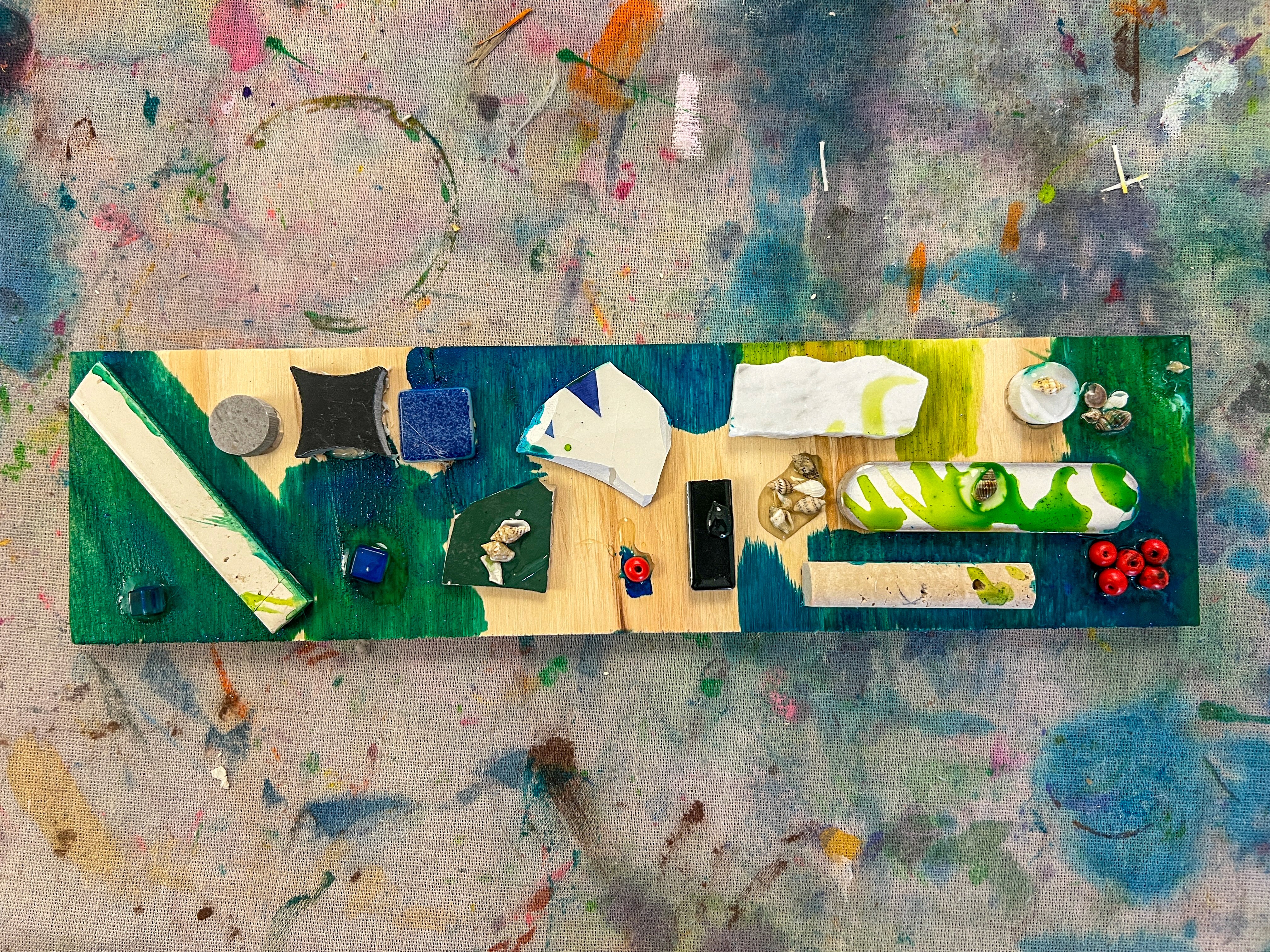
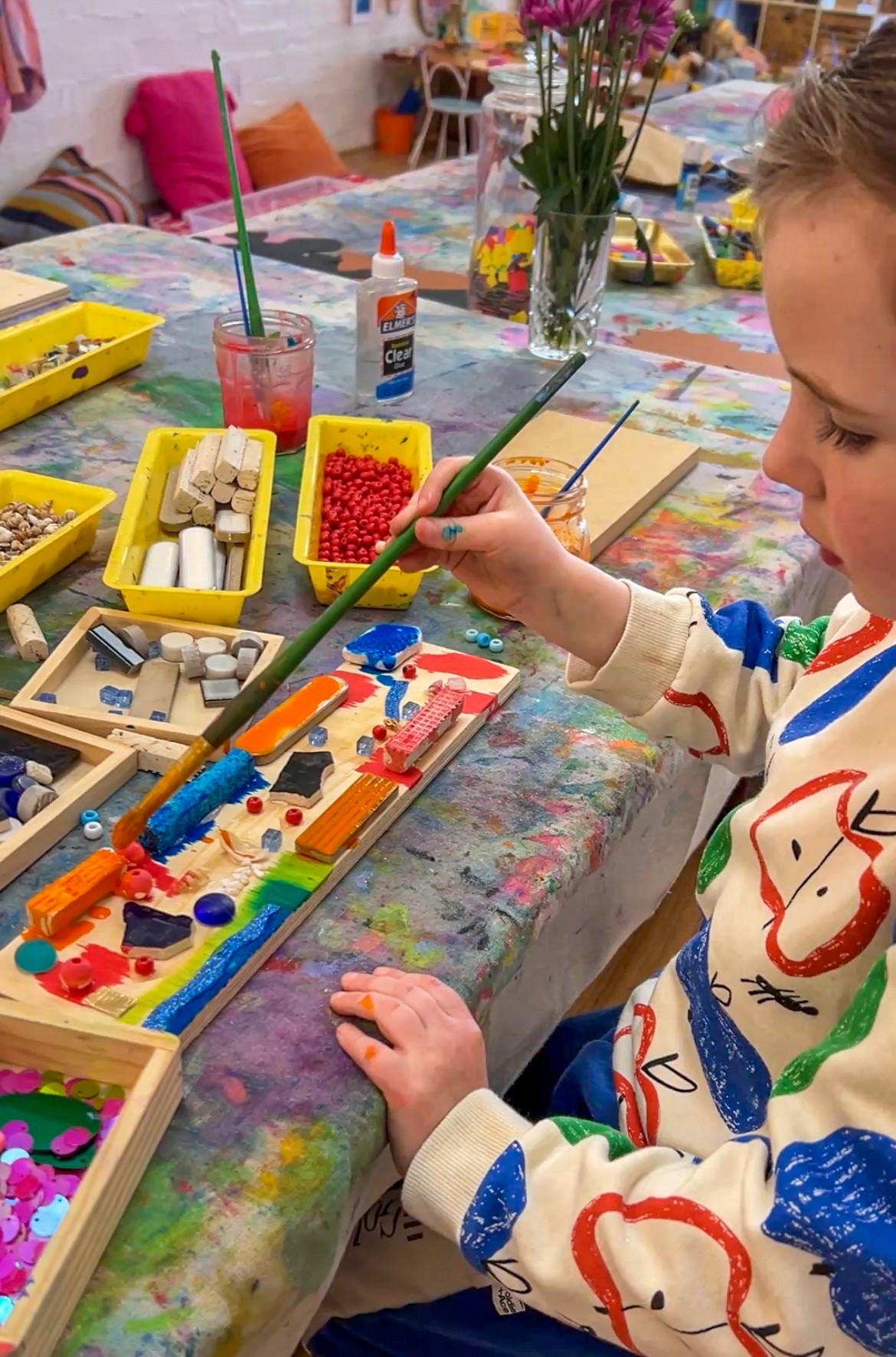
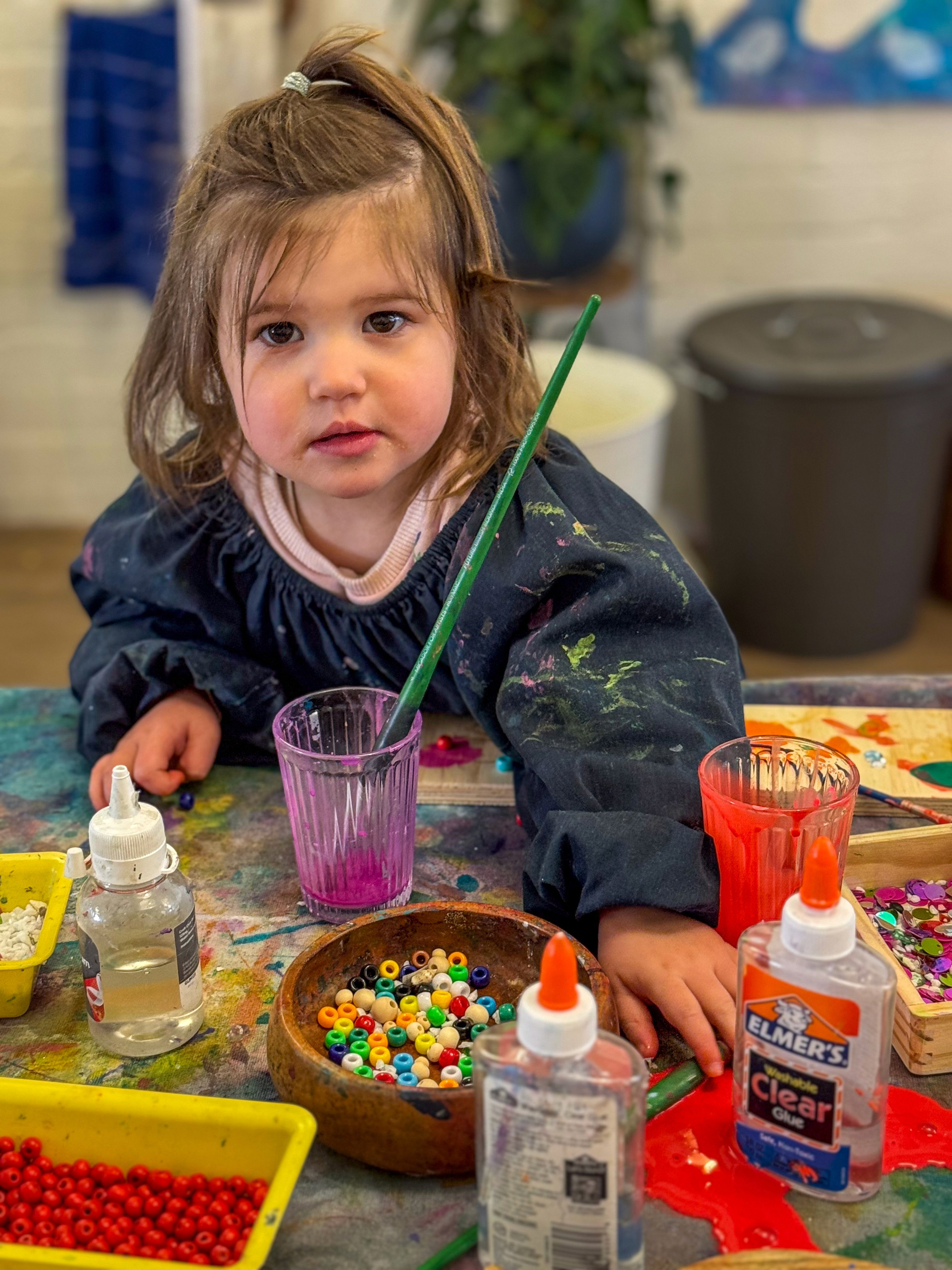
I adore this experience for how open it is. It’s one of those setups where every artist can make something completely different from the exact same materials.
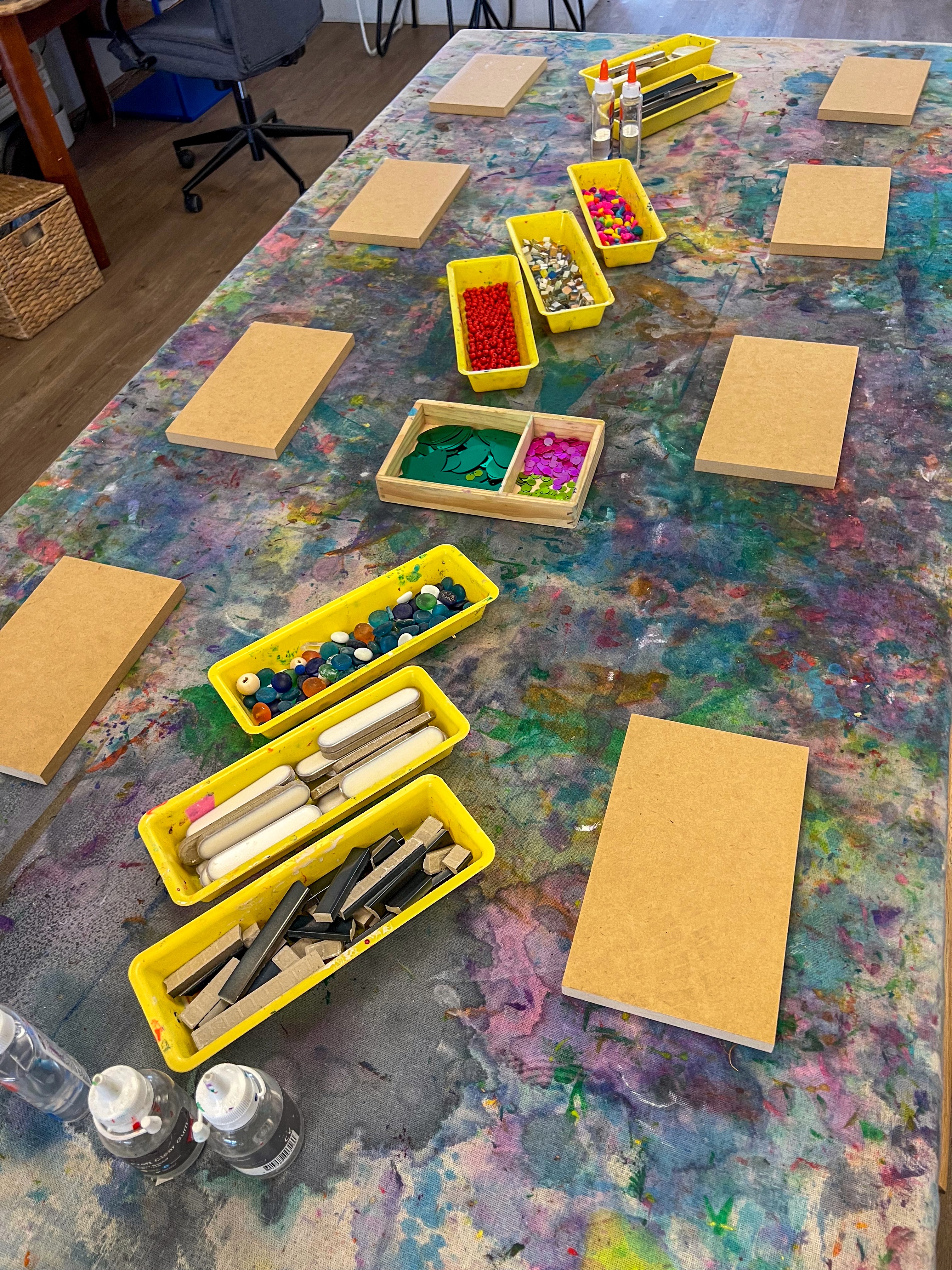
Start with a plain piece of wood. I recommend not making it too big for individual work, purely because large empty surfaces can feel daunting for younger kids, and you will need a lot of tiles. That said, this works beautifully as a shared collaborative piece if you want to go bigger and have everyone contribute.
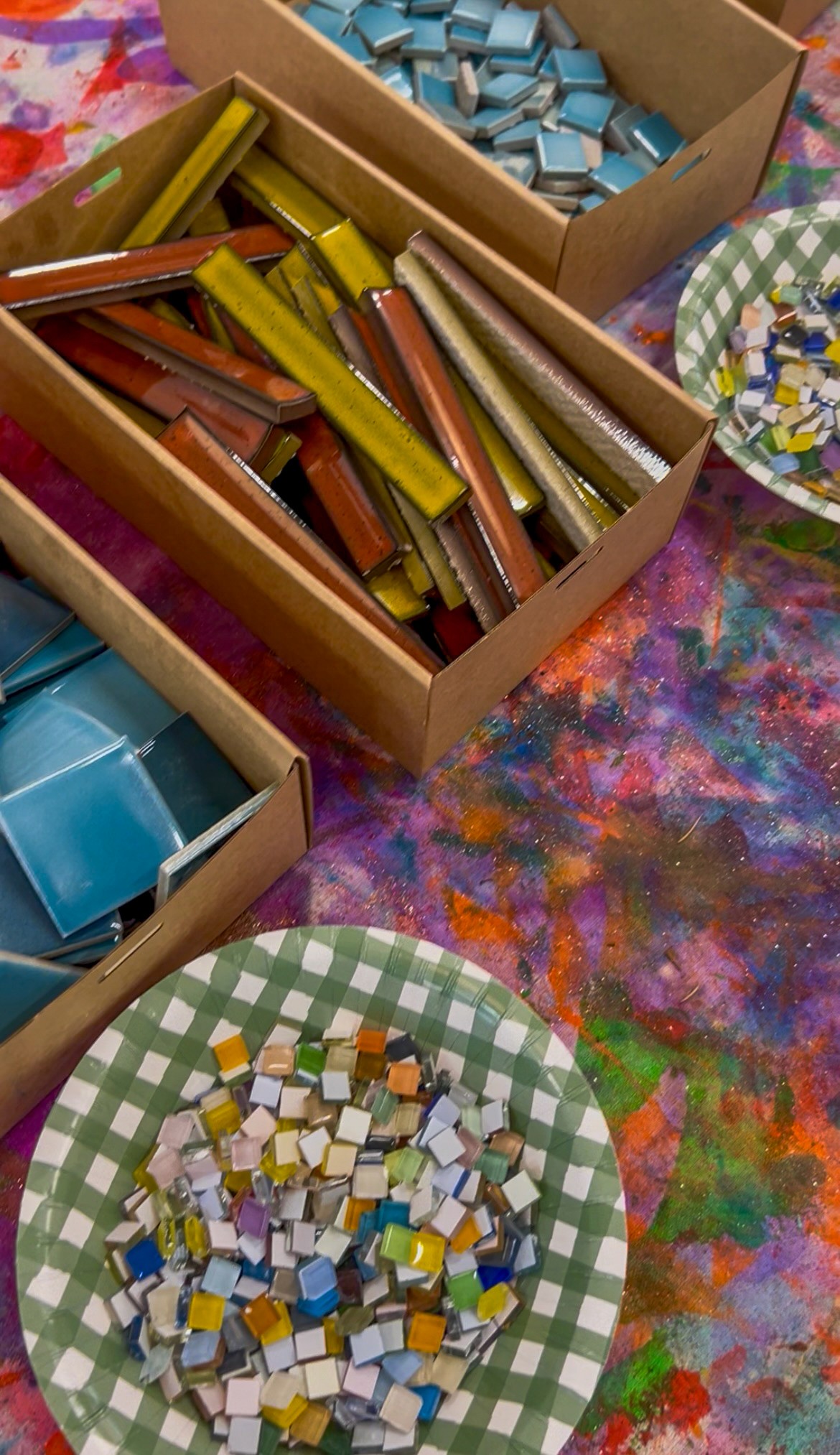
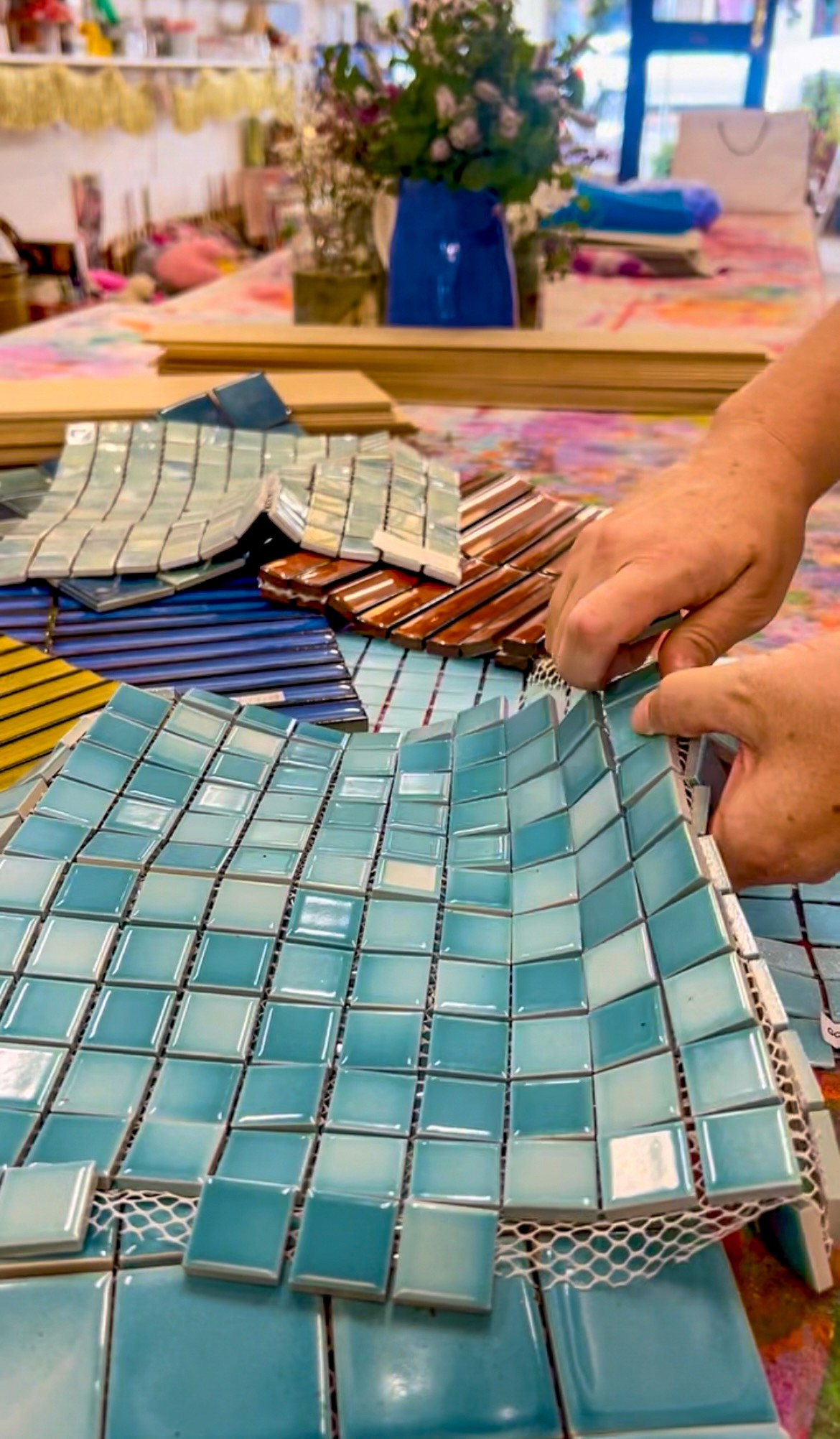
Curate your tiles. Recycled places and marketplace finds are gold. Hardware stores also sell inexpensive tile sheets and you can pull the tiles off the mesh backing easily. We have also made a call out to Smudge families for leftover renovation tiles, and people are often delighted to pass them on.
Add in little glass river stones, beads, and other treasures if you want more texture.
The Making
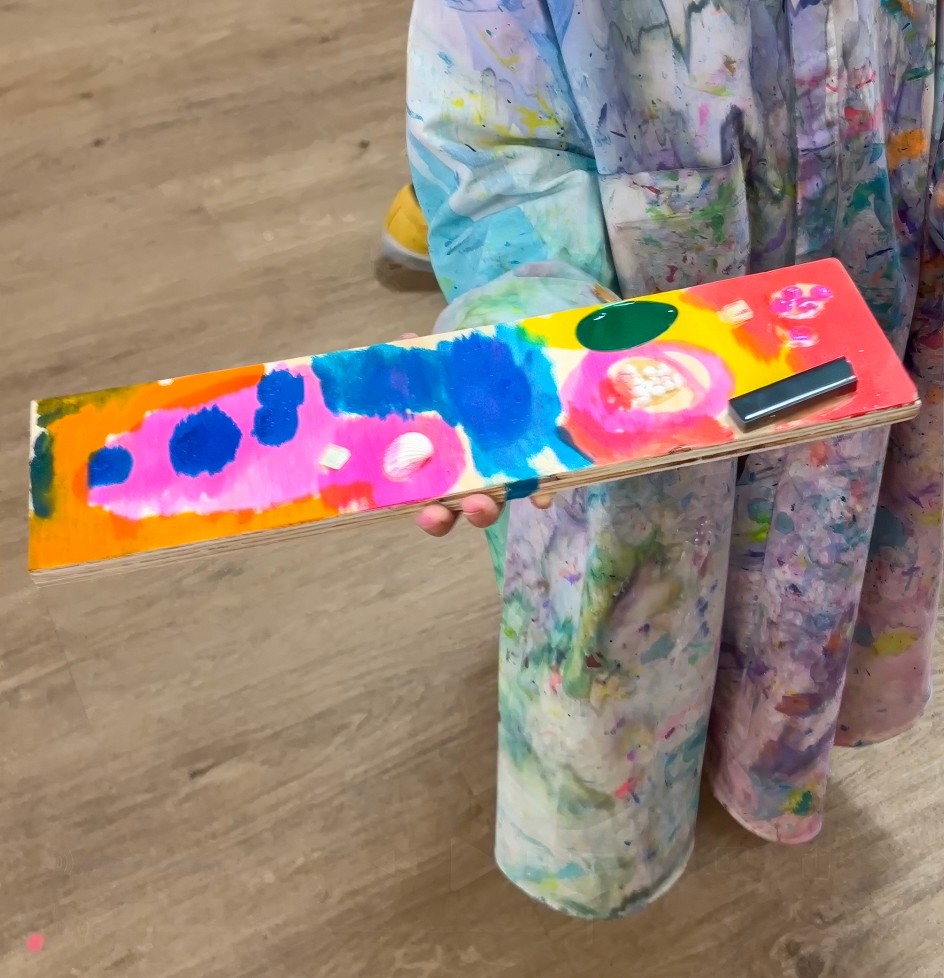
Invite kids to place and balance first. This part is so, so good. It’s engineering, composition, and decision making all at once! Then glue. Mosaic glue is ideal if you are using heavier tiles.
Once tiles are set, paint in between or even over the top. We love liquid watercolours because the colour sinks into raw wood beautifully while still letting the grain show through.
Variations
Offer grout for an older group so they can experience the full mosaic finish.
Try a black painted wood base so colour pops.
Add a tiny “treasure tile” rule, each artist picks one special piece and decides where it goes.
Materials
• Wooden base boards
• Tiles (varied colours and sizes)
• Optional extras: glass stones, beads, shells
• Mosaic glue (or strong PVA depending on tile weight)
• Liquid watercolours or watercolour palettes
• Brushes and water jars
Back to Top
Tile Stories
Layering colour, texture and instinct onto wood.
Bookmark
Collage
The Set Up
I adore this experience for how open it is. It’s one of those setups where every artist can make something completely different from the exact same materials.
Start with a plain piece of wood. I recommend not making it too big for individual work, purely because large empty surfaces can feel daunting for younger kids, and you will need a lot of tiles. That said, this works beautifully as a shared collaborative piece if you want to go bigger and have everyone contribute.
Curate your tiles. Recycled places and marketplace finds are gold. Hardware stores also sell inexpensive tile sheets and you can pull the tiles off the mesh backing easily. We have also made a call out to Smudge families for leftover renovation tiles, and people are often delighted to pass them on.
Add in little glass river stones, beads, and other treasures if you want more texture.
The Making
Invite kids to place and balance first. This part is so, so good. It’s engineering, composition, and decision making all at once! Then glue. Mosaic glue is ideal if you are using heavier tiles.
Once tiles are set, paint in between or even over the top. We love liquid watercolours because the colour sinks into raw wood beautifully while still letting the grain show through.
Variations
Offer grout for an older group so they can experience the full mosaic finish.
Try a black painted wood base so colour pops.
Add a tiny “treasure tile” rule, each artist picks one special piece and decides where it goes.
Materials
• Wooden base boards
• Tiles (varied colours and sizes)
• Optional extras: glass stones, beads, shells
• Mosaic glue (or strong PVA depending on tile weight)
• Liquid watercolours or watercolour palettes
• Brushes and water jars
Back to Top
Tile Stories
Layering colour, texture and instinct onto wood.
Bookmark
Collage
The Set Up
I adore this experience for how open it is. It’s one of those setups where every artist can make something completely different from the exact same materials.
Start with a plain piece of wood. I recommend not making it too big for individual work, purely because large empty surfaces can feel daunting for younger kids, and you will need a lot of tiles. That said, this works beautifully as a shared collaborative piece if you want to go bigger and have everyone contribute.
Curate your tiles. Recycled places and marketplace finds are gold. Hardware stores also sell inexpensive tile sheets and you can pull the tiles off the mesh backing easily. We have also made a call out to Smudge families for leftover renovation tiles, and people are often delighted to pass them on.
Add in little glass river stones, beads, and other treasures if you want more texture.
The Making
Invite kids to place and balance first. This part is so, so good. It’s engineering, composition, and decision making all at once! Then glue. Mosaic glue is ideal if you are using heavier tiles.
Once tiles are set, paint in between or even over the top. We love liquid watercolours because the colour sinks into raw wood beautifully while still letting the grain show through.
Variations
Offer grout for an older group so they can experience the full mosaic finish.
Try a black painted wood base so colour pops.
Add a tiny “treasure tile” rule, each artist picks one special piece and decides where it goes.
Materials
• Wooden base boards
• Tiles (varied colours and sizes)
• Optional extras: glass stones, beads, shells
• Mosaic glue (or strong PVA depending on tile weight)
• Liquid watercolours or watercolour palettes
• Brushes and water jars
Back to Top
Mosaic Mirrors
Colour, reflection, and a gorgeous excuse for self portraits.
Bookmark
Sculpture
The Set Up
Mirrors feel very Gaudí to me because his buildings play with reflection, shimmer, and surfaces that change as you move through them. Casa Batlló is full of that kind of magic.
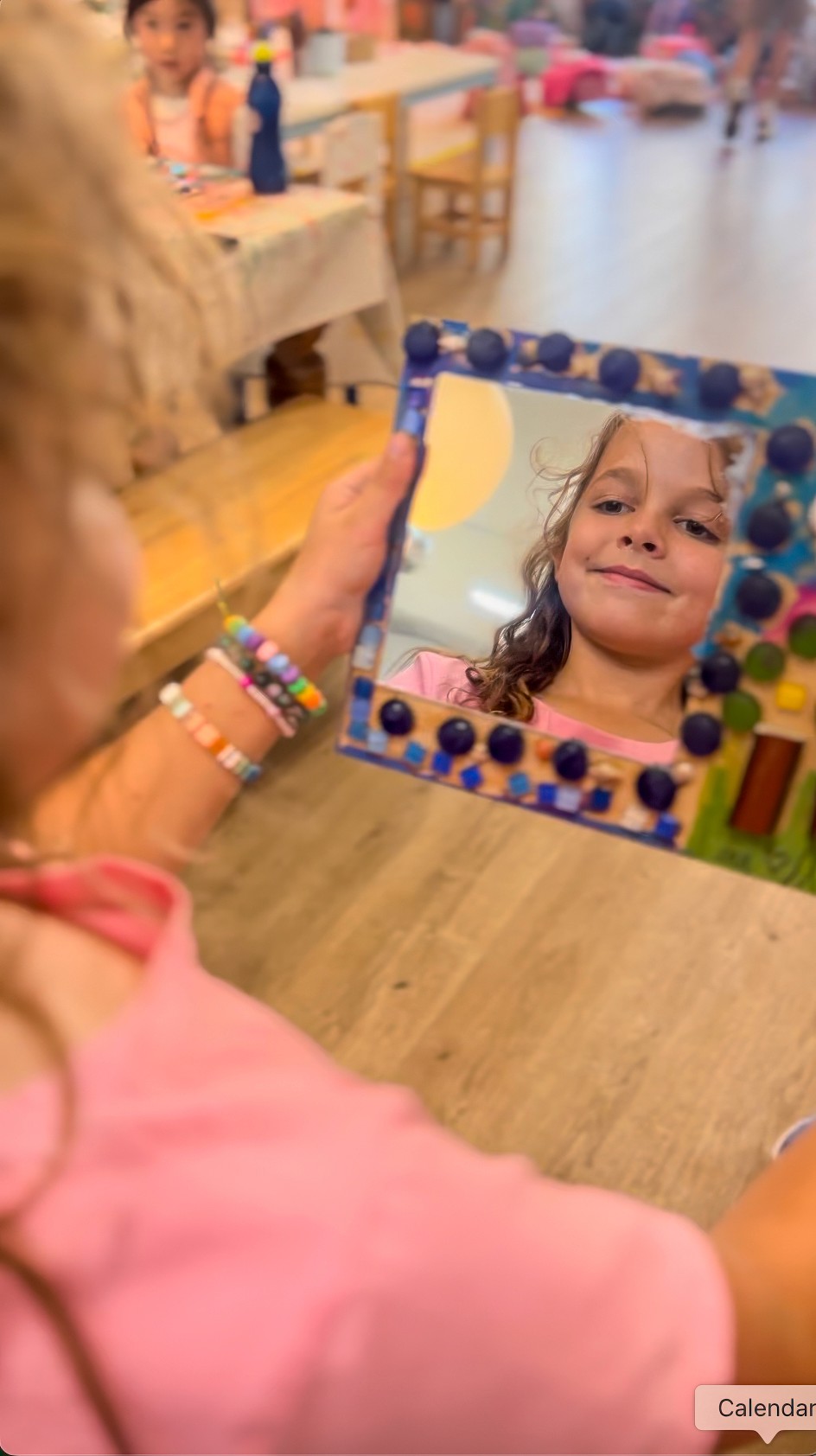
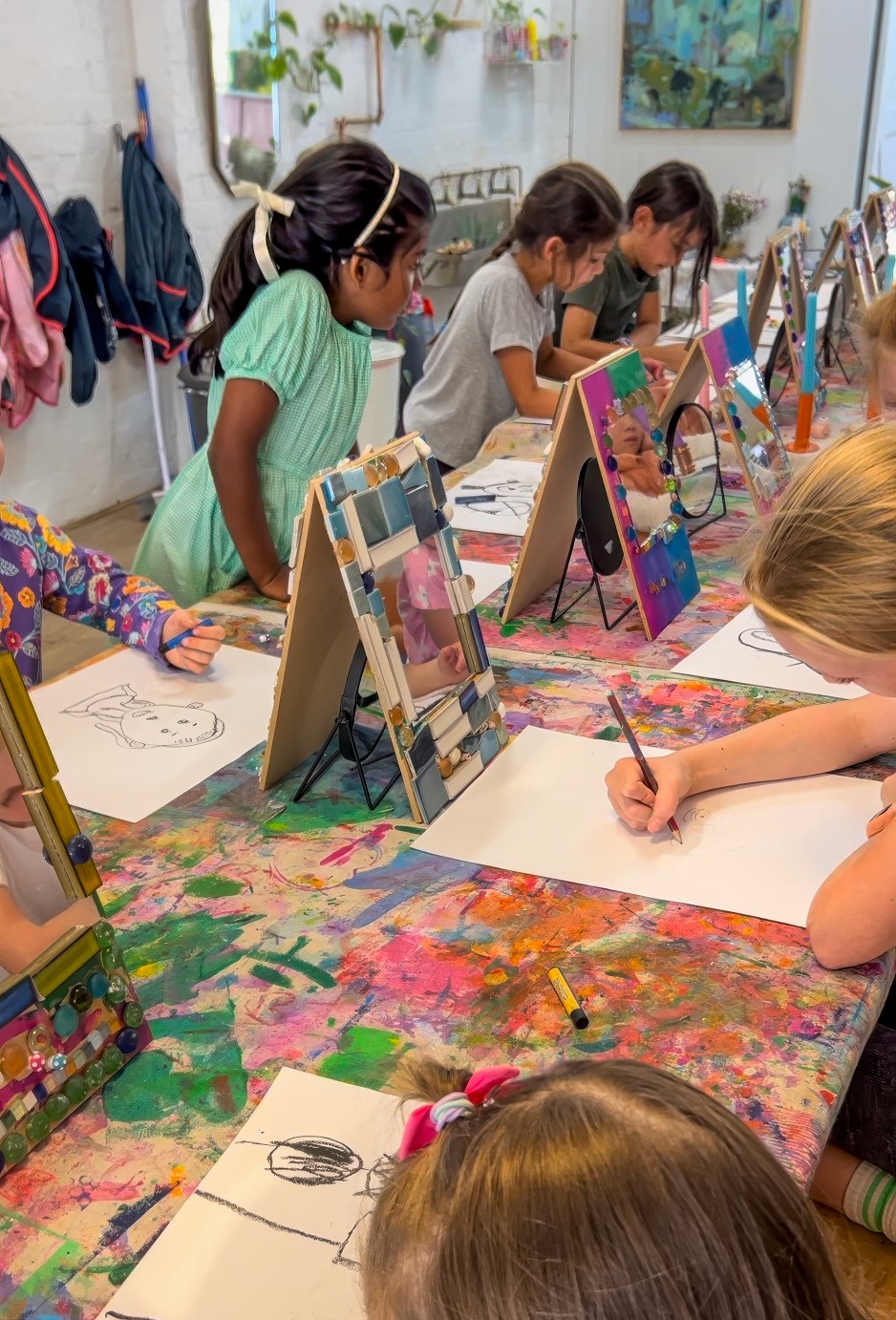
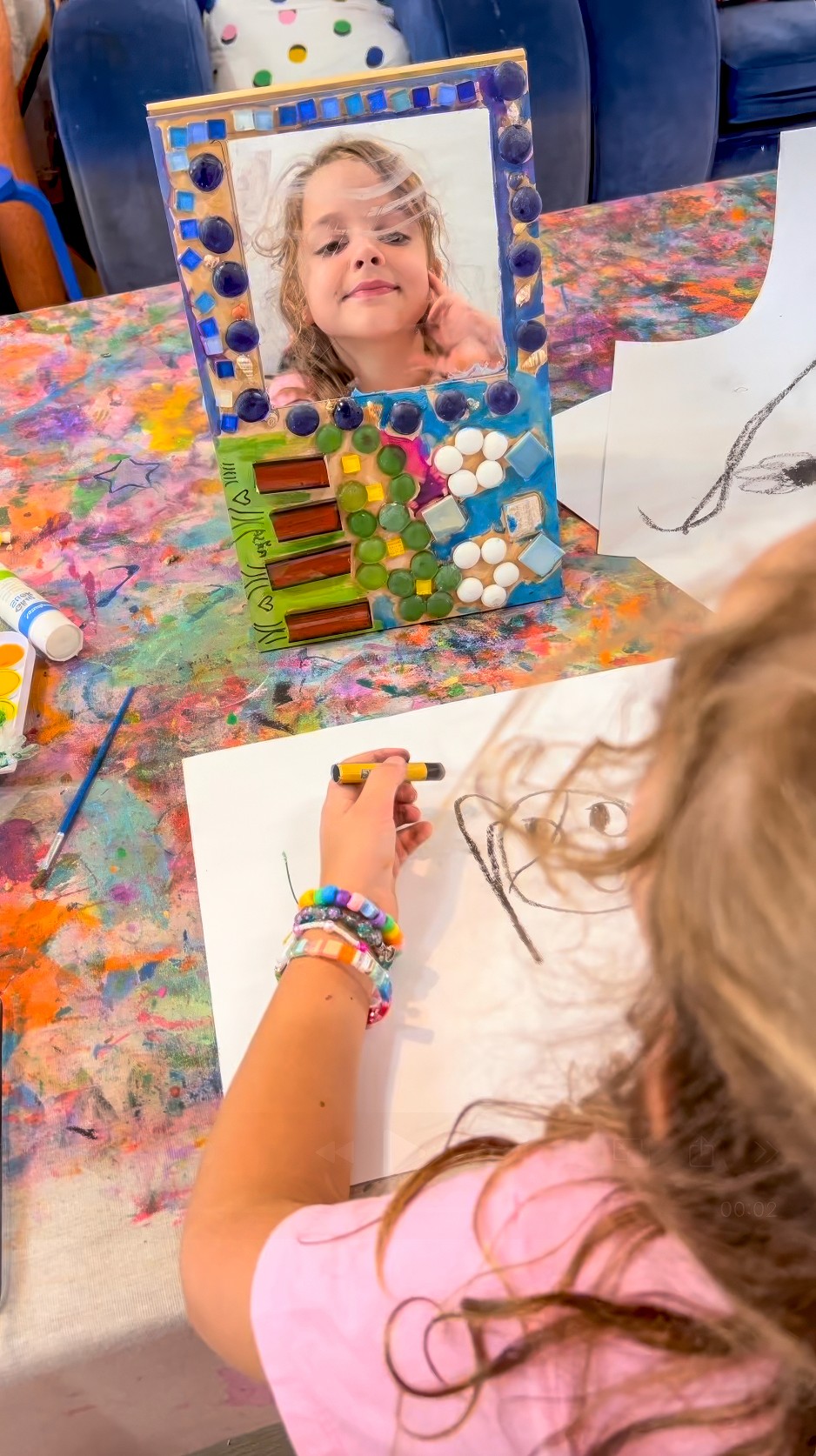
This is a simple build with a high impact result, and it naturally invites self portrait work straight afterwards.
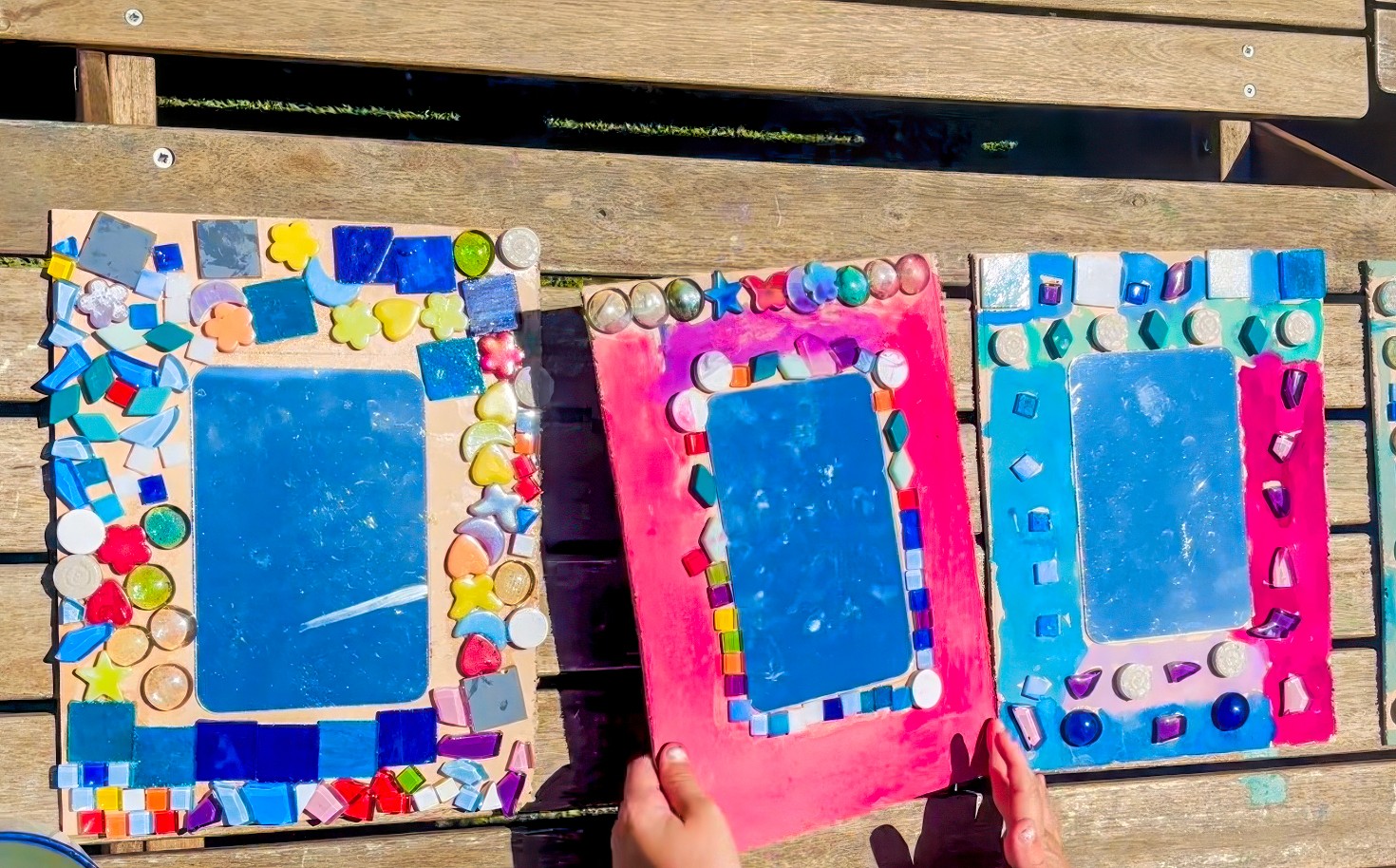
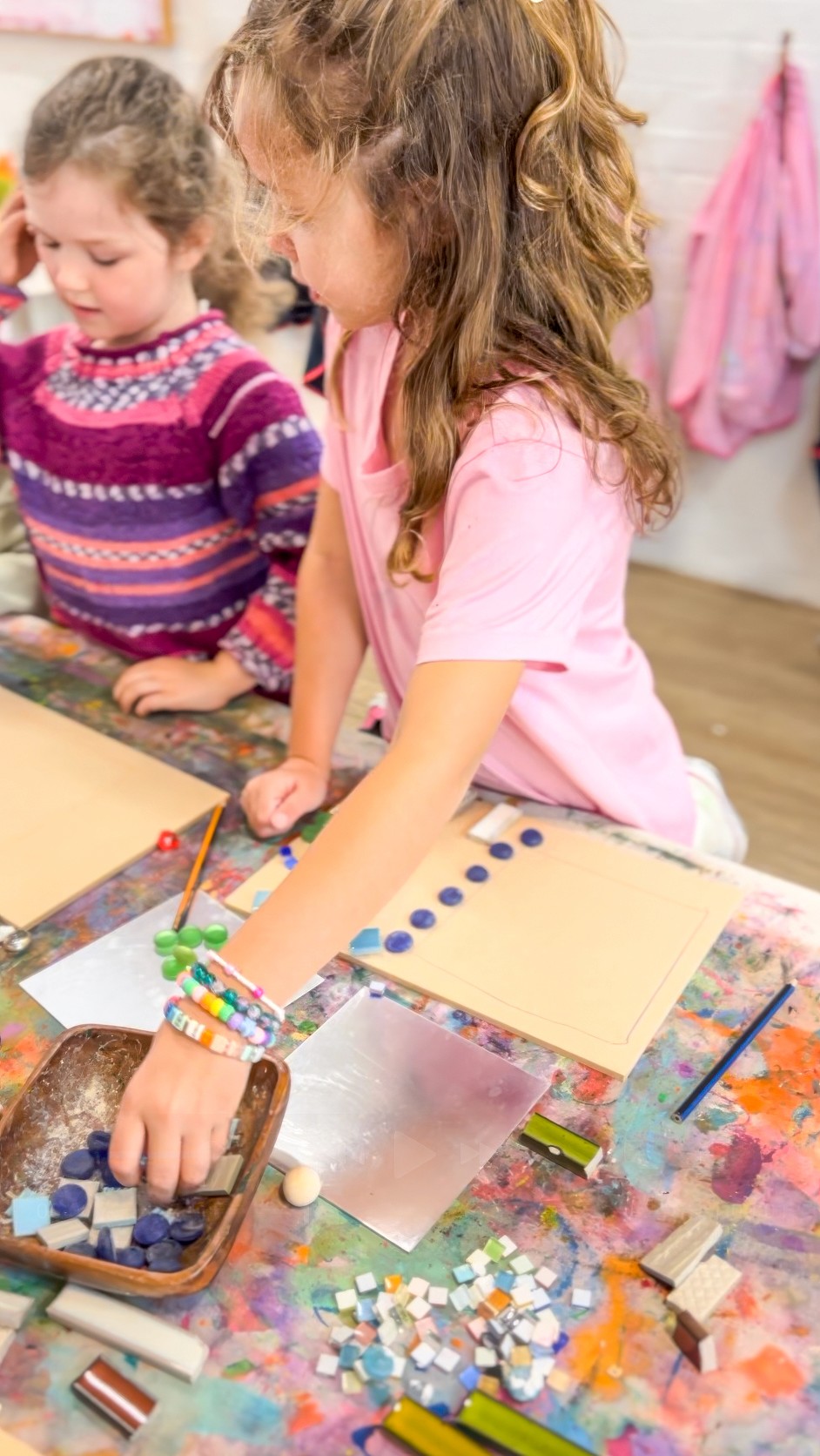
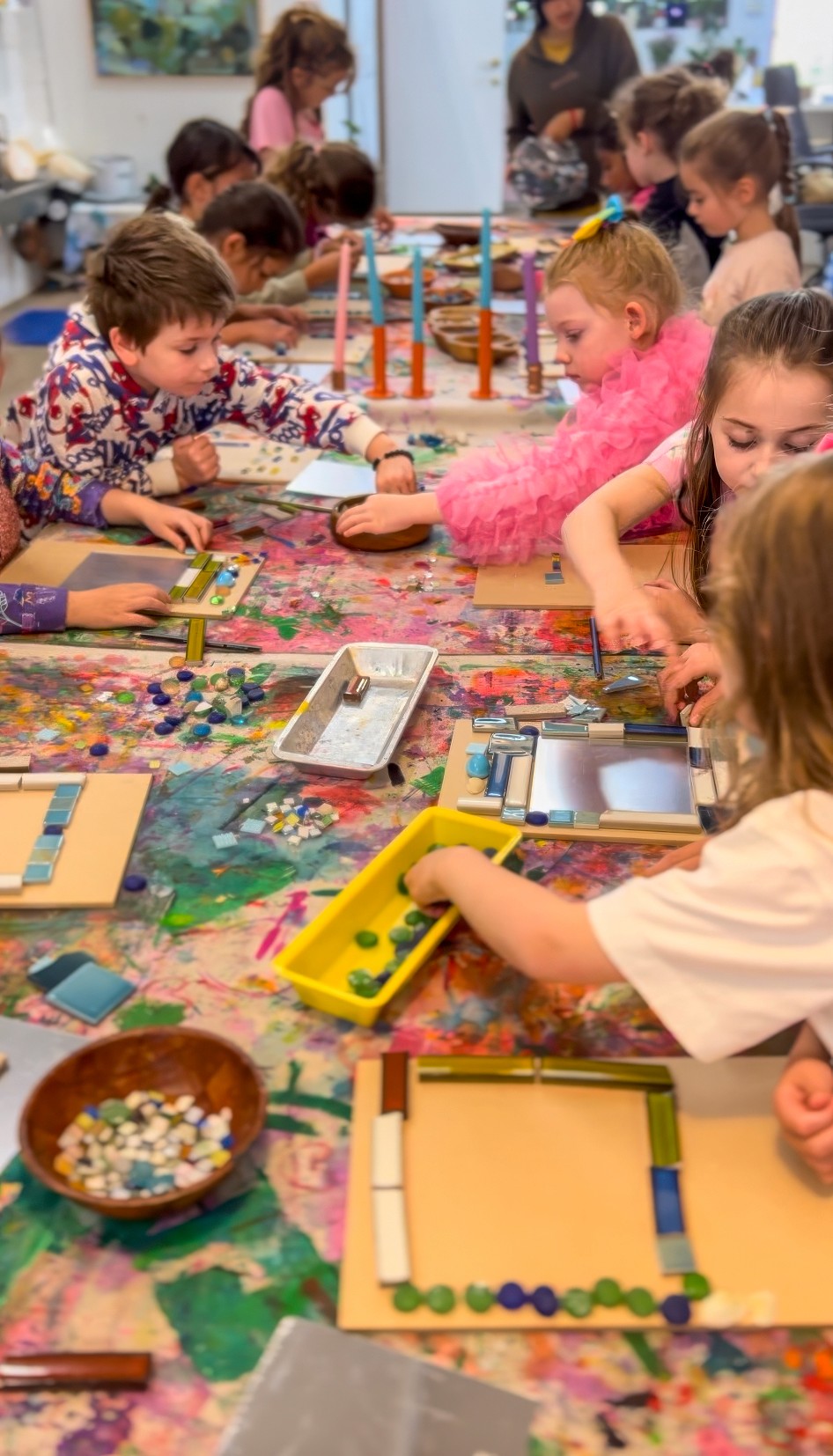
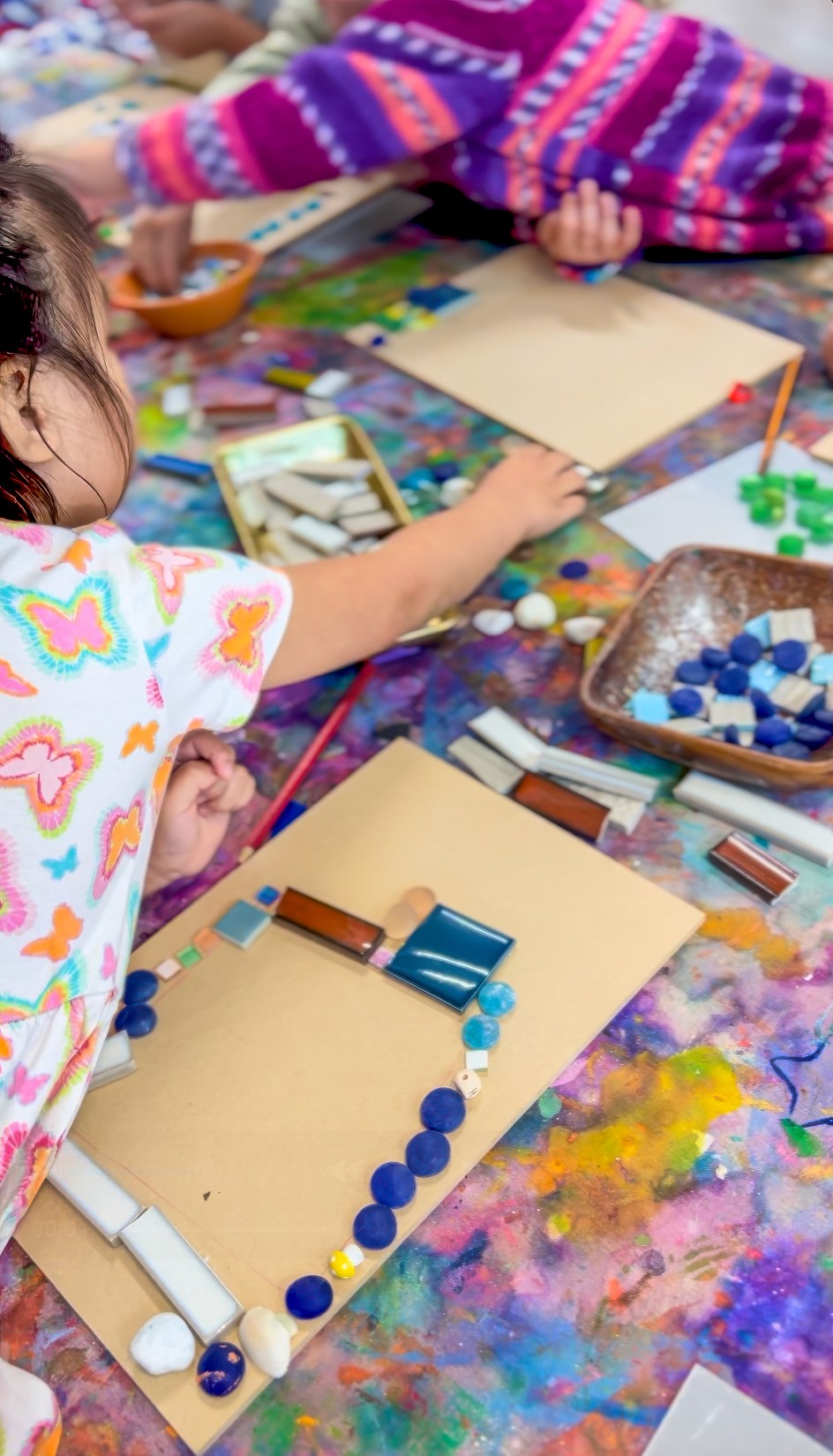
Place your mirror onto the wooden base where you’d like it to sit, then trace around it lightly with pencil. I prefer not to stick it down first because it keeps the mirror safe from glue and paint during the messy part. Or keeping the film over the top and peeling it off at the end works well too.
The Making
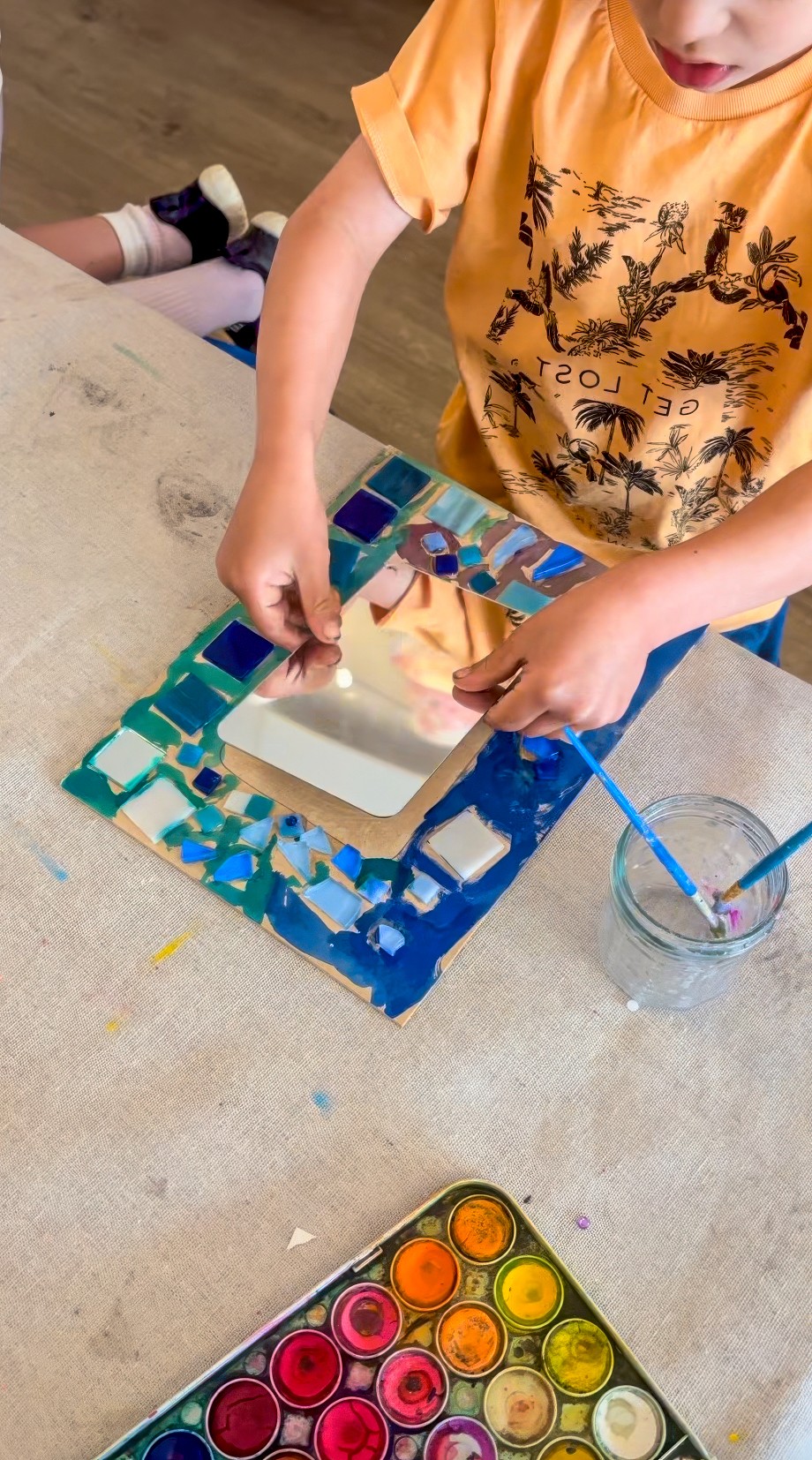
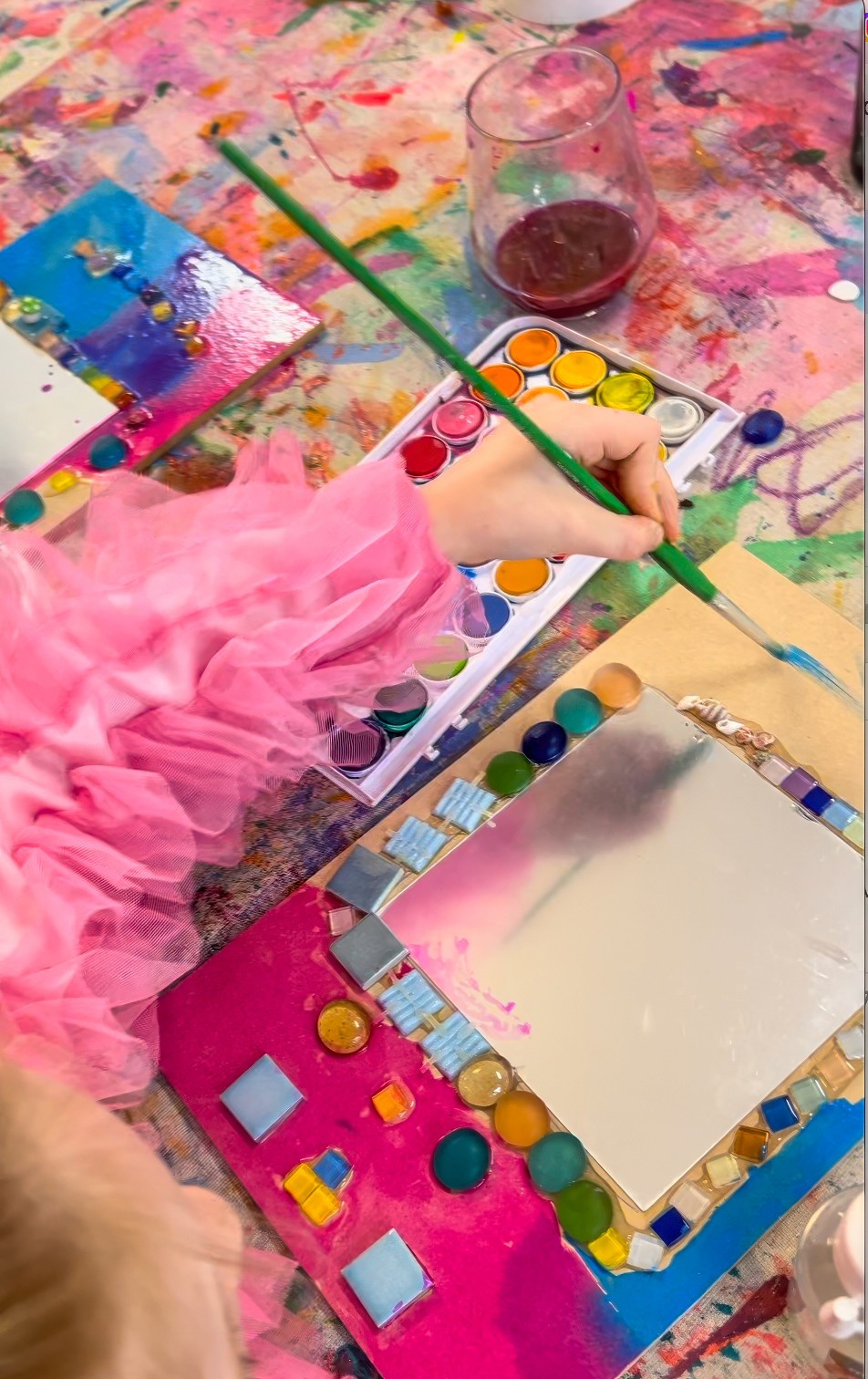
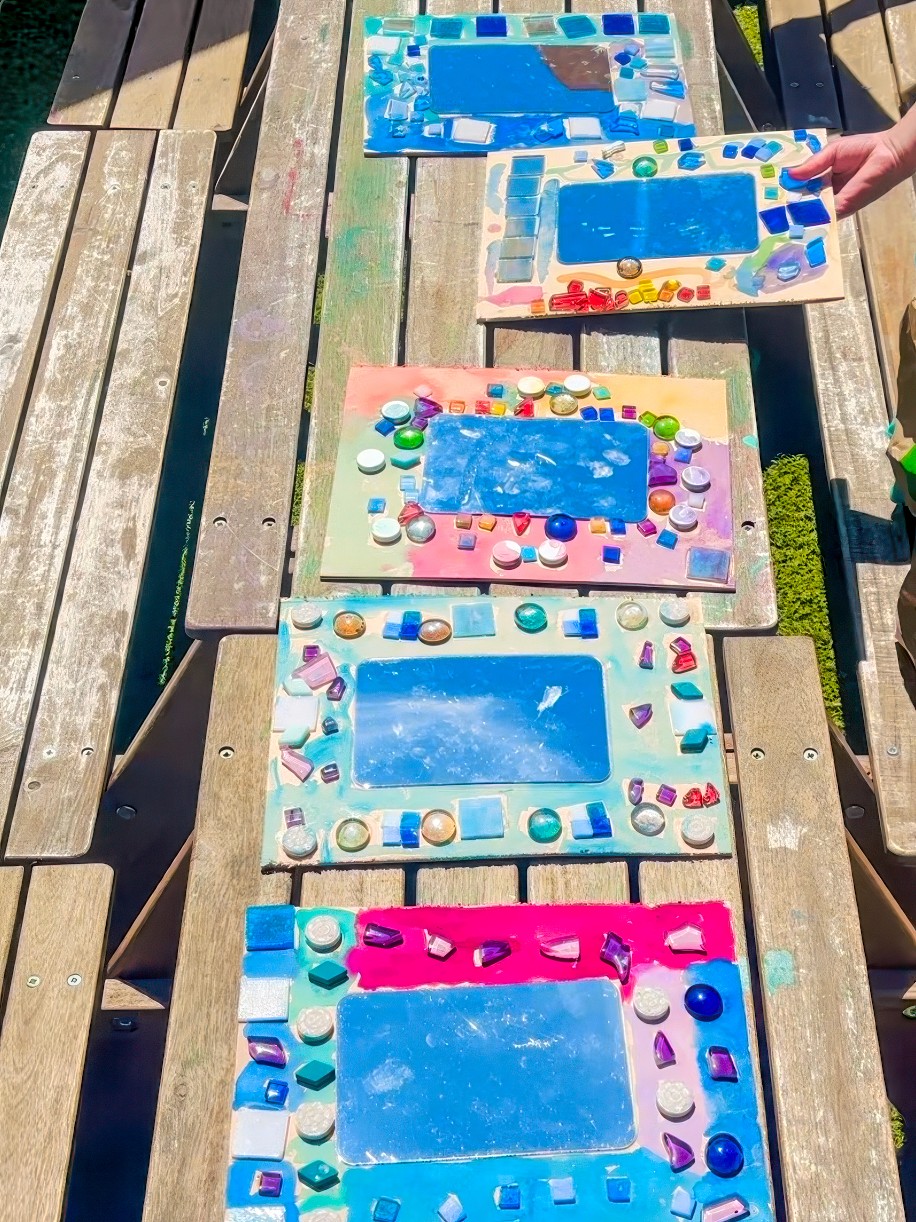
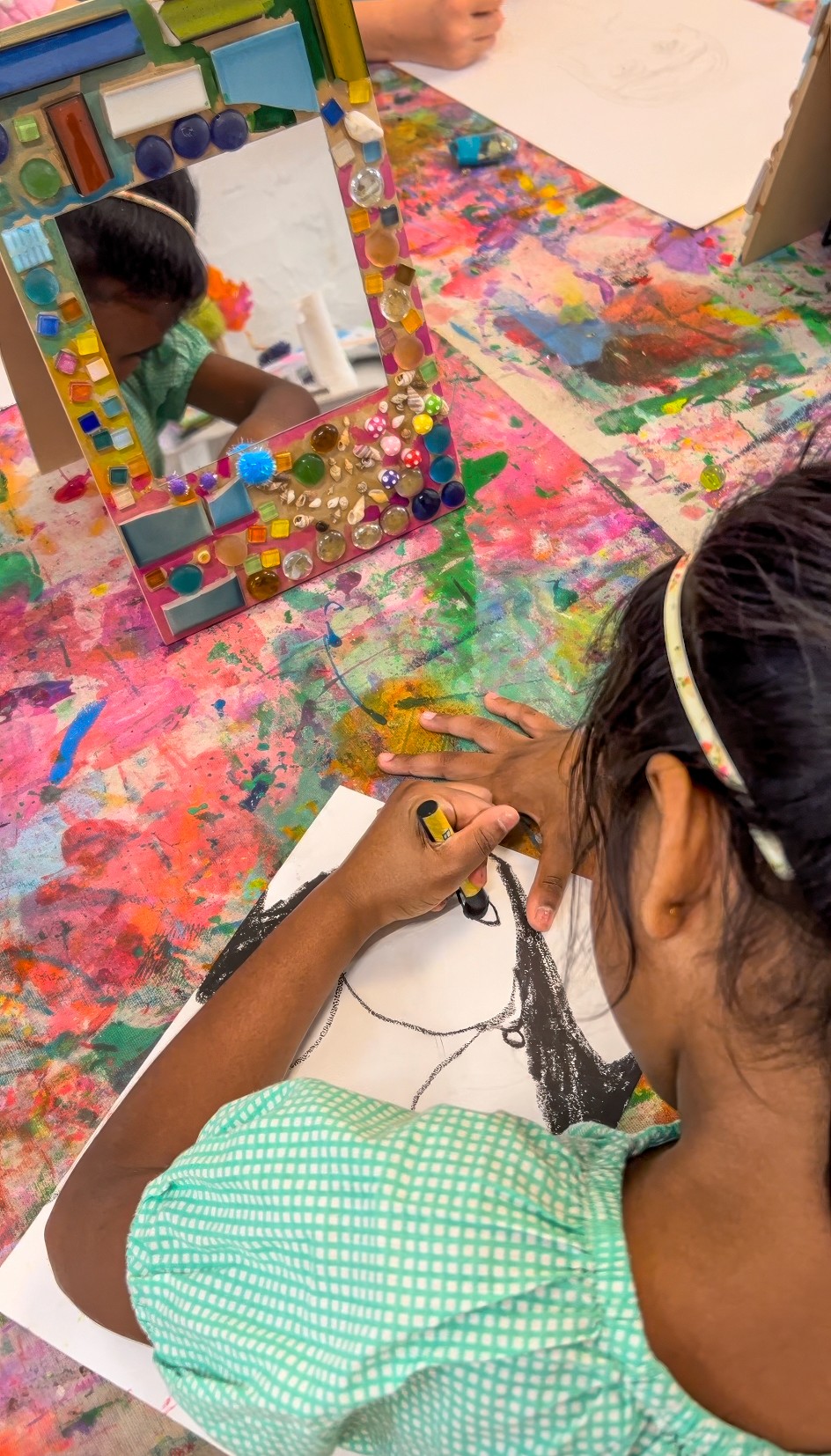
Design the border using tiles and treasures. If you have time, let artists lay everything out before gluing so they can rearrange and refine. If time is tight, committing as you go is also totally fine. That is part of the learning too.
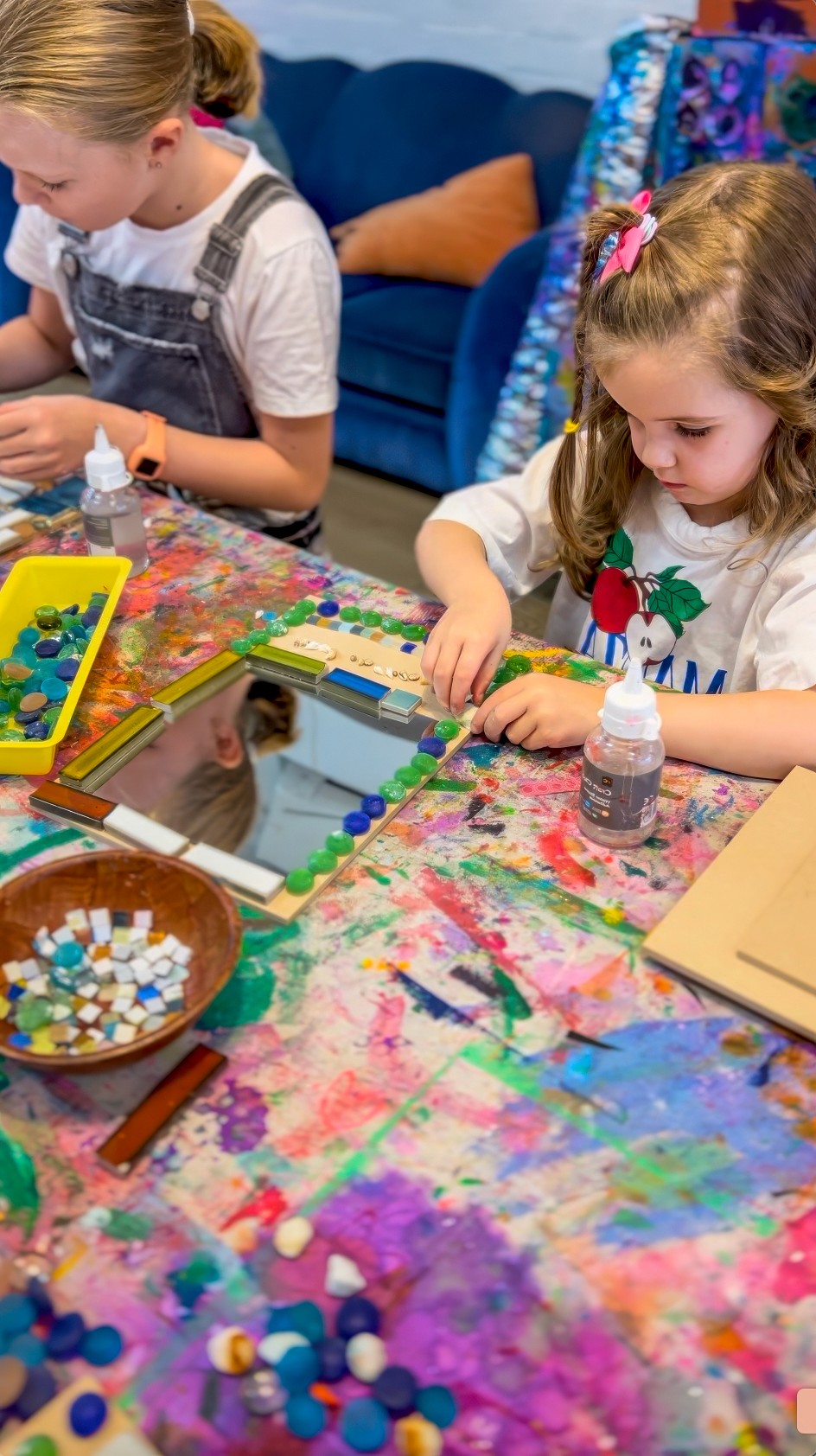
Once glued, add watercolour washes to the raw wood. The seep and spread is so satisfying, and the grain showing through makes it feel layered and warm. When dry, peel the backing and stick the mirror into the traced area.
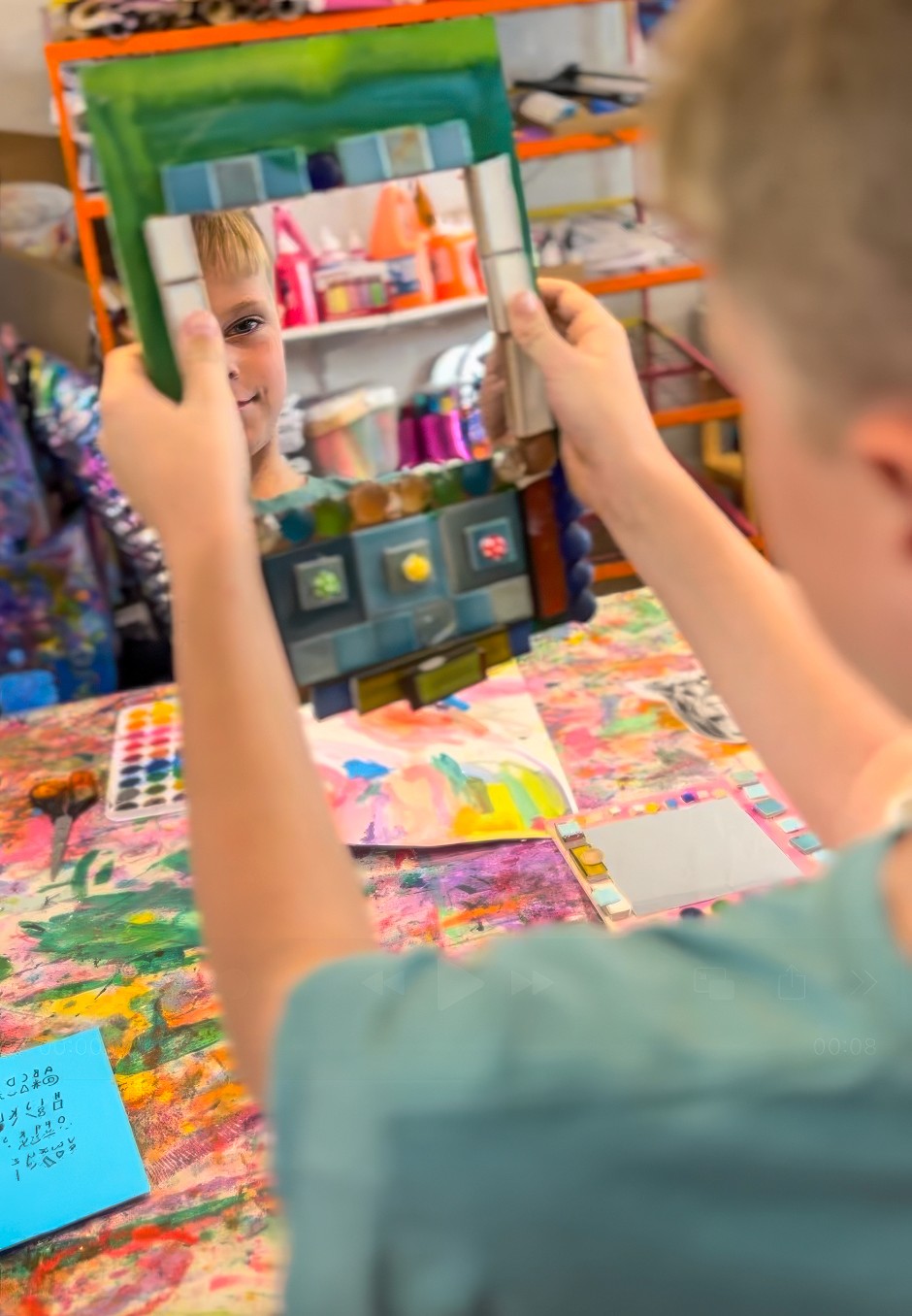
Smudge tip, I love using the mirror for a self portrait straight away, but it can also become a prop for imaginative play or a beautiful piece to hang at home.
Variations
Use a round mirror for a sun vibe.
Add tiny paper mosaic squares for lighter weight detailing.
Offer a limited palette, all sea tones, all warm tones, all monochrome plus one pop.
Materials
• Wooden base
• Acrylic adhesive mirror
• Tiles, shells, beads, jewels
• Mosaic glue
• Pencil
• Watercolours or paint sticks
Gallery
Back to Top
Mosaic Mirrors
Colour, reflection, and a gorgeous excuse for self portraits.
Bookmark
Sculpture
The Set Up
Mirrors feel very Gaudí to me because his buildings play with reflection, shimmer, and surfaces that change as you move through them. Casa Batlló is full of that kind of magic.
This is a simple build with a high impact result, and it naturally invites self portrait work straight afterwards.
Place your mirror onto the wooden base where you’d like it to sit, then trace around it lightly with pencil. I prefer not to stick it down first because it keeps the mirror safe from glue and paint during the messy part. Or keeping the film over the top and peeling it off at the end works well too.
The Making
Design the border using tiles and treasures. If you have time, let artists lay everything out before gluing so they can rearrange and refine. If time is tight, committing as you go is also totally fine. That is part of the learning too.
Once glued, add watercolour washes to the raw wood. The seep and spread is so satisfying, and the grain showing through makes it feel layered and warm. When dry, peel the backing and stick the mirror into the traced area.
Smudge tip, I love using the mirror for a self portrait straight away, but it can also become a prop for imaginative play or a beautiful piece to hang at home.
Variations
Use a round mirror for a sun vibe.
Add tiny paper mosaic squares for lighter weight detailing.
Offer a limited palette, all sea tones, all warm tones, all monochrome plus one pop.
Materials
• Wooden base
• Acrylic adhesive mirror
• Tiles, shells, beads, jewels
• Mosaic glue
• Pencil
• Watercolours or paint sticks
Gallery
Back to Top
Mosaic Mirrors
Colour, reflection, and a gorgeous excuse for self portraits.
Bookmark
Sculpture
The Set Up
Mirrors feel very Gaudí to me because his buildings play with reflection, shimmer, and surfaces that change as you move through them. Casa Batlló is full of that kind of magic.
This is a simple build with a high impact result, and it naturally invites self portrait work straight afterwards.
Place your mirror onto the wooden base where you’d like it to sit, then trace around it lightly with pencil. I prefer not to stick it down first because it keeps the mirror safe from glue and paint during the messy part. Or keeping the film over the top and peeling it off at the end works well too.
The Making
Design the border using tiles and treasures. If you have time, let artists lay everything out before gluing so they can rearrange and refine. If time is tight, committing as you go is also totally fine. That is part of the learning too.
Once glued, add watercolour washes to the raw wood. The seep and spread is so satisfying, and the grain showing through makes it feel layered and warm. When dry, peel the backing and stick the mirror into the traced area.
Smudge tip, I love using the mirror for a self portrait straight away, but it can also become a prop for imaginative play or a beautiful piece to hang at home.
Variations
Use a round mirror for a sun vibe.
Add tiny paper mosaic squares for lighter weight detailing.
Offer a limited palette, all sea tones, all warm tones, all monochrome plus one pop.
Materials
• Wooden base
• Acrylic adhesive mirror
• Tiles, shells, beads, jewels
• Mosaic glue
• Pencil
• Watercolours or paint sticks
Gallery
Back to Top
Shadow Box Parc Güell
Tiny architectural worlds built in layers.
Bookmark
Collage
The Set Up
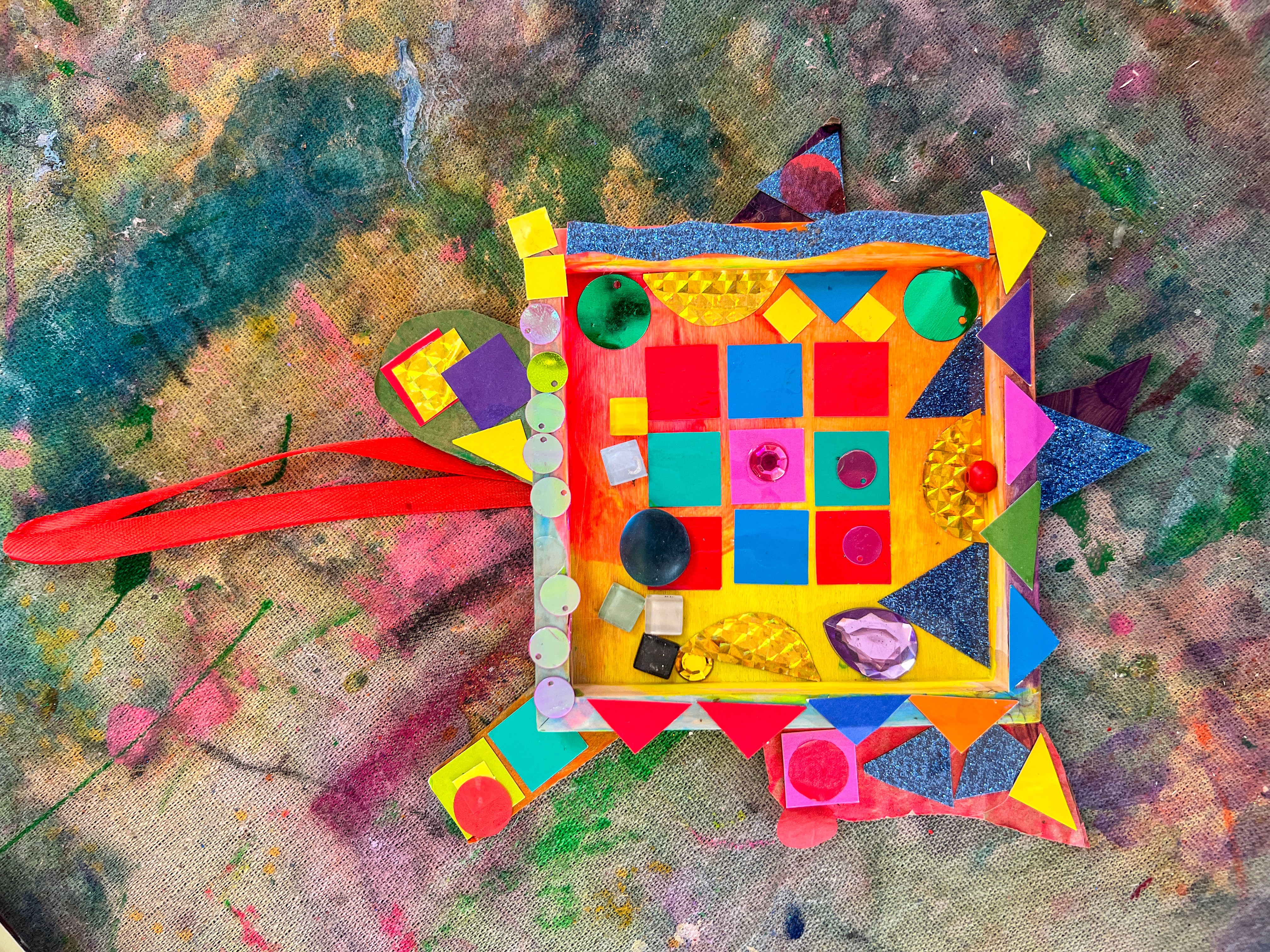
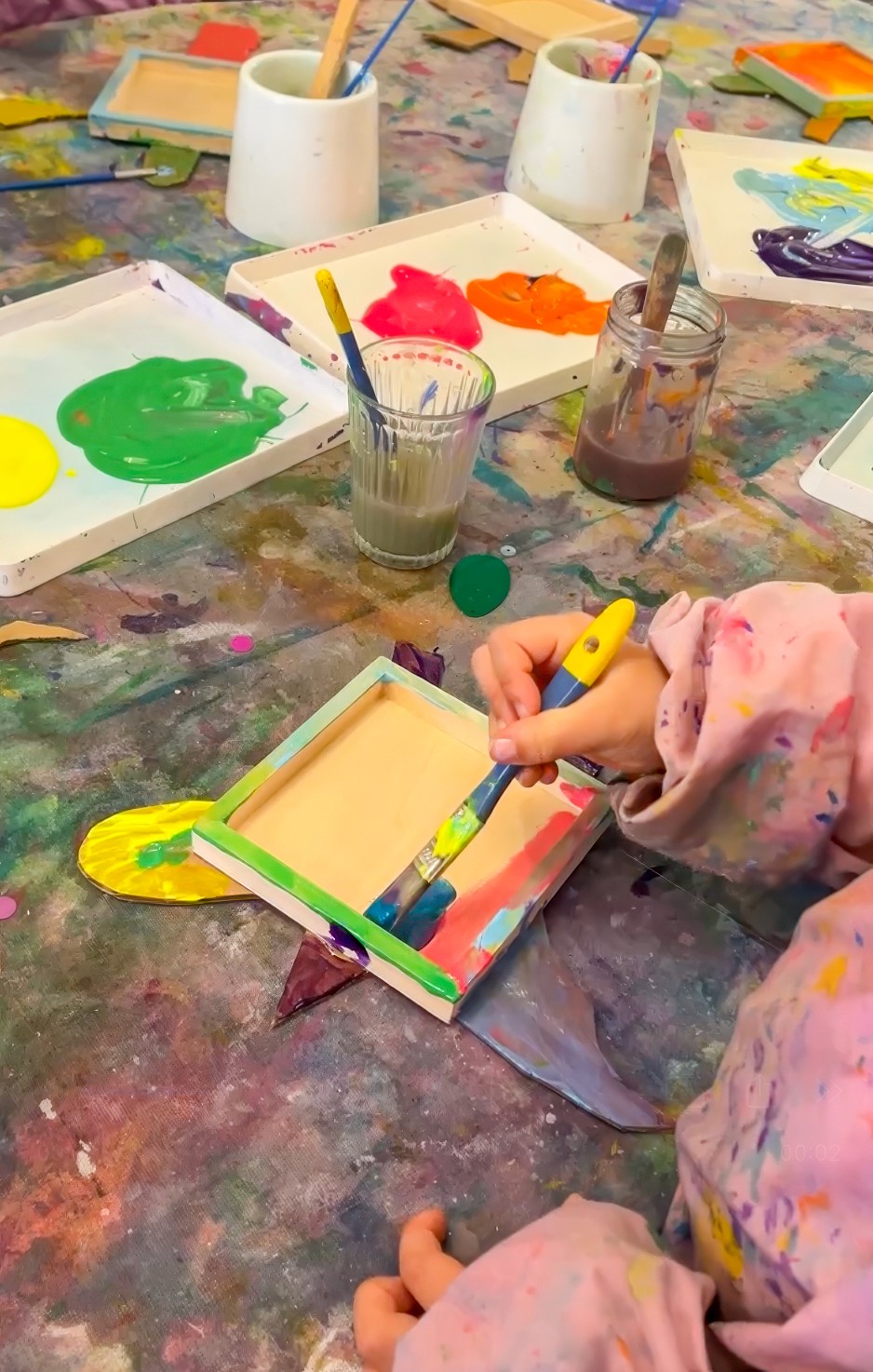
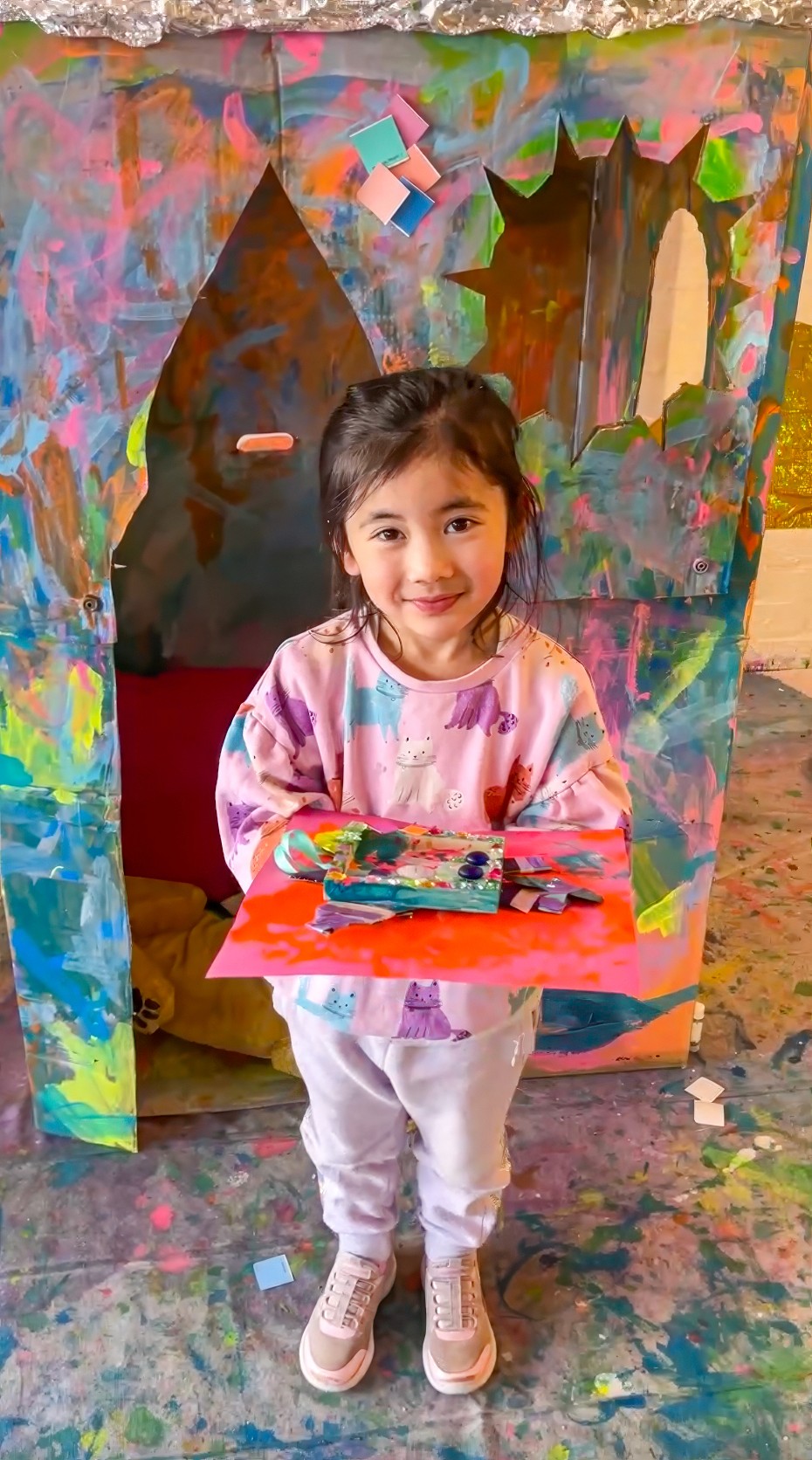
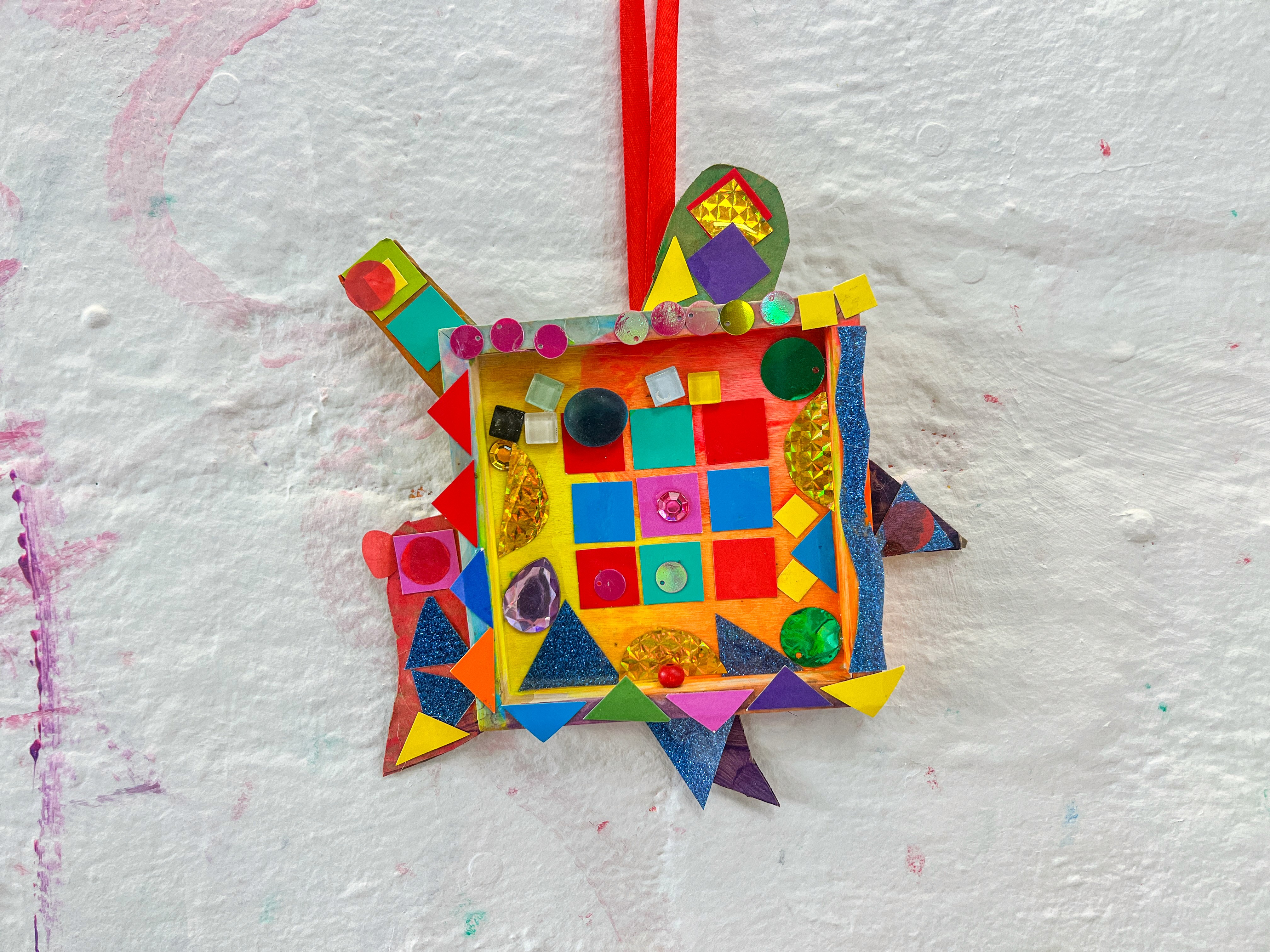
Our small wooden shadow boxes come out again because they are just too good. They are like tiny stages, and mosaics love a frame.
To bring in that Parc Güell feeling, we start by adding organic shapes. Curves, bumps, little wave forms. Cut cardboard shapes and hot glue them inside the shadow box to create raised areas and more architectural texture.
The Making
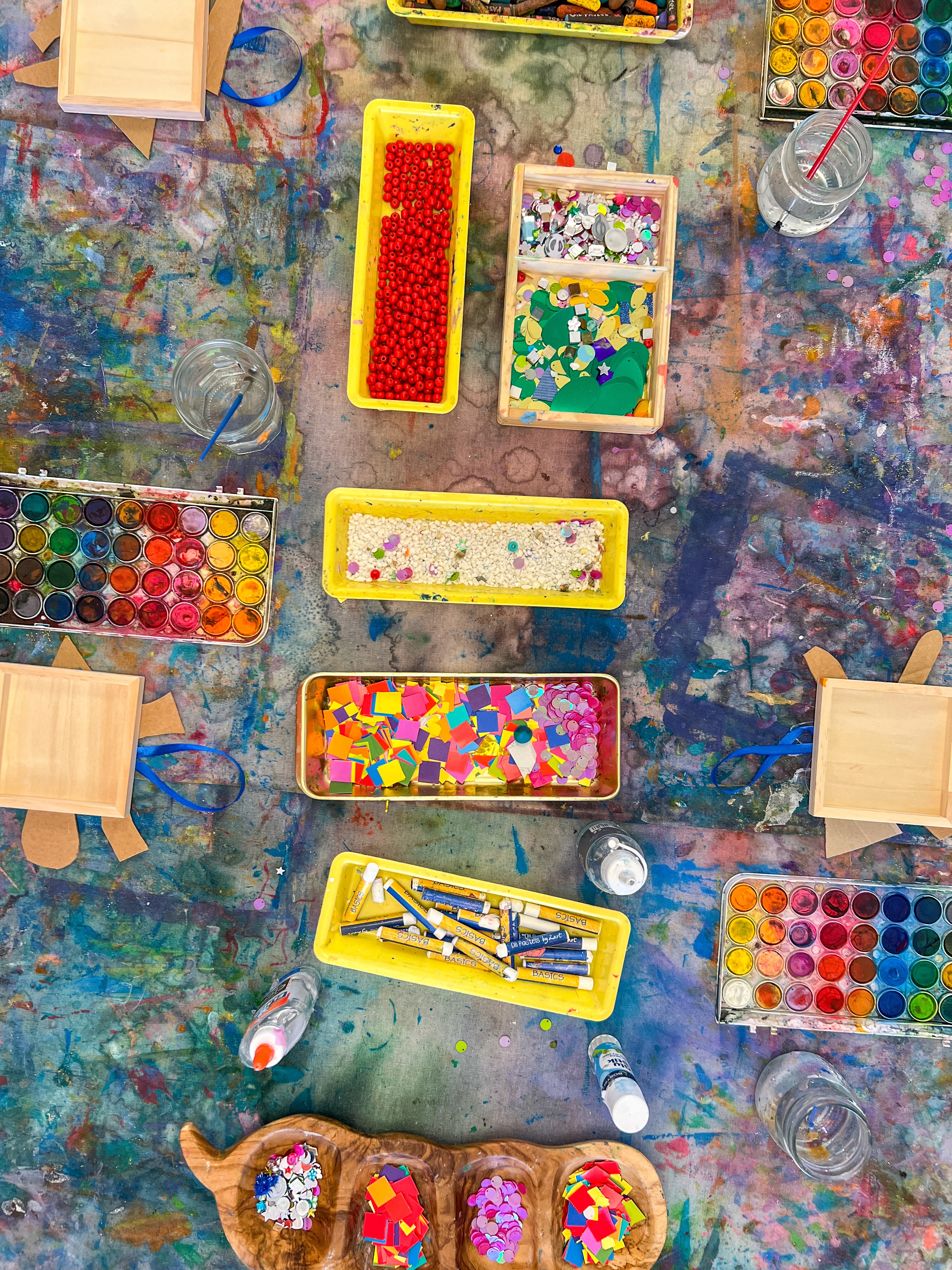
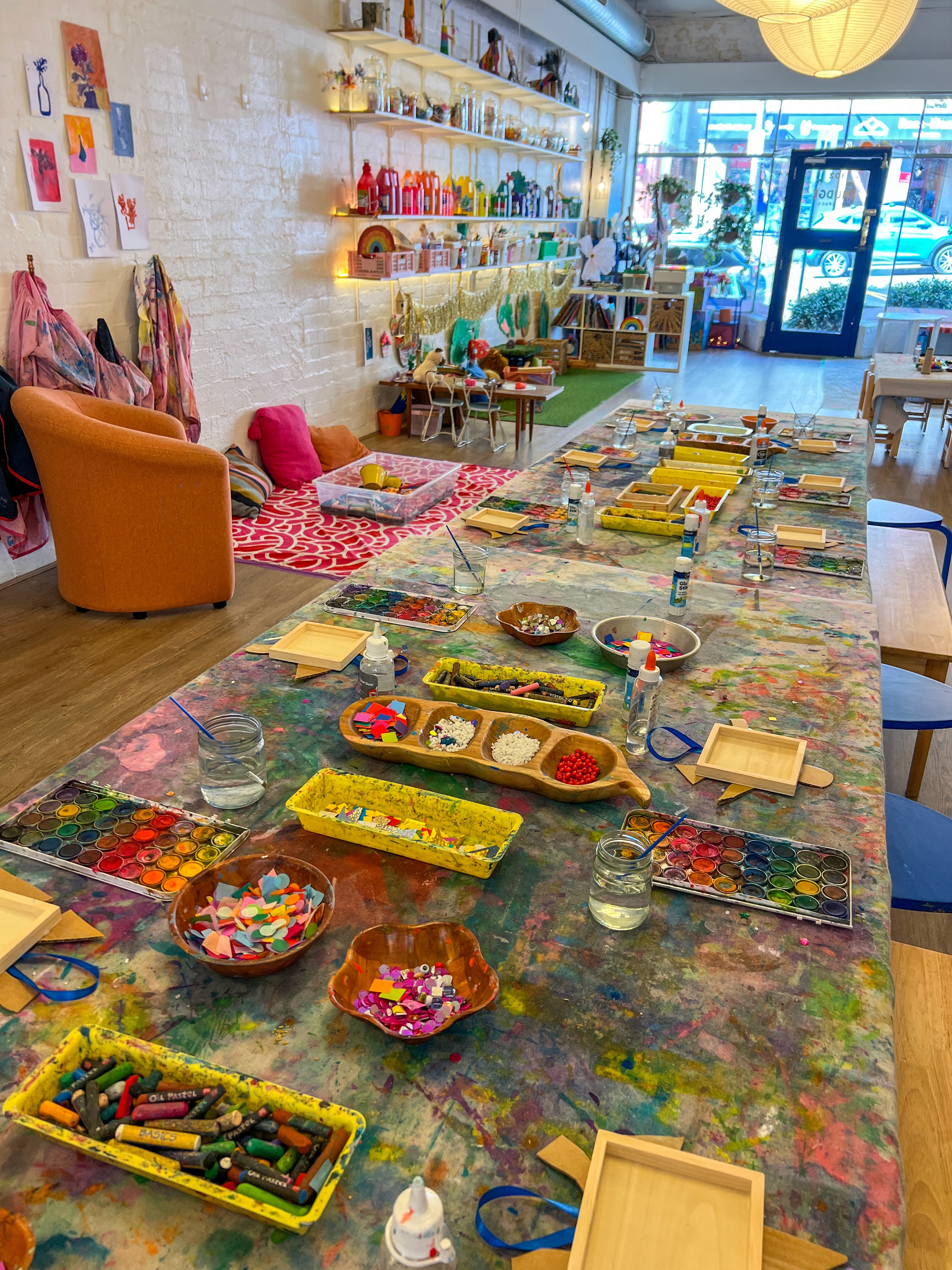
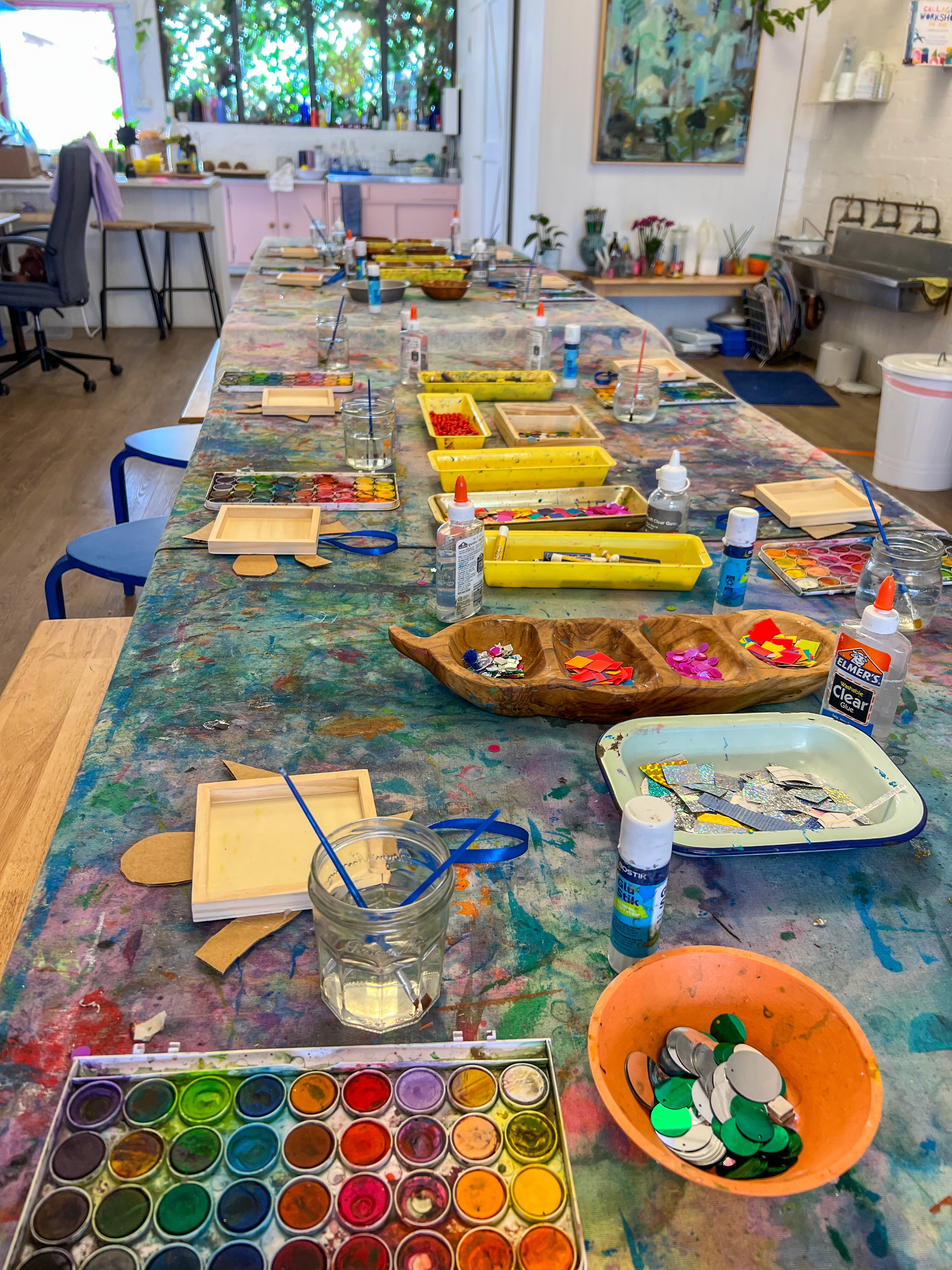
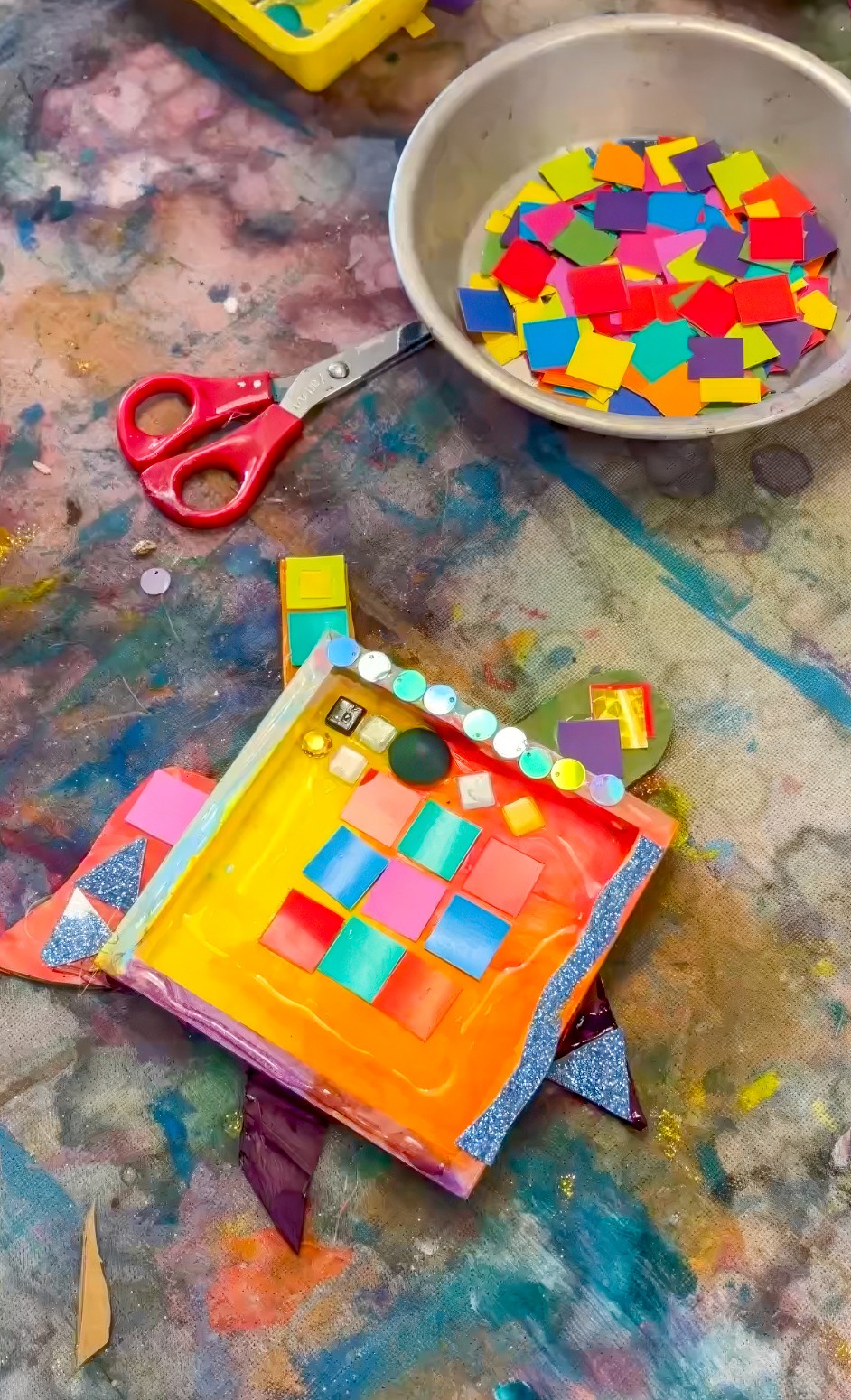
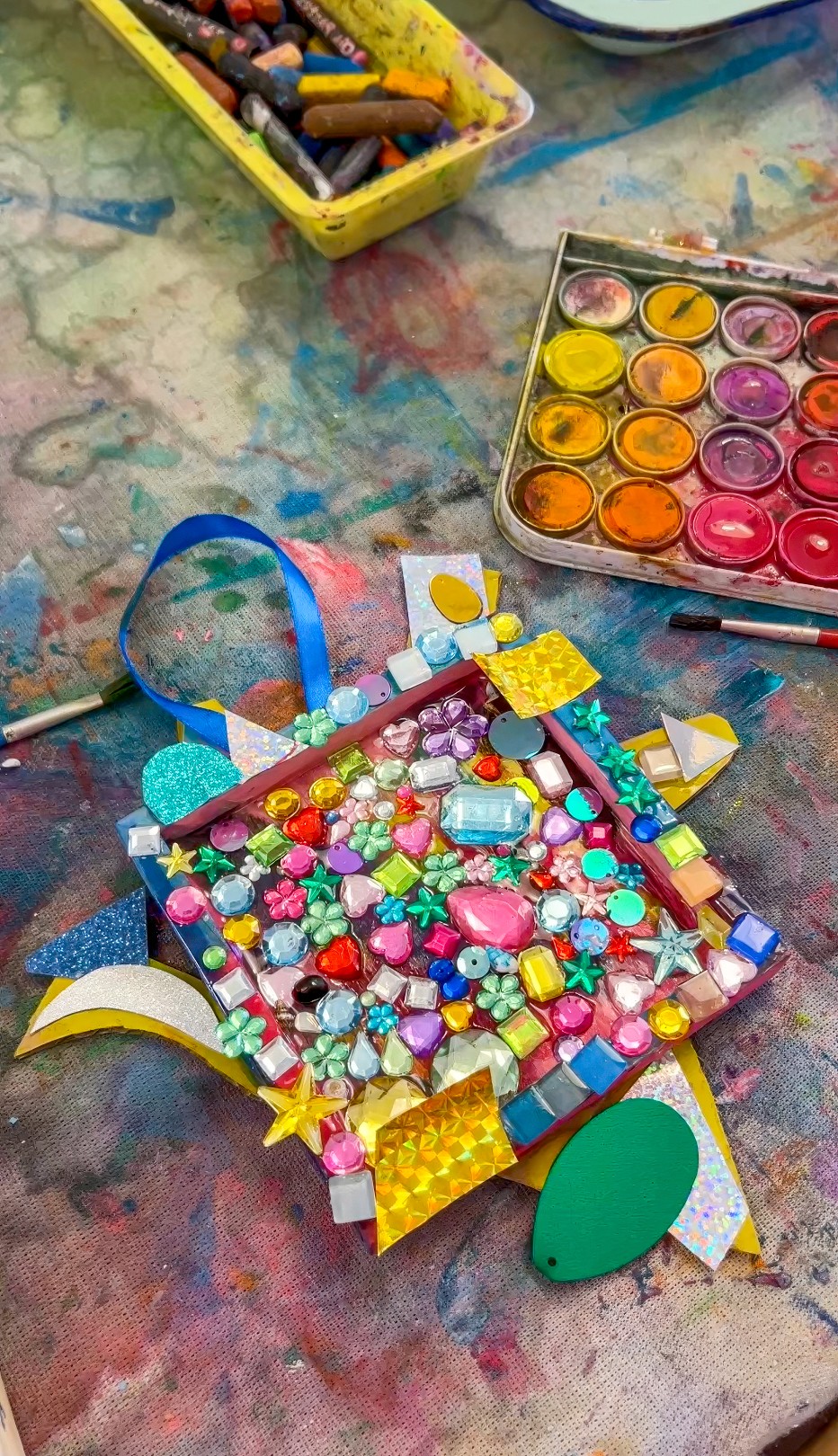
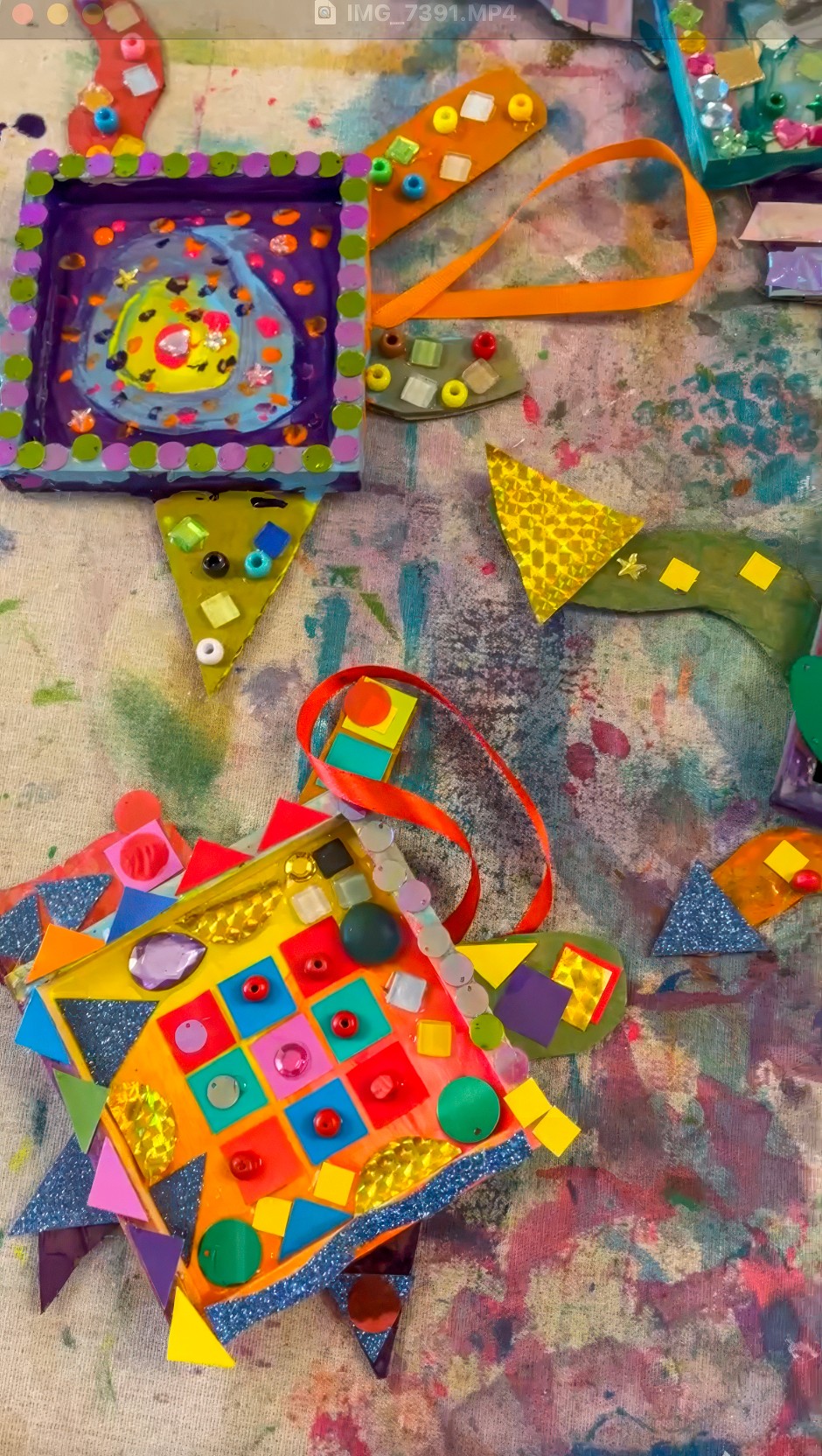
Then it becomes a layered build. Tiles, gems, beads, paper mosaic squares, anything sparkly. Kids choose where they want density and where they want space.
If you want paint here, paint sticks are great because they sit on top of everything and add another colour layer without soaking the wood too much. Watercolour also works, especially around edges where you want soft washes (my personal favourite).
Materials
• Wooden shadow boxes
• Cardboard scraps for raised shapes
• Hot glue
• Tiles, gems, beads, paper mosaic squares
• Mosaic glue
• Optional: paint sticks or watercolours
Back to Top
Shadow Box Parc Güell
Tiny architectural worlds built in layers.
Bookmark
Collage
The Set Up
Our small wooden shadow boxes come out again because they are just too good. They are like tiny stages, and mosaics love a frame.
To bring in that Parc Güell feeling, we start by adding organic shapes. Curves, bumps, little wave forms. Cut cardboard shapes and hot glue them inside the shadow box to create raised areas and more architectural texture.
The Making
Then it becomes a layered build. Tiles, gems, beads, paper mosaic squares, anything sparkly. Kids choose where they want density and where they want space.
If you want paint here, paint sticks are great because they sit on top of everything and add another colour layer without soaking the wood too much. Watercolour also works, especially around edges where you want soft washes (my personal favourite).
Materials
• Wooden shadow boxes
• Cardboard scraps for raised shapes
• Hot glue
• Tiles, gems, beads, paper mosaic squares
• Mosaic glue
• Optional: paint sticks or watercolours
Back to Top
Shadow Box Parc Güell
Tiny architectural worlds built in layers.
Bookmark
Collage
The Set Up
Our small wooden shadow boxes come out again because they are just too good. They are like tiny stages, and mosaics love a frame.
To bring in that Parc Güell feeling, we start by adding organic shapes. Curves, bumps, little wave forms. Cut cardboard shapes and hot glue them inside the shadow box to create raised areas and more architectural texture.
The Making
Then it becomes a layered build. Tiles, gems, beads, paper mosaic squares, anything sparkly. Kids choose where they want density and where they want space.
If you want paint here, paint sticks are great because they sit on top of everything and add another colour layer without soaking the wood too much. Watercolour also works, especially around edges where you want soft washes (my personal favourite).
Materials
• Wooden shadow boxes
• Cardboard scraps for raised shapes
• Hot glue
• Tiles, gems, beads, paper mosaic squares
• Mosaic glue
• Optional: paint sticks or watercolours
Back to Top
DIY Terrazzo Benchtop
A behind the scenes Smudge build for the grown ups.
Bookmark
Sculpture
The Set Up
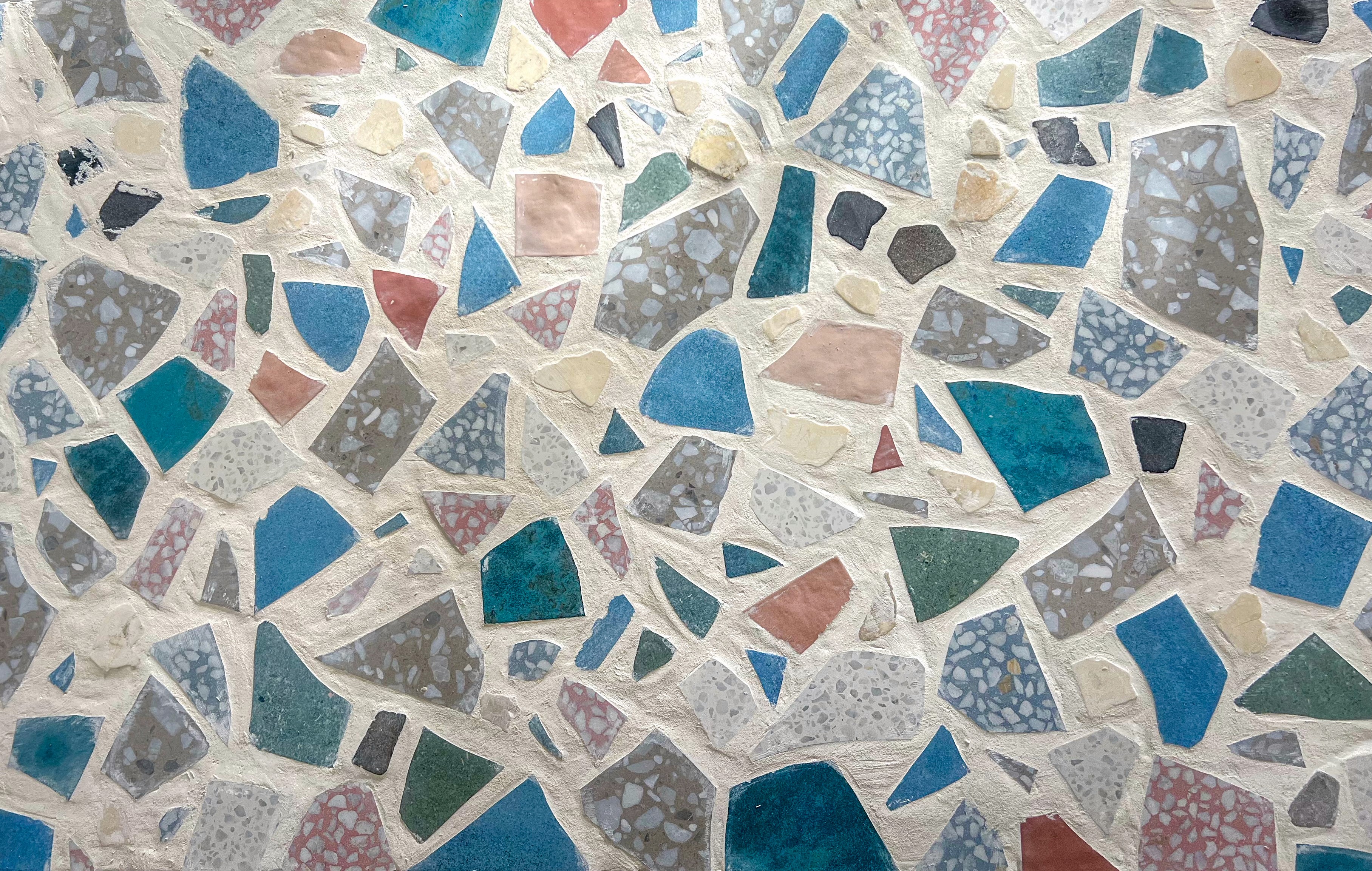
This is not a children’s art experience, but I’m including it because it ties in so beautifully with mosaics and it’s something I get asked about constantly. It is a little behind the scenes Smudge build moment from 2023!
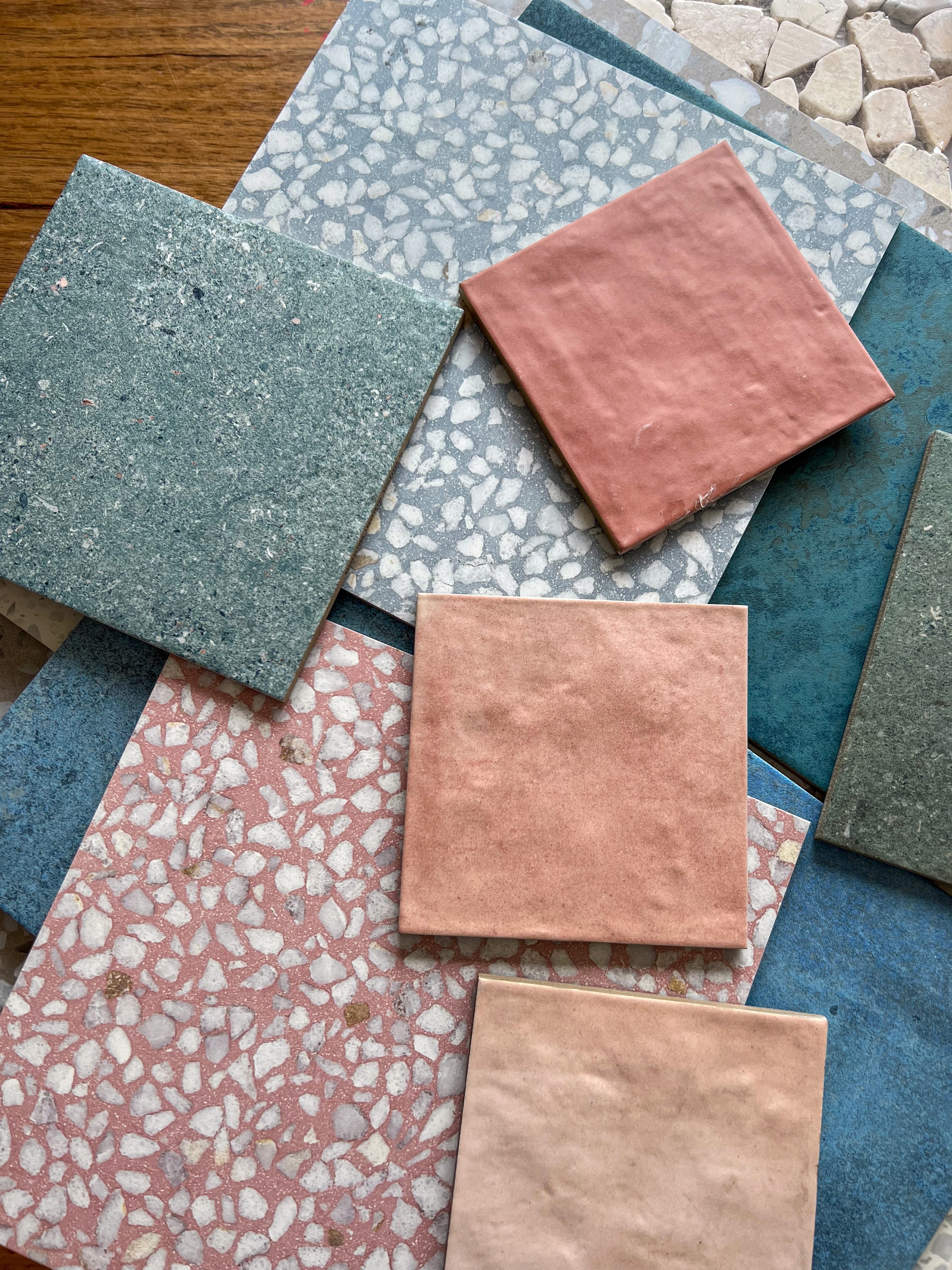
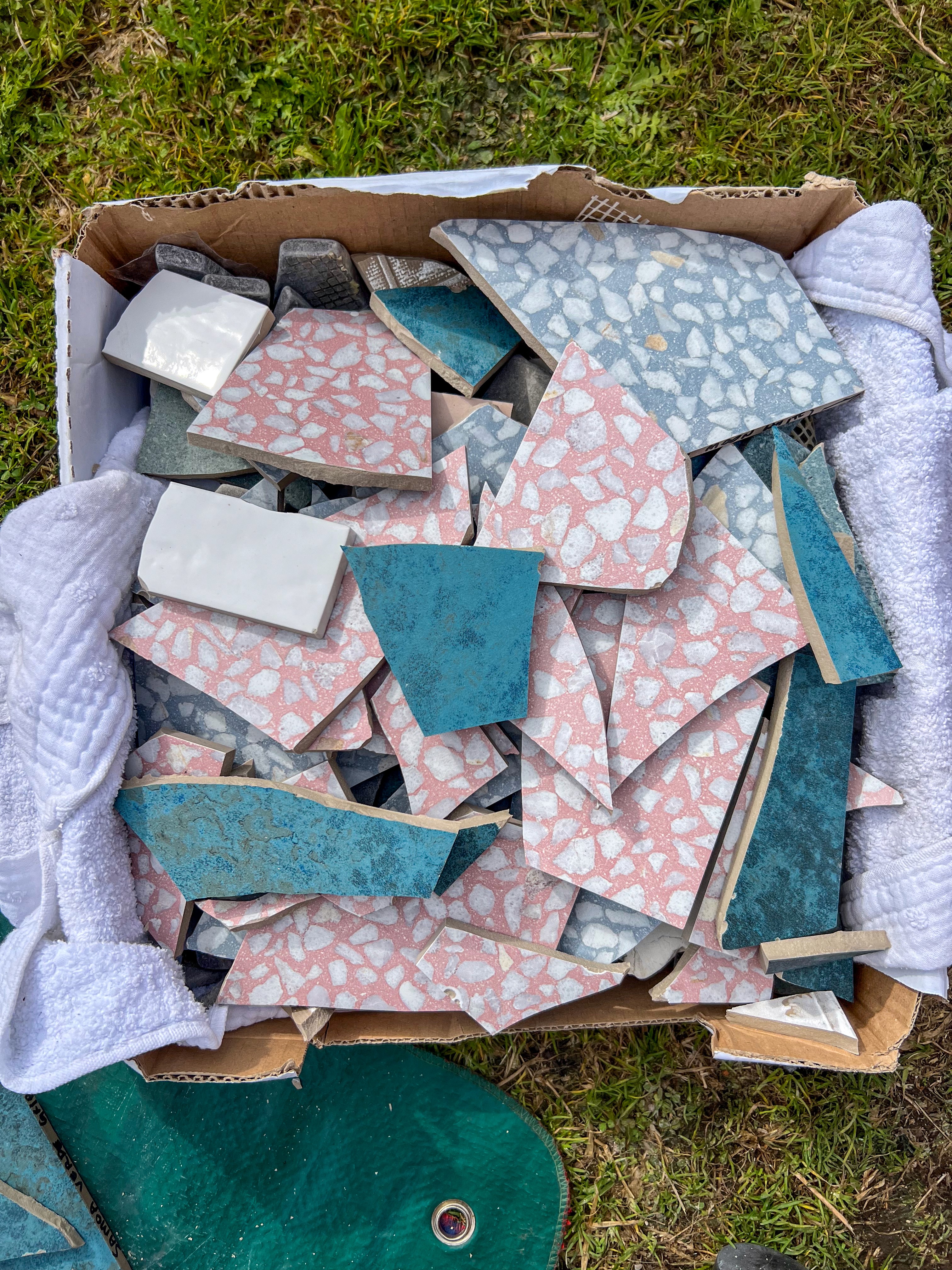
I went around to tile shops and collected samples in colours and textures I loved. If you ever do this yourself, try to find tiles that are a similar thickness. I didn't, and it made the finishing stage much harder!
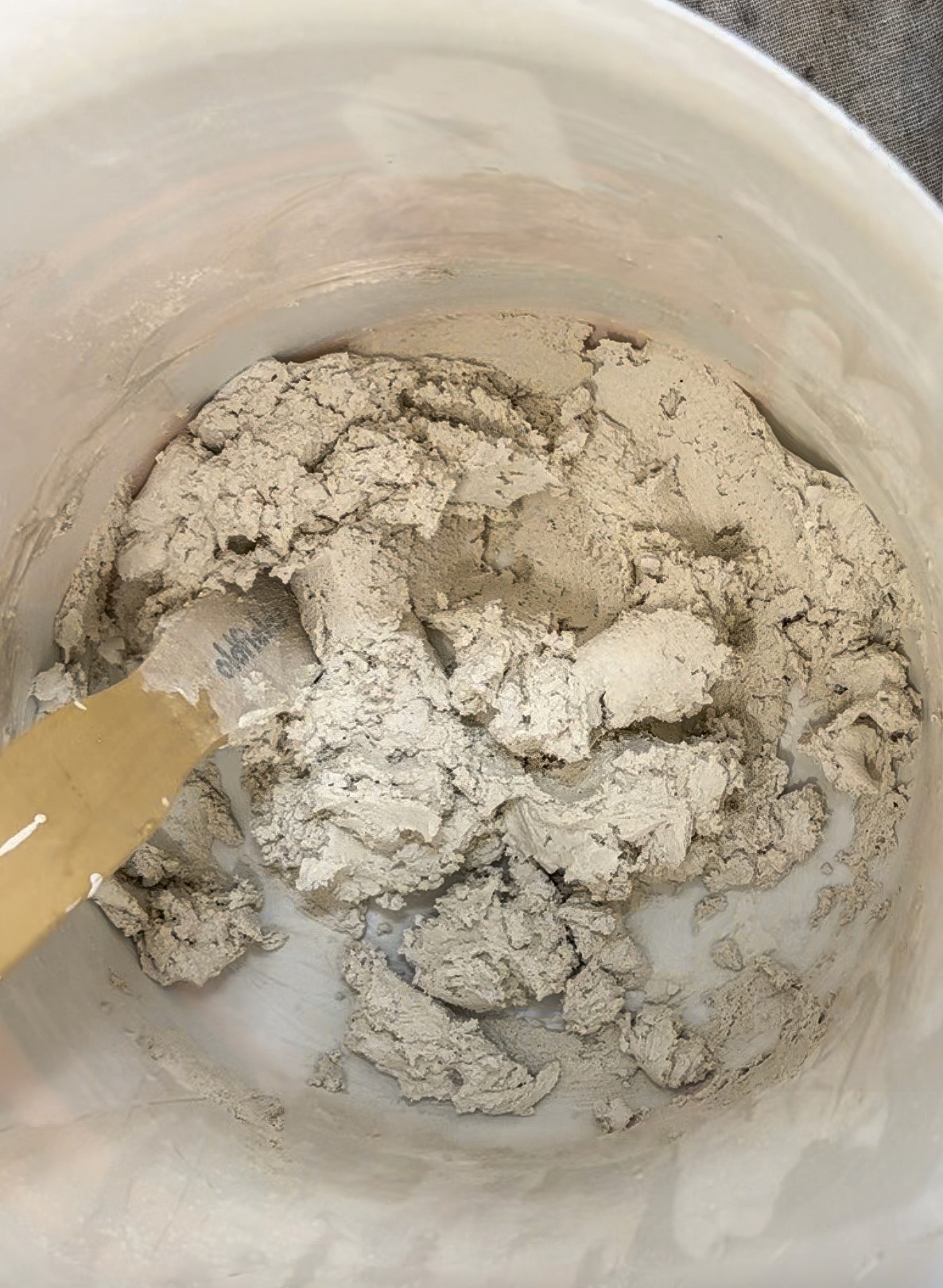
Measure the surface you are covering and cut a timber base to size. Gather tile glue, grout, a bucket, water, mixing utensil, and a grout float. You’ll also want rubber gloves.
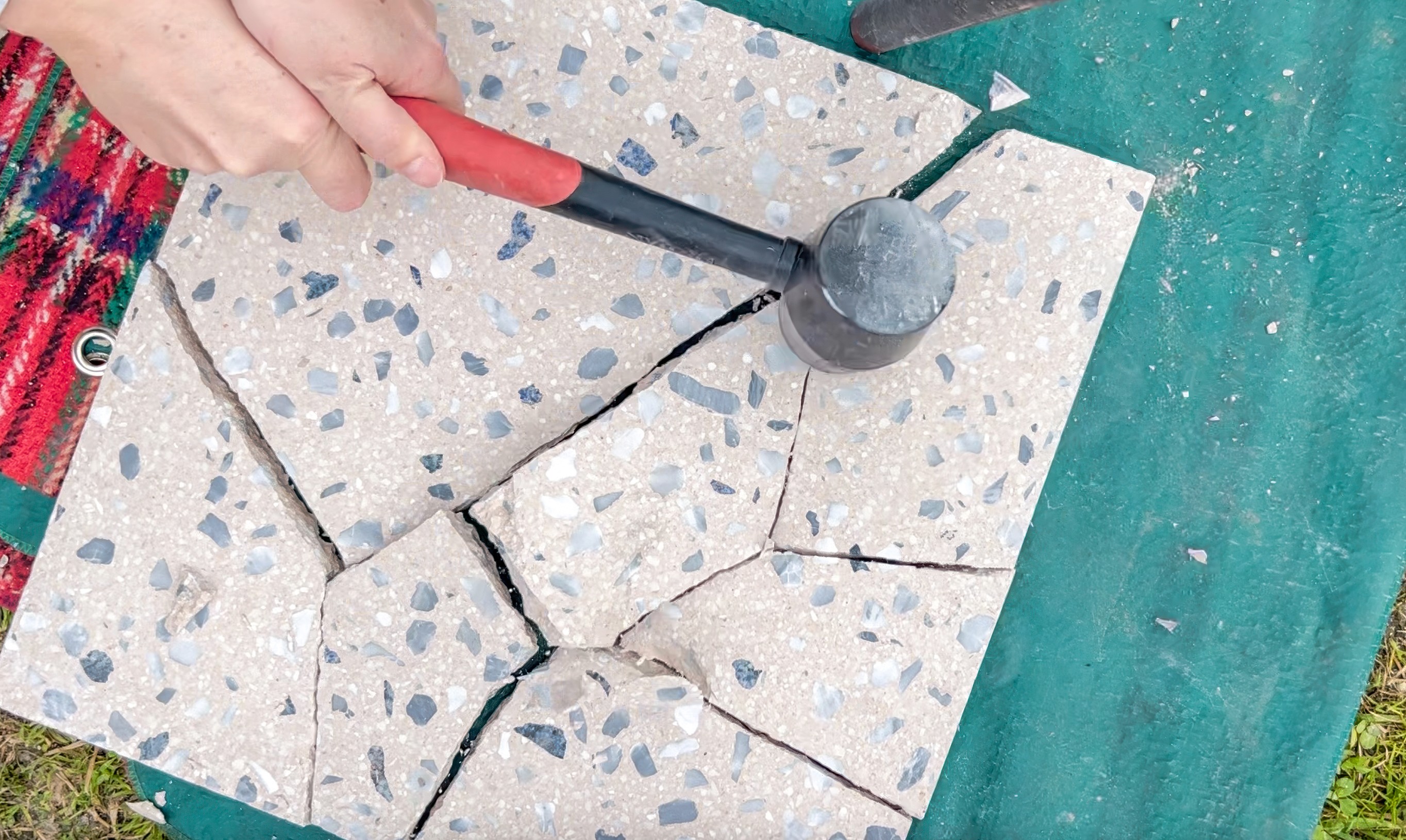
For smashing tiles, a rubber mallet is brilliant. Wrap tiles in a tea towel first and please wear safety goggles.
The Making
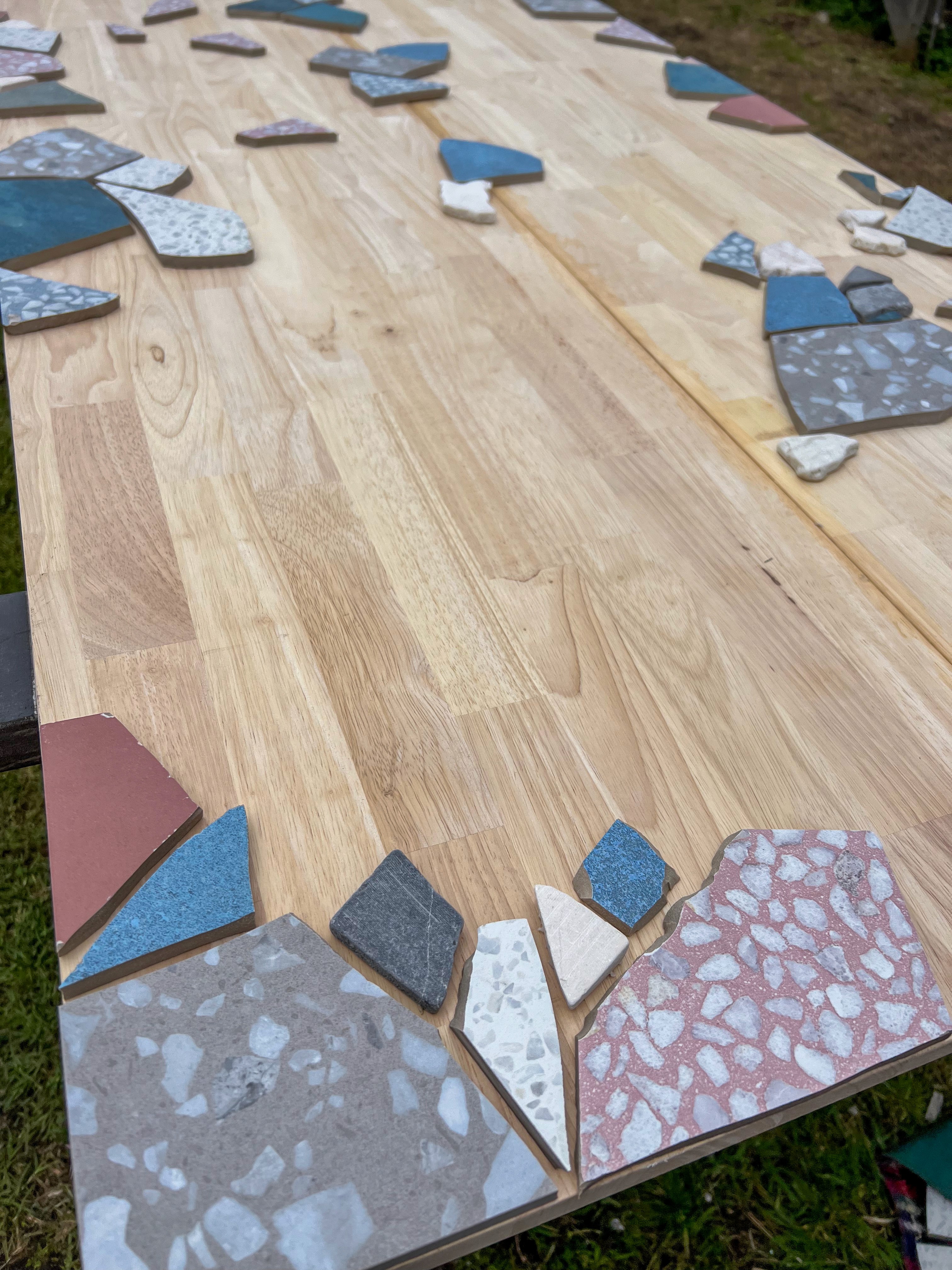
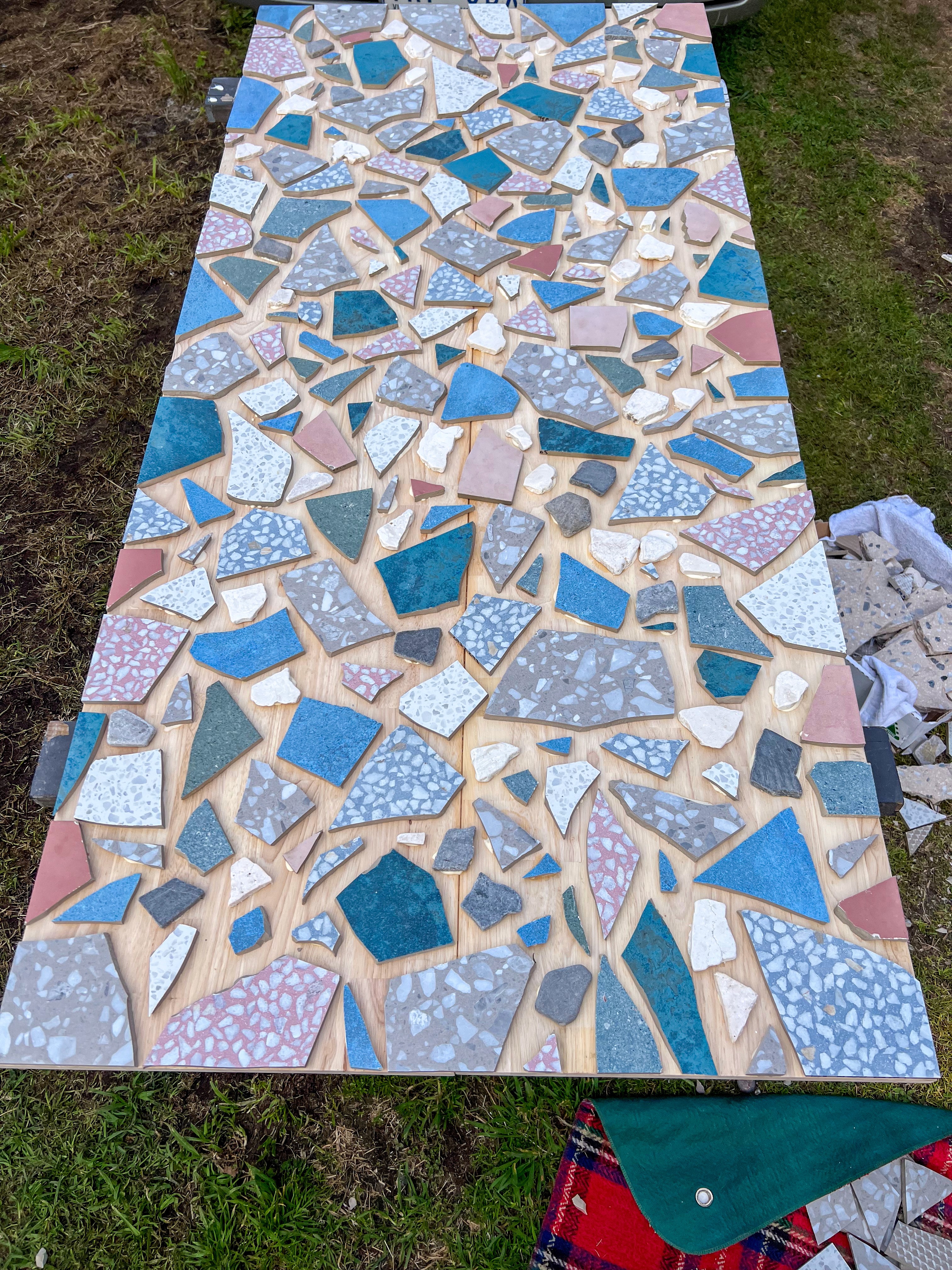
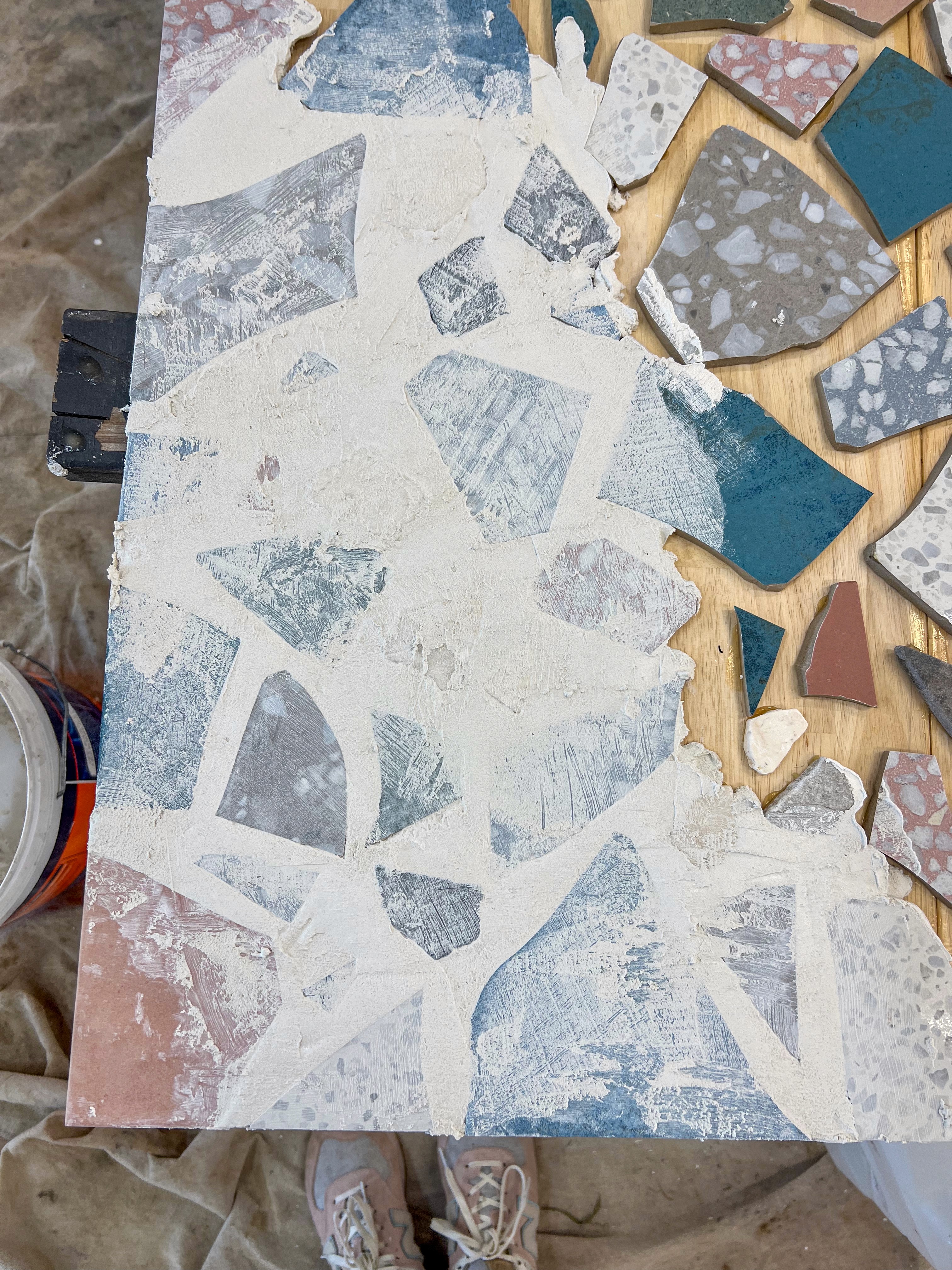
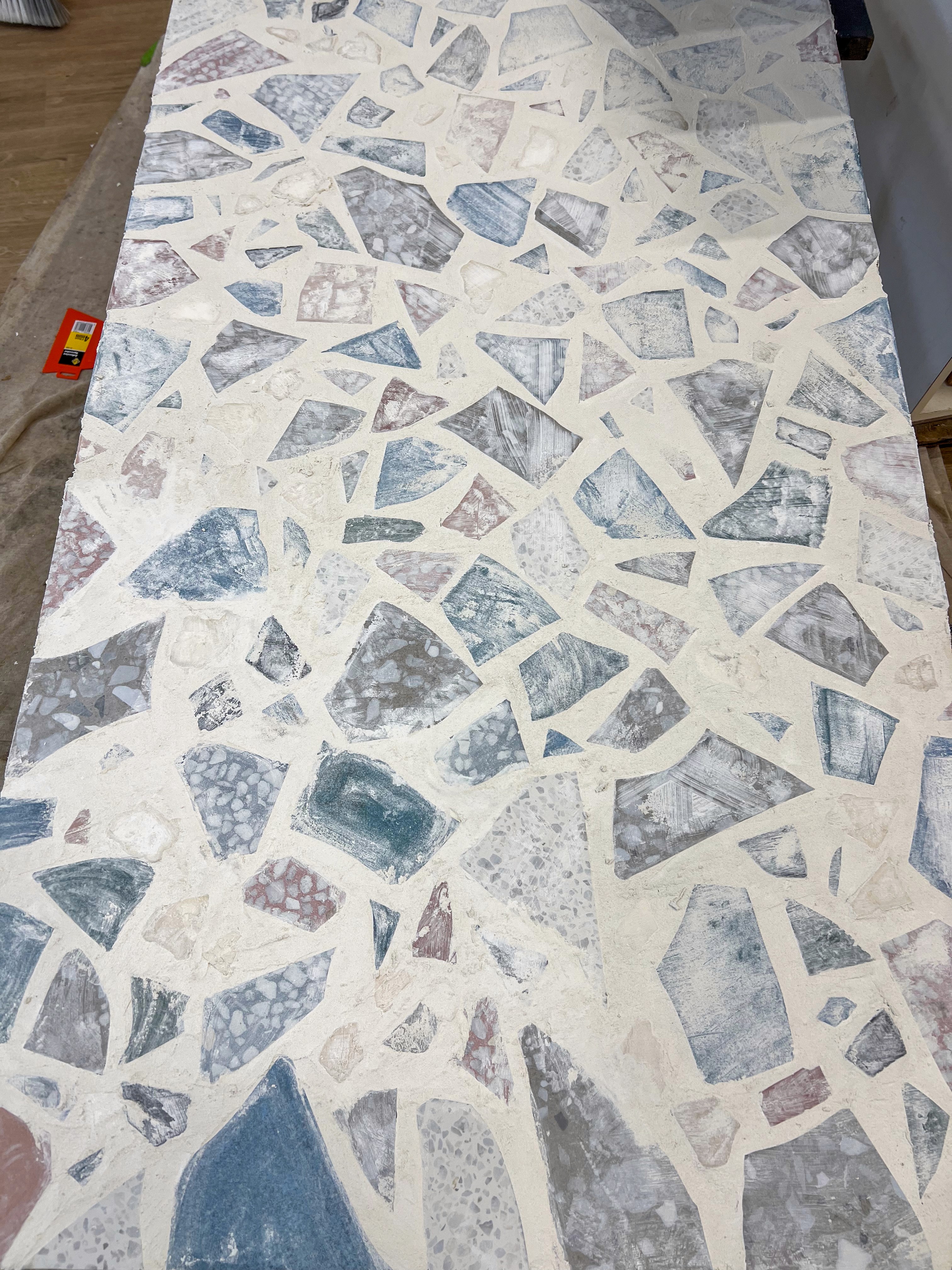
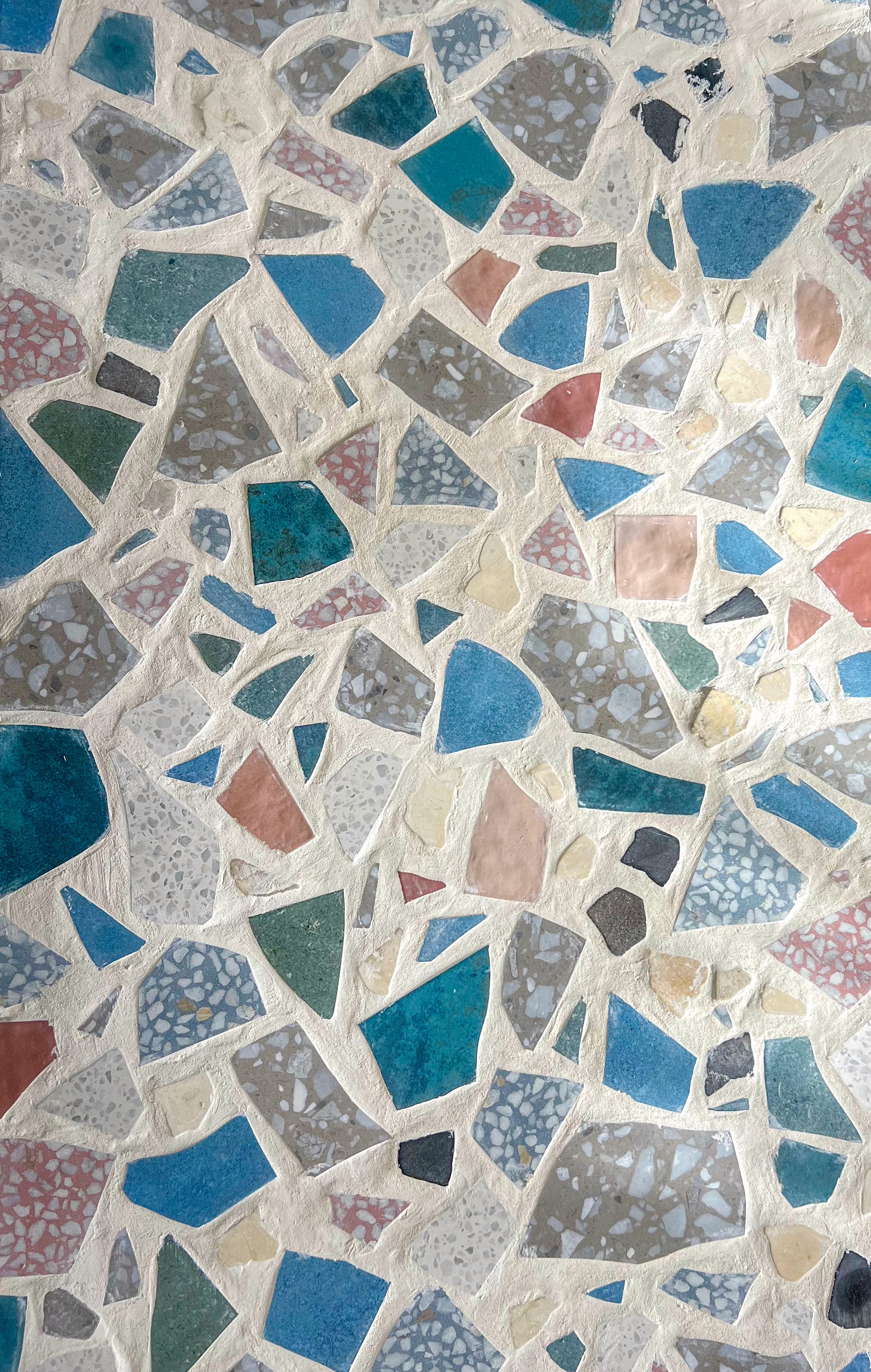
Lay out your tile pieces before gluing. Decide whether you want lots of grout showing (more terrazzo style), or tighter tiles with minimal grout lines (more mosaic style). I like starting by forming a border around the edge so the whole surface feels contained, then filling in from there.
Glue the tiles down, let them set, then grout the entire surface. Once cured, clean, sand back if needed, and seal properly so it is durable and wipeable.
Variations
Do a small version first on a tray or a plant stand to test your process.
Materials
• Timber base cut to size
• Tile samples or tiles (similar thickness helps)
• Tile adhesive
• Grout, bucket, water, mixing tool
• Grout float
• Rubber mallet, tea towel, safety goggles
• Sealer for finishing
Back to Top
DIY Terrazzo Benchtop
A behind the scenes Smudge build for the grown ups.
Bookmark
Sculpture
The Set Up
This is not a children’s art experience, but I’m including it because it ties in so beautifully with mosaics and it’s something I get asked about constantly. It is a little behind the scenes Smudge build moment from 2023!
I went around to tile shops and collected samples in colours and textures I loved. If you ever do this yourself, try to find tiles that are a similar thickness. I didn't, and it made the finishing stage much harder!
Measure the surface you are covering and cut a timber base to size. Gather tile glue, grout, a bucket, water, mixing utensil, and a grout float. You’ll also want rubber gloves.
For smashing tiles, a rubber mallet is brilliant. Wrap tiles in a tea towel first and please wear safety goggles.
The Making
Lay out your tile pieces before gluing. Decide whether you want lots of grout showing (more terrazzo style), or tighter tiles with minimal grout lines (more mosaic style). I like starting by forming a border around the edge so the whole surface feels contained, then filling in from there.
Glue the tiles down, let them set, then grout the entire surface. Once cured, clean, sand back if needed, and seal properly so it is durable and wipeable.
Variations
Do a small version first on a tray or a plant stand to test your process.
Materials
• Timber base cut to size
• Tile samples or tiles (similar thickness helps)
• Tile adhesive
• Grout, bucket, water, mixing tool
• Grout float
• Rubber mallet, tea towel, safety goggles
• Sealer for finishing
Back to Top
DIY Terrazzo Benchtop
A behind the scenes Smudge build for the grown ups.
Bookmark
Sculpture
The Set Up
This is not a children’s art experience, but I’m including it because it ties in so beautifully with mosaics and it’s something I get asked about constantly. It is a little behind the scenes Smudge build moment from 2023!
I went around to tile shops and collected samples in colours and textures I loved. If you ever do this yourself, try to find tiles that are a similar thickness. I didn't, and it made the finishing stage much harder!
Measure the surface you are covering and cut a timber base to size. Gather tile glue, grout, a bucket, water, mixing utensil, and a grout float. You’ll also want rubber gloves.
For smashing tiles, a rubber mallet is brilliant. Wrap tiles in a tea towel first and please wear safety goggles.
The Making
Lay out your tile pieces before gluing. Decide whether you want lots of grout showing (more terrazzo style), or tighter tiles with minimal grout lines (more mosaic style). I like starting by forming a border around the edge so the whole surface feels contained, then filling in from there.
Glue the tiles down, let them set, then grout the entire surface. Once cured, clean, sand back if needed, and seal properly so it is durable and wipeable.
Variations
Do a small version first on a tray or a plant stand to test your process.
Materials
• Timber base cut to size
• Tile samples or tiles (similar thickness helps)
• Tile adhesive
• Grout, bucket, water, mixing tool
• Grout float
• Rubber mallet, tea towel, safety goggles
• Sealer for finishing
Back to Top