Adventure Lab
Stones and scoops and hidden treasure
The Set Up
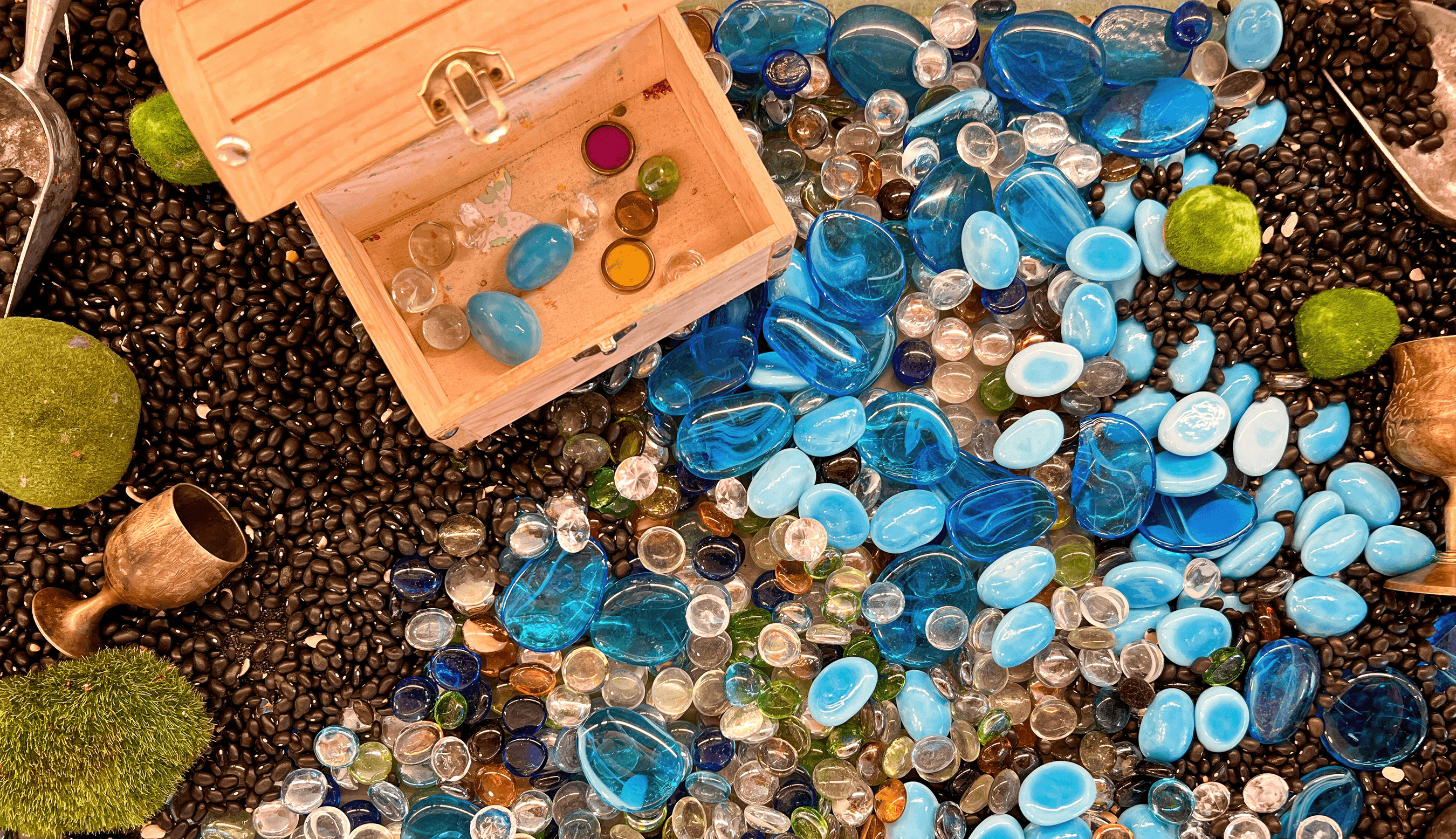
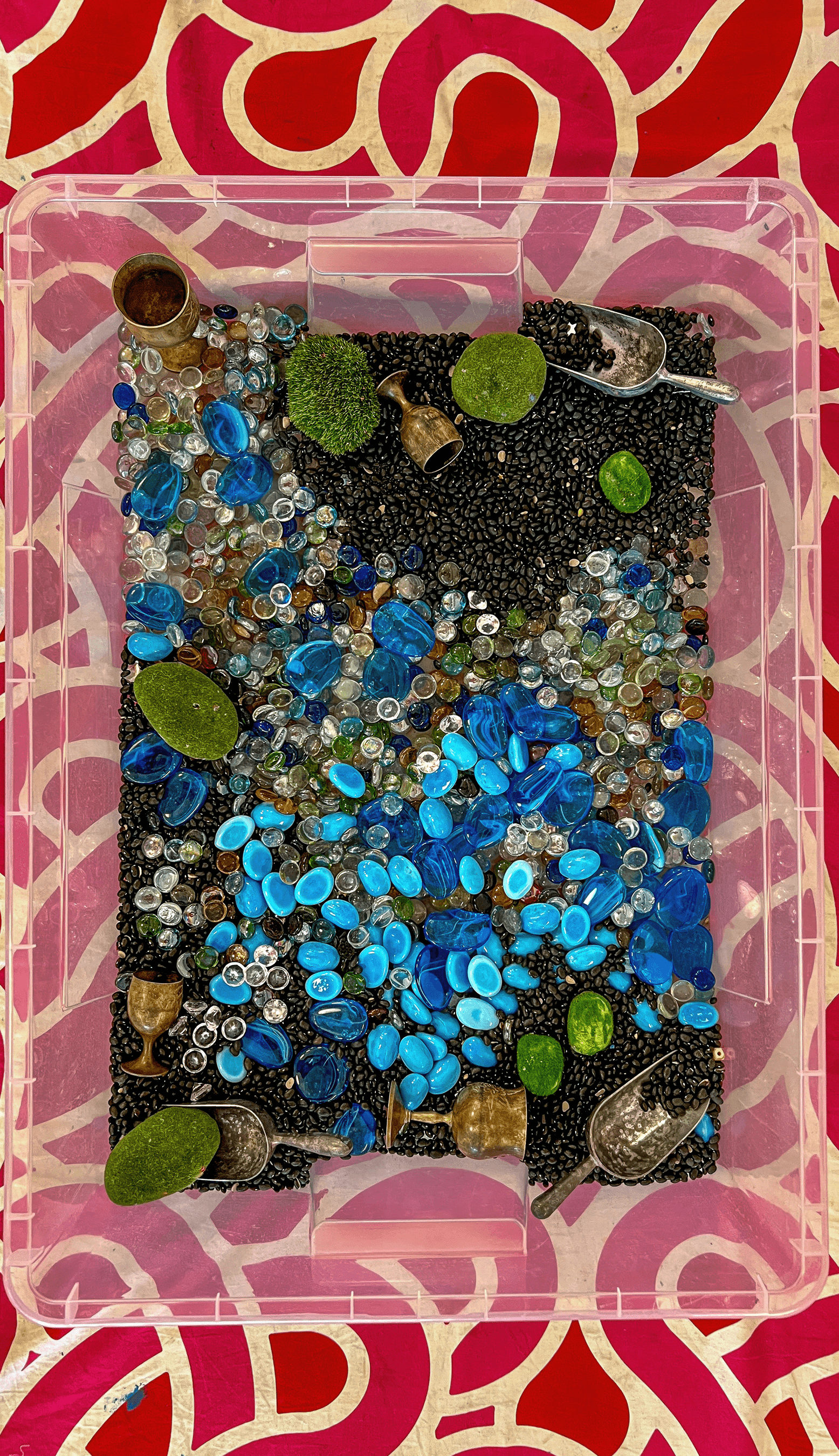
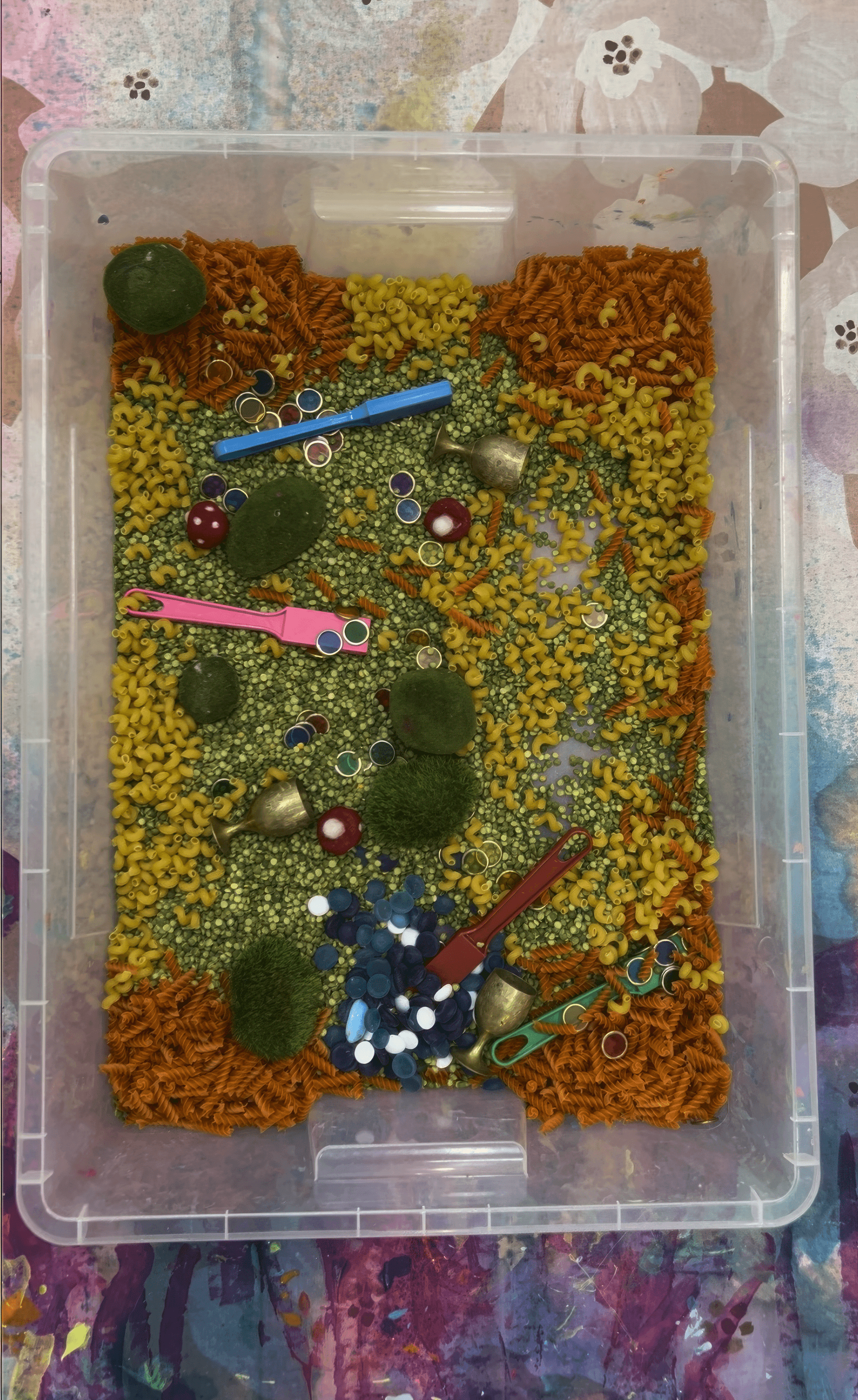
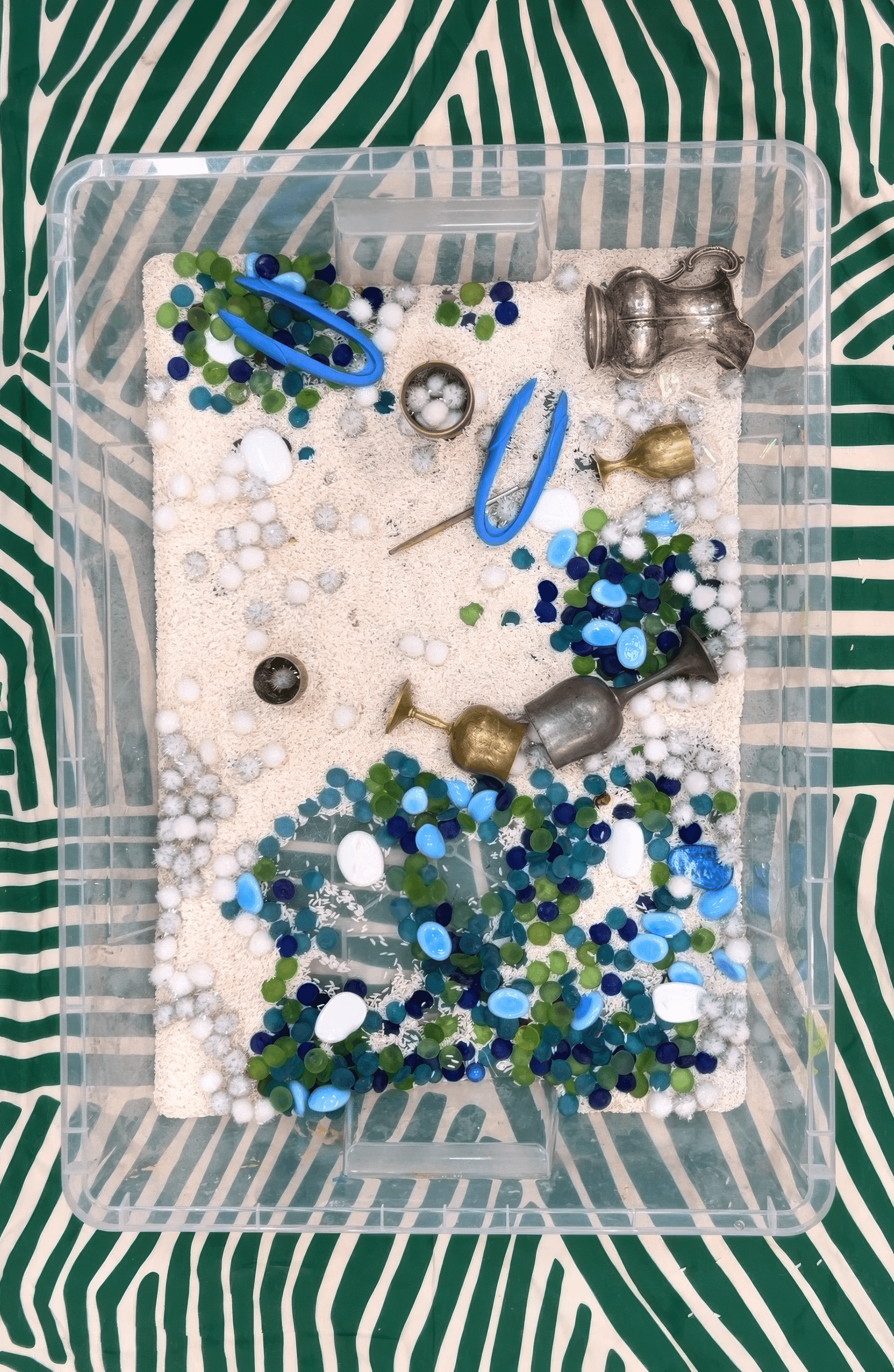
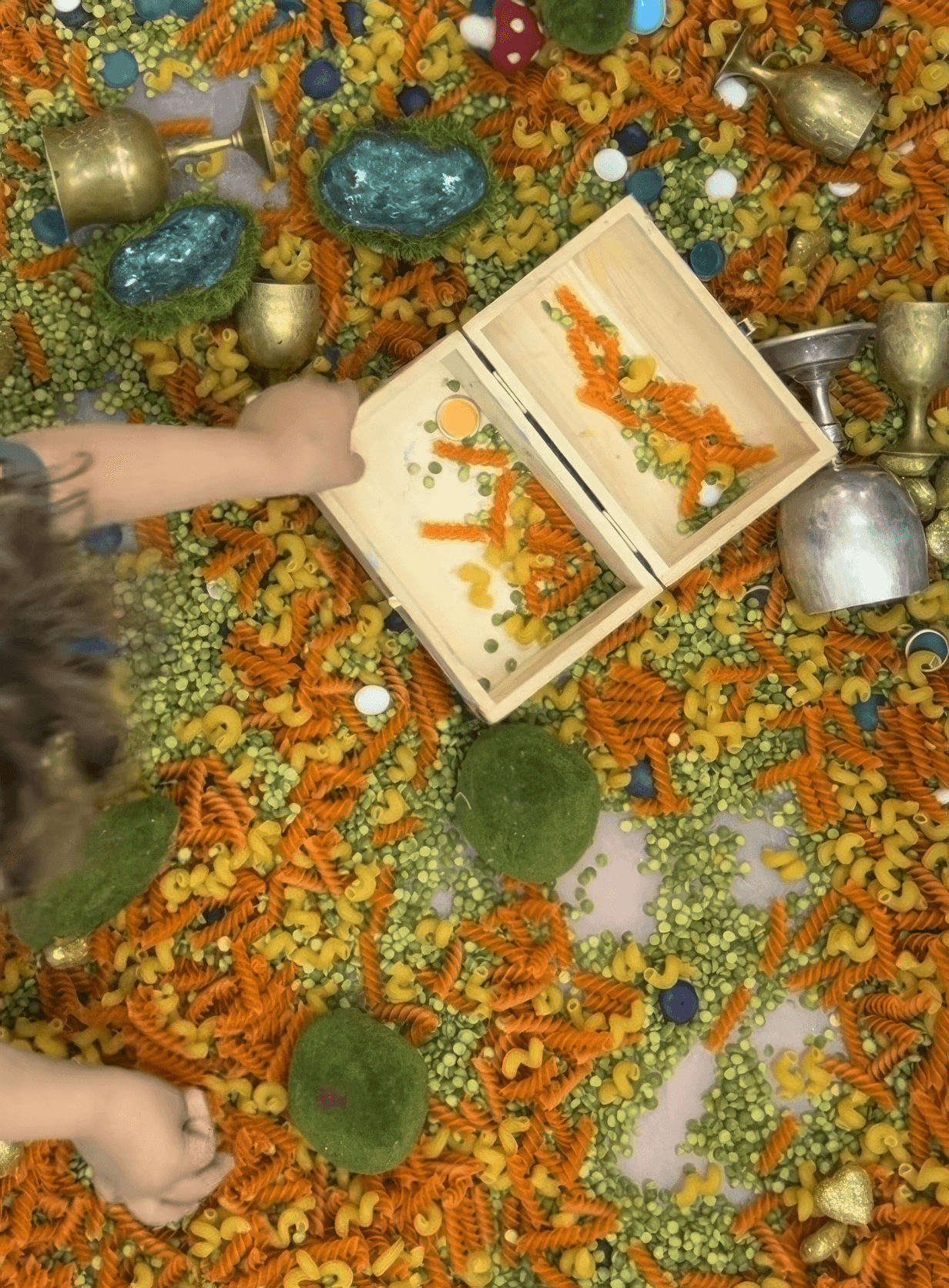
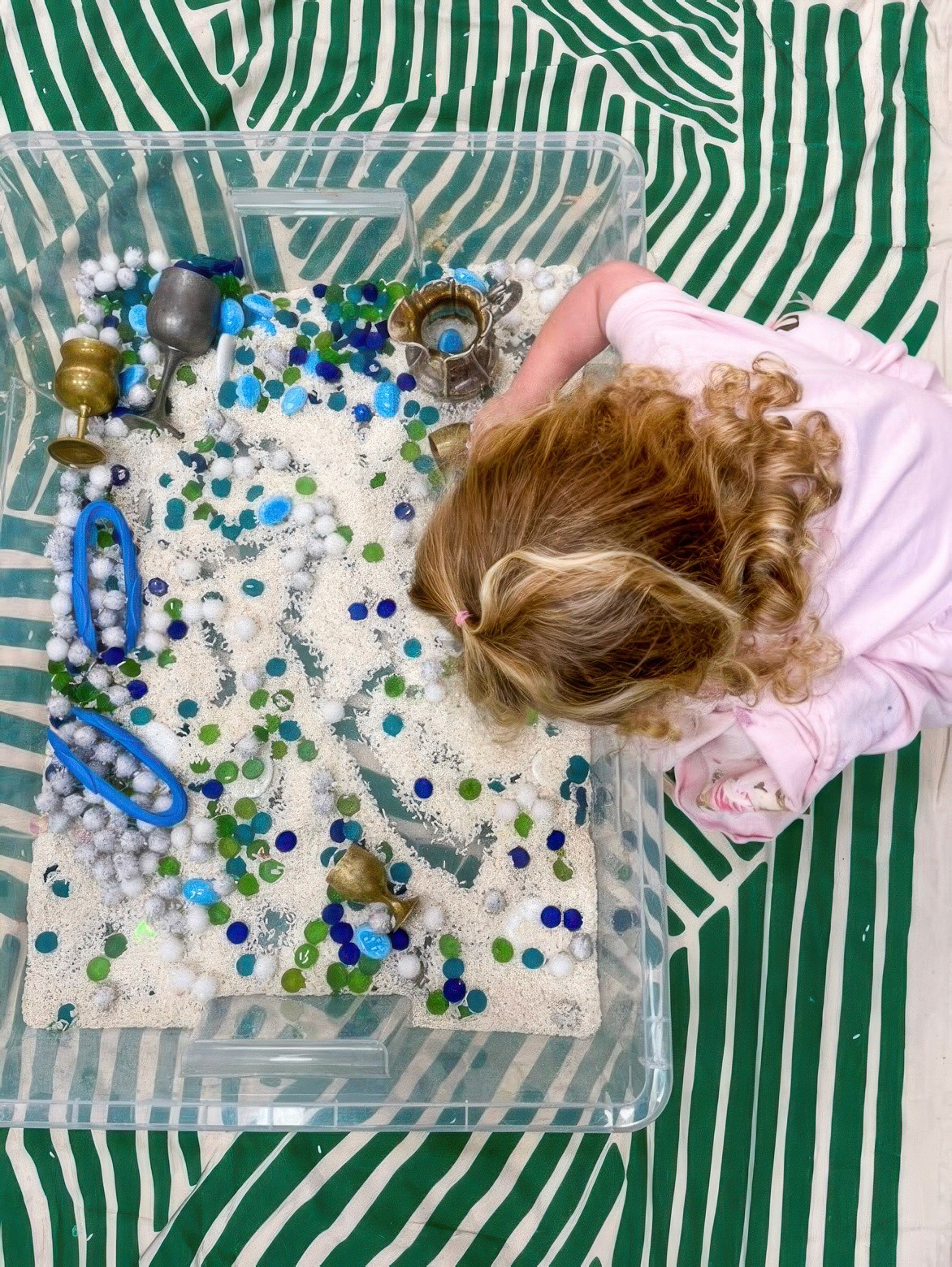
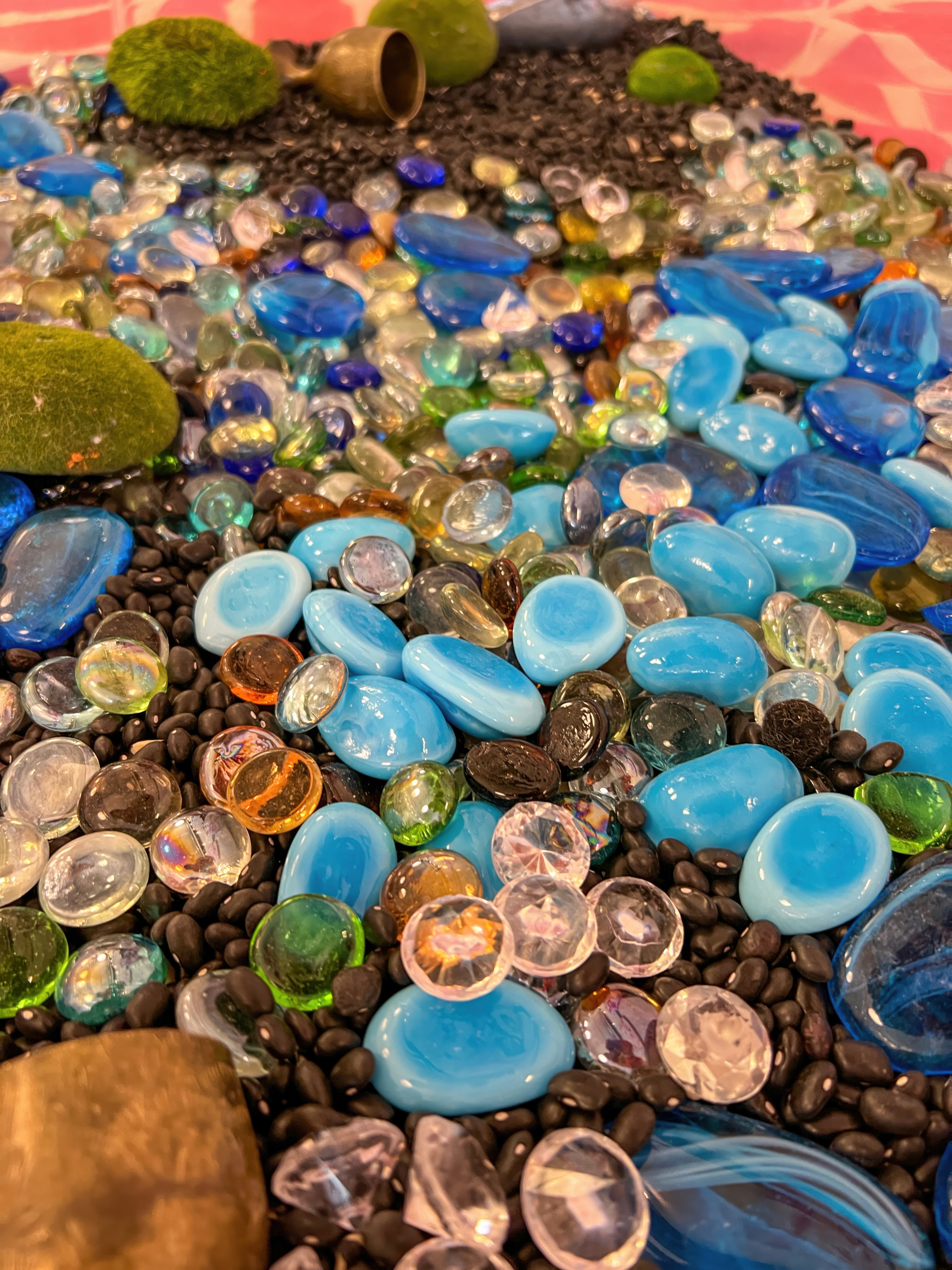
Tip a base layer into a low tub or tray. River pebbles from the garden centre or hardware store work beautifully. They are usually sold cheaply for paving and drainage and they have that cool smooth weight in the hand. Just the best! You can add a second base like white rice or yellow split peas or black beans if you want contrast under the stones. The sounds are glorious and matter here as much as the look.
Drop in a wooden treasure box. Scatter a few jewels, old keys, crystals, coins, magnetic chips with a wand, anything that reads treasure. Add scoops, small containers, funnels, ladles. The more it feels like real adventure gear, the deeper they go!
For toddlers or any group where mouthing is likely, swap tiny loose parts for safer larger pieces. Dried citrus slices, large shells, big wooden discs. You still get the ritual of finding and collecting without the choke risk.
The Making
As always with sensory play, stand back and watch the first choice they make. Do they go straight for the scoop and listen to the pour? Do they hunt for the most shiny object? Do they start arranging stones into lines like roads or river edges? That first instinct tells you what to lean into. If they choose sound, talk about sound. If they choose collecting, talk about what belongs in the treasure box today and why.
This is a great one to have a display tray nearby, like a shallow board or lid where found objects can be placed and admired! The adventure lab might shift from 'grab and dump' to 'curate and explain', so language, turn taking and memory work can start to build naturally.
Variations
Add a mirror or metallic tray under part of the base so everything reflects and shimmers
Use natural finds like pinecones, bark, seed pods for an outdoor campsite version
Materials
Low tub or tray
River stones or pebbles from a garden supplier
Optional split peas, rice, or beans as a base
Treasure box, jewels, crystals, keys, coins, magnetic chips
Scoops, funnels, spoons, jars
A shallow tray or board for displaying finds
Note on safety: Keep loose parts large for toddlers so nothing disappears into a mouth
Back to Top
Adventure Lab
Stones and scoops and hidden treasure
Bookmark
Sensory Play
The Set Up
Tip a base layer into a low tub or tray. River pebbles from the garden centre or hardware store work beautifully. They are usually sold cheaply for paving and drainage and they have that cool smooth weight in the hand. Just the best! You can add a second base like white rice or yellow split peas or black beans if you want contrast under the stones. The sounds are glorious and matter here as much as the look.
Drop in a wooden treasure box. Scatter a few jewels, old keys, crystals, coins, magnetic chips with a wand, anything that reads treasure. Add scoops, small containers, funnels, ladles. The more it feels like real adventure gear, the deeper they go!
For toddlers or any group where mouthing is likely, swap tiny loose parts for safer larger pieces. Dried citrus slices, large shells, big wooden discs. You still get the ritual of finding and collecting without the choke risk.
The Making
As always with sensory play, stand back and watch the first choice they make. Do they go straight for the scoop and listen to the pour? Do they hunt for the most shiny object? Do they start arranging stones into lines like roads or river edges? That first instinct tells you what to lean into. If they choose sound, talk about sound. If they choose collecting, talk about what belongs in the treasure box today and why.
This is a great one to have a display tray nearby, like a shallow board or lid where found objects can be placed and admired! The adventure lab might shift from 'grab and dump' to 'curate and explain', so language, turn taking and memory work can start to build naturally.
Variations
Add a mirror or metallic tray under part of the base so everything reflects and shimmers
Use natural finds like pinecones, bark, seed pods for an outdoor campsite version
Materials
Low tub or tray
River stones or pebbles from a garden supplier
Optional split peas, rice, or beans as a base
Treasure box, jewels, crystals, keys, coins, magnetic chips
Scoops, funnels, spoons, jars
A shallow tray or board for displaying finds
Note on safety: Keep loose parts large for toddlers so nothing disappears into a mouth
Back to Top
Add this to your favourites
Add this to your favourites
Thoughts?
Would love to hear if youv'e tried this or have any ideas on how to make it even better!