Cardboard Instruments
Take a beat from Picasso’s Blue Guitars
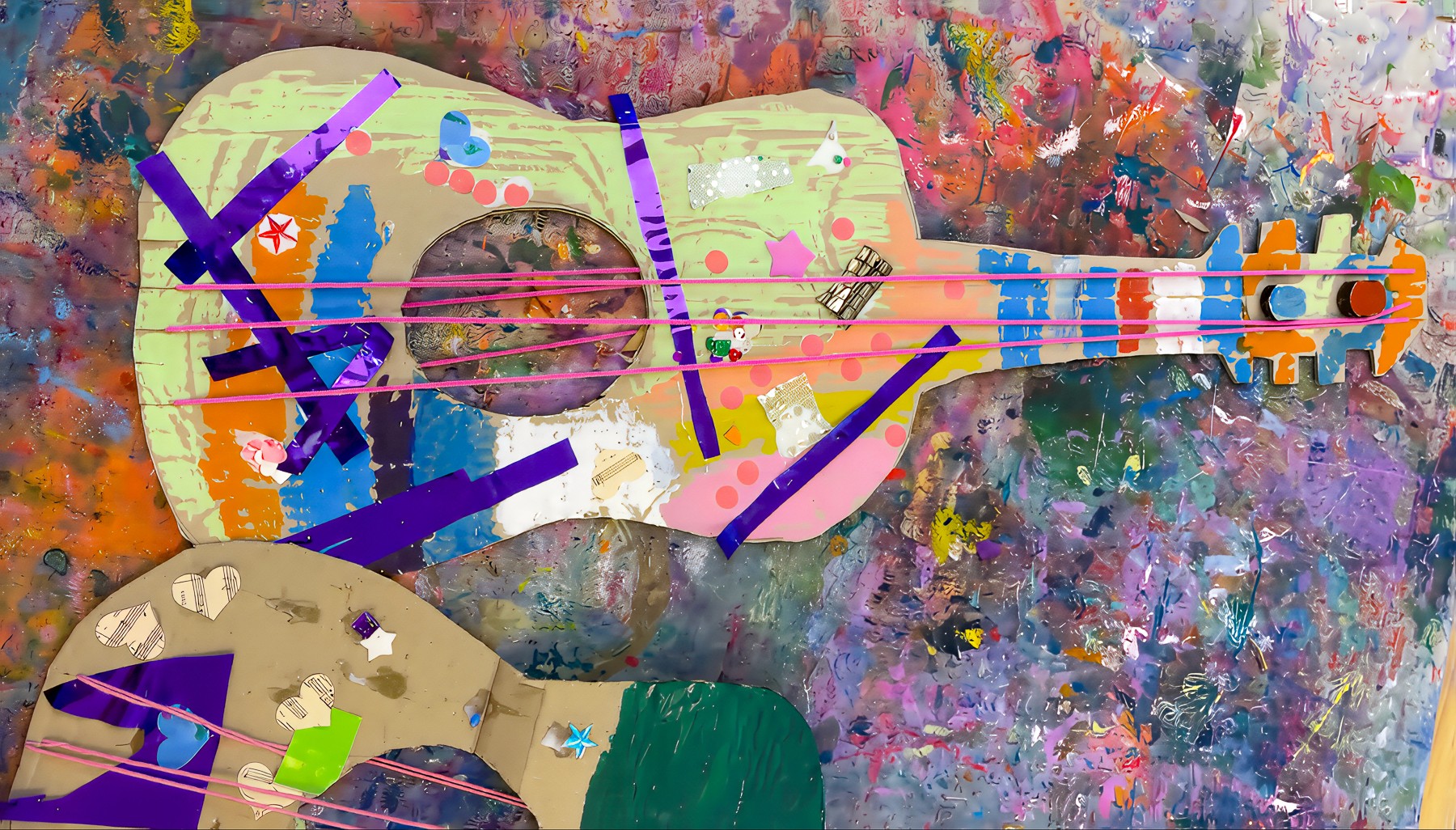
Artist Study: Pablo Picasso
Picasso painted his guitars during what’s known as his “Blue Period.” Those works are full of long, flowing lines and deep, melancholy blues. He wasn’t trying to make his guitars look real, he wanted them to feel real.
He used colour to express mood and line to capture emotion. It’s a perfect reminder that art doesn’t need to copy what we see; it can show what something feels like instead!
The Set Up
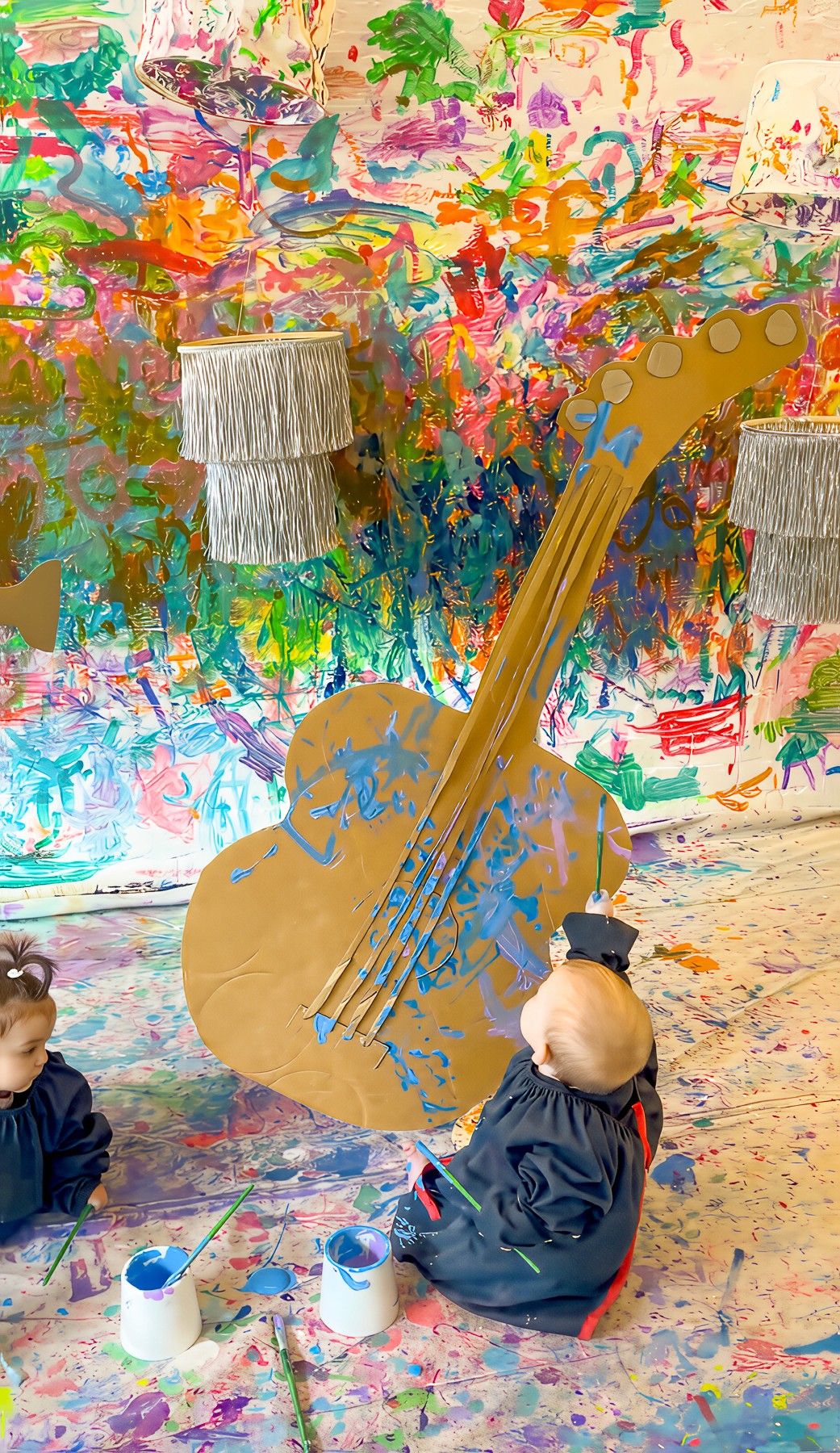
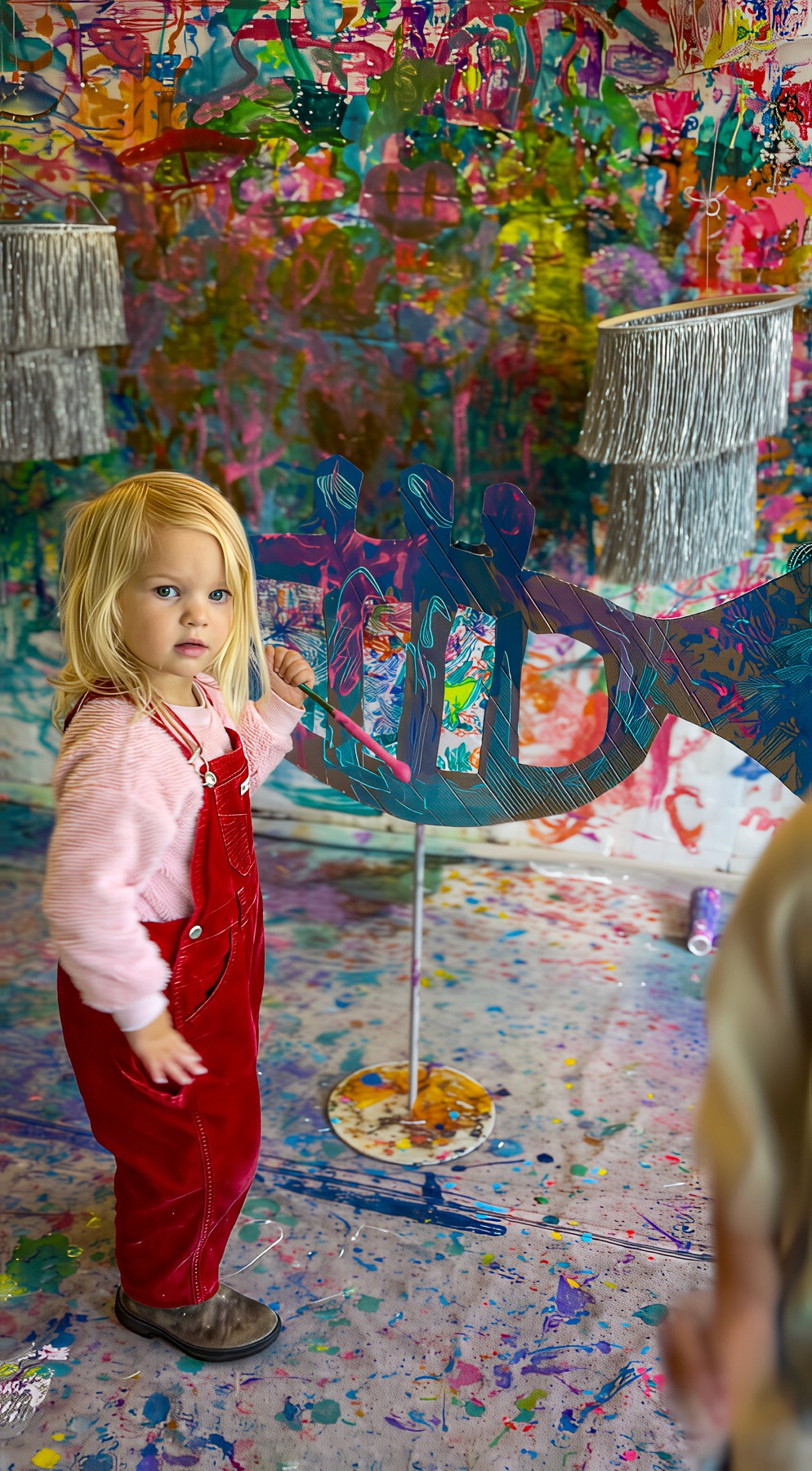
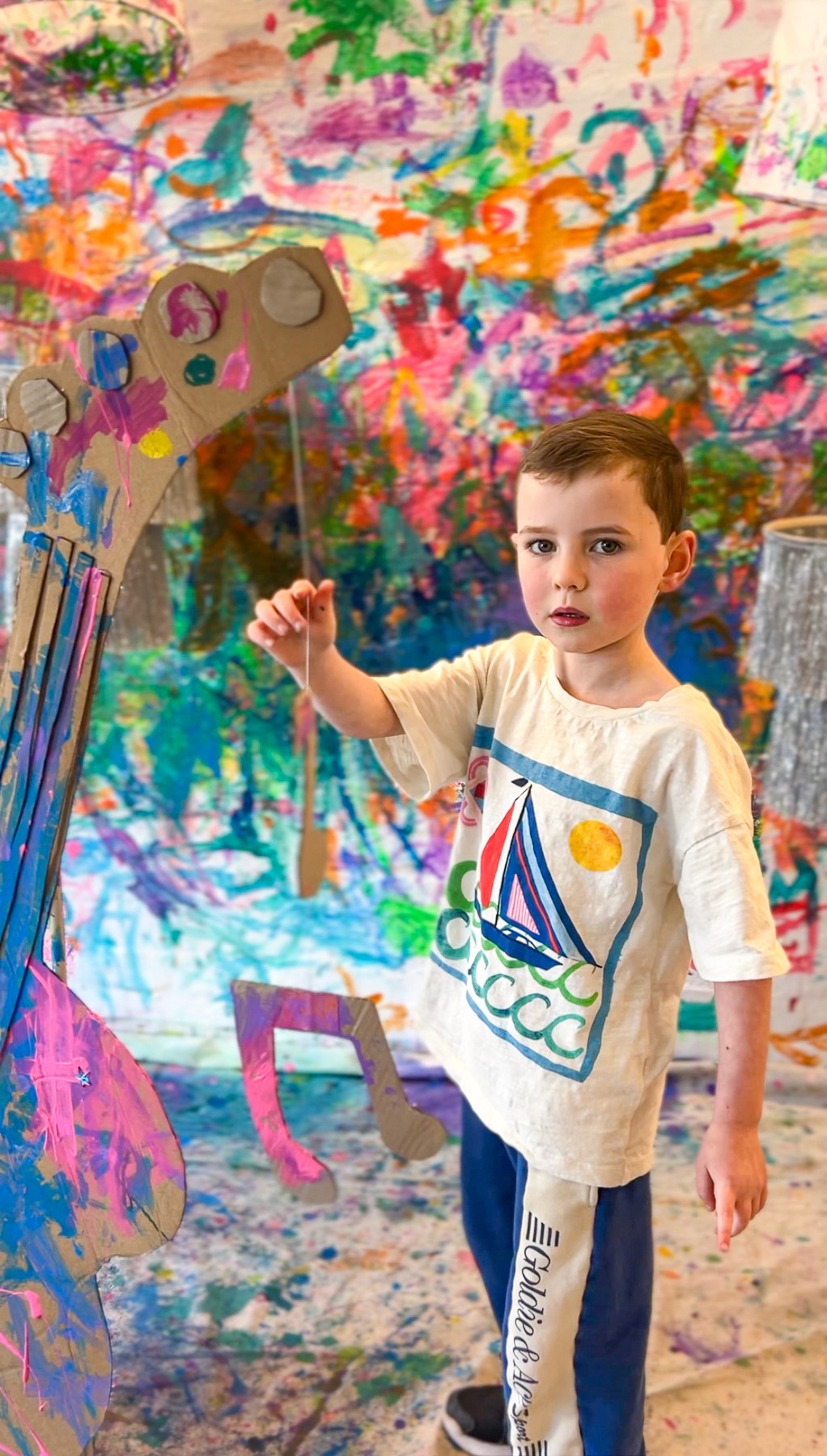
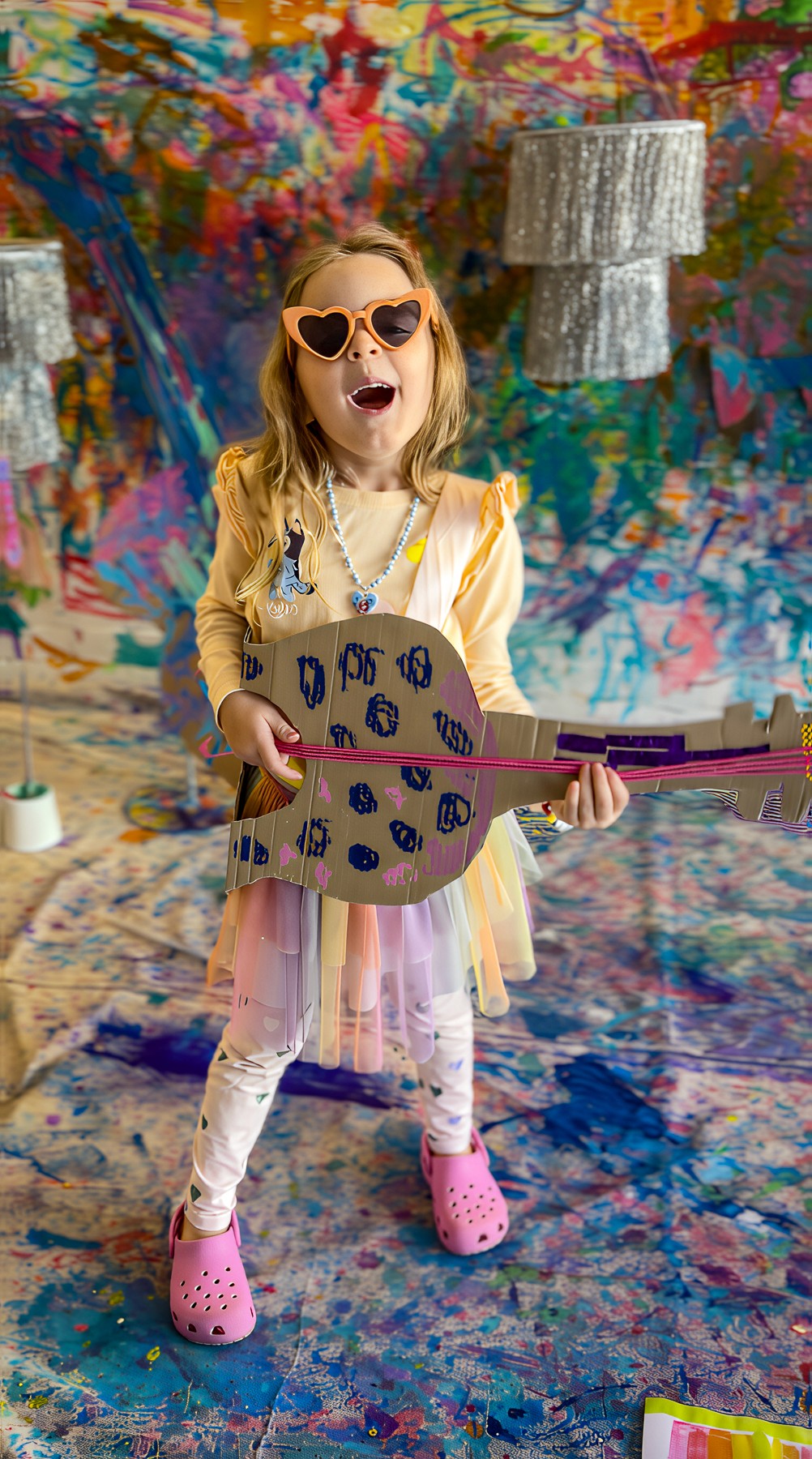
Use large sheets of recycled cardboard and sketch outlines of guitars, trumpets, violins, drums (or invent something completely new!). Keep them flat rather than boxy. The simplicity invites more play with line, paint, and form.
Show a few of Picasso’s Blue Guitars or his cubist works for inspiration. Notice how he broke shapes apart and used angles to create rhythm.
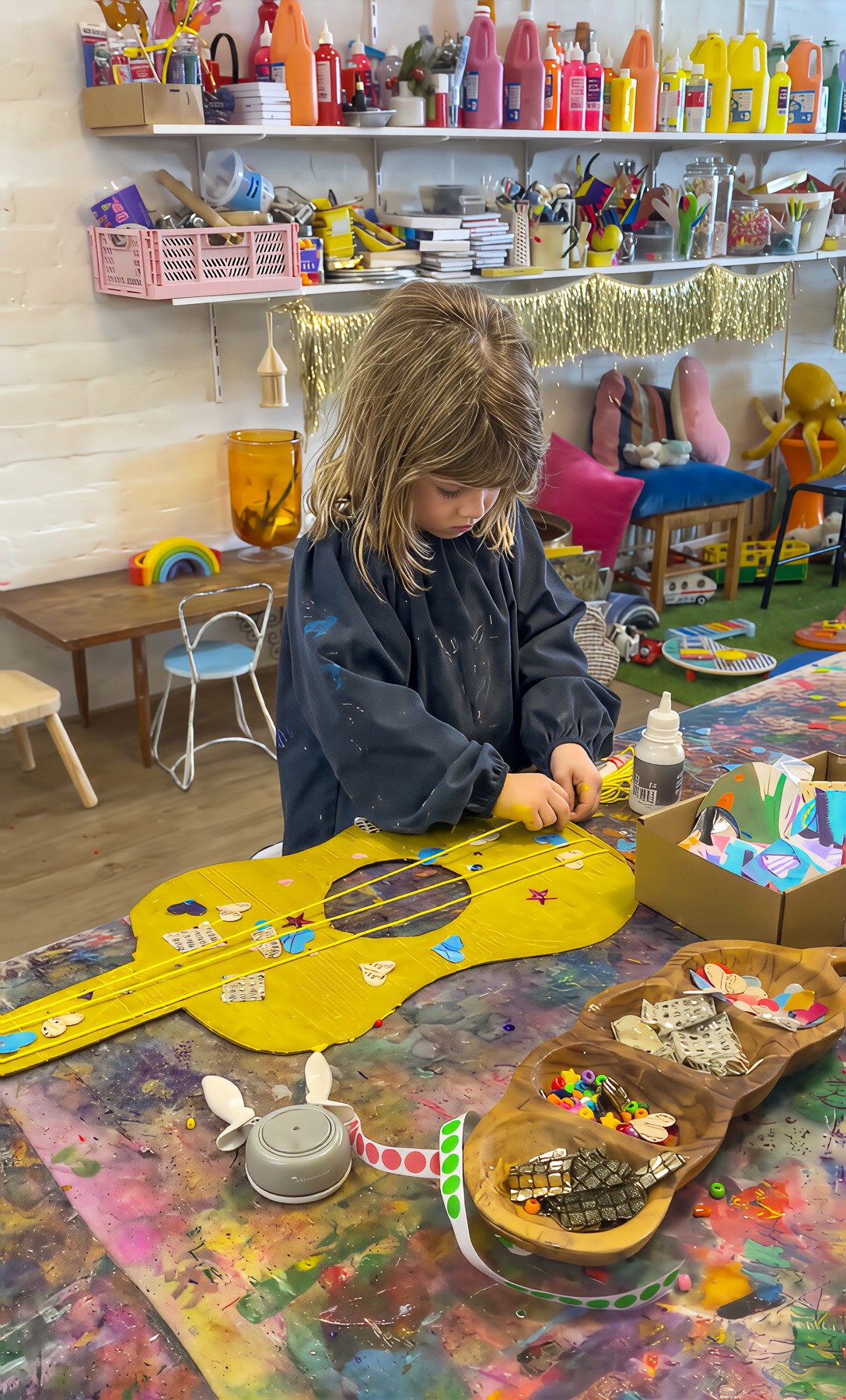
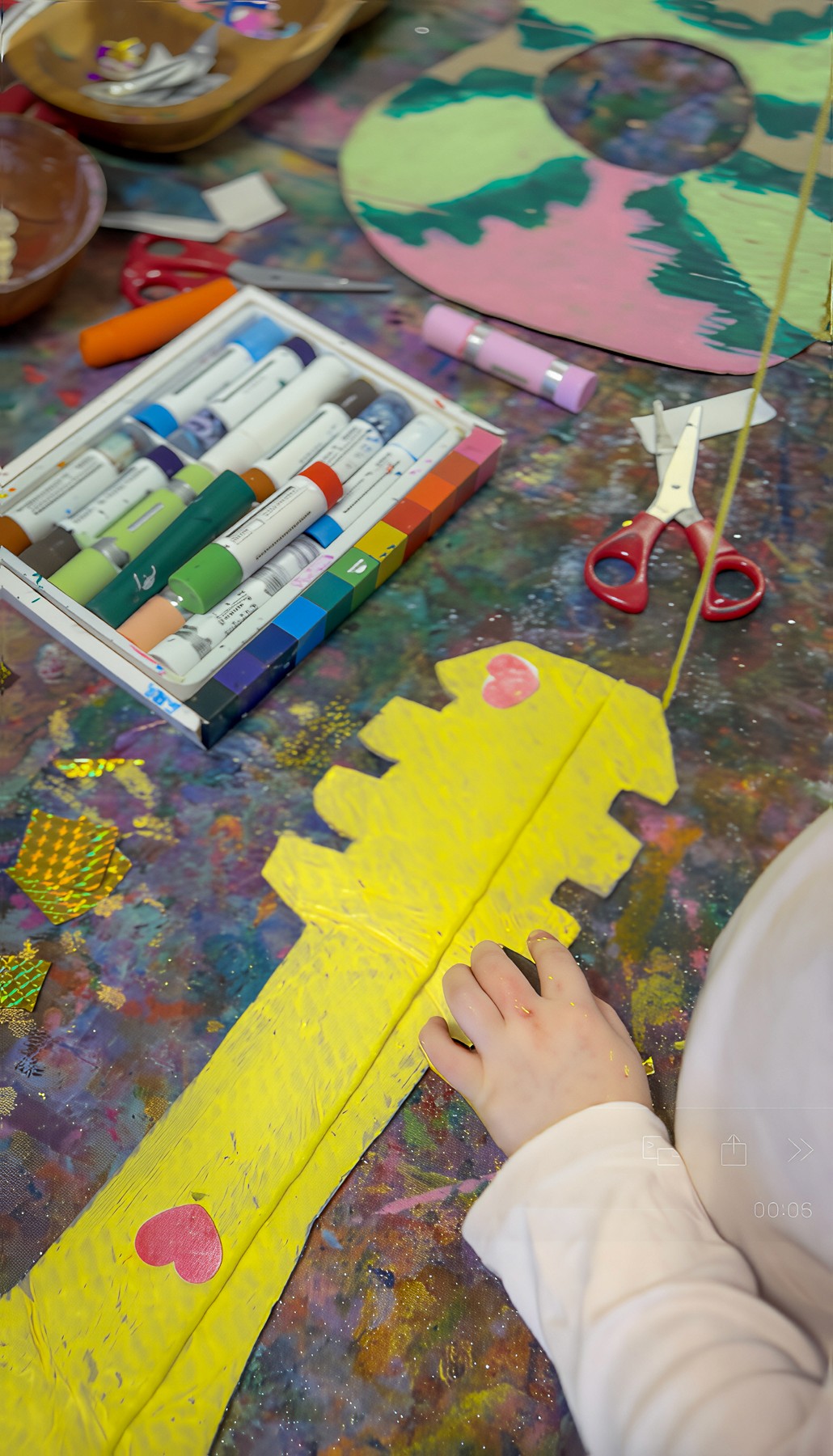
Set out trays of poster paint or paint sticks, plus string, yarn, and collage scraps. Pre-punch holes if you want kids to weave or thread. The more tactile, the better!
The Making
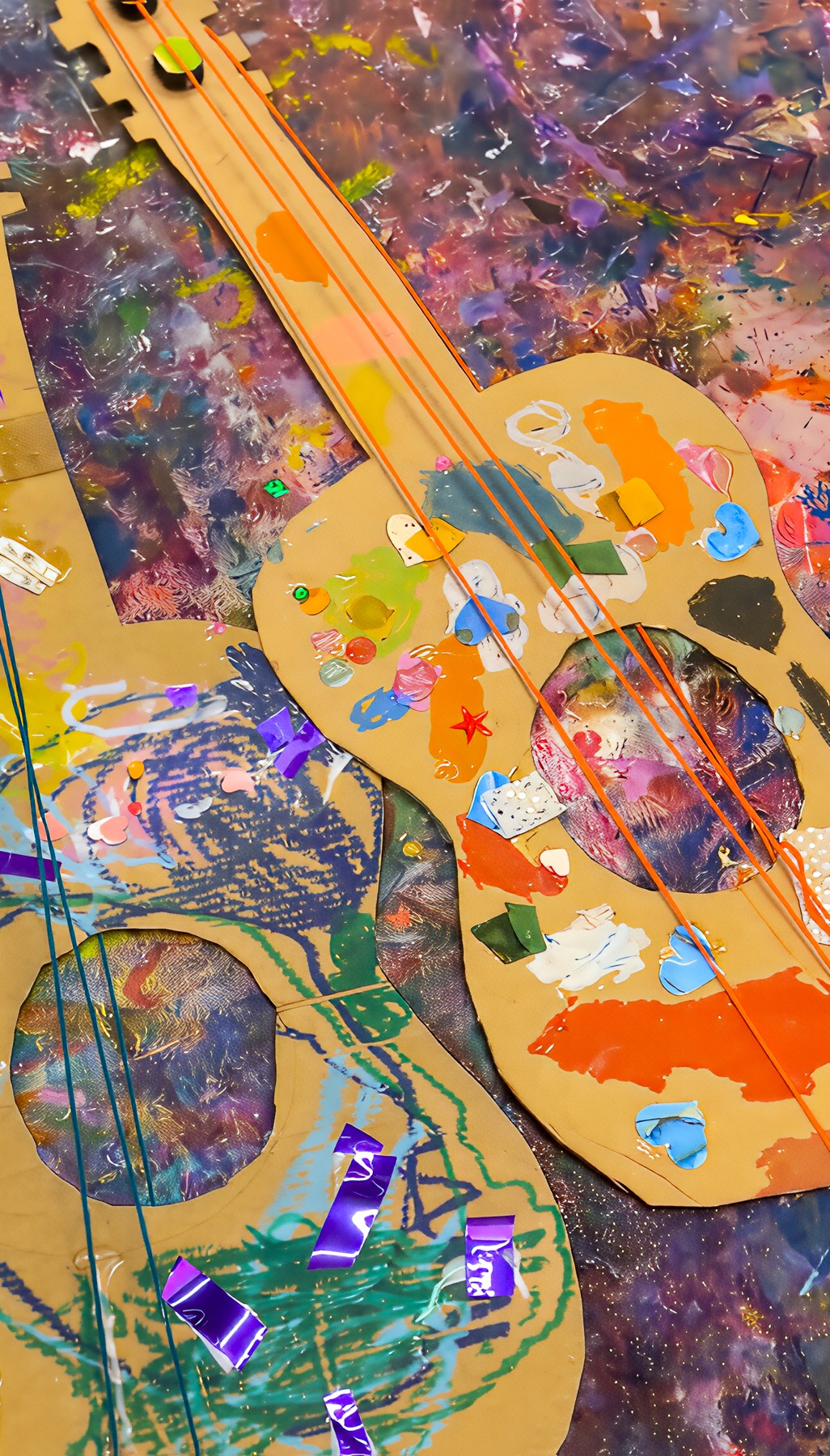
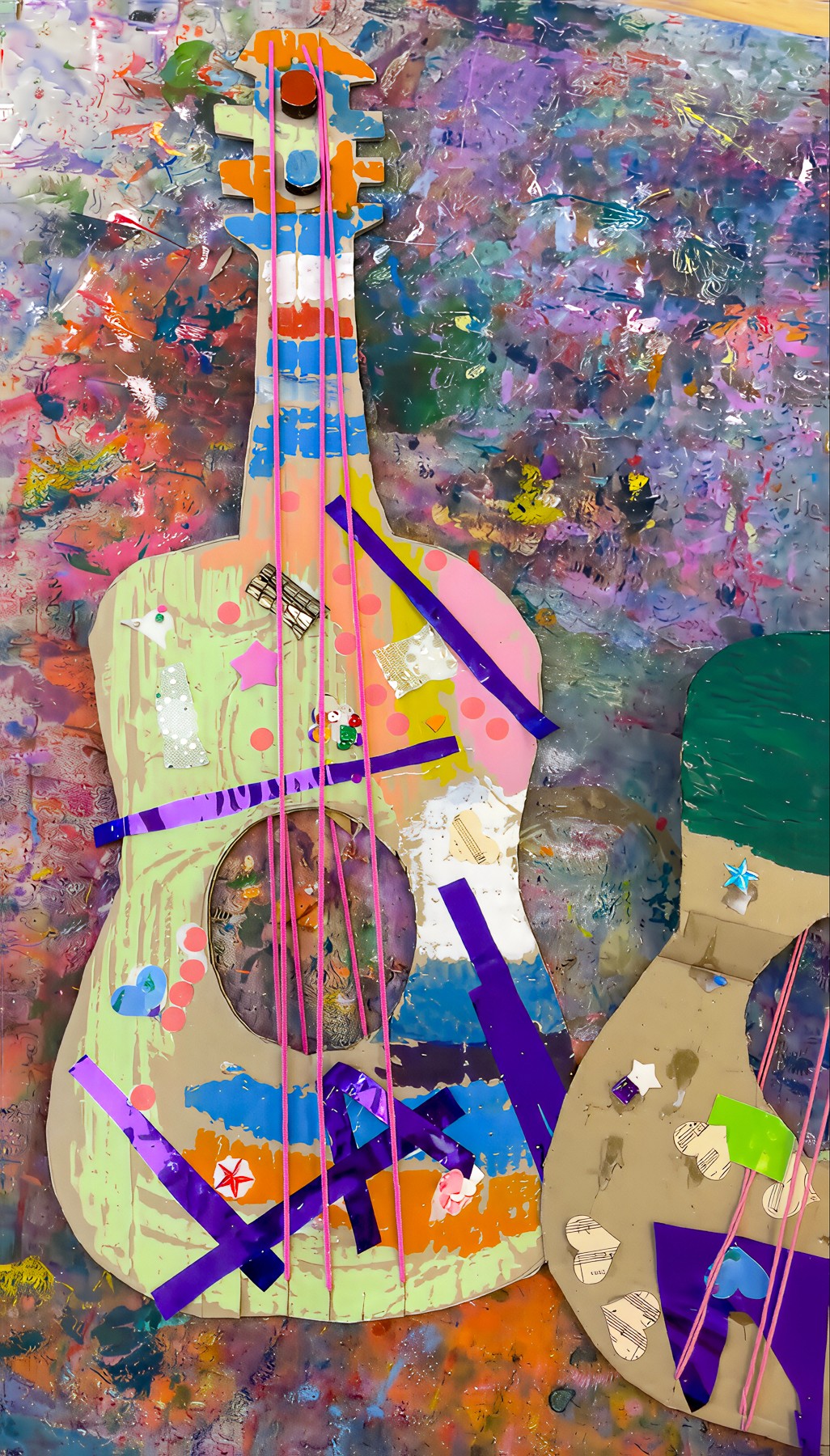
Encourage loose, expressive mark-making and let the colour mixing take the lead! String or yarn can become guitar strings, trumpet valves, or swirling sound waves.
It’s always gorgeous to play music while they paint; jazz, blues, or something with rhythm.
Variations
Work large-scale and join instruments together for a cardboard orchestra.
Collage foil or metallic paper to echo the shimmer of sound.
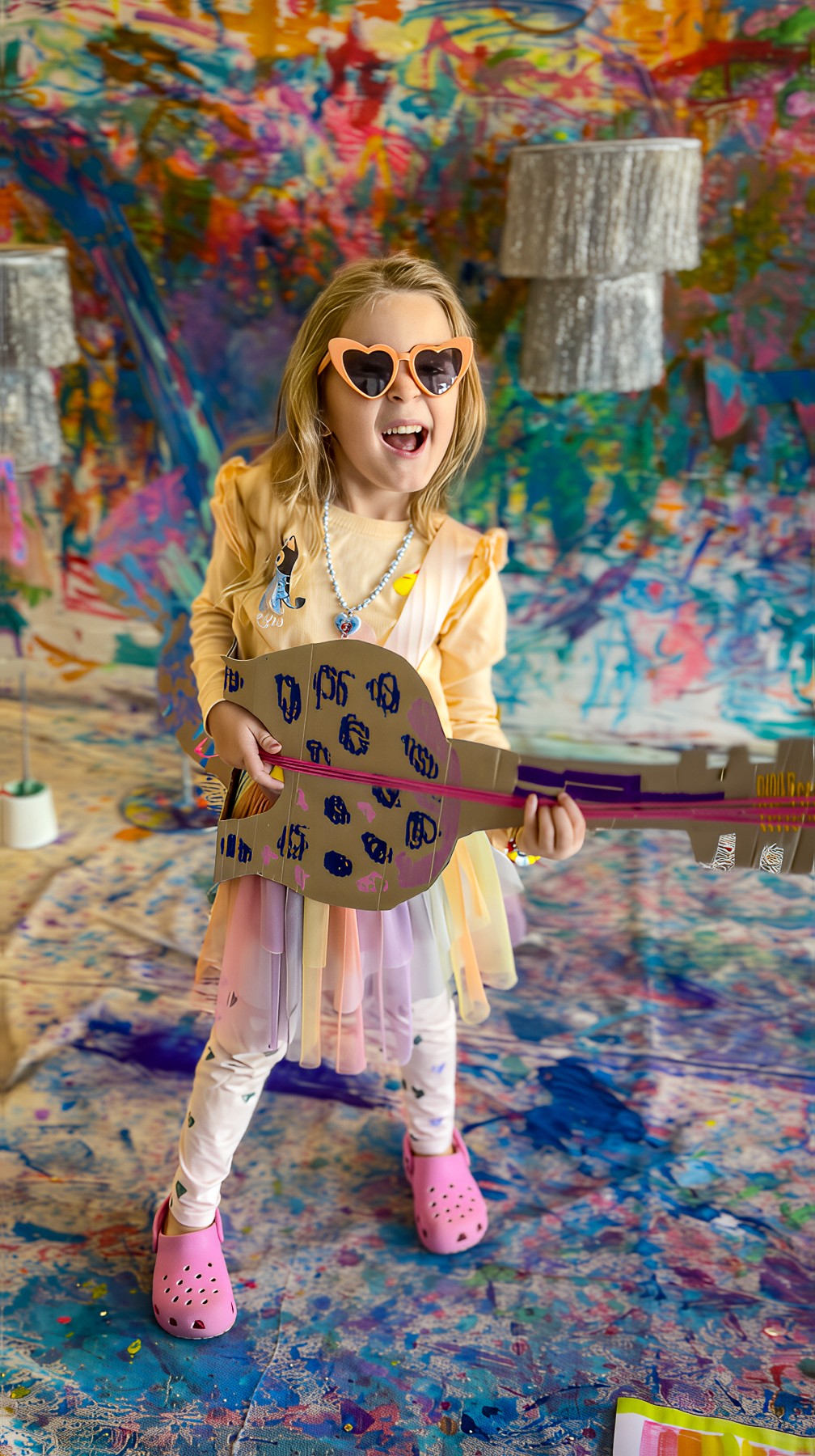
Display the finished works upright, like a band waiting to play.
Materials
Flat recycled cardboard
Poster paints or paint sticks
Yarn or string for weaving or “strings”
Hole punch, scissors, brushes, sponges
Images of Picasso’s Blue Guitar series for inspiration
Back to Top
Cardboard Instruments
Take a beat from Picasso’s Blue Guitars
Bookmark
Sculpture
Artist Study: Pablo Picasso
Picasso painted his guitars during what’s known as his “Blue Period.” Those works are full of long, flowing lines and deep, melancholy blues. He wasn’t trying to make his guitars look real, he wanted them to feel real.
He used colour to express mood and line to capture emotion. It’s a perfect reminder that art doesn’t need to copy what we see; it can show what something feels like instead!
The Set Up
Use large sheets of recycled cardboard and sketch outlines of guitars, trumpets, violins, drums (or invent something completely new!). Keep them flat rather than boxy. The simplicity invites more play with line, paint, and form.
Show a few of Picasso’s Blue Guitars or his cubist works for inspiration. Notice how he broke shapes apart and used angles to create rhythm.
Set out trays of poster paint or paint sticks, plus string, yarn, and collage scraps. Pre-punch holes if you want kids to weave or thread. The more tactile, the better!
The Making
Encourage loose, expressive mark-making and let the colour mixing take the lead! String or yarn can become guitar strings, trumpet valves, or swirling sound waves.
It’s always gorgeous to play music while they paint; jazz, blues, or something with rhythm.
Variations
Work large-scale and join instruments together for a cardboard orchestra.
Collage foil or metallic paper to echo the shimmer of sound.
Display the finished works upright, like a band waiting to play.
Materials
Flat recycled cardboard
Poster paints or paint sticks
Yarn or string for weaving or “strings”
Hole punch, scissors, brushes, sponges
Images of Picasso’s Blue Guitar series for inspiration
Back to Top
Add this to your favourites
Add this to your favourites
Thoughts?
Would love to hear if youv'e tried this or have any ideas on how to make it even better!