Deep Blue Sea
Dive in! (the ocean won’t paint itself)
The Set Up
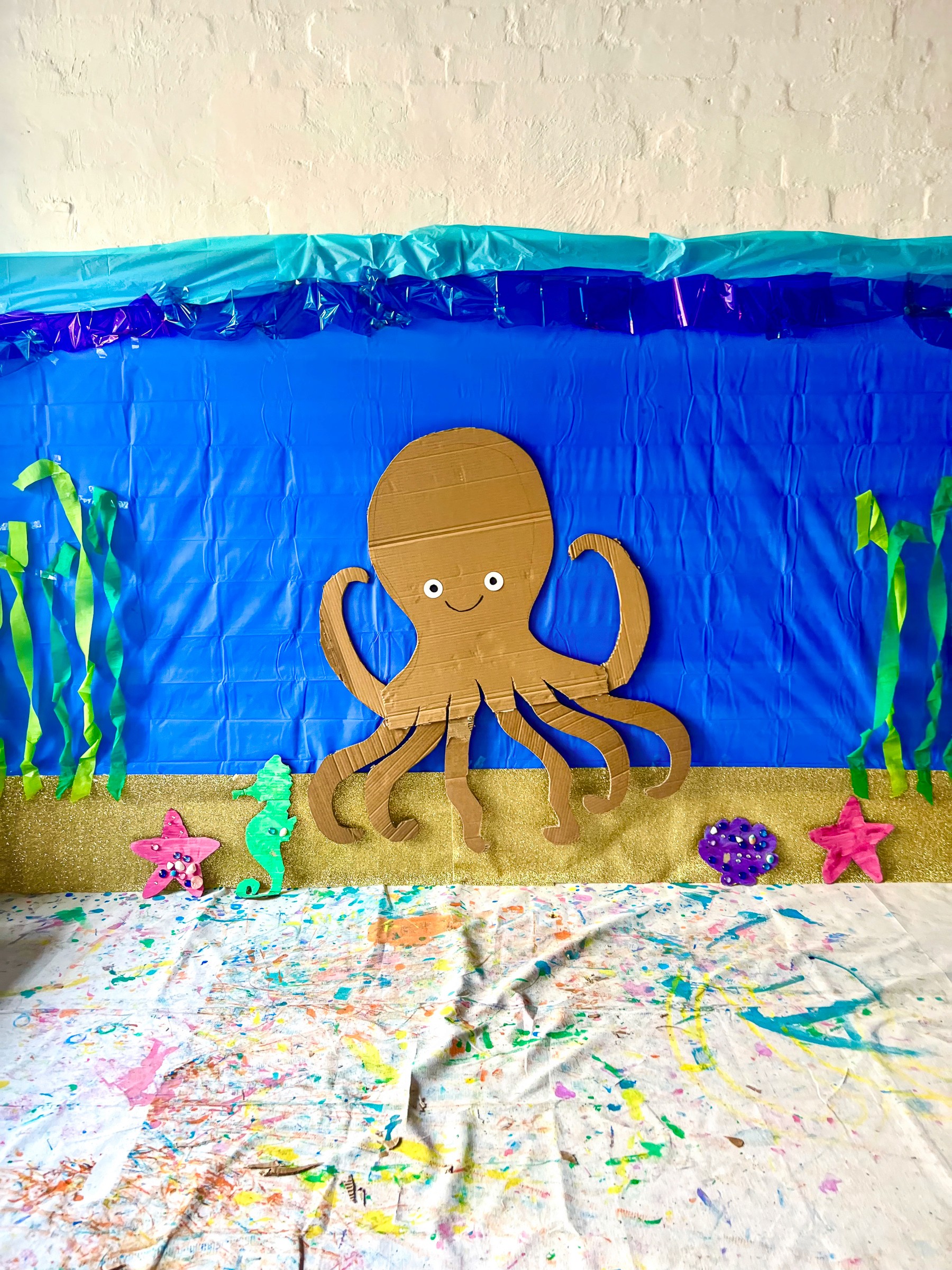
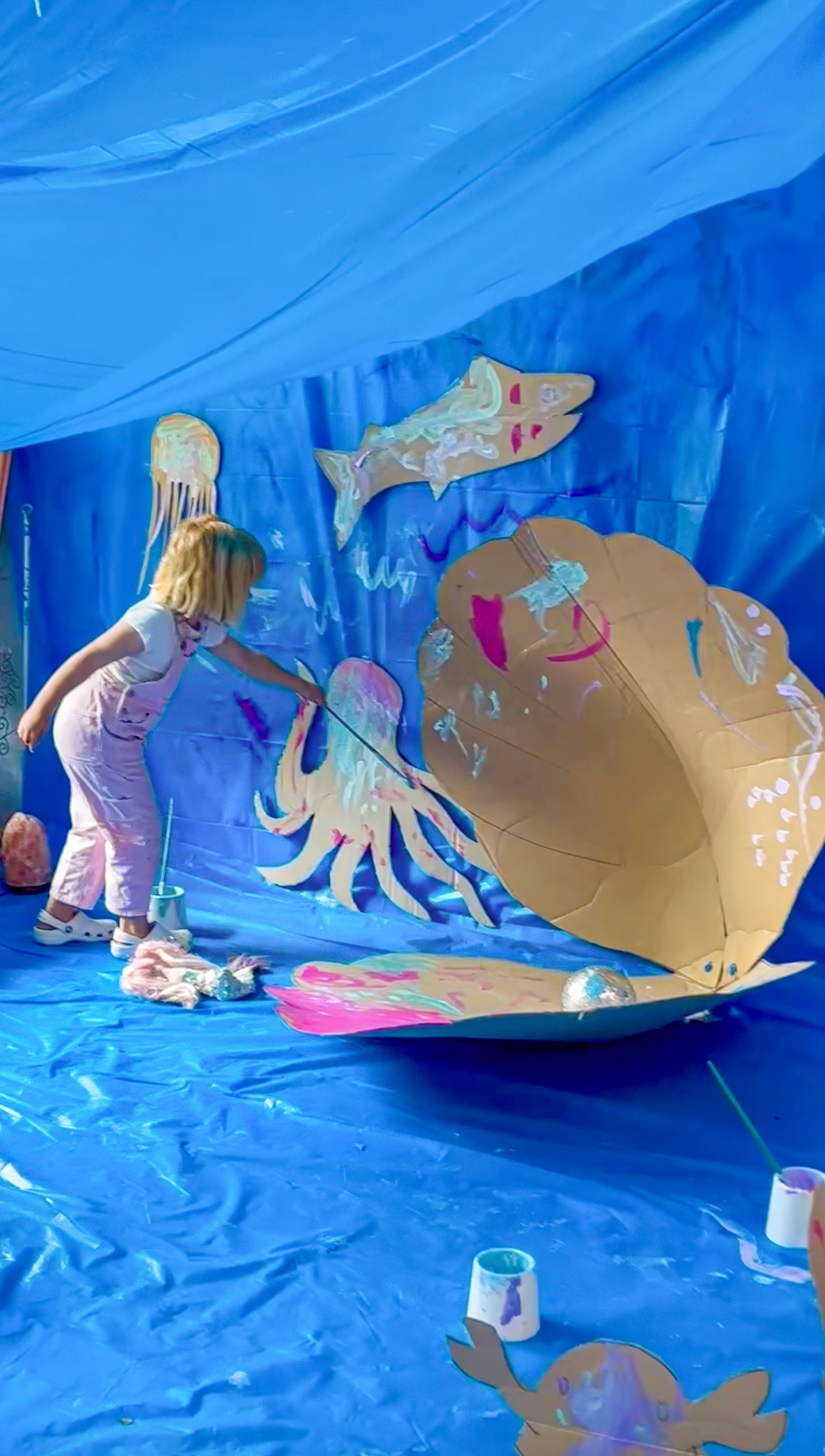
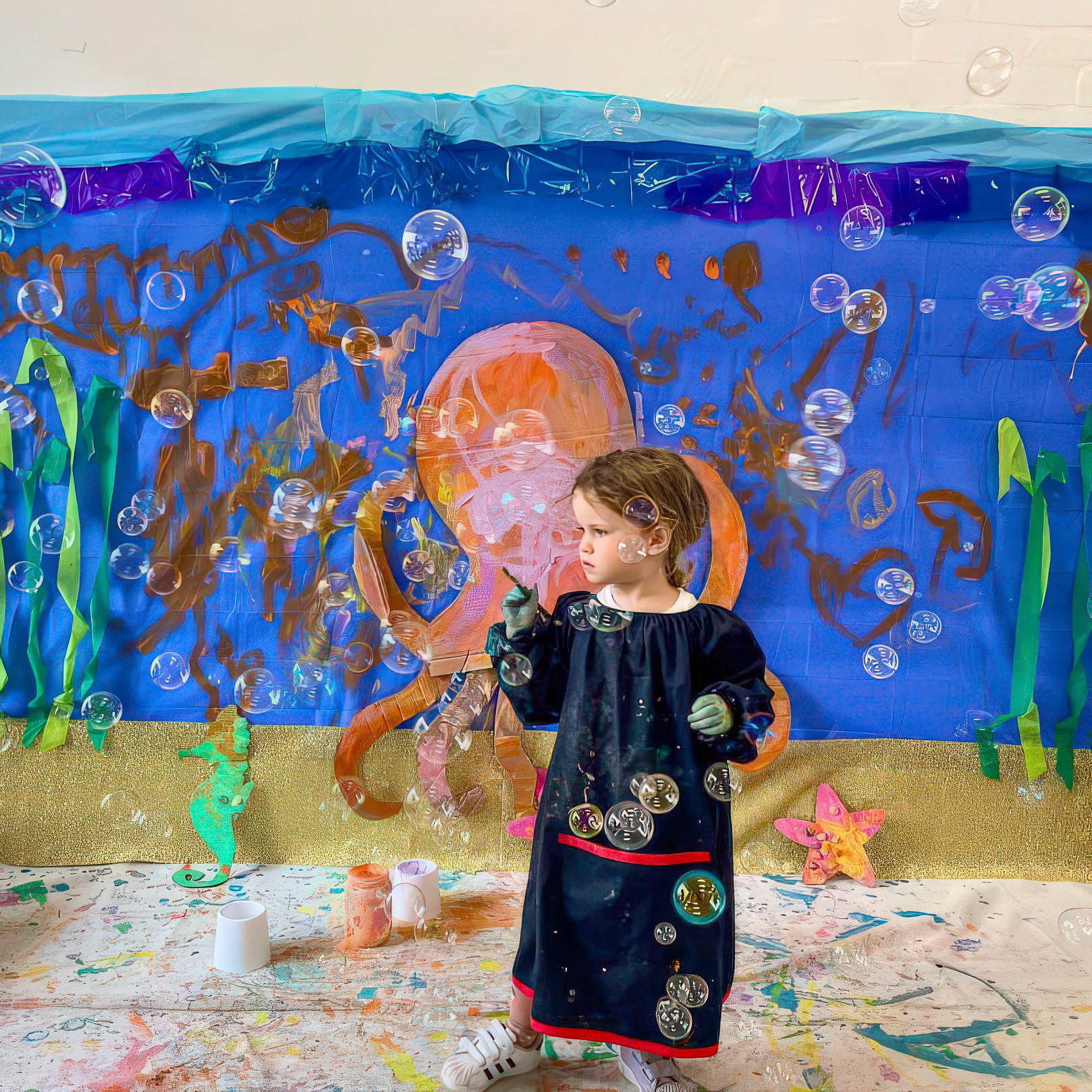
When kids walk in, the space already feels like the ocean. Blue runs across the walls and spills onto the floor. If you have the height, hang a few creatures from the ceiling so it feels like a dive beneath the waves.
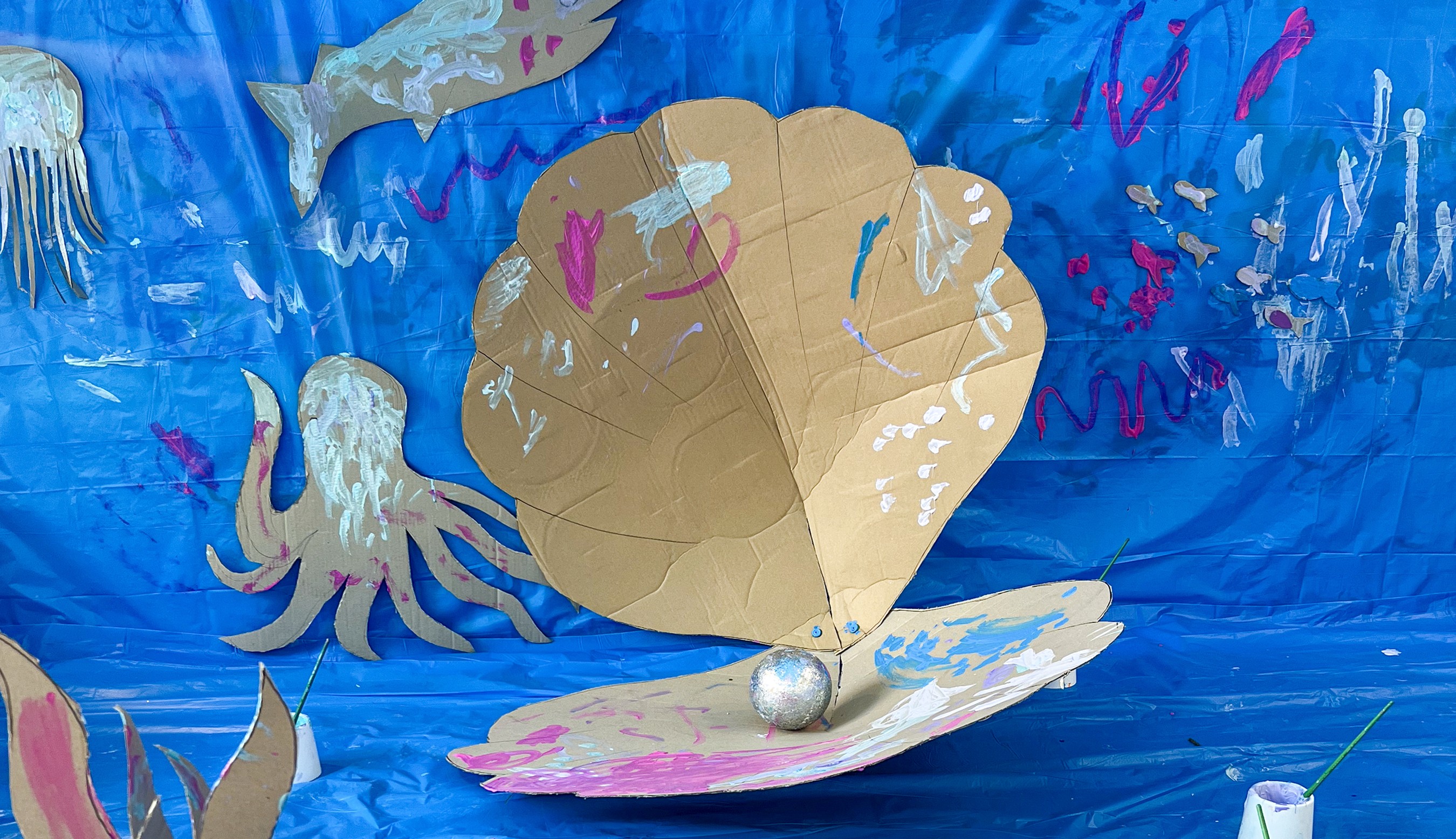
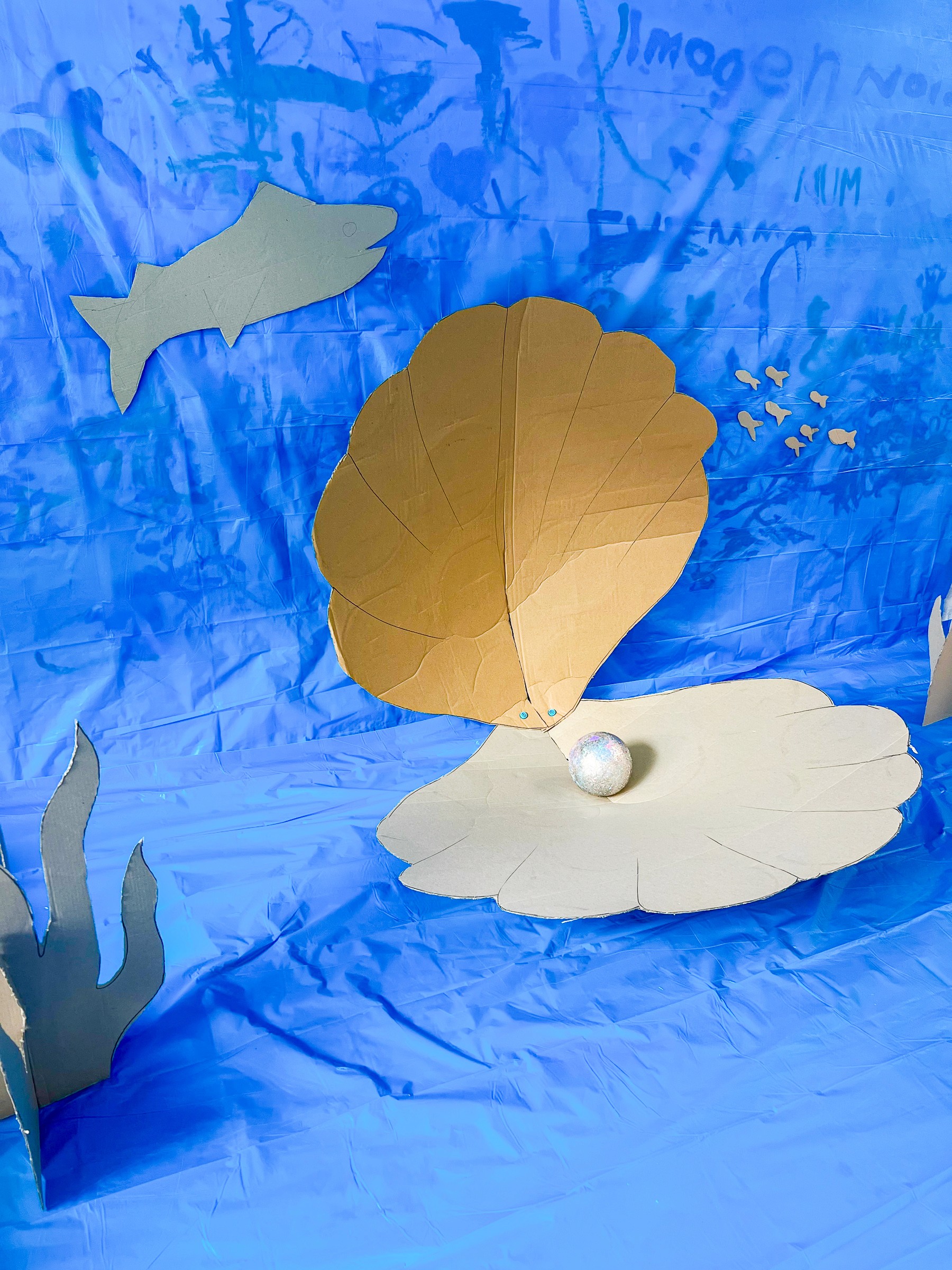
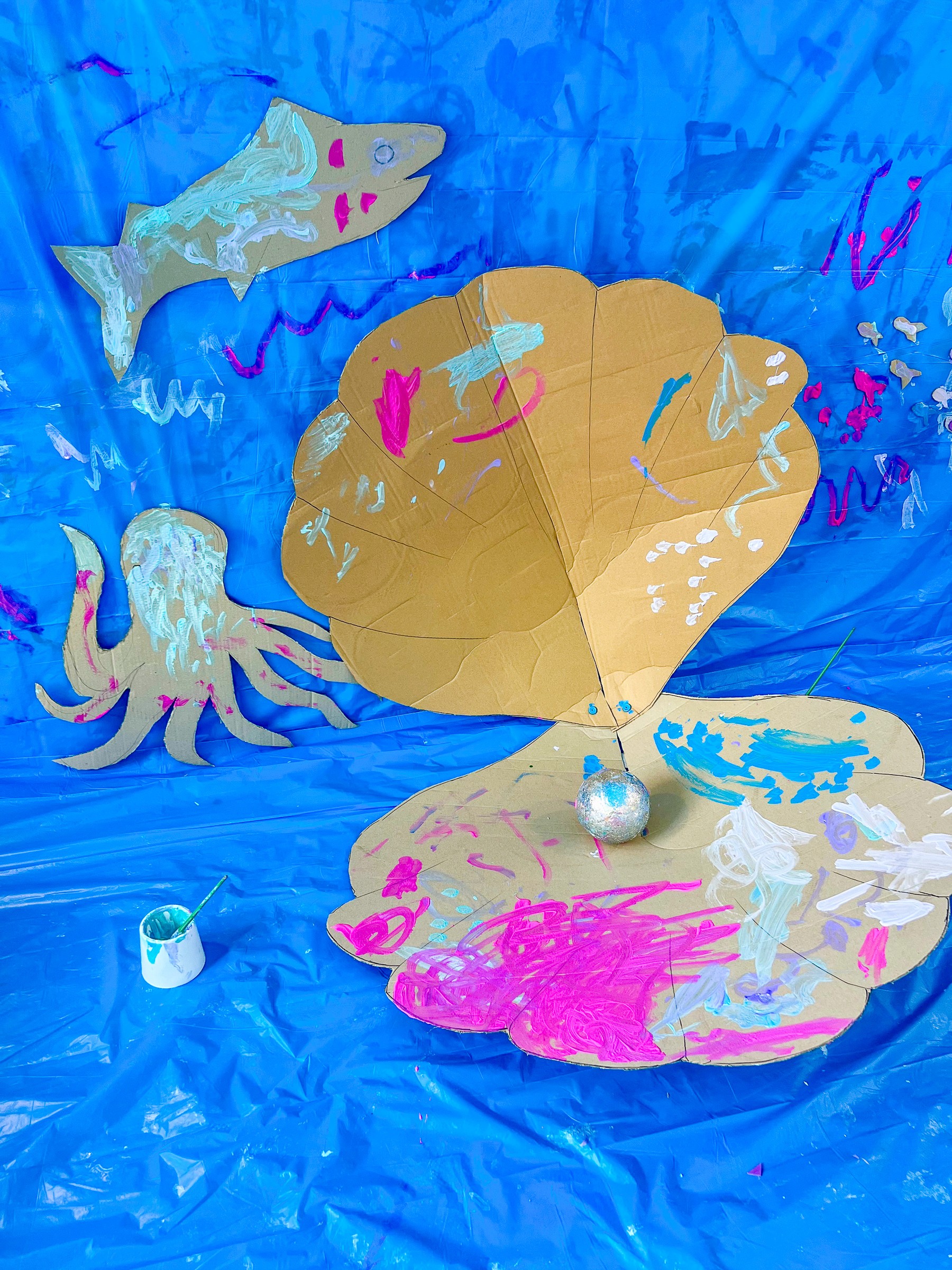
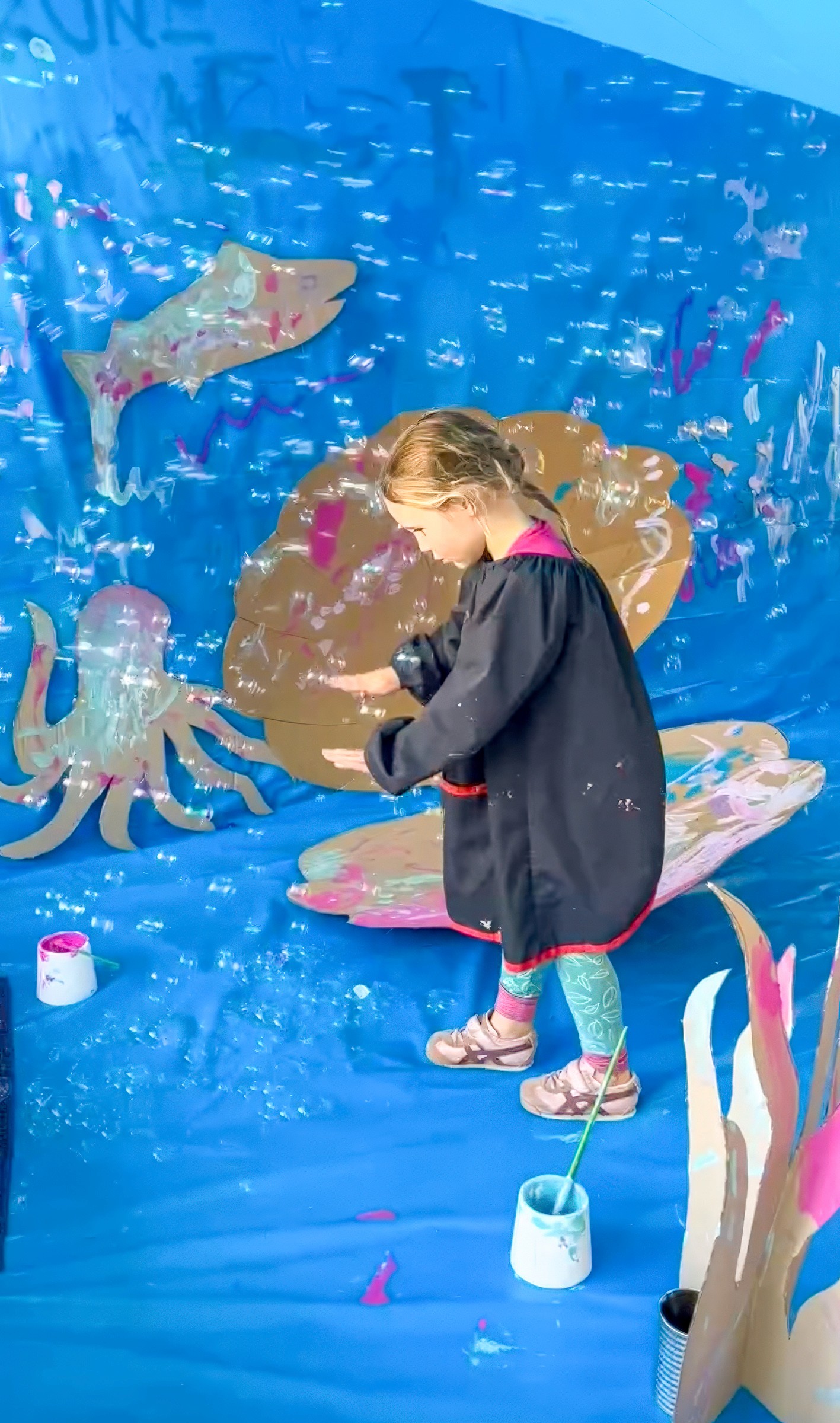
The big features are where the magic really happens. I still love our giant cardboard octopus with curling arms. And our clam shell big enough to climb inside (pearl optional, but a fun extra). We love using our Makedo Fold-Roller too because it bends cardboard into those beautiful scalloped curves so the plain boxes can become something sculptural.
But it doesn’t always have to be big and elaborate. A corner of blue fabric outdoors, a school of painted fish taped to the wall or a patch of bubble wrap “seaweed” to step on. Really anything that makes you feel like you’ve slipped under the surface works beautifully. The key is openness. Let the setup suggest the sea, and then let the kids take it wherever they want to go.
And of course… paint. Always tubs of washable poster or tempera, with a good squeeze of white mixed in to make the colours sing. All the ocean shades work here like seafoam green, turquoise shallows, deep indigo. It’s a brilliant chance to chat about how the sea changes with the light: bright and sparkling near the surface, dark and mysterious the deeper you go.
The Making
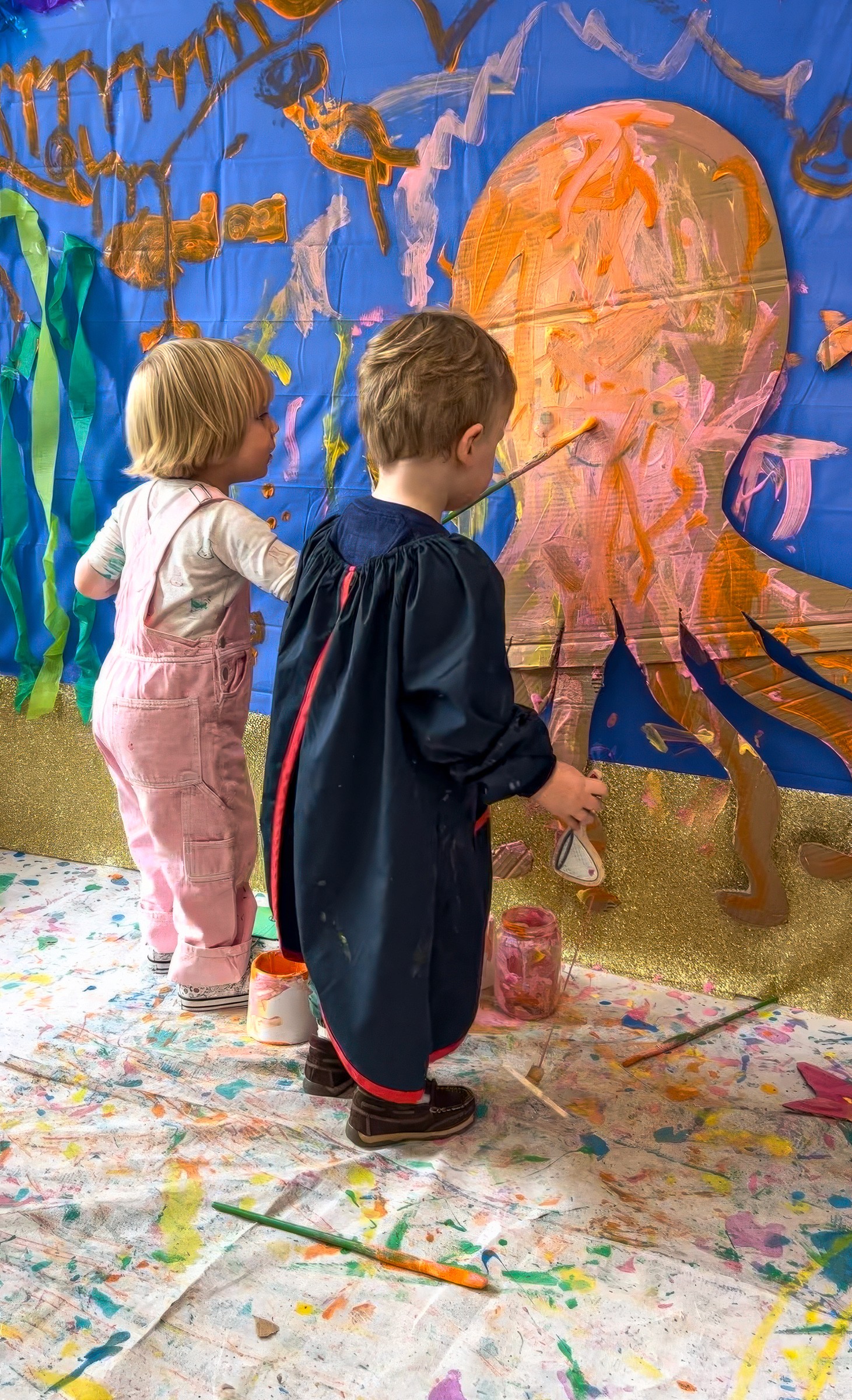
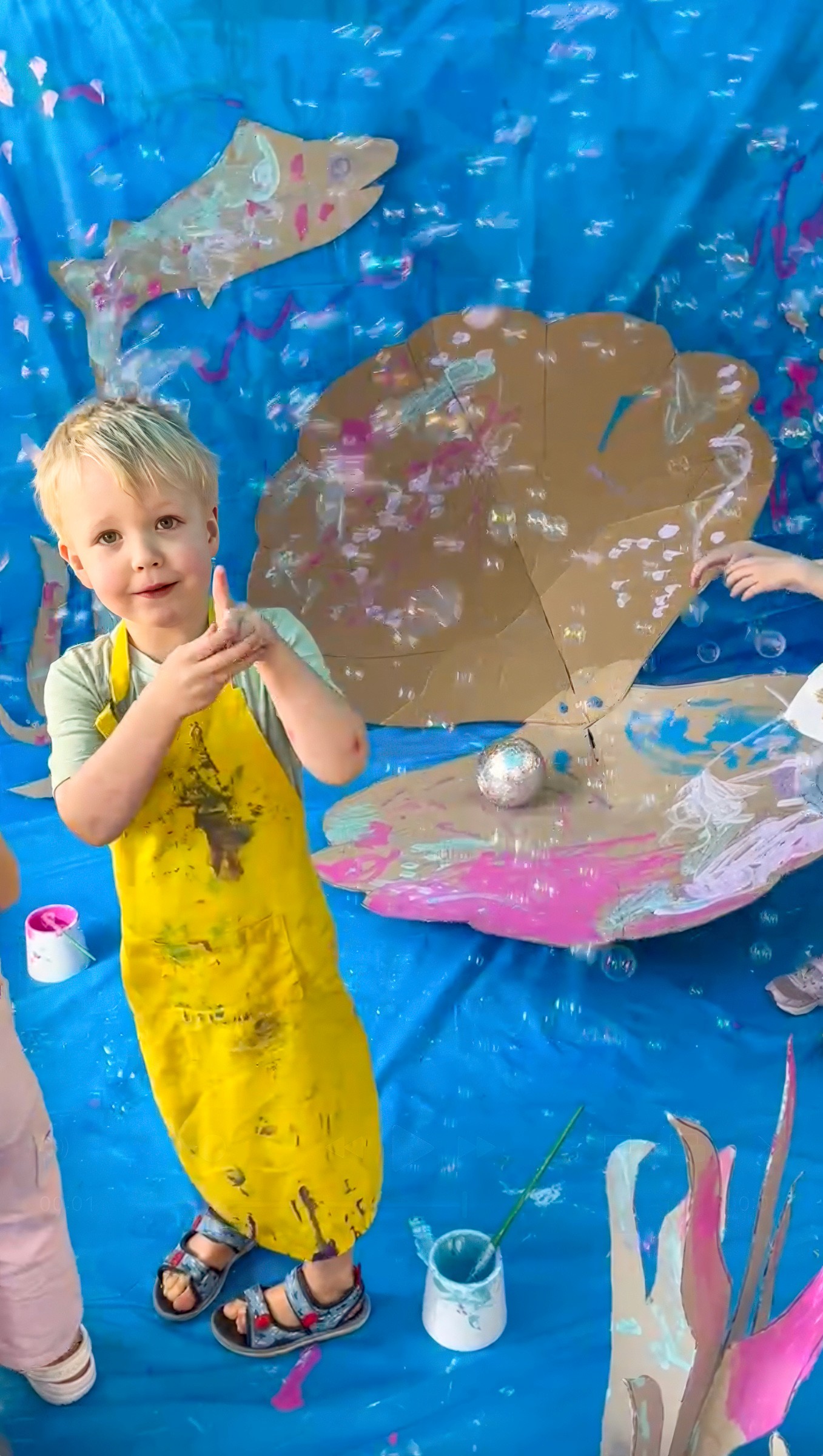
Once the paint is out, the ocean builds itself. Shapes and creatures appear quickly, and the cardboard disappears under layers of colour. Keep the energy loose and collaborative so the whole space grows together. And if you have a bubble machine handy, it is always a hit! Nothing feels more underwater than painting while bubbles float through the air.
Variations
Build the ocean slowly over a week and watch it shift and change every day.
Swap out paint for chalk or pastels on dark cardboard so it feels like deep night water.
Let the kids create their own sea creatures to add to the ocean.
Photograph the installation at each stage and flip through like a stop-motion dive.
Materials
Cardboard in every size: boxes, scraps, anything you can rescue from the recycling pile
Makedo tools (the Fold-Roller is a winner for shells and curves)
Washable poster paints in all the ocean shades: always with a hit of white so they cover well
A wild mix of tools: brushes and sponges and bubble wrap and loufas and whatever else leaves watery marks
Drop cloths, tarps, or old sheets
Optional extras: string for hanging jellyfish, fabric for waves, glitter if your sea needs sparkle
Back to Top
Deep Blue Sea
Dive in! (the ocean won’t paint itself)
Bookmark
Installations
The Set Up
When kids walk in, the space already feels like the ocean. Blue runs across the walls and spills onto the floor. If you have the height, hang a few creatures from the ceiling so it feels like a dive beneath the waves.
The big features are where the magic really happens. I still love our giant cardboard octopus with curling arms. And our clam shell big enough to climb inside (pearl optional, but a fun extra). We love using our Makedo Fold-Roller too because it bends cardboard into those beautiful scalloped curves so the plain boxes can become something sculptural.
But it doesn’t always have to be big and elaborate. A corner of blue fabric outdoors, a school of painted fish taped to the wall or a patch of bubble wrap “seaweed” to step on. Really anything that makes you feel like you’ve slipped under the surface works beautifully. The key is openness. Let the setup suggest the sea, and then let the kids take it wherever they want to go.
And of course… paint. Always tubs of washable poster or tempera, with a good squeeze of white mixed in to make the colours sing. All the ocean shades work here like seafoam green, turquoise shallows, deep indigo. It’s a brilliant chance to chat about how the sea changes with the light: bright and sparkling near the surface, dark and mysterious the deeper you go.
The Making
Once the paint is out, the ocean builds itself. Shapes and creatures appear quickly, and the cardboard disappears under layers of colour. Keep the energy loose and collaborative so the whole space grows together. And if you have a bubble machine handy, it is always a hit! Nothing feels more underwater than painting while bubbles float through the air.
Variations
Build the ocean slowly over a week and watch it shift and change every day.
Swap out paint for chalk or pastels on dark cardboard so it feels like deep night water.
Let the kids create their own sea creatures to add to the ocean.
Photograph the installation at each stage and flip through like a stop-motion dive.
Materials
Cardboard in every size: boxes, scraps, anything you can rescue from the recycling pile
Makedo tools (the Fold-Roller is a winner for shells and curves)
Washable poster paints in all the ocean shades: always with a hit of white so they cover well
A wild mix of tools: brushes and sponges and bubble wrap and loufas and whatever else leaves watery marks
Drop cloths, tarps, or old sheets
Optional extras: string for hanging jellyfish, fabric for waves, glitter if your sea needs sparkle
Back to Top
Add this to your favourites
Add this to your favourites
Thoughts?
Would love to hear if youv'e tried this or have any ideas on how to make it even better!