Patisserie Collages
Layers on layers of yum!
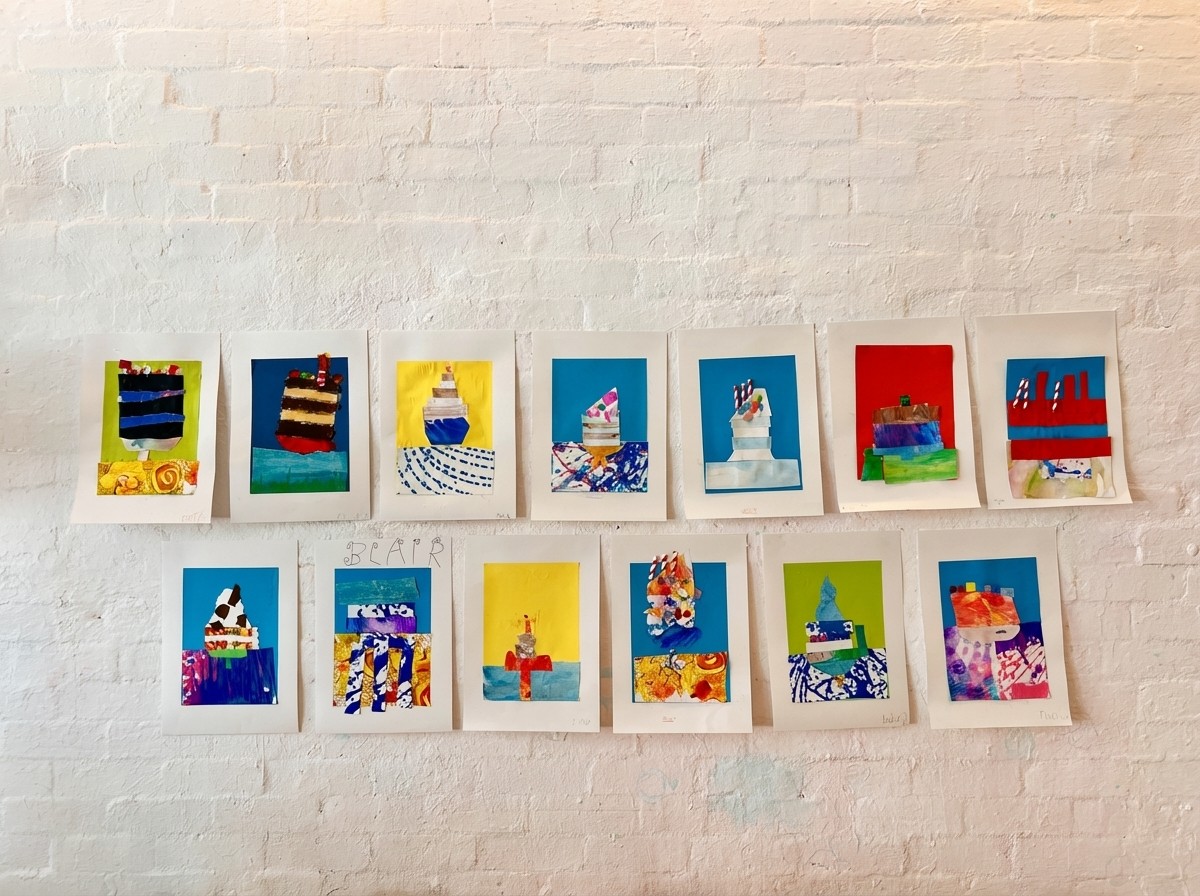
The Set Up
This experience is inspired by Melbourne illustrator and designer Alice Oehr, whose cake illustrations are graphic and bold. She's also written lots (and lots) of books (both non-fiction and kids' books), including my personal favourite; 'The Art of Cake'.
While Alice often uses printmaking, collage gives artists a similar visual impact through layering, pattern, and contrast.
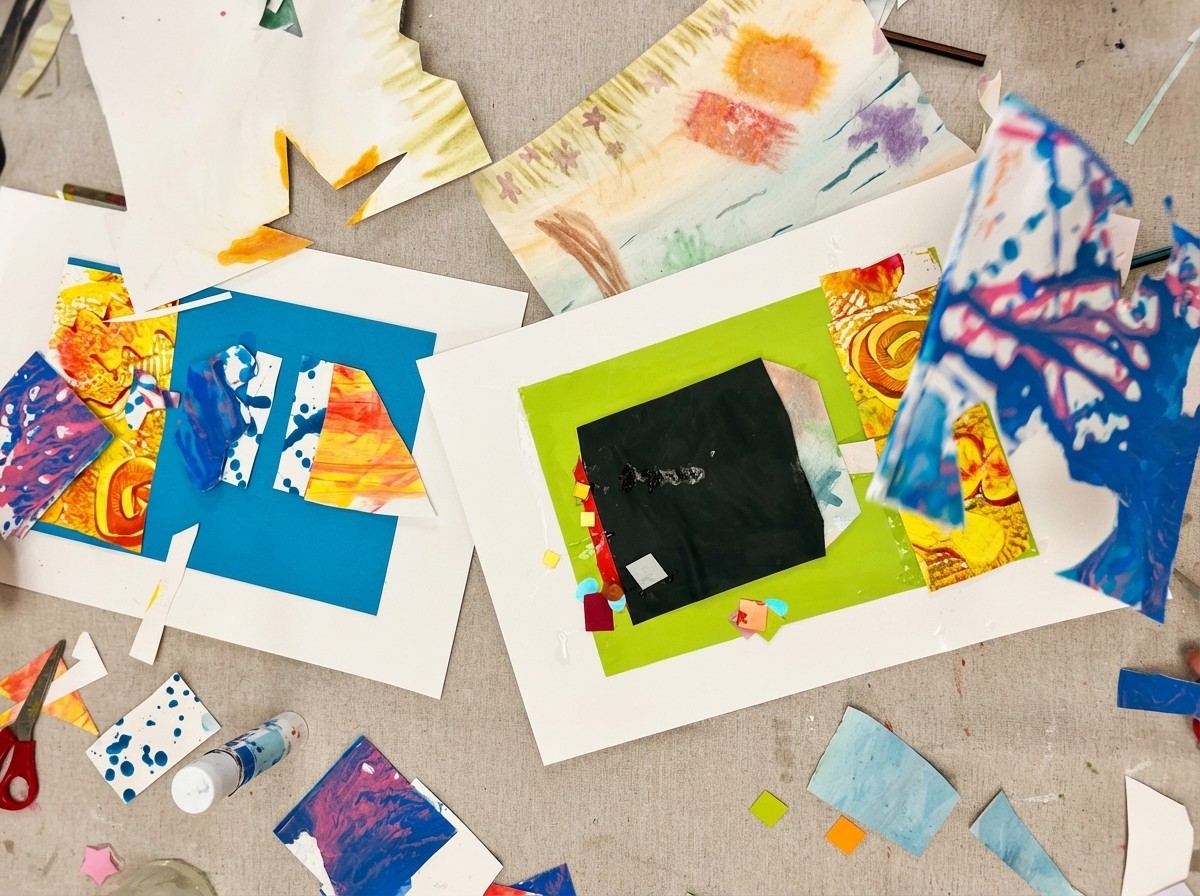
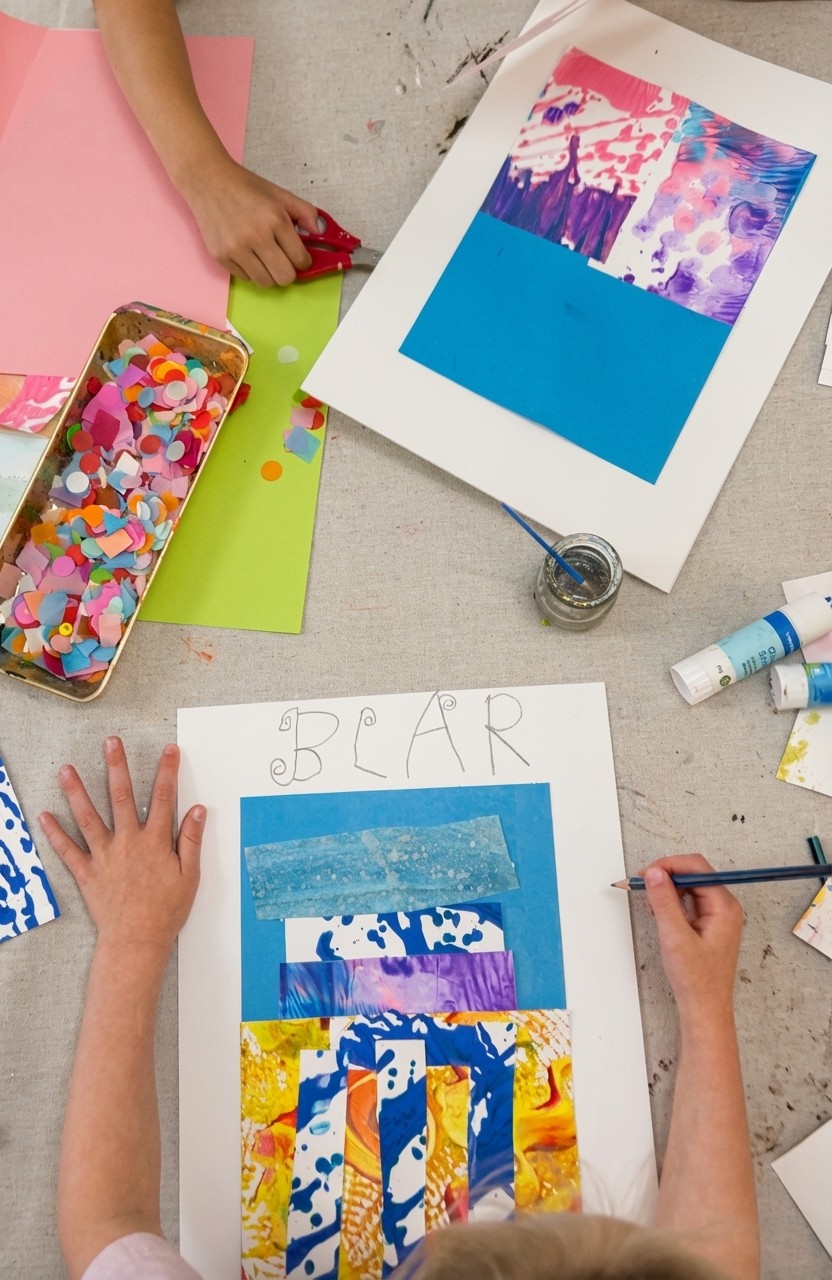
This is the perfect place to repurpose old paintings and scraps, or to prepare a pile of painted collage papers ahead of time. Think texture and mark making rather than neat shapes. If time is tight, paint sticks work beautifully because the paper dries instantly and can be used straight away. The best!
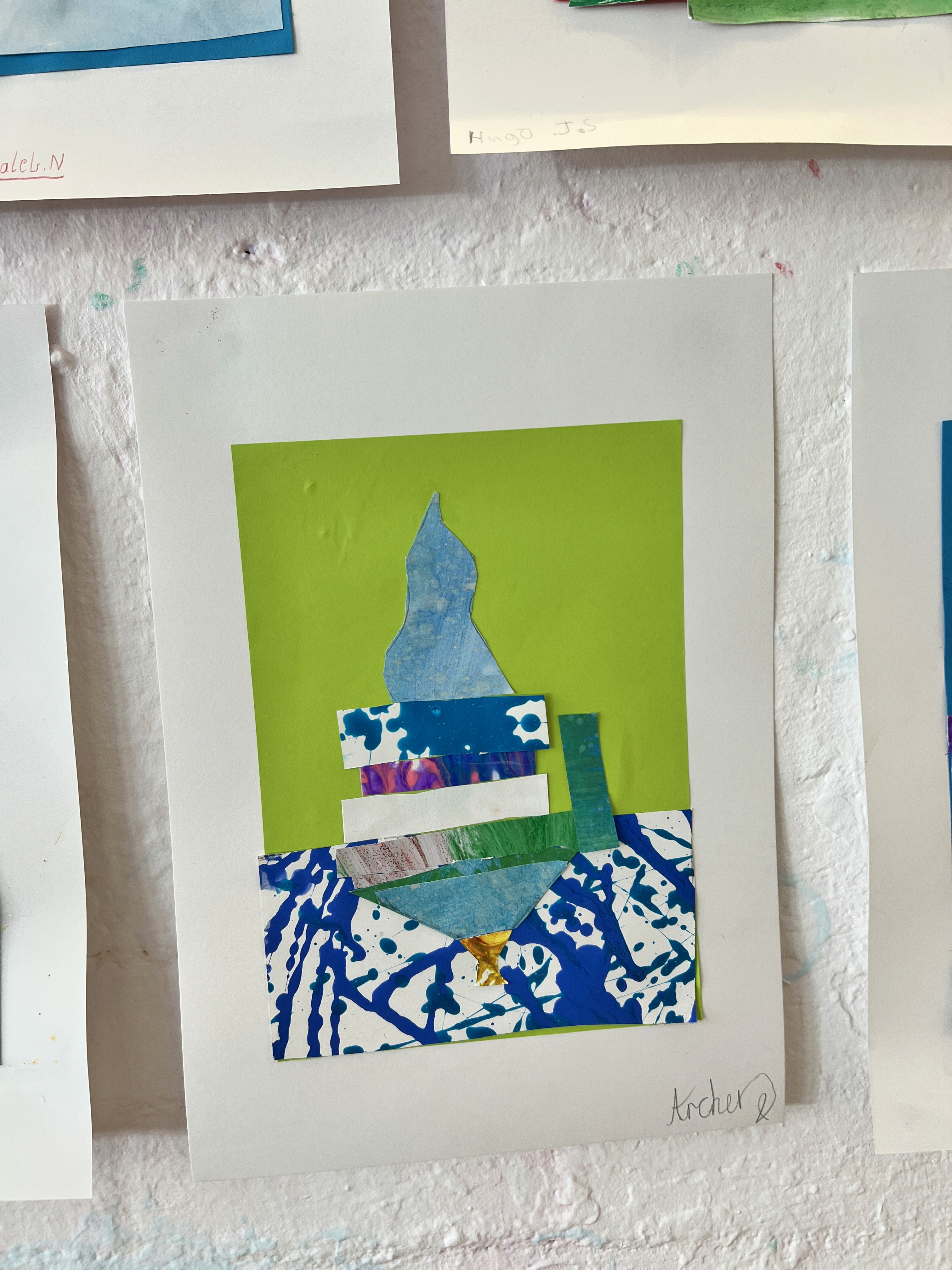
Each artist works on a thick A3 base. We often glue a coloured A4 sheet into the centre as a kind of frame, referencing Alice’s bordered compositions, but this is just a design choice (and totally optional).
The Making
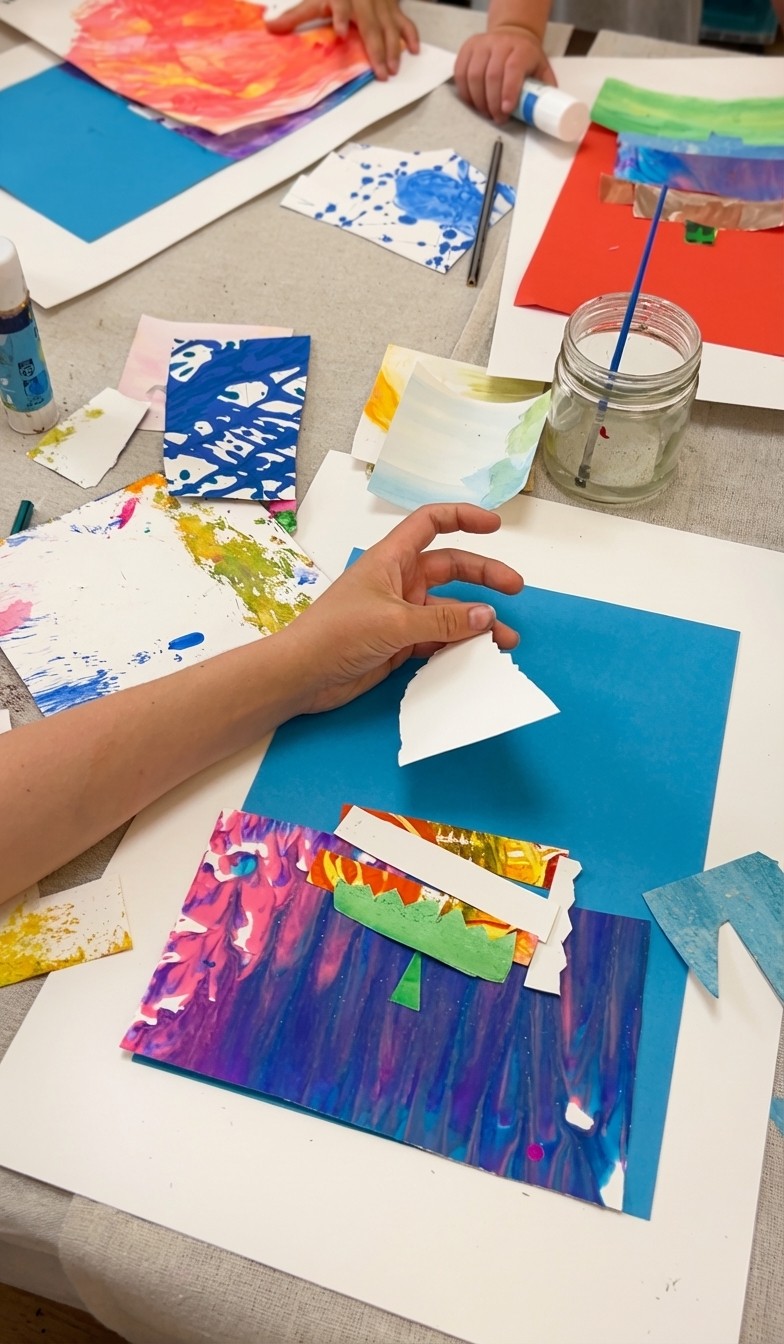
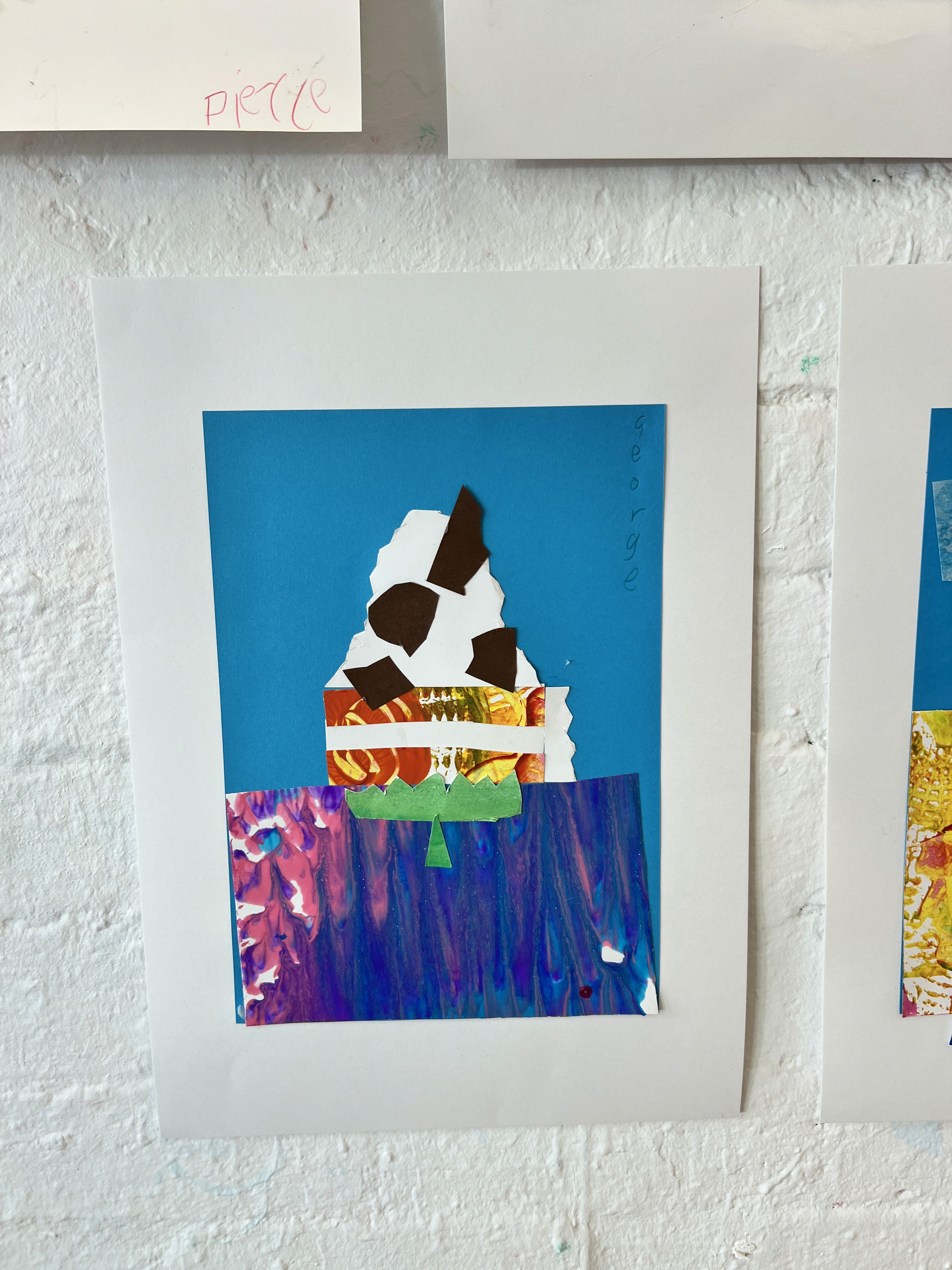
This is a hands-first process! Start by experimenting with tearing paper rather than cutting it. Ripping creates edges that feel softer and more cake-like, and it keeps the work loose from the start. Thick tears and thin strips and curved edges and accidental shapes! It's also lovely to chat about colour choices, and contrasting patterns. If you're able to take a look at Alice's work, you'll no doubt be struck by how gorgeous her colour choices are! She's a colour wiz for sure.
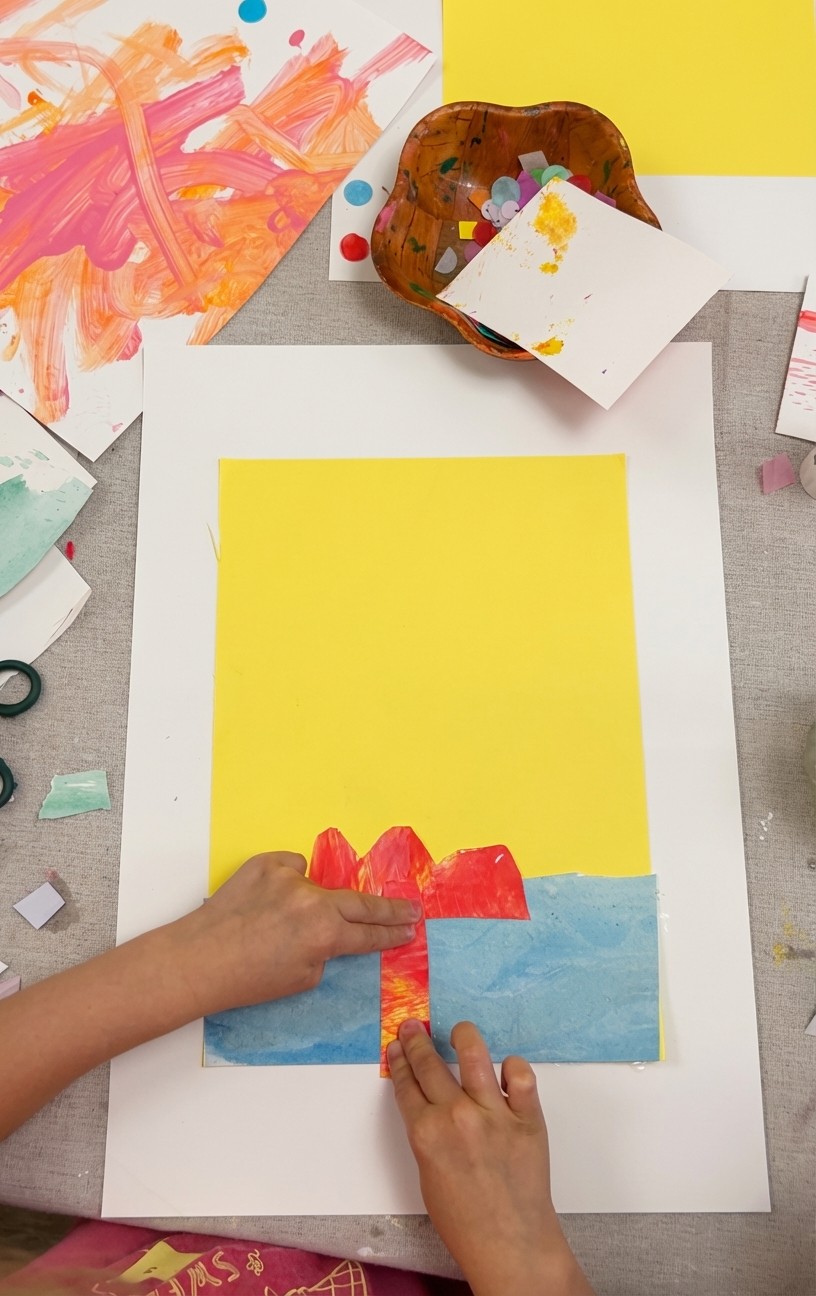
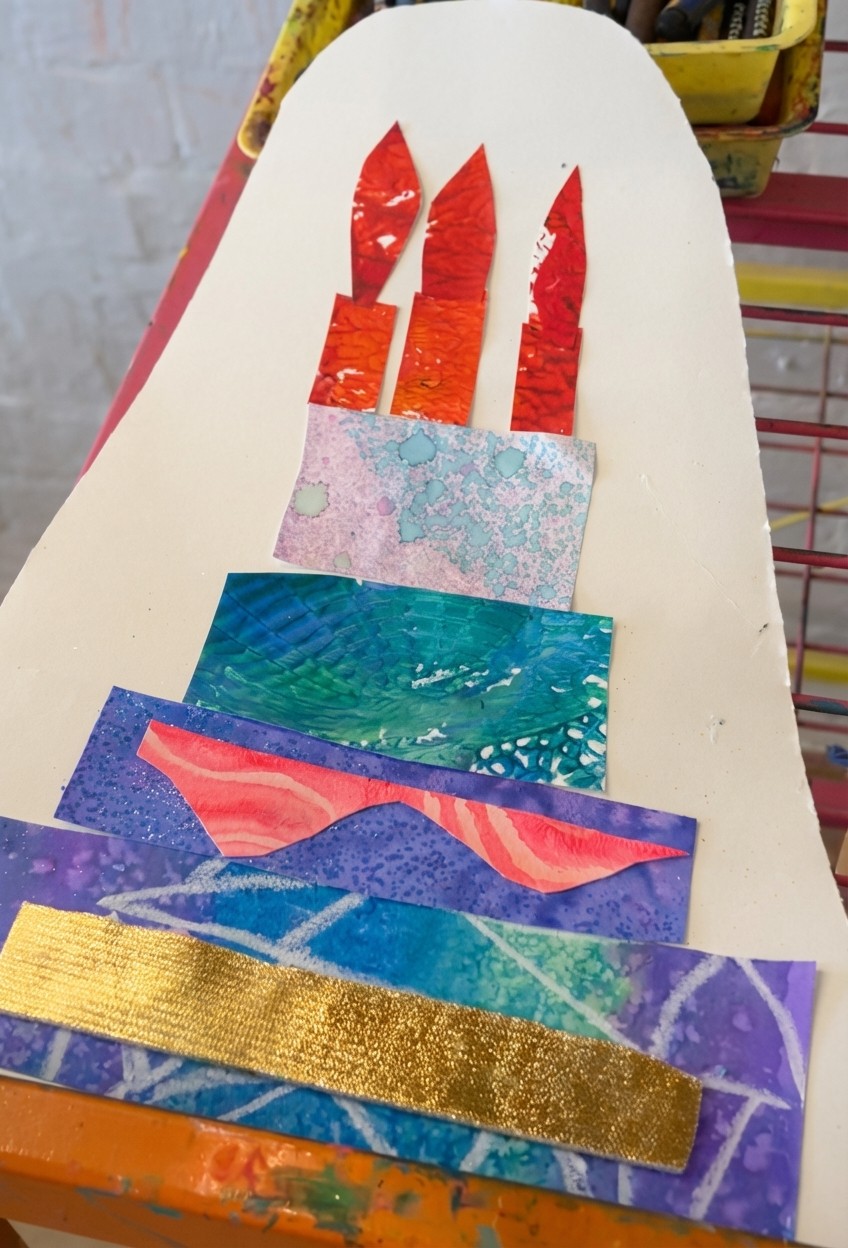
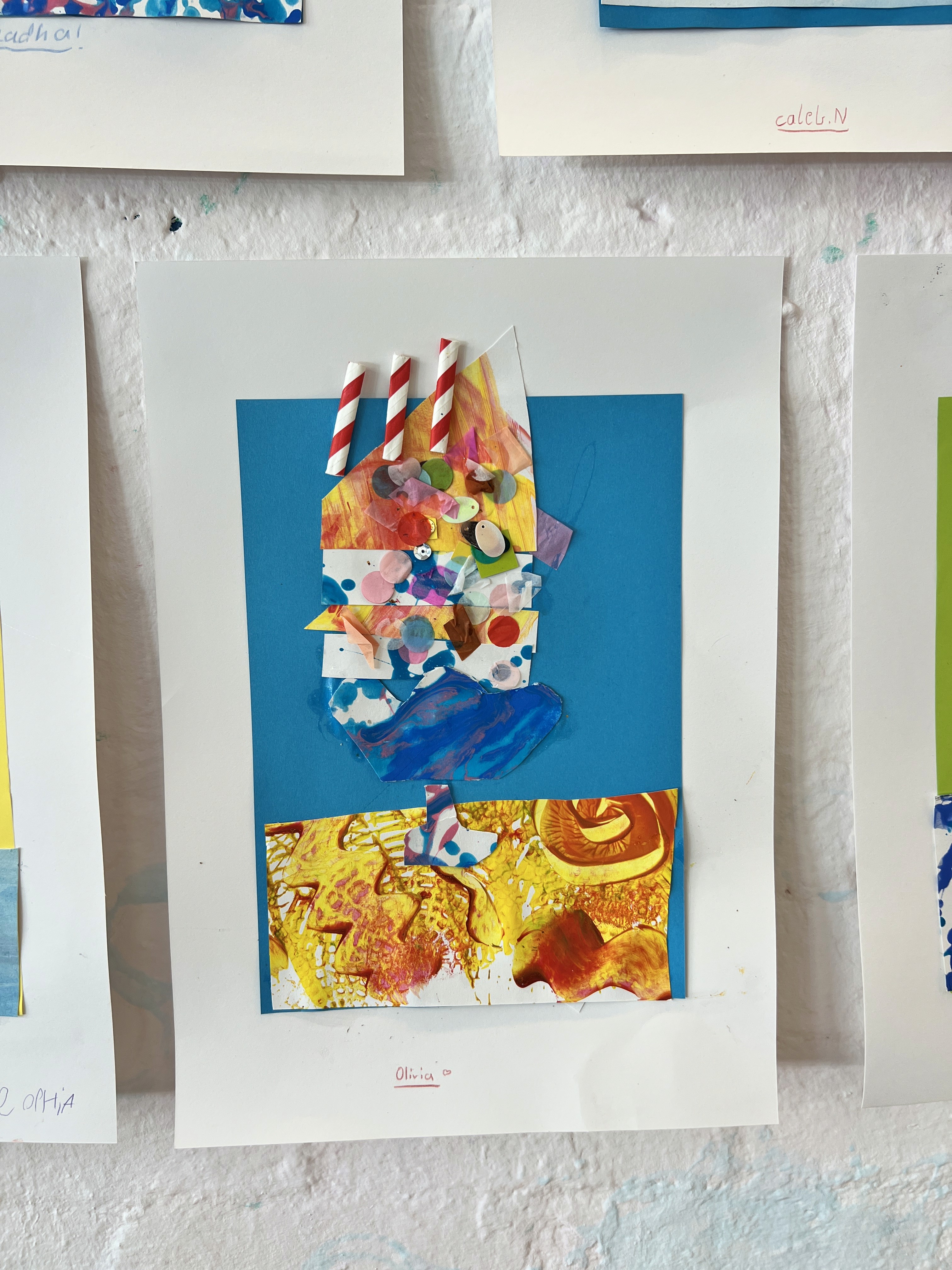
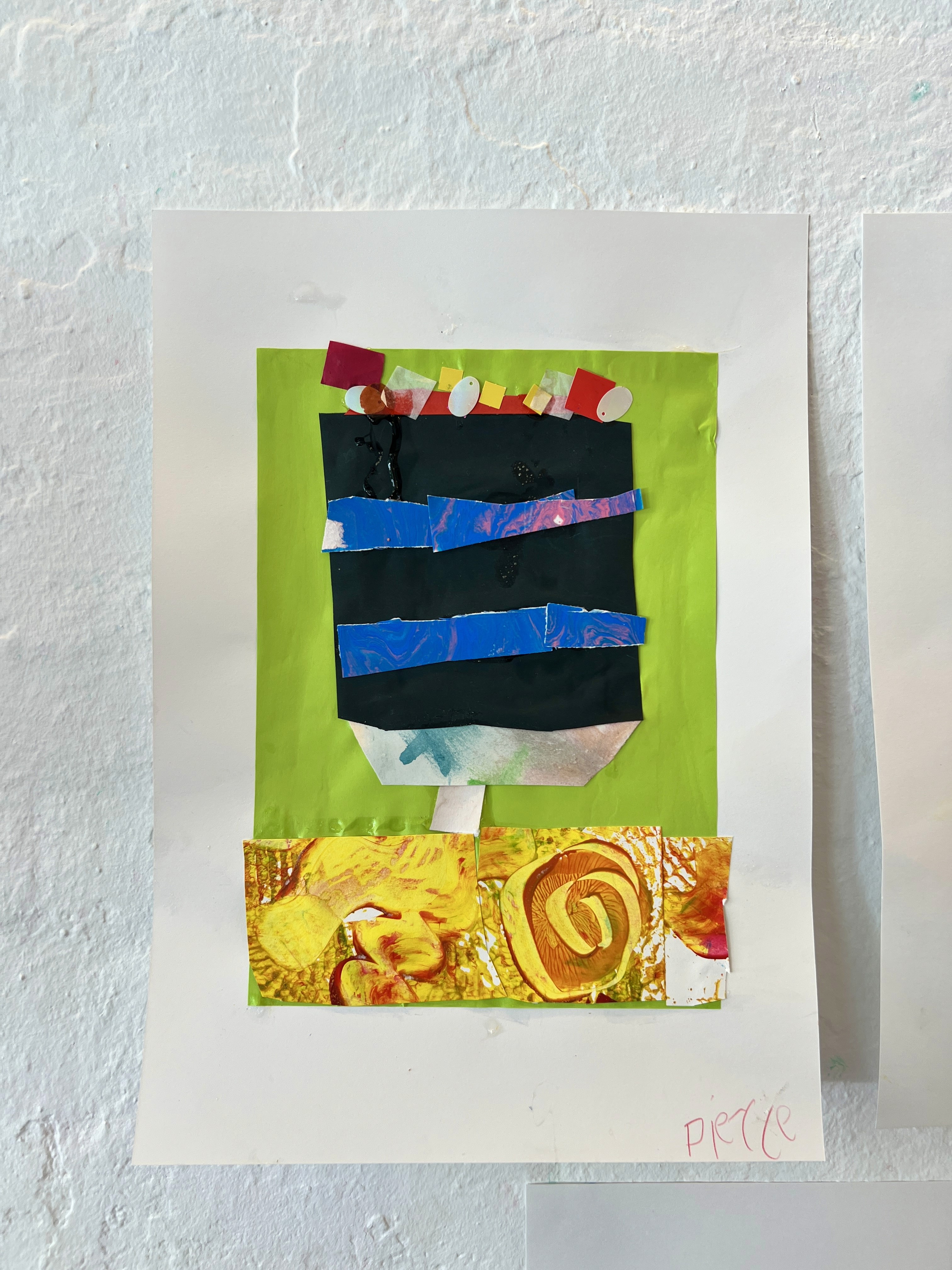
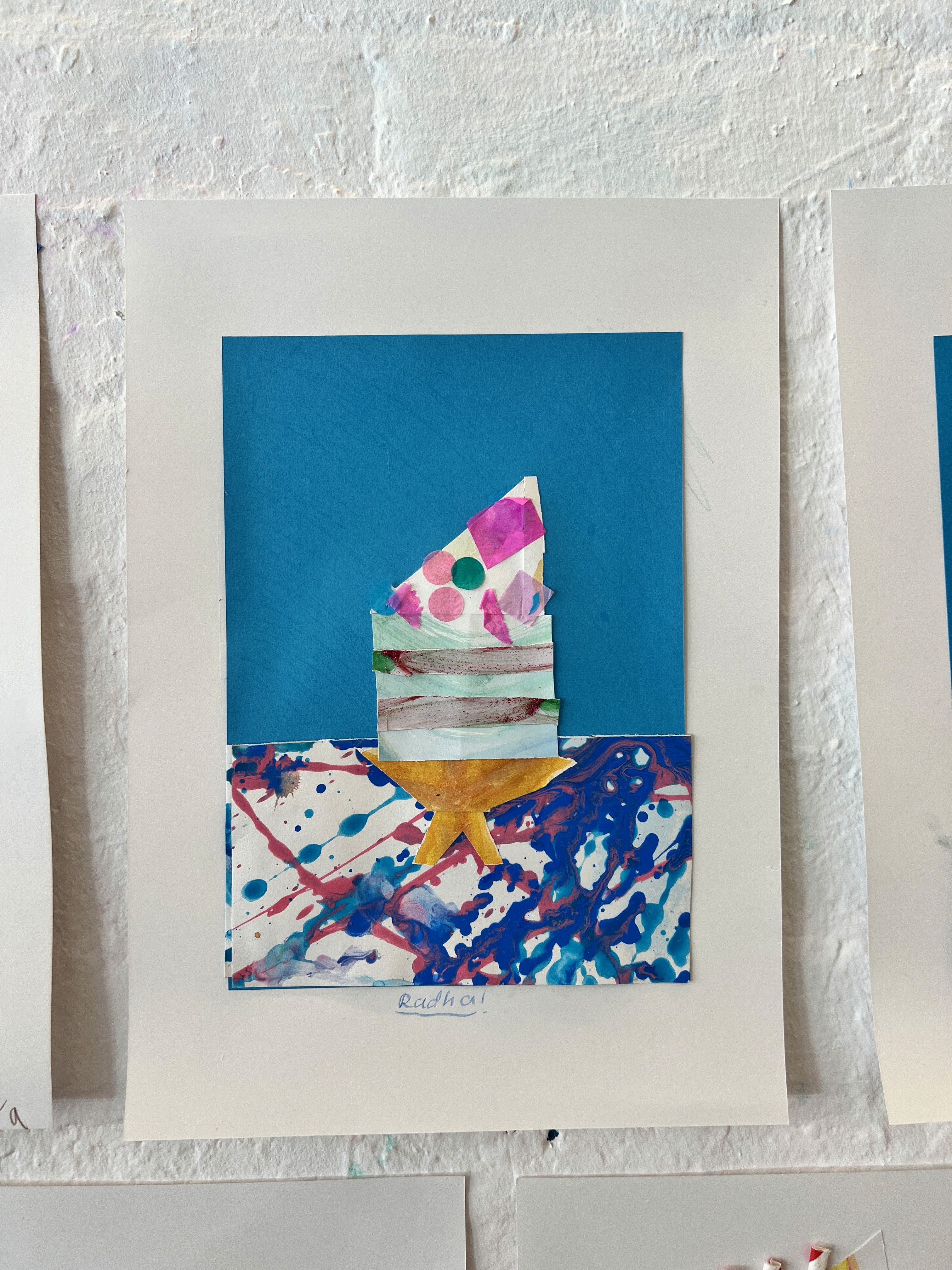
Gradually encourage the kids to build their layers (just like baking in the real world). A base for the plate or cake stand. Larger shapes for cake layers. Smaller pieces stacked on top for icing, fillings, and decorative details. Pieces get shuffled, overlapped, pulled off, and tried again before any glue comes out. That moving-around stage is important. It’s where decisions get made without pressure.
Once the composition starts to feel right for the artist, glue everything down from the bottom up.
I think it's great to focus more on flavour and feeling than precision or perfect outcomes!
Variations
Limit the palette to two or three colours plus one patterned paper for a more graphic look.
Work collaboratively on one large “bakery window” instead of individual pieces.
Add drawn details over the top with oil pastel or paint marker once everything is dry.
Materials
Thick A3 paper or card for bases
Coloured A4 paper (optional centre frame)
Painted collage papers or old artworks
Paint sticks (for quick paper prep)
Scissors (optional, ripping encouraged)
Glue sticks or PVA
Oil pastels or paint markers (optional finishing details)
Back to Top
Patisserie Collages
Layers on layers of yum!
Bookmark
Collage
The Set Up
This experience is inspired by Melbourne illustrator and designer Alice Oehr, whose cake illustrations are graphic and bold. She's also written lots (and lots) of books (both non-fiction and kids' books), including my personal favourite; 'The Art of Cake'.
While Alice often uses printmaking, collage gives artists a similar visual impact through layering, pattern, and contrast.
This is the perfect place to repurpose old paintings and scraps, or to prepare a pile of painted collage papers ahead of time. Think texture and mark making rather than neat shapes. If time is tight, paint sticks work beautifully because the paper dries instantly and can be used straight away. The best!
Each artist works on a thick A3 base. We often glue a coloured A4 sheet into the centre as a kind of frame, referencing Alice’s bordered compositions, but this is just a design choice (and totally optional).
The Making
This is a hands-first process! Start by experimenting with tearing paper rather than cutting it. Ripping creates edges that feel softer and more cake-like, and it keeps the work loose from the start. Thick tears and thin strips and curved edges and accidental shapes! It's also lovely to chat about colour choices, and contrasting patterns. If you're able to take a look at Alice's work, you'll no doubt be struck by how gorgeous her colour choices are! She's a colour wiz for sure.
Gradually encourage the kids to build their layers (just like baking in the real world). A base for the plate or cake stand. Larger shapes for cake layers. Smaller pieces stacked on top for icing, fillings, and decorative details. Pieces get shuffled, overlapped, pulled off, and tried again before any glue comes out. That moving-around stage is important. It’s where decisions get made without pressure.
Once the composition starts to feel right for the artist, glue everything down from the bottom up.
I think it's great to focus more on flavour and feeling than precision or perfect outcomes!
Variations
Limit the palette to two or three colours plus one patterned paper for a more graphic look.
Work collaboratively on one large “bakery window” instead of individual pieces.
Add drawn details over the top with oil pastel or paint marker once everything is dry.
Materials
Thick A3 paper or card for bases
Coloured A4 paper (optional centre frame)
Painted collage papers or old artworks
Paint sticks (for quick paper prep)
Scissors (optional, ripping encouraged)
Glue sticks or PVA
Oil pastels or paint markers (optional finishing details)
Back to Top
Add this to your favourites
Add this to your favourites
Thoughts?
Would love to hear if youv'e tried this or have any ideas on how to make it even better!