Record Remix
Old records, new rhythms.
The Set Up
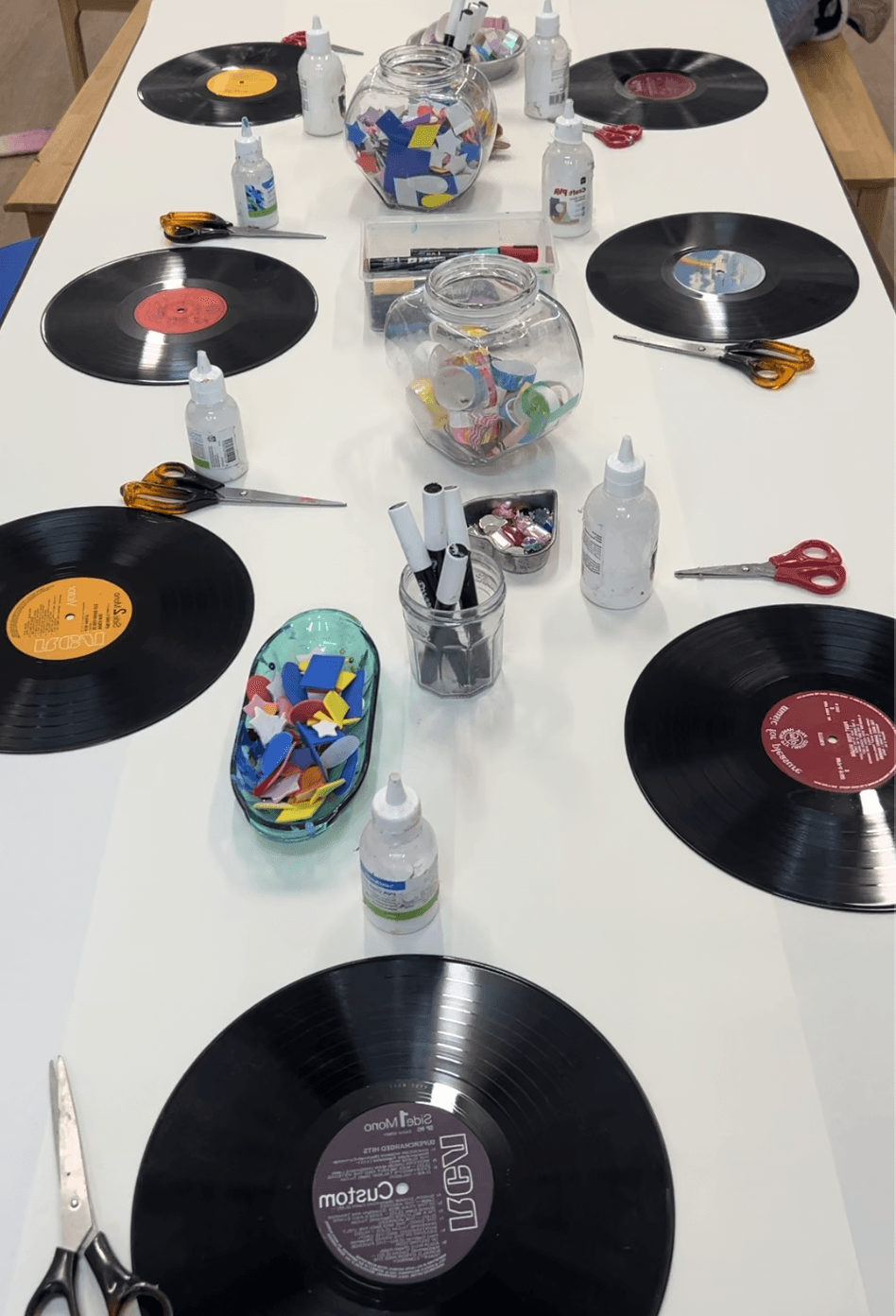
Lay out vinyl records and album covers as the canvas. A little musical history is always a great place to start as well! Discuss how they work and how sound lives in those tiny grooves. Let kids touch the surface, feel the ridges, and imagine the music inside.
As they create, I jump onto Spotify and play a song from each of the albums, or at least from the same artist if the record isn’t available. It’s always incredible to hear the mix that follows: Bowie? Stevie Wonder? Etta James? Santana? That blend of genres and eras makes for the best connections.
We talk about how vinyl works, running fingers along the grooves and noticing the A and B sides. In a world where music streams instantly and playlists are built by algorithms, there’s something special about slowing down and hearing songs chosen by hand. It can spark the best conversations and sometimes a brand-new favourite artist.
🎵 How Records Work
Music is hidden in the grooves!
Each tiny line on a vinyl record is a wave of sound carved into the surface. When a needle glides through the grooves, it wiggles and those vibrations travel through the player and turn back into music.
You’re literally seeing sound you can touch.
The Making
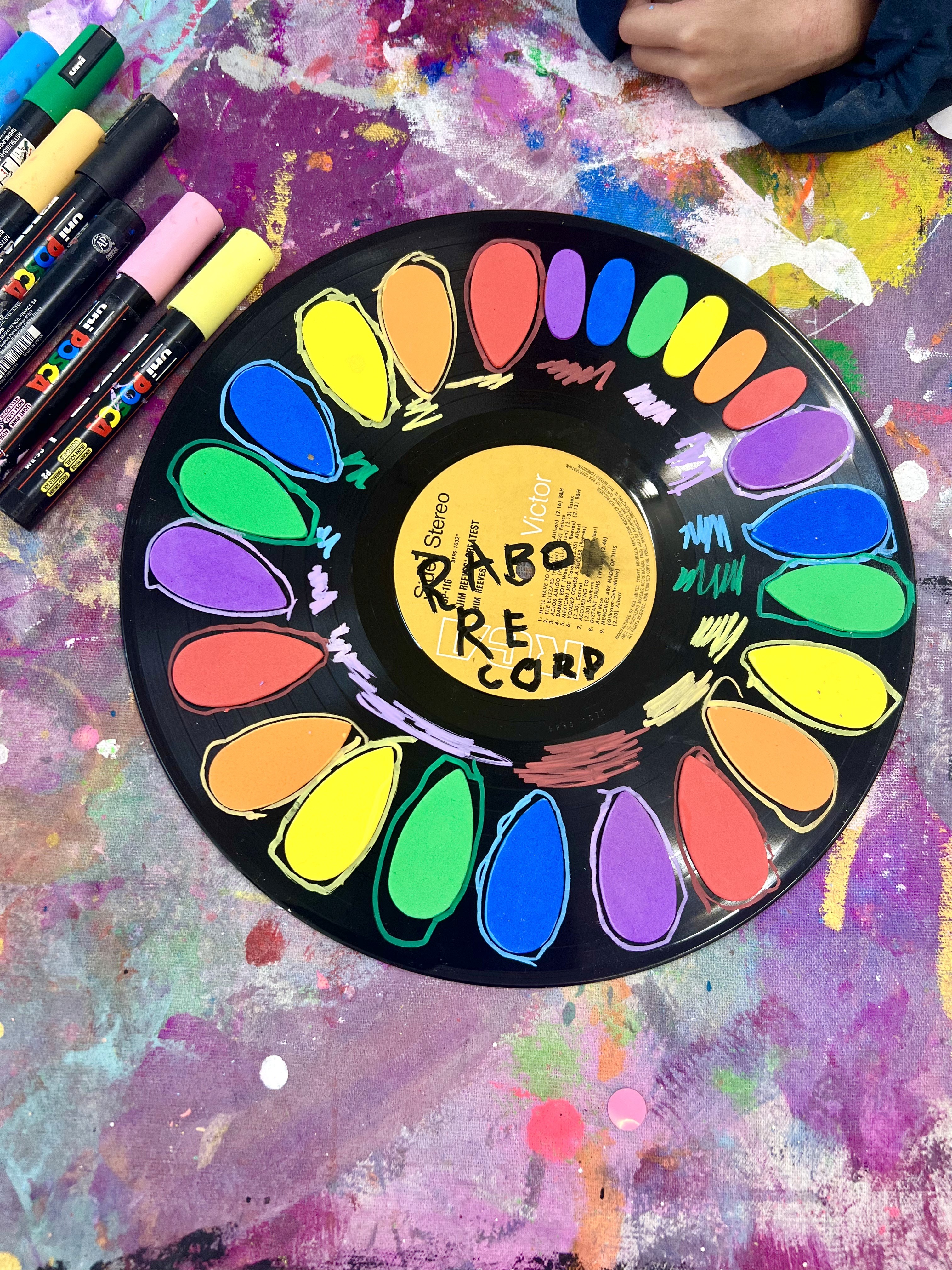
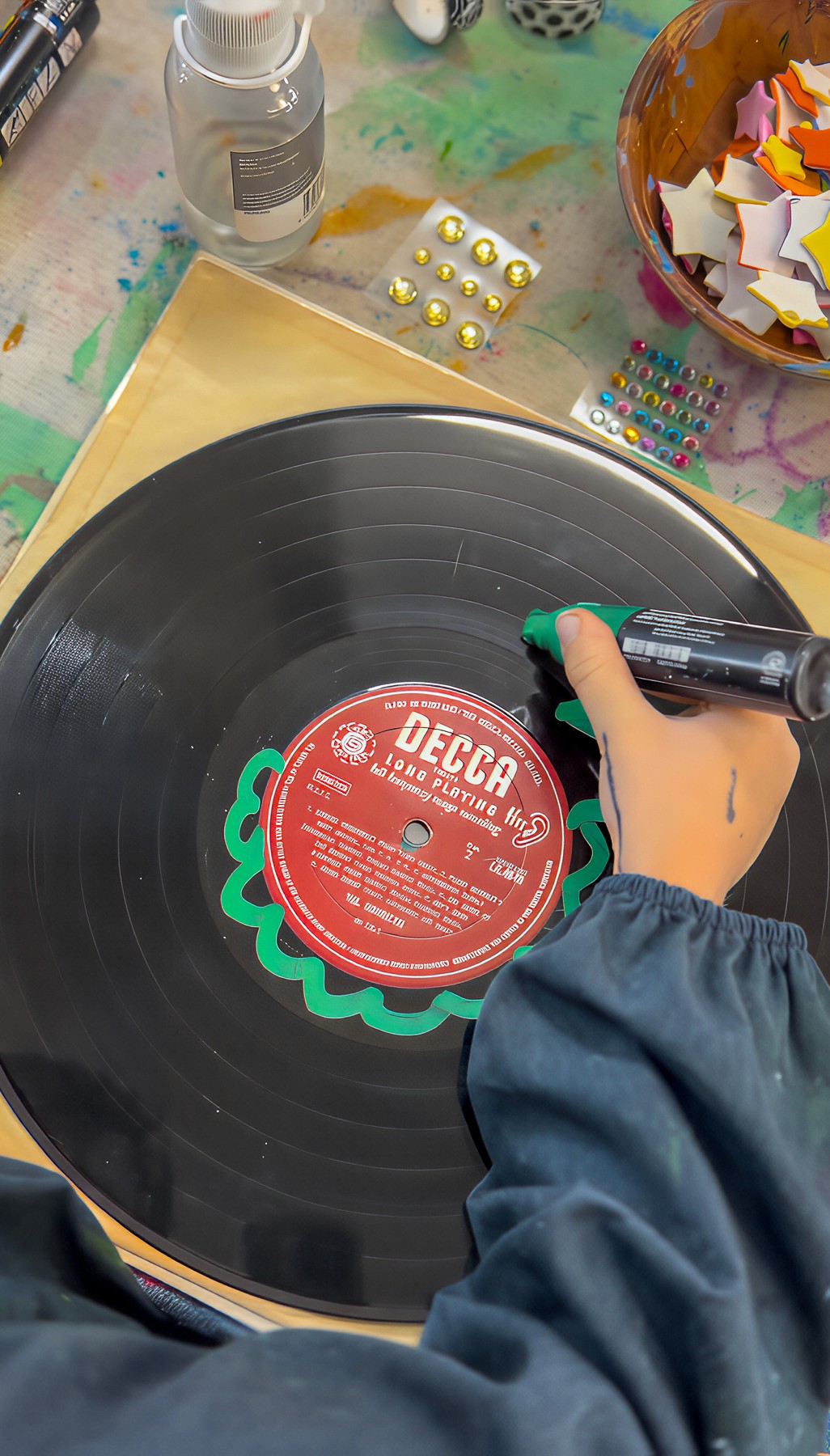
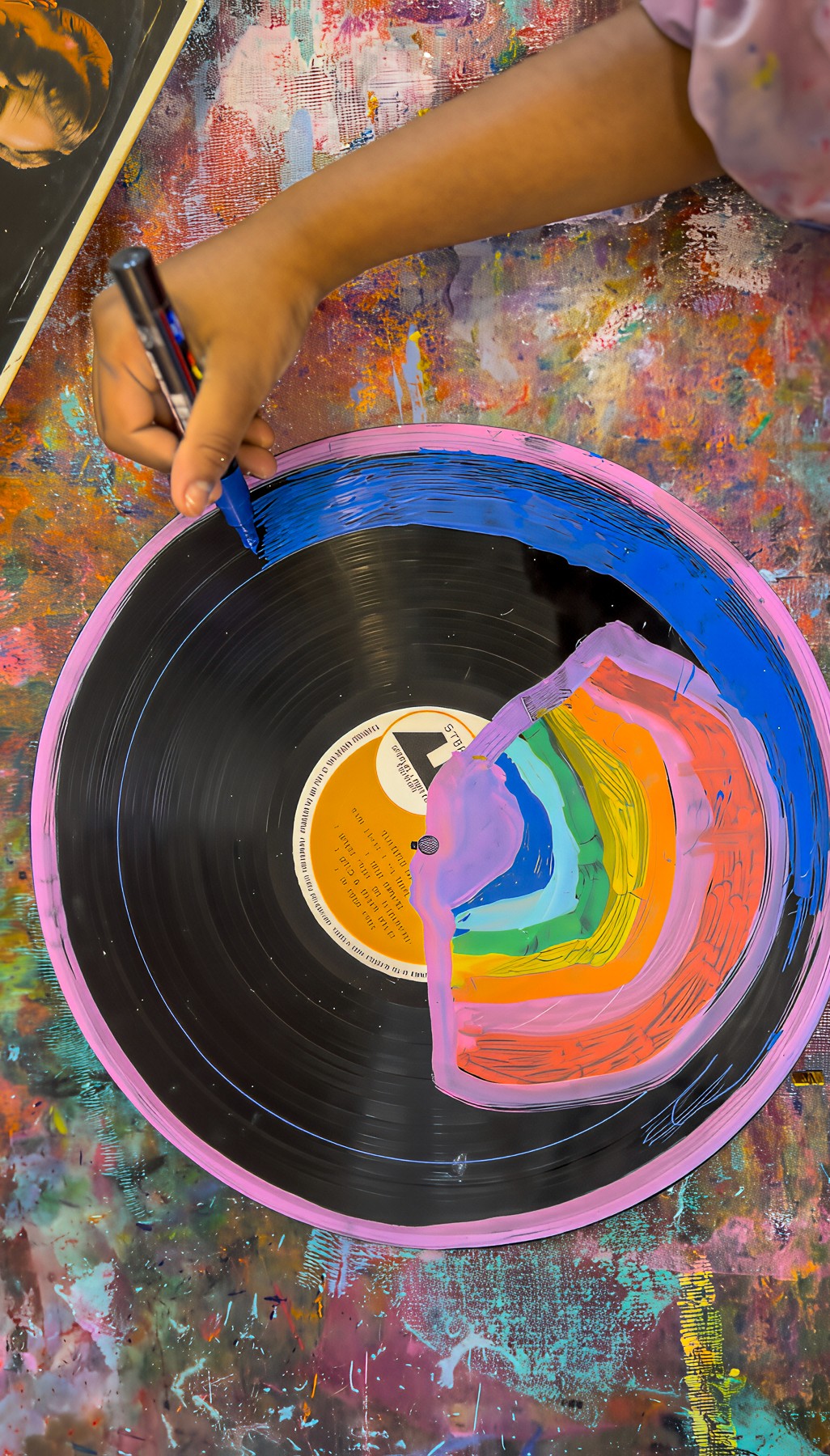
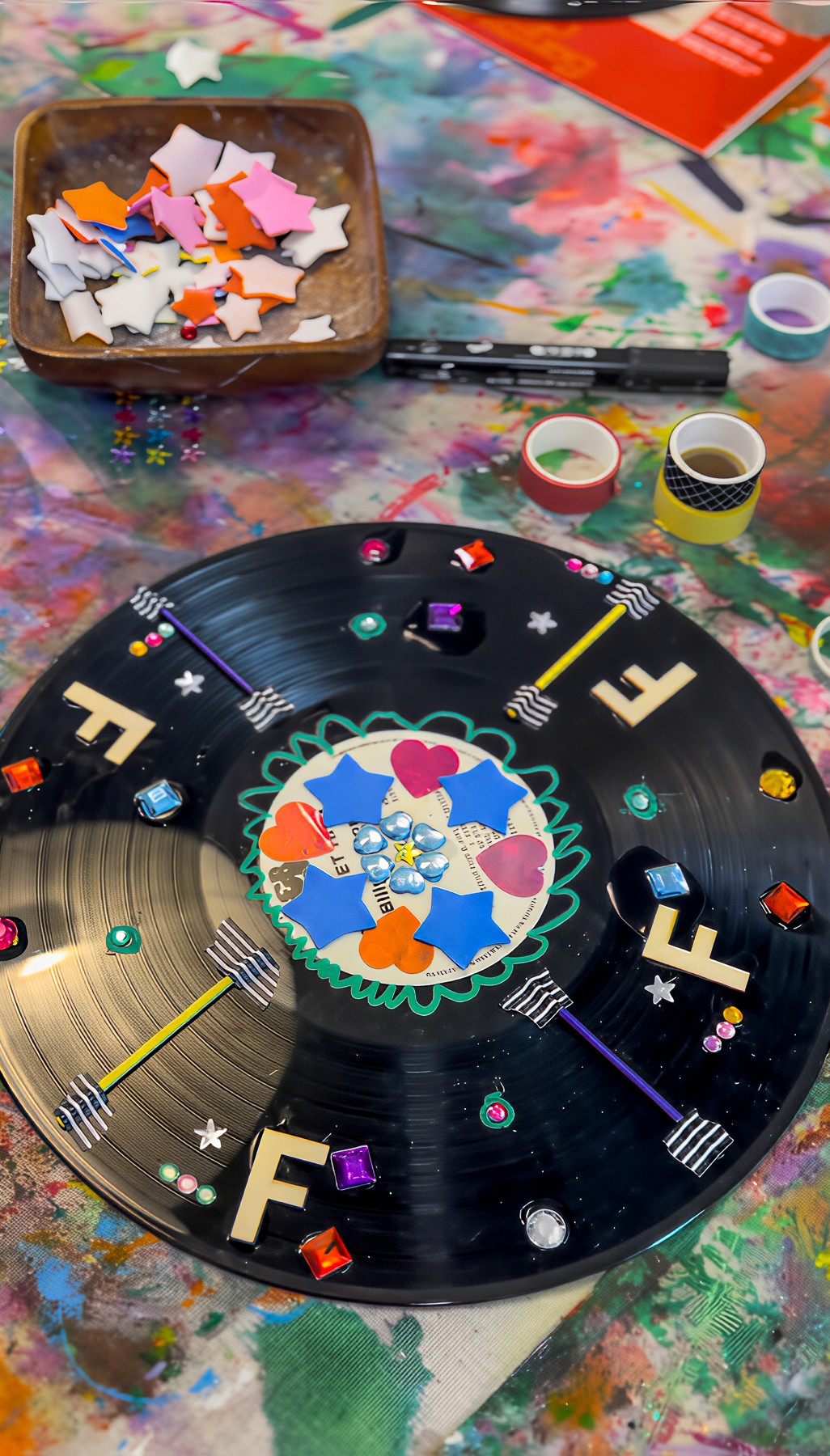
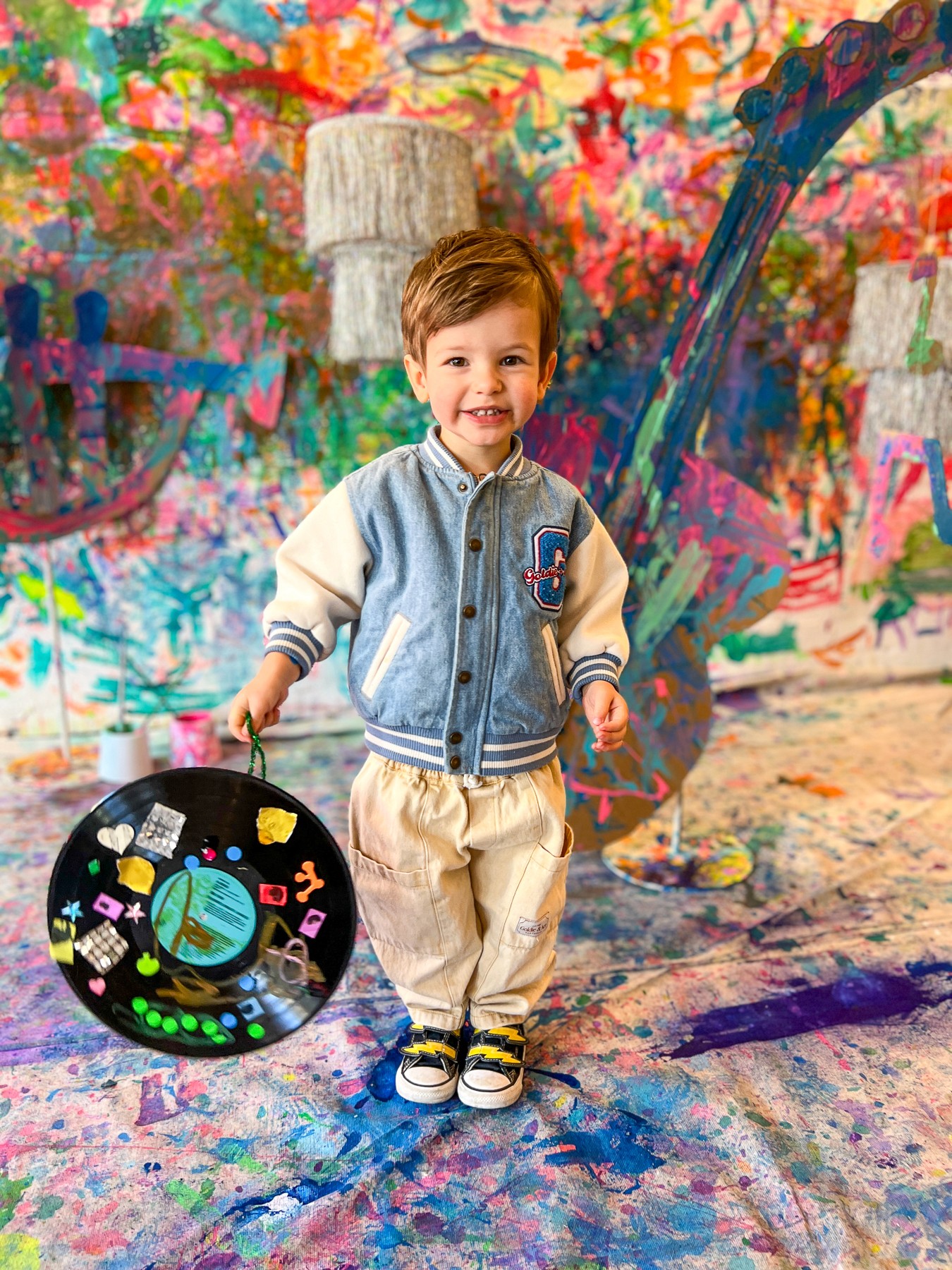
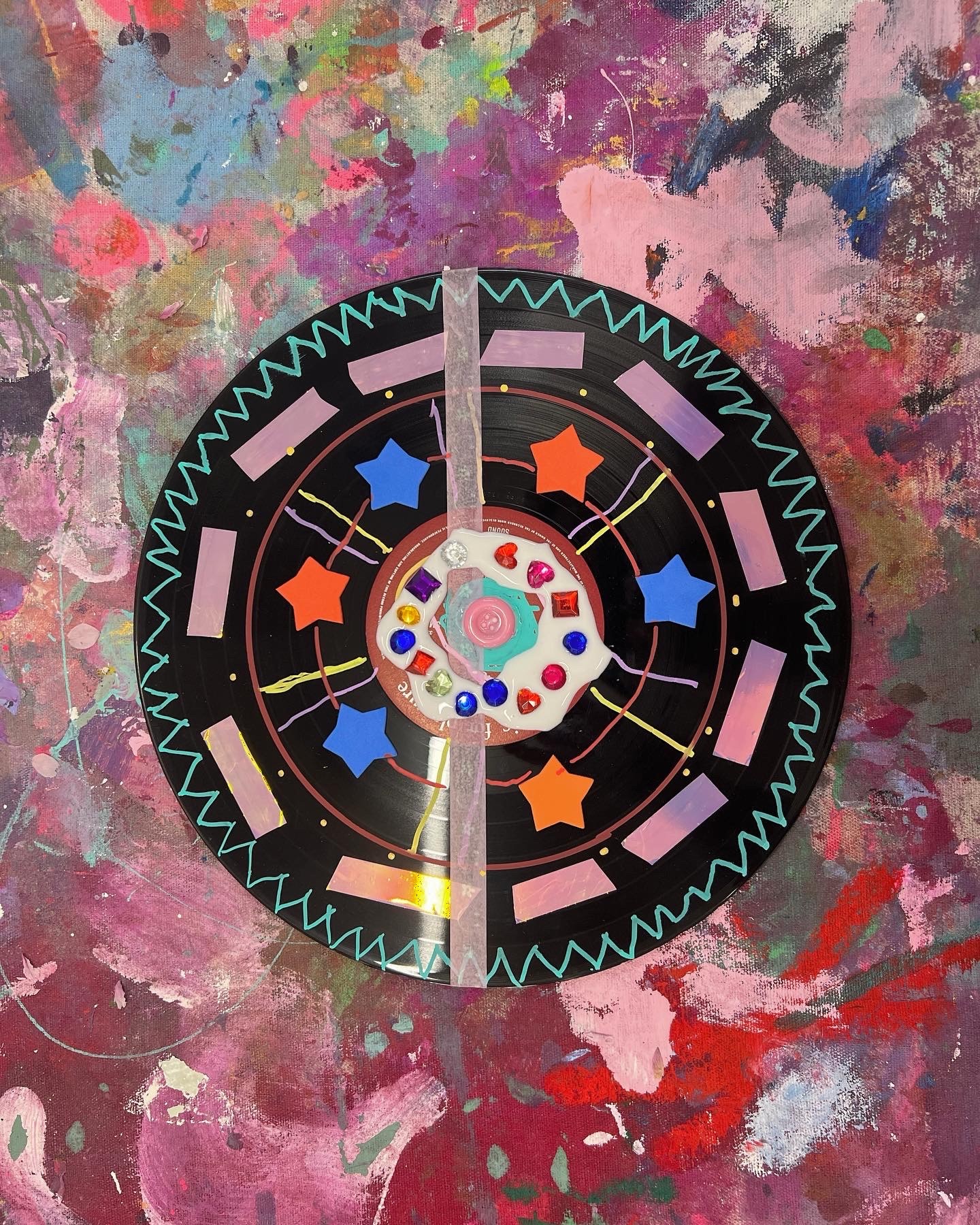
Paint pens and foam stickers are our go-to because they glide perfectly across the shiny surface. Encourage bold lines and patterns that sound like music might look: spirals, bursts, zigzags, loops.
It’s collage as rhythm, remixing as art.
Don’t skip the sound element! Even a short playlist connects the process to the feeling behind it.
Variations
Build a “record wall” where each piece becomes a track in a bigger visual album.
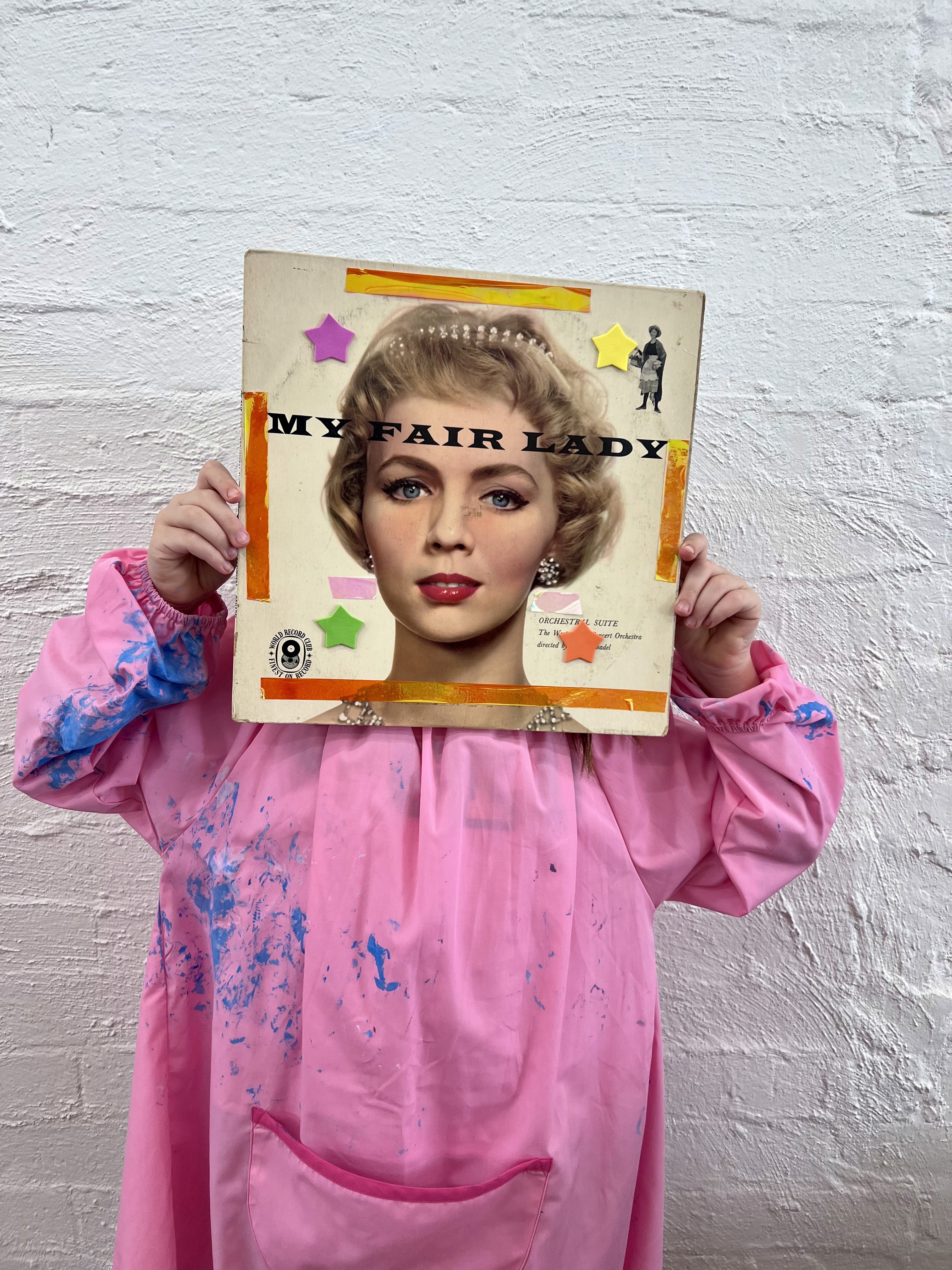
Try working on the sleeves instead for an easier glue base.
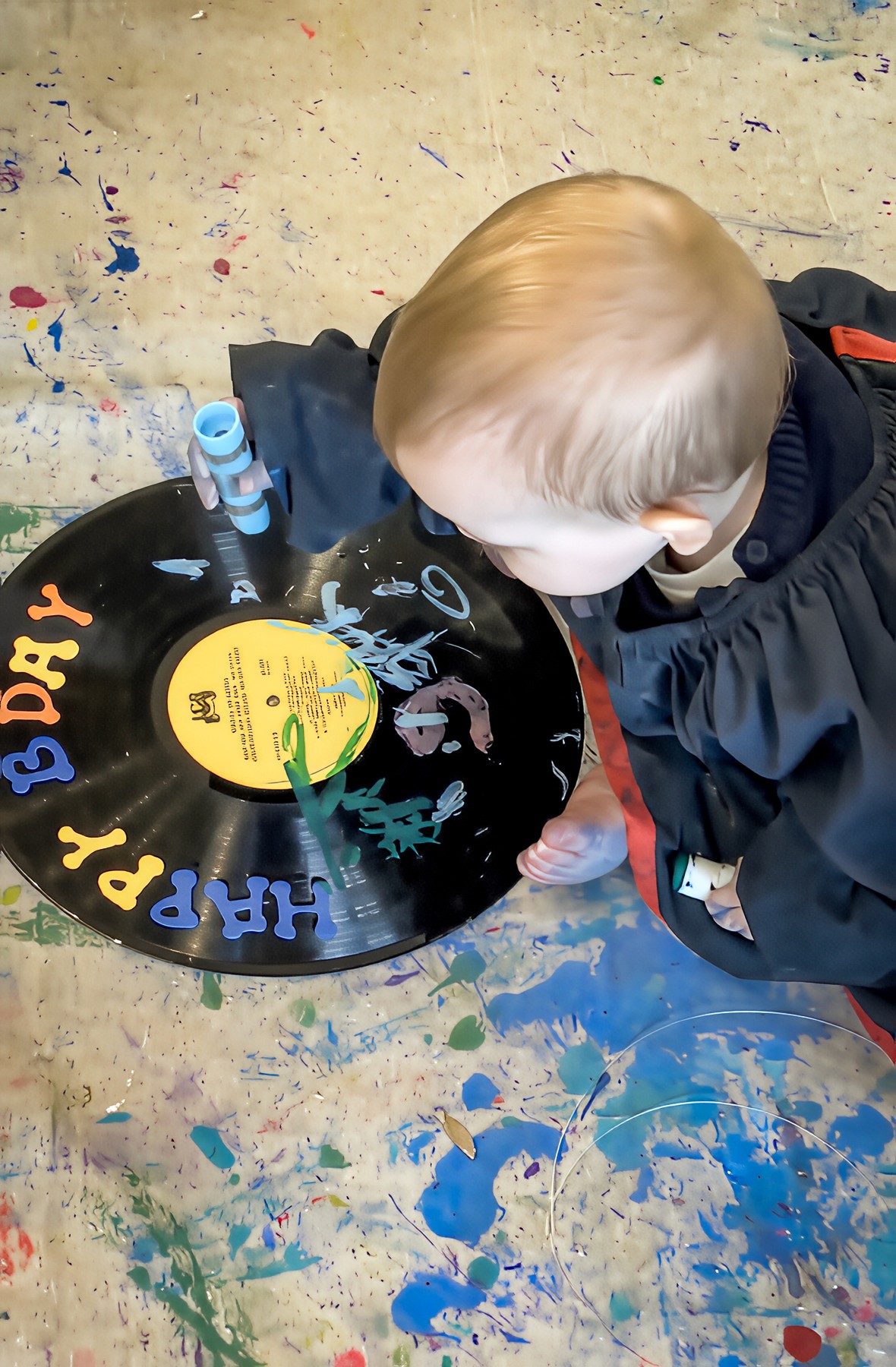
Younger artists can use paint sticks for easier coverage.
Materials
Vinyl records or covers (thrift stores are goldmines)
Posca markers, paint pens, or paint sticks
Foam stickers, collage scraps, wooden letters, glue
Scissors
Back to Top
Record Remix
Old records, new rhythms.
Bookmark
Collage
The Set Up
Lay out vinyl records and album covers as the canvas. A little musical history is always a great place to start as well! Discuss how they work and how sound lives in those tiny grooves. Let kids touch the surface, feel the ridges, and imagine the music inside.
As they create, I jump onto Spotify and play a song from each of the albums, or at least from the same artist if the record isn’t available. It’s always incredible to hear the mix that follows: Bowie? Stevie Wonder? Etta James? Santana? That blend of genres and eras makes for the best connections.
We talk about how vinyl works, running fingers along the grooves and noticing the A and B sides. In a world where music streams instantly and playlists are built by algorithms, there’s something special about slowing down and hearing songs chosen by hand. It can spark the best conversations and sometimes a brand-new favourite artist.
🎵 How Records Work
Music is hidden in the grooves!
Each tiny line on a vinyl record is a wave of sound carved into the surface. When a needle glides through the grooves, it wiggles and those vibrations travel through the player and turn back into music.
You’re literally seeing sound you can touch.
The Making
Paint pens and foam stickers are our go-to because they glide perfectly across the shiny surface. Encourage bold lines and patterns that sound like music might look: spirals, bursts, zigzags, loops.
It’s collage as rhythm, remixing as art.
Don’t skip the sound element! Even a short playlist connects the process to the feeling behind it.
Variations
Build a “record wall” where each piece becomes a track in a bigger visual album.
Try working on the sleeves instead for an easier glue base.
Younger artists can use paint sticks for easier coverage.
Materials
Vinyl records or covers (thrift stores are goldmines)
Posca markers, paint pens, or paint sticks
Foam stickers, collage scraps, wooden letters, glue
Scissors
Back to Top
Add this to your favourites
Add this to your favourites
Thoughts?
Would love to hear if youv'e tried this or have any ideas on how to make it even better!