Shiny Disco Balls
Colour mixing reflections!
The Set Up
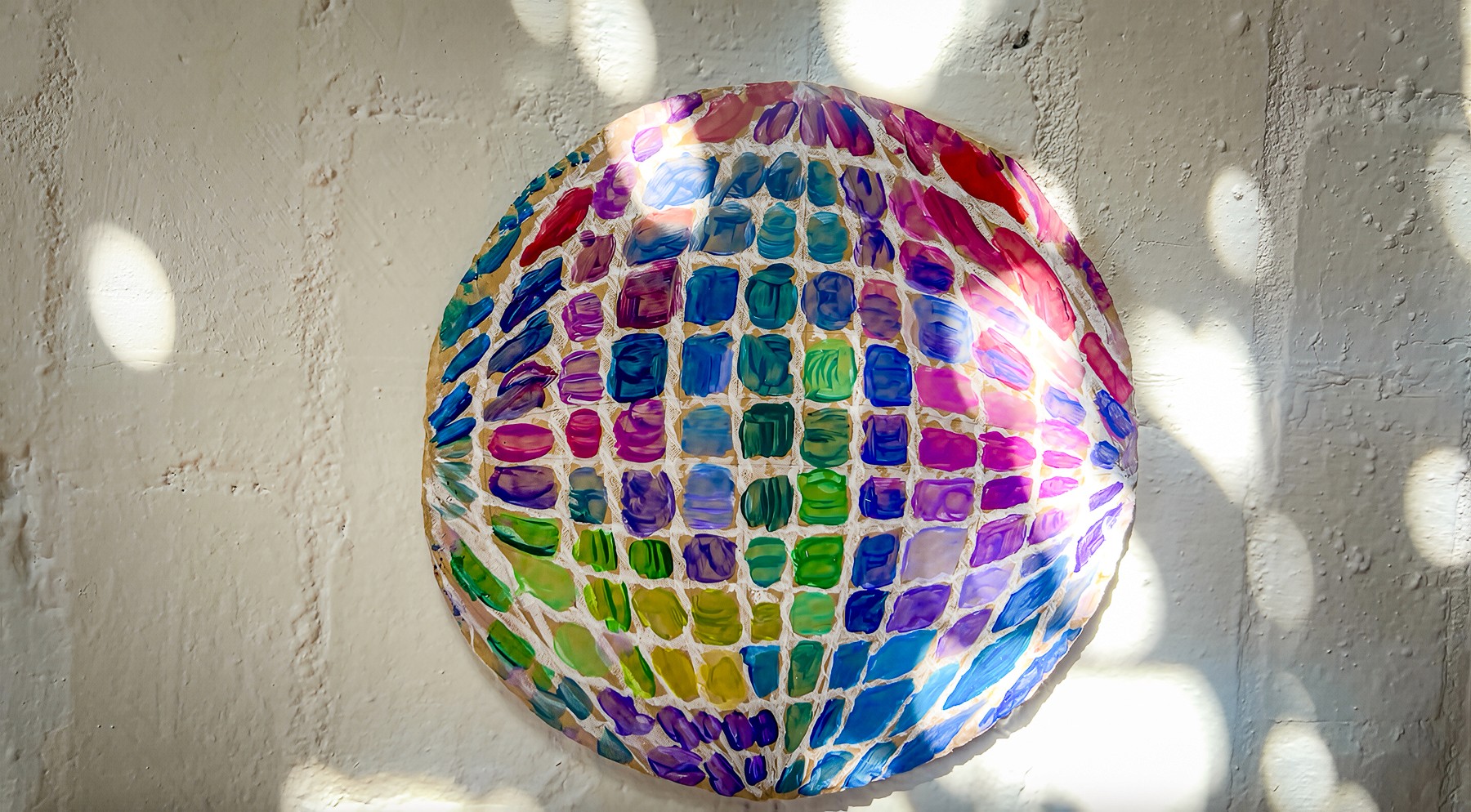
Start with the real thing! You can just imagine how engaged the kids will be from the start with a disco ball catching sunlight and scattering hundreds of tiny reflections across the walls. Watch how the light moves and talk about how every tiny mirror reflects something different.
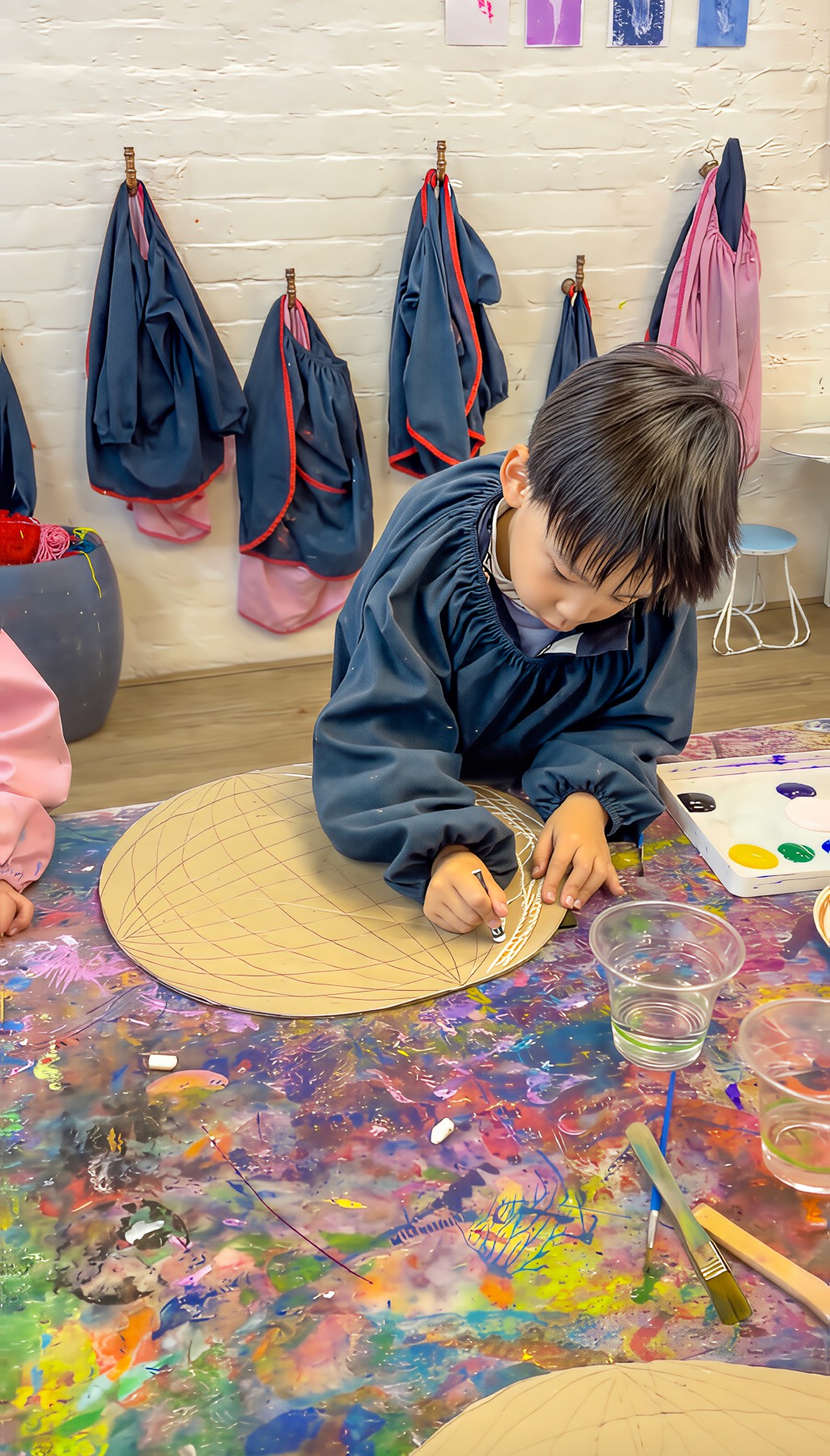
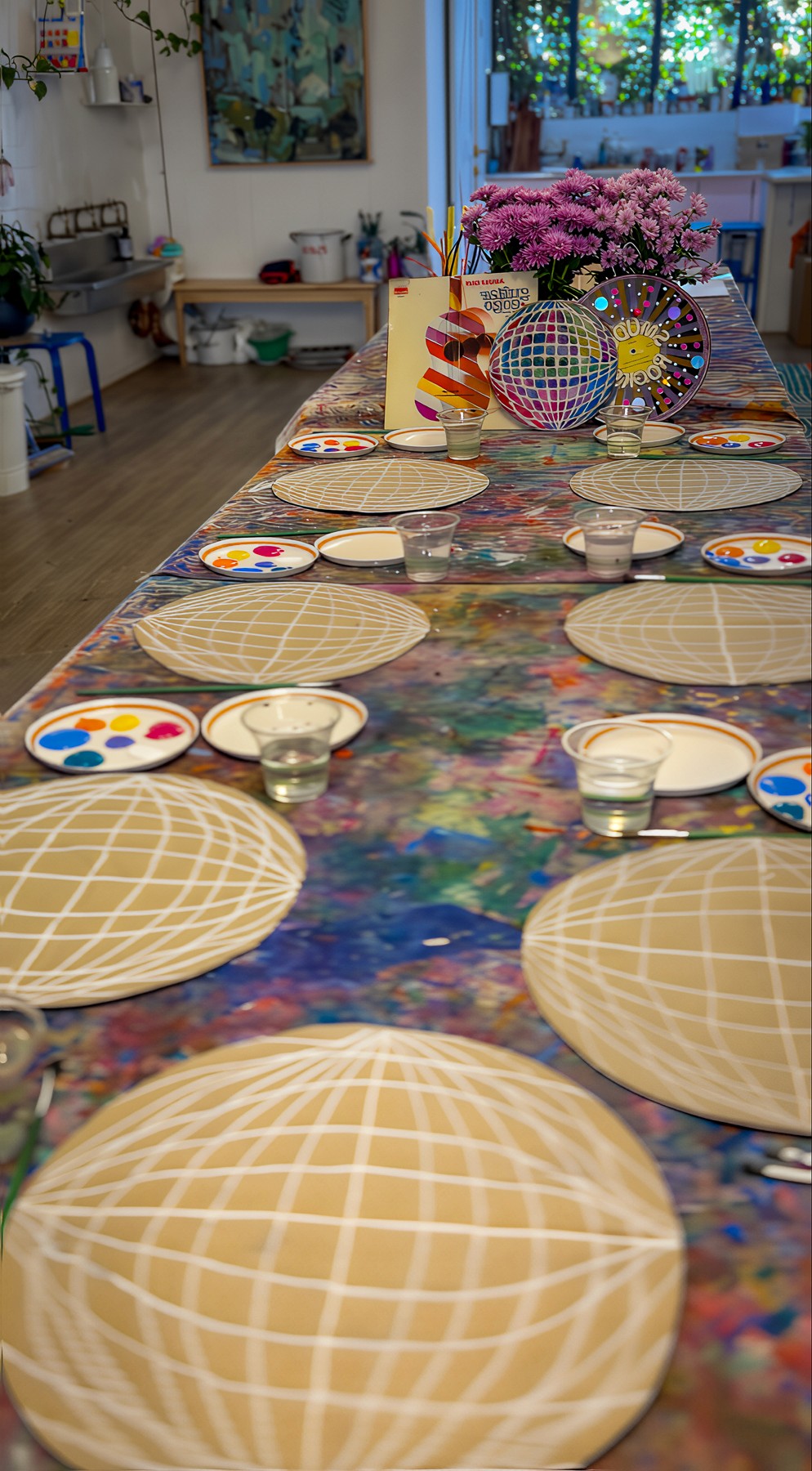
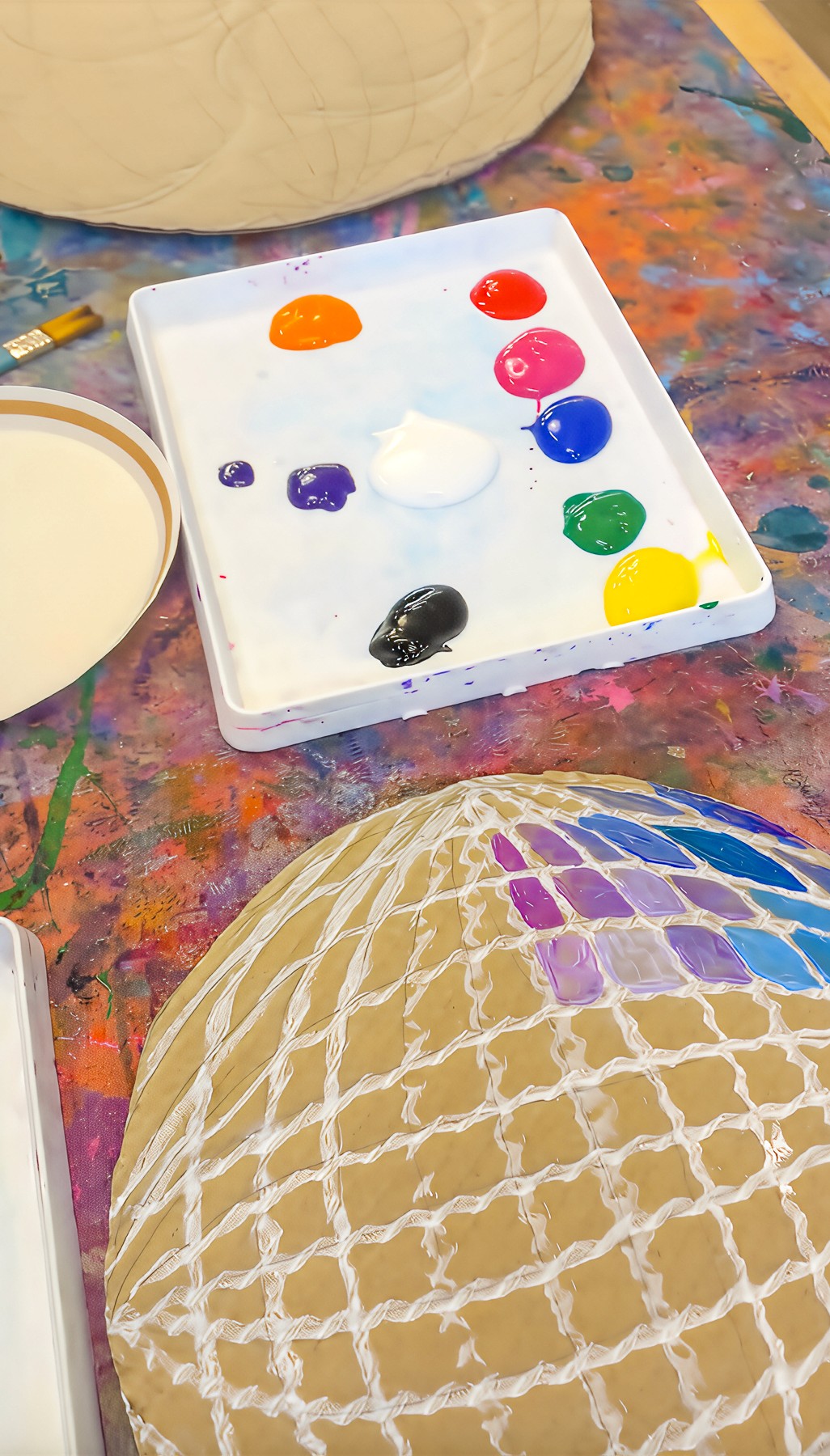
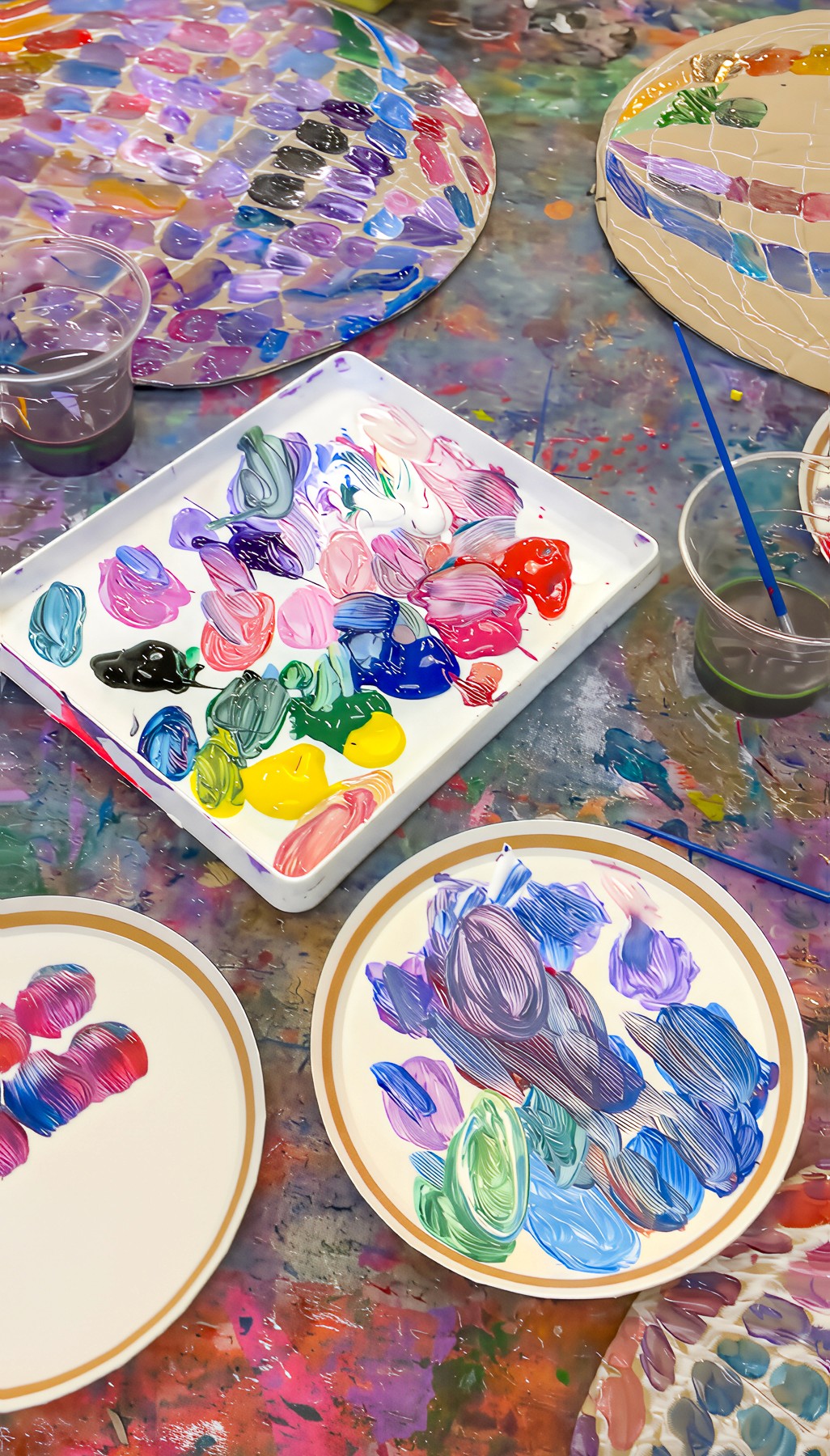
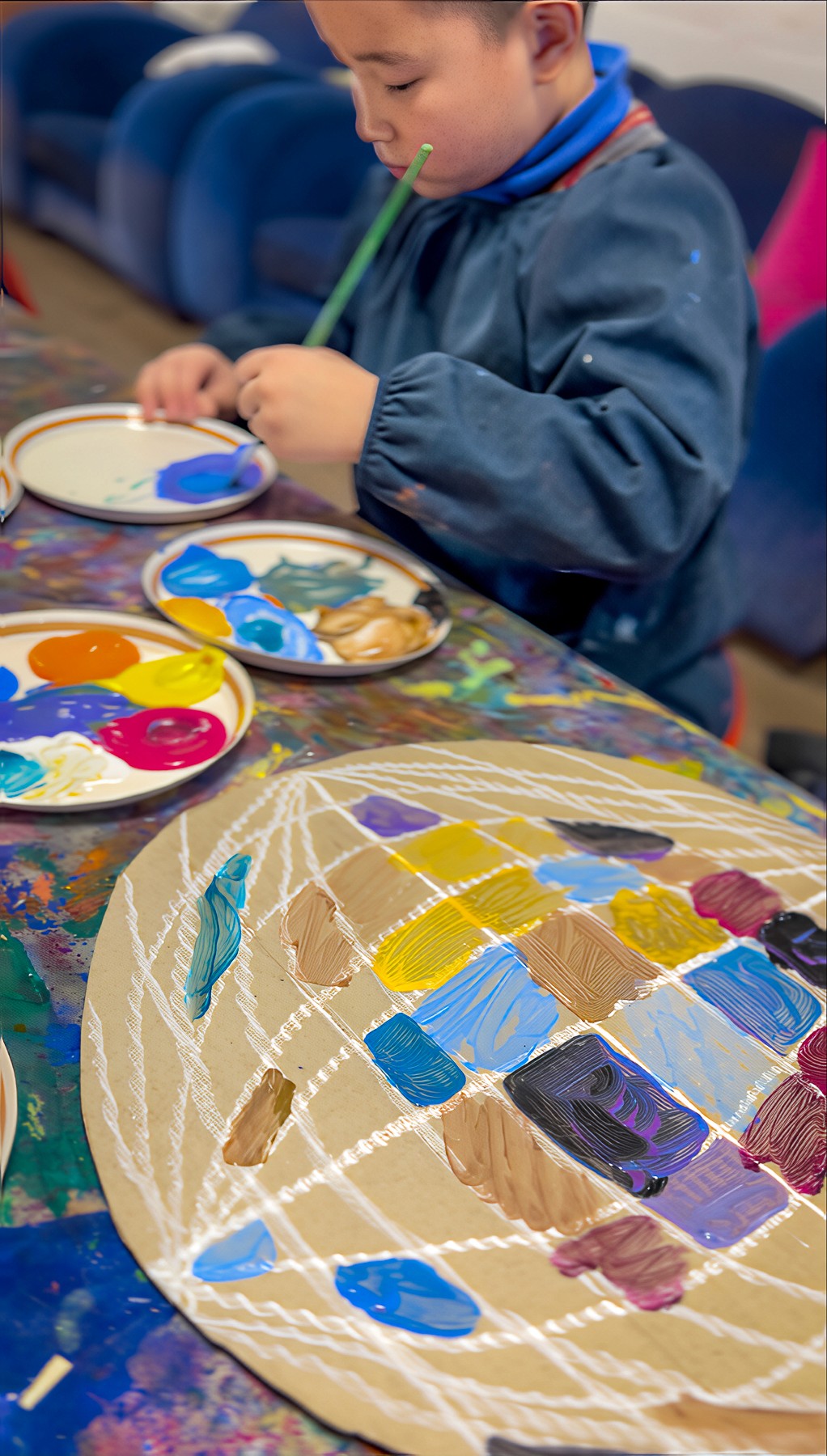
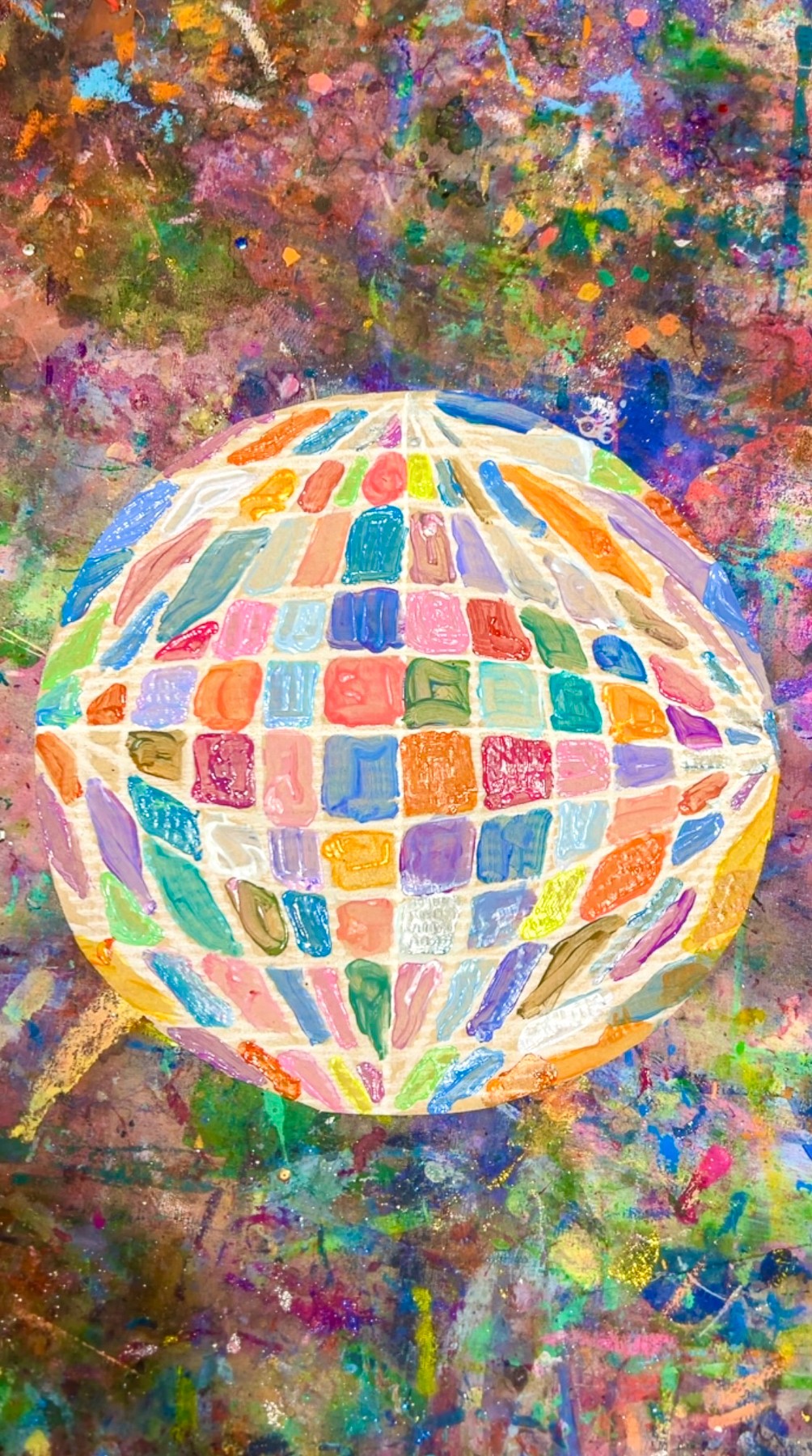
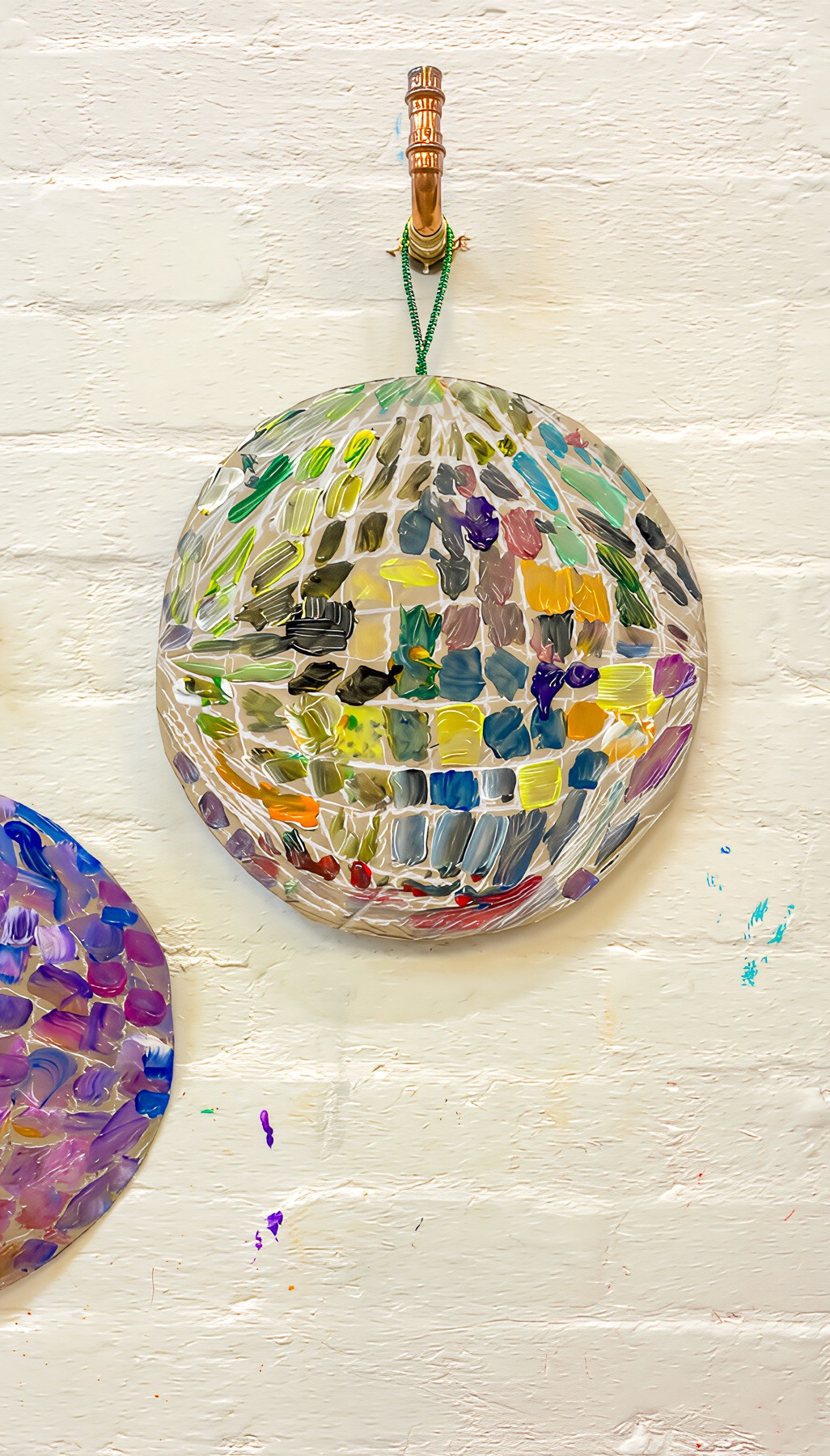
Give each artist a large cardboard circle (around 30 cm wide). Trace a bowl or plate if you need to. Draw faint pencil lines starting with a vertical and horizontal cross, and then add slightly curved lines to mimic the ball’s 3D shape. Depending on the age of the artists, I either draw the pencil lines for them and then they trace over twitch white oil pastel, or they do the whole lot themselves.Now for the colour! Each artist will need their own palette or paper plate for mixing. Ask them to choose three colours they love, plus plenty of white and a small blob of black for exploring tone, hue, and shade. You can guide them toward a single colour family for a softer look, or embrace the wild muddiness that happens when curiosity takes over.
The Making
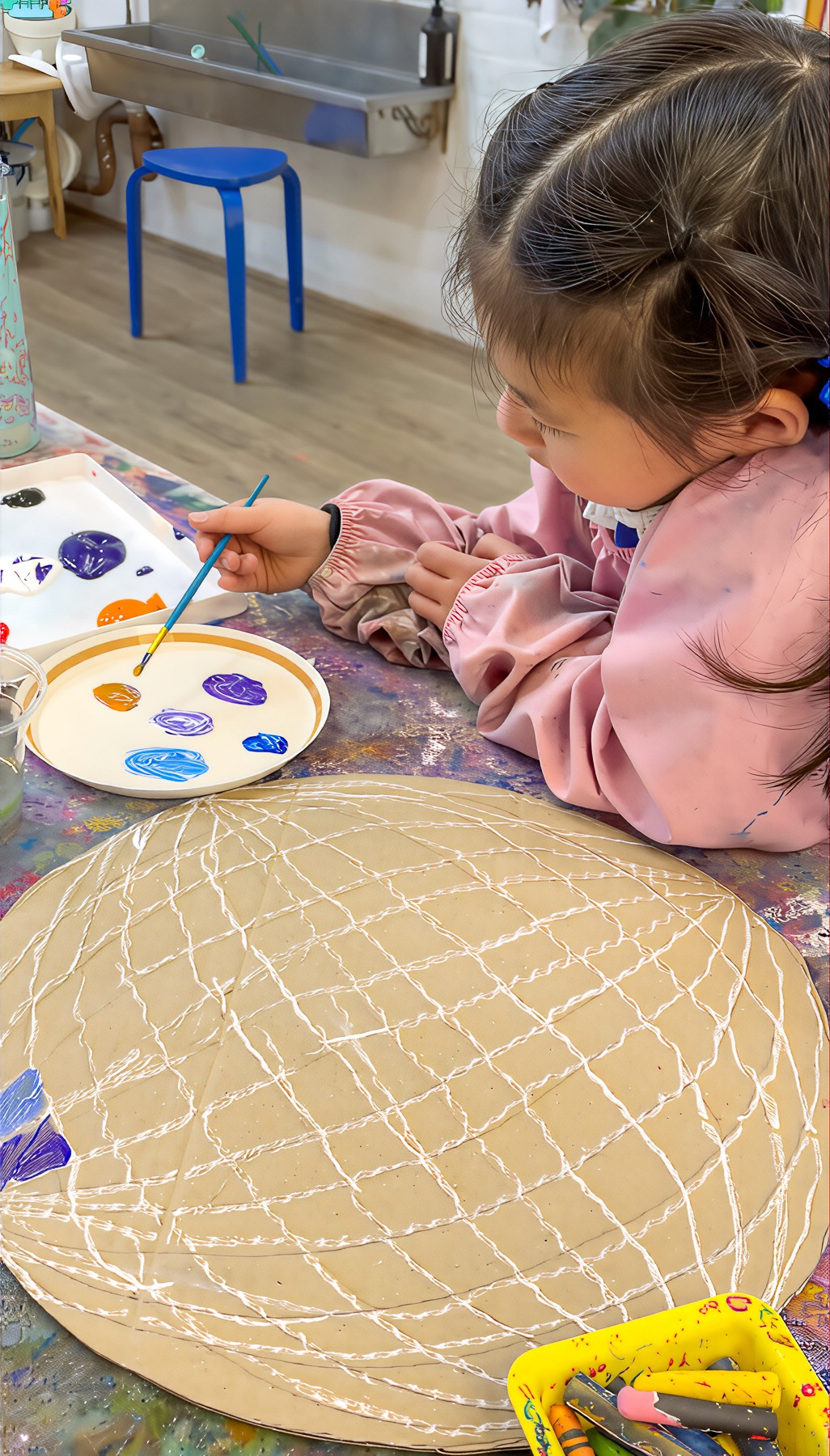
Let the mixing begin! Every time they discover a new shade, they can use it to fill one of the tiny shapes inside their disco ball. Some paint from top to bottom, others side to side, there’s no single “right” direction. Watch how their movements shift with the music or conversation around them.
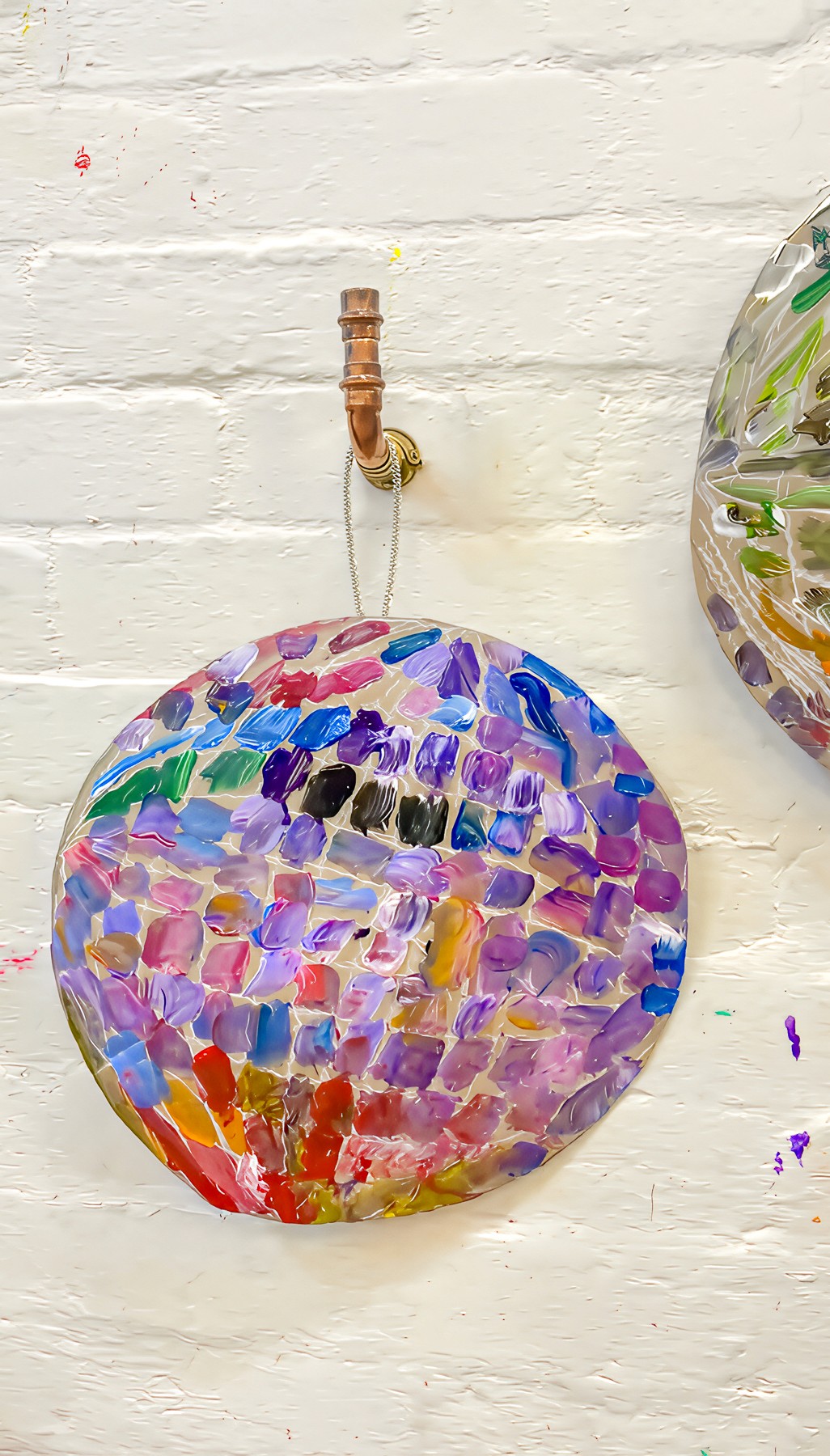
Add silver, gold, or dots of white in a few corners to catch the light. Hang with a sparkly pipe-cleaner or piece of wire if you like.
Smudge Tip: Pause throughout the colour mixing and talk about how colour behaves. Ask open questions, and the artists might come to explain how white can lift and soften, how a touch of black deepens everything around it. The science of colour is just the best.
Variations
Collage foil or mirrored paper over sections for extra sparkle.
Use a metallic Sharpie or sparkly paint for detail lines once the paint dries.
Materials
Cardboard circles or heavy paper
Poster paint (plus black and white for mixing)
Paintbrushes, water jars
Metallic paint or pens (optional)
Music playlist
Back to Top
Shiny Disco Balls
Colour mixing reflections!
Bookmark
Painting & Drawing
The Set Up
Start with the real thing! You can just imagine how engaged the kids will be from the start with a disco ball catching sunlight and scattering hundreds of tiny reflections across the walls. Watch how the light moves and talk about how every tiny mirror reflects something different.
Give each artist a large cardboard circle (around 30 cm wide). Trace a bowl or plate if you need to. Draw faint pencil lines starting with a vertical and horizontal cross, and then add slightly curved lines to mimic the ball’s 3D shape. Depending on the age of the artists, I either draw the pencil lines for them and then they trace over twitch white oil pastel, or they do the whole lot themselves.Now for the colour! Each artist will need their own palette or paper plate for mixing. Ask them to choose three colours they love, plus plenty of white and a small blob of black for exploring tone, hue, and shade. You can guide them toward a single colour family for a softer look, or embrace the wild muddiness that happens when curiosity takes over.
The Making
Let the mixing begin! Every time they discover a new shade, they can use it to fill one of the tiny shapes inside their disco ball. Some paint from top to bottom, others side to side, there’s no single “right” direction. Watch how their movements shift with the music or conversation around them.
Add silver, gold, or dots of white in a few corners to catch the light. Hang with a sparkly pipe-cleaner or piece of wire if you like.
Smudge Tip: Pause throughout the colour mixing and talk about how colour behaves. Ask open questions, and the artists might come to explain how white can lift and soften, how a touch of black deepens everything around it. The science of colour is just the best.
Variations
Collage foil or mirrored paper over sections for extra sparkle.
Use a metallic Sharpie or sparkly paint for detail lines once the paint dries.
Materials
Cardboard circles or heavy paper
Poster paint (plus black and white for mixing)
Paintbrushes, water jars
Metallic paint or pens (optional)
Music playlist
Back to Top
Add this to your favourites
Add this to your favourites
Thoughts?
Would love to hear if youv'e tried this or have any ideas on how to make it even better!