Spooky Bugs
A simple process that turns paint into pattern and whole new species.
The Set Up
Fold a stack of A3 paper in half before you start. Choose something sturdy, around 180 gsm or heavier, so it can hold wet paint.
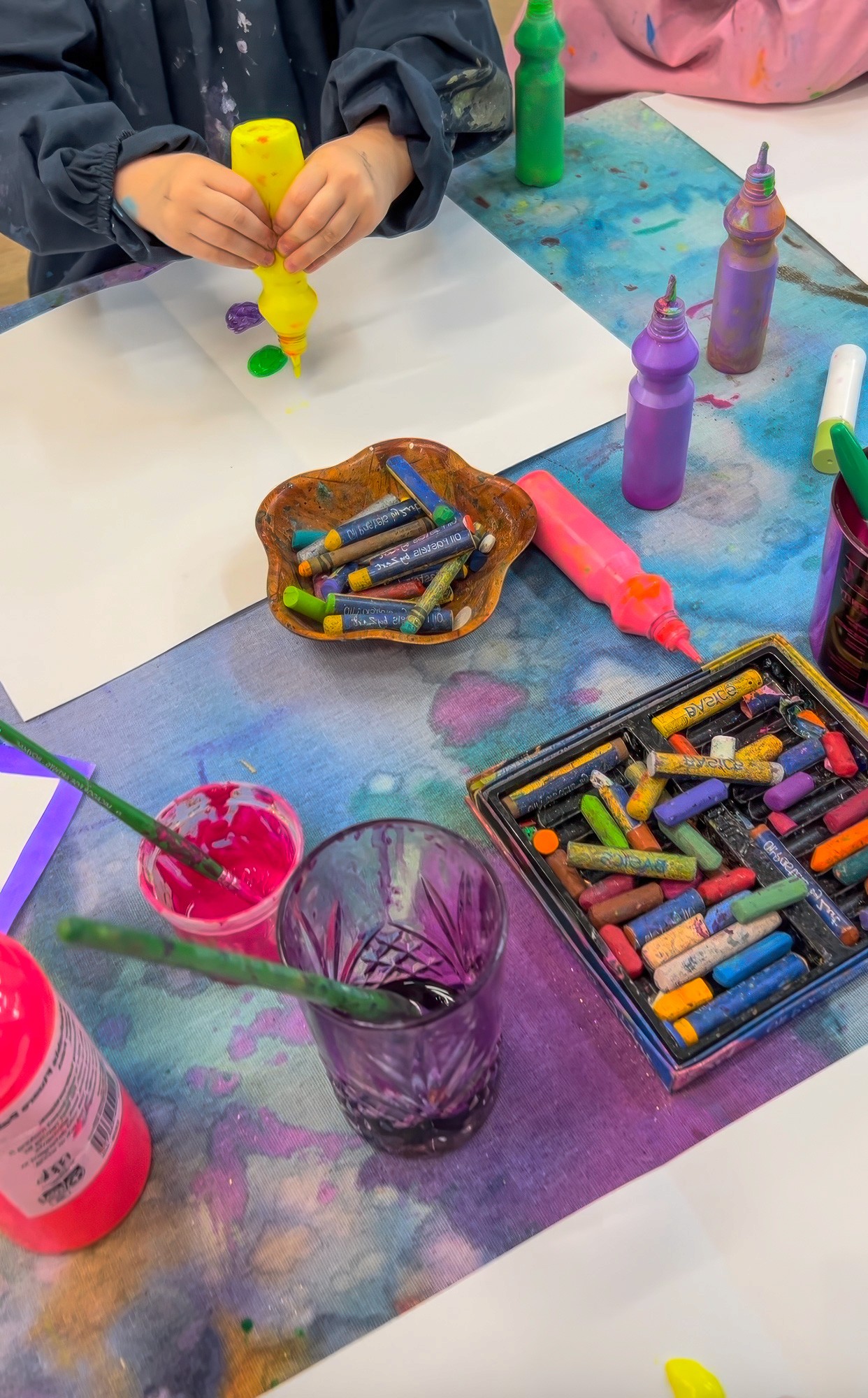
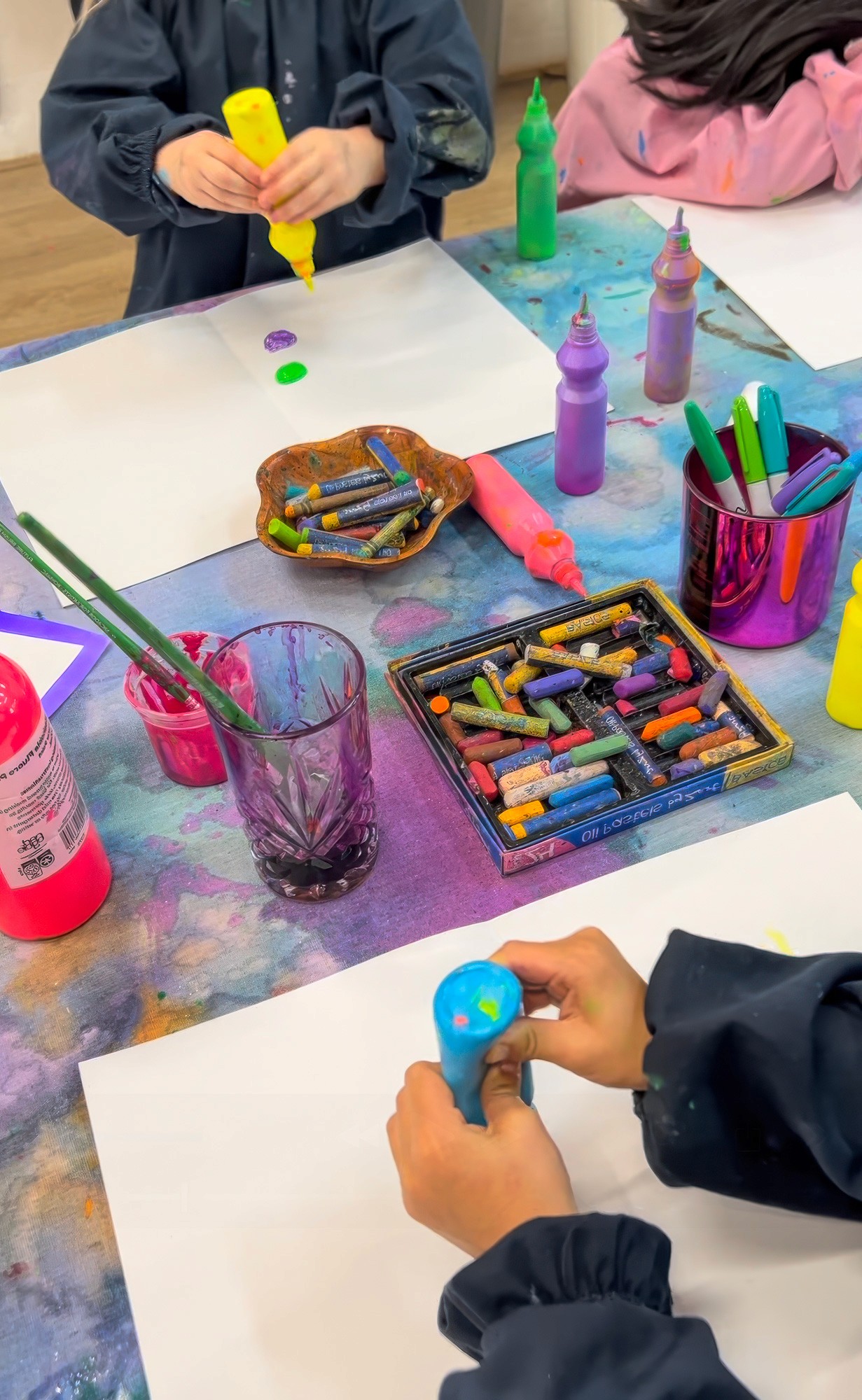
Set out squeezy bottles of poster or tempera paint in Halloween colours such as orange, magenta, lime, and violet, and always add a pot of white to brighten and mix. The IKEA MÅLA bottles work beautifully because the paint moves slowly and gives kids control.
It helps to have a few close-up photos of beetles, butterflies, or moths nearby. Pattern and structure are clearer when you look at the real thing. You could also show a few images by Christopher Marley, who arranges real insects into bold symmetrical mosaics. His work celebrates colour, balance, and repetition, the same qualities that make this activity so satisfying.
The Making
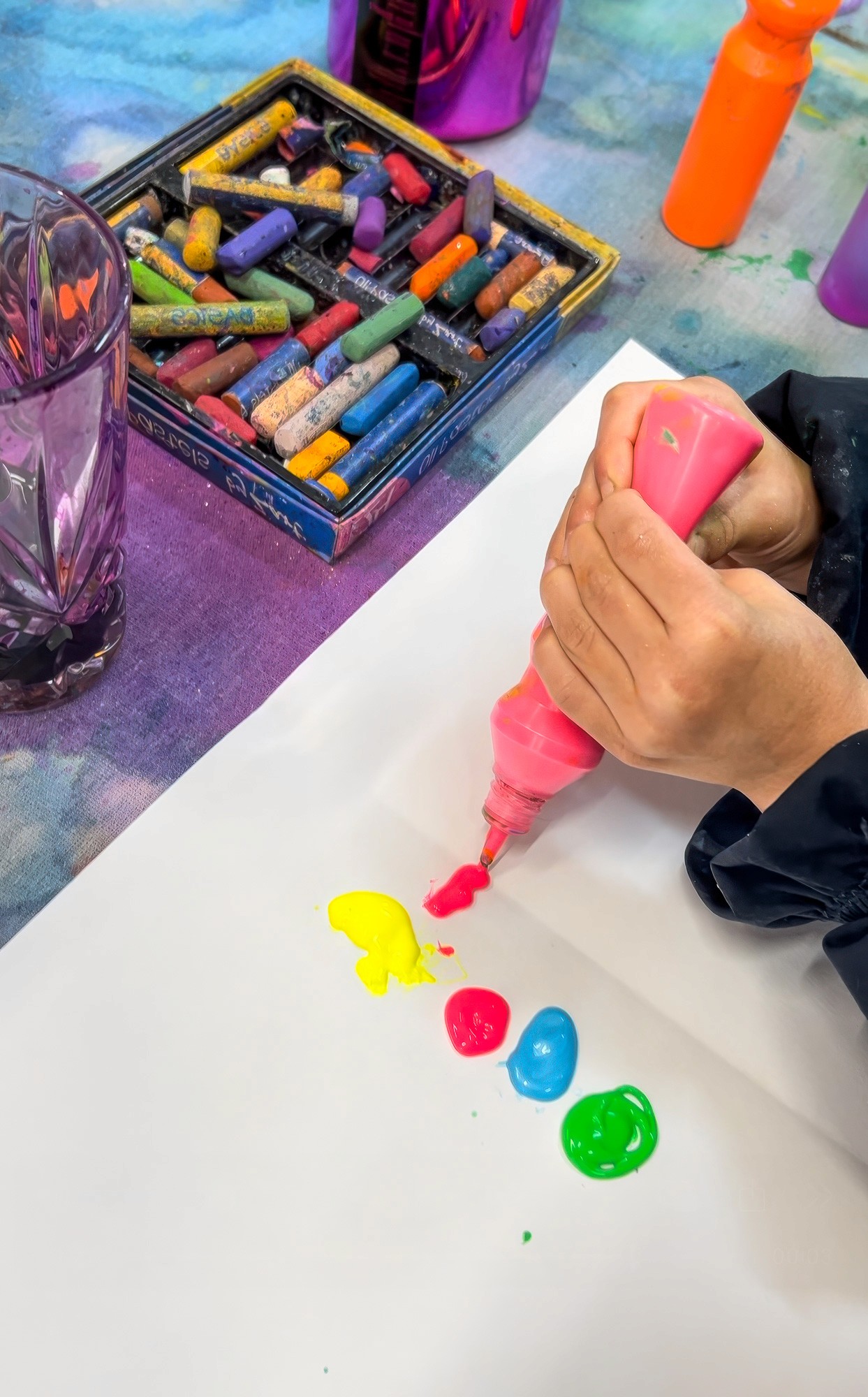
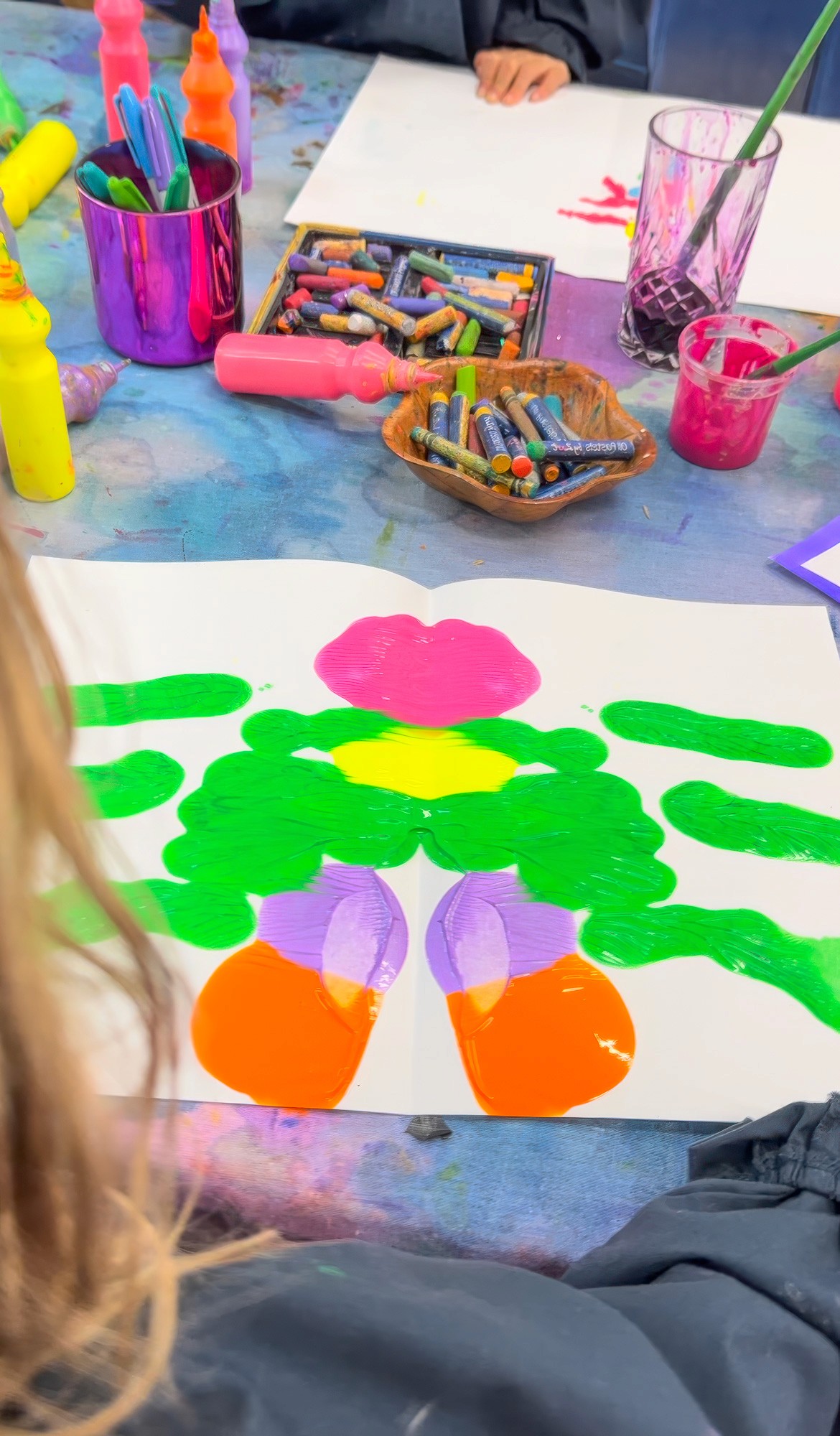
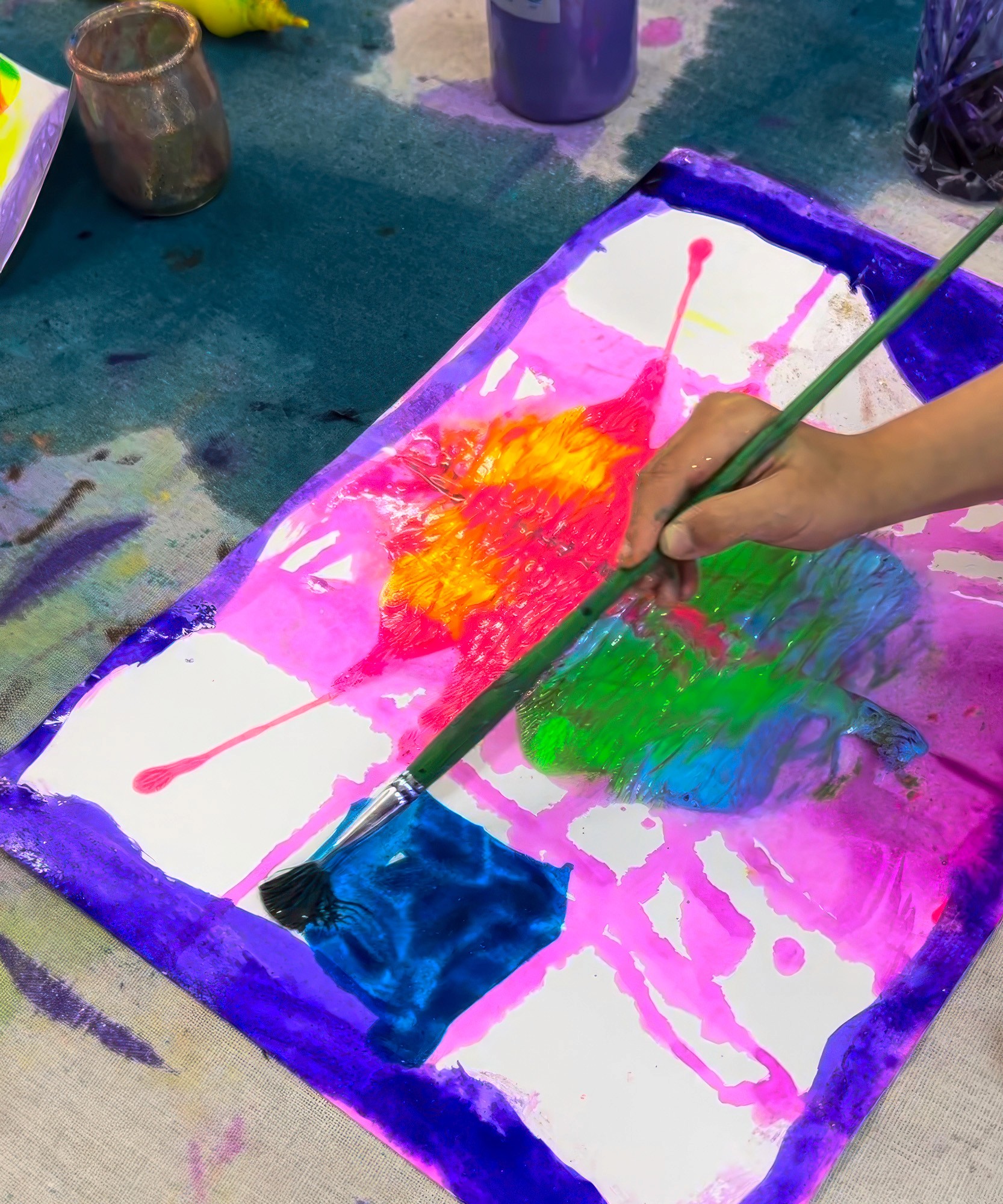
Invite kids to squeeze small blobs of paint on one side of the folded paper. A few drops are plenty. The fold line becomes the body, so they can think about wings, shells, or new imagined species.
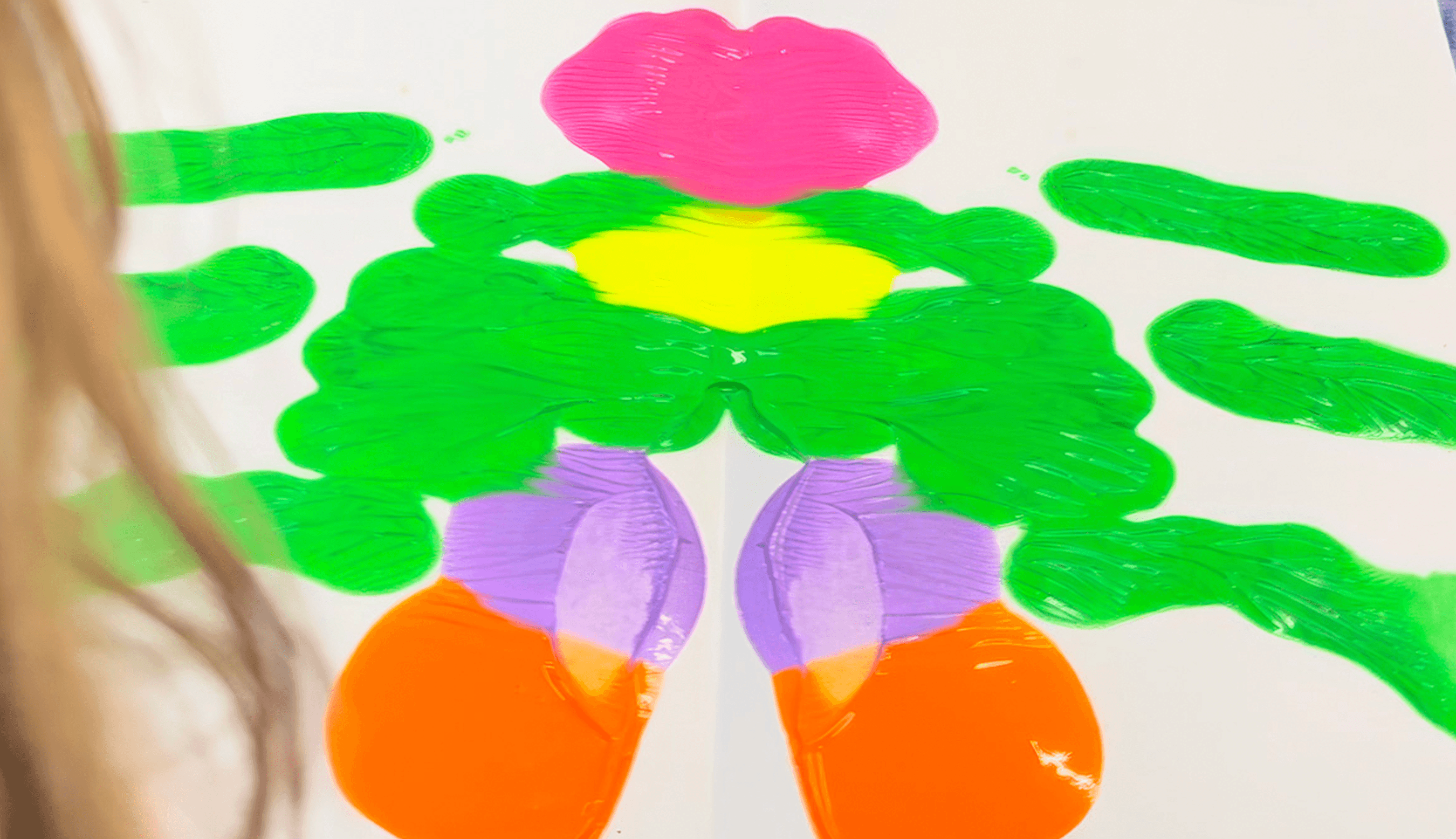
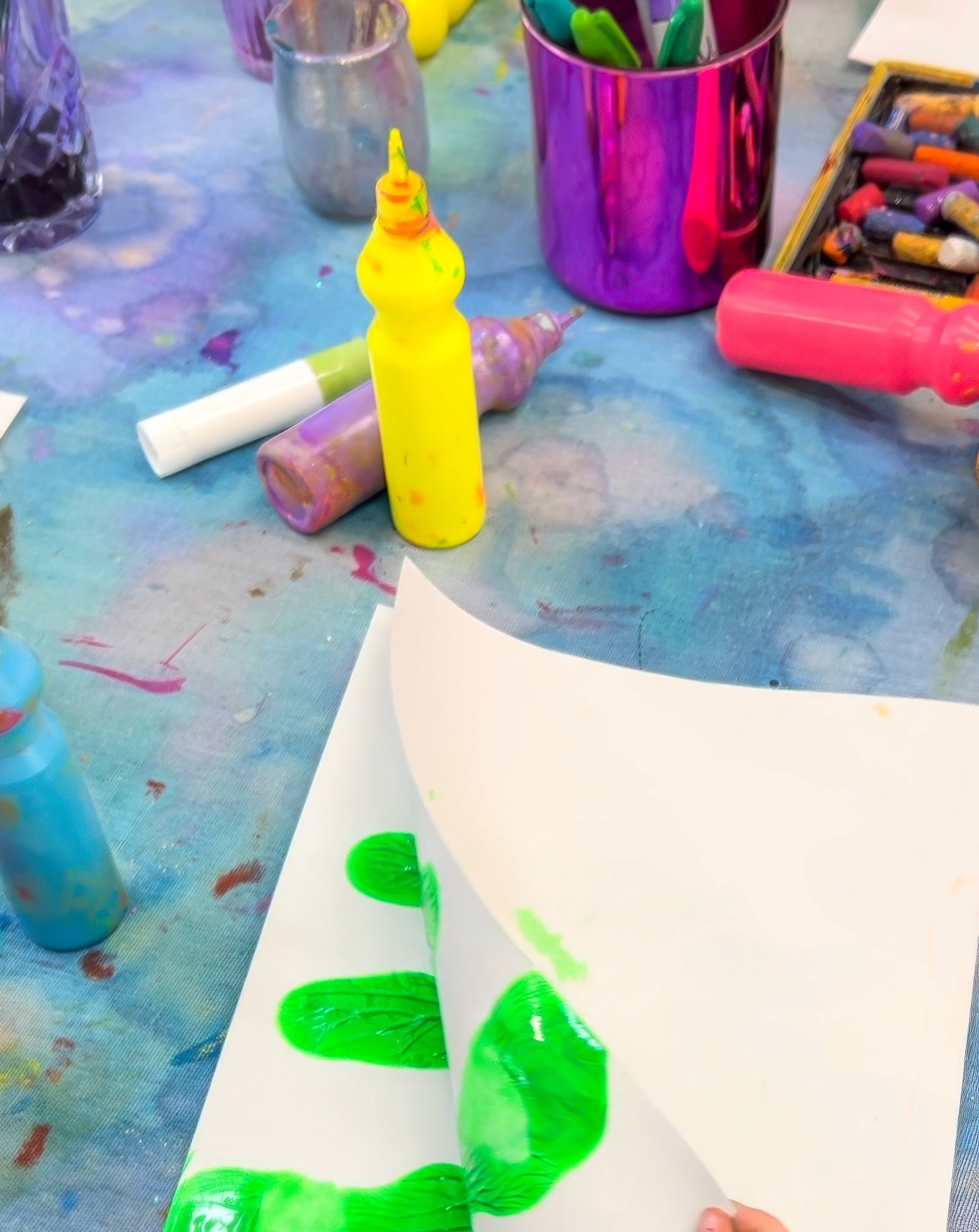
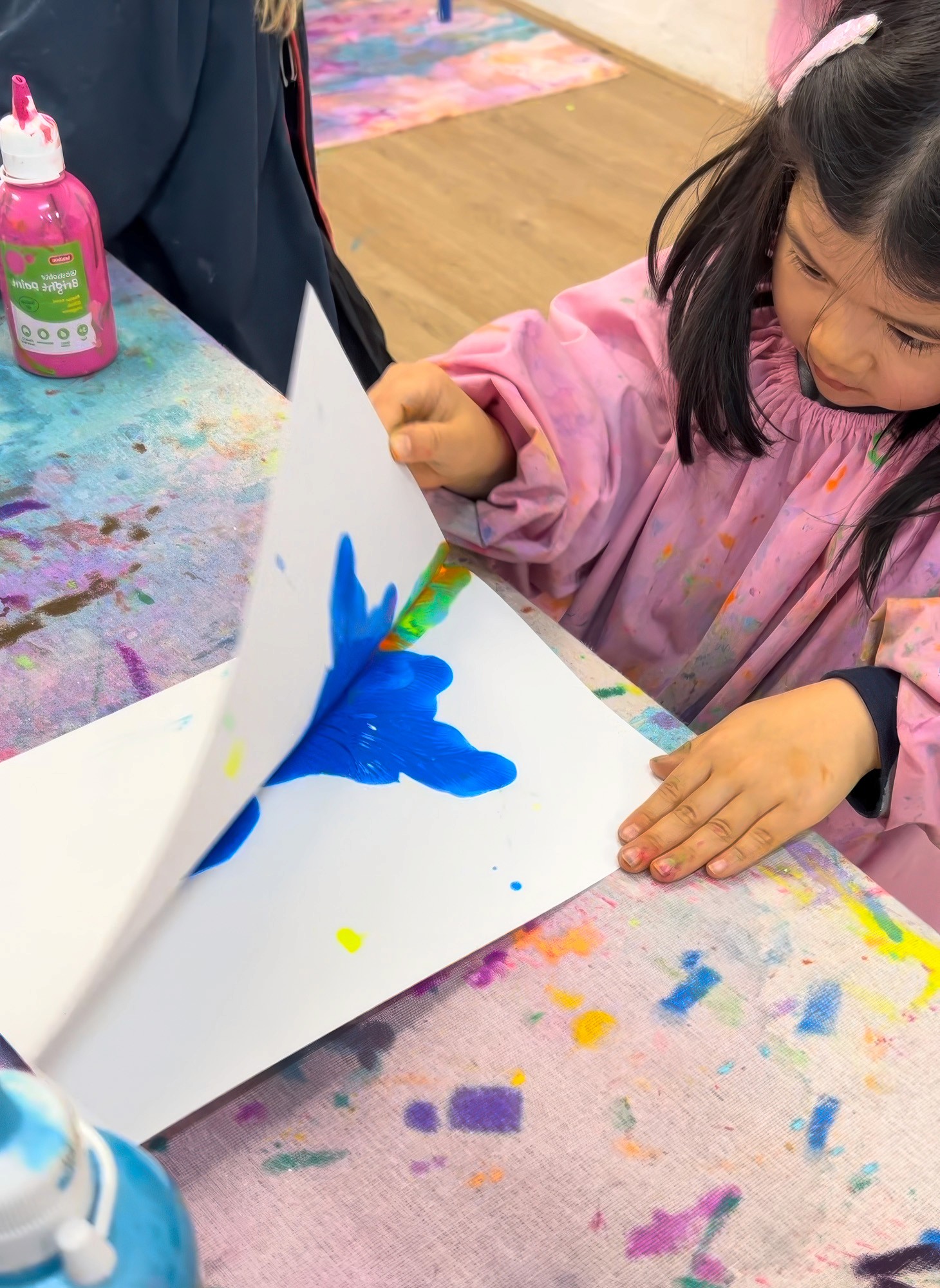
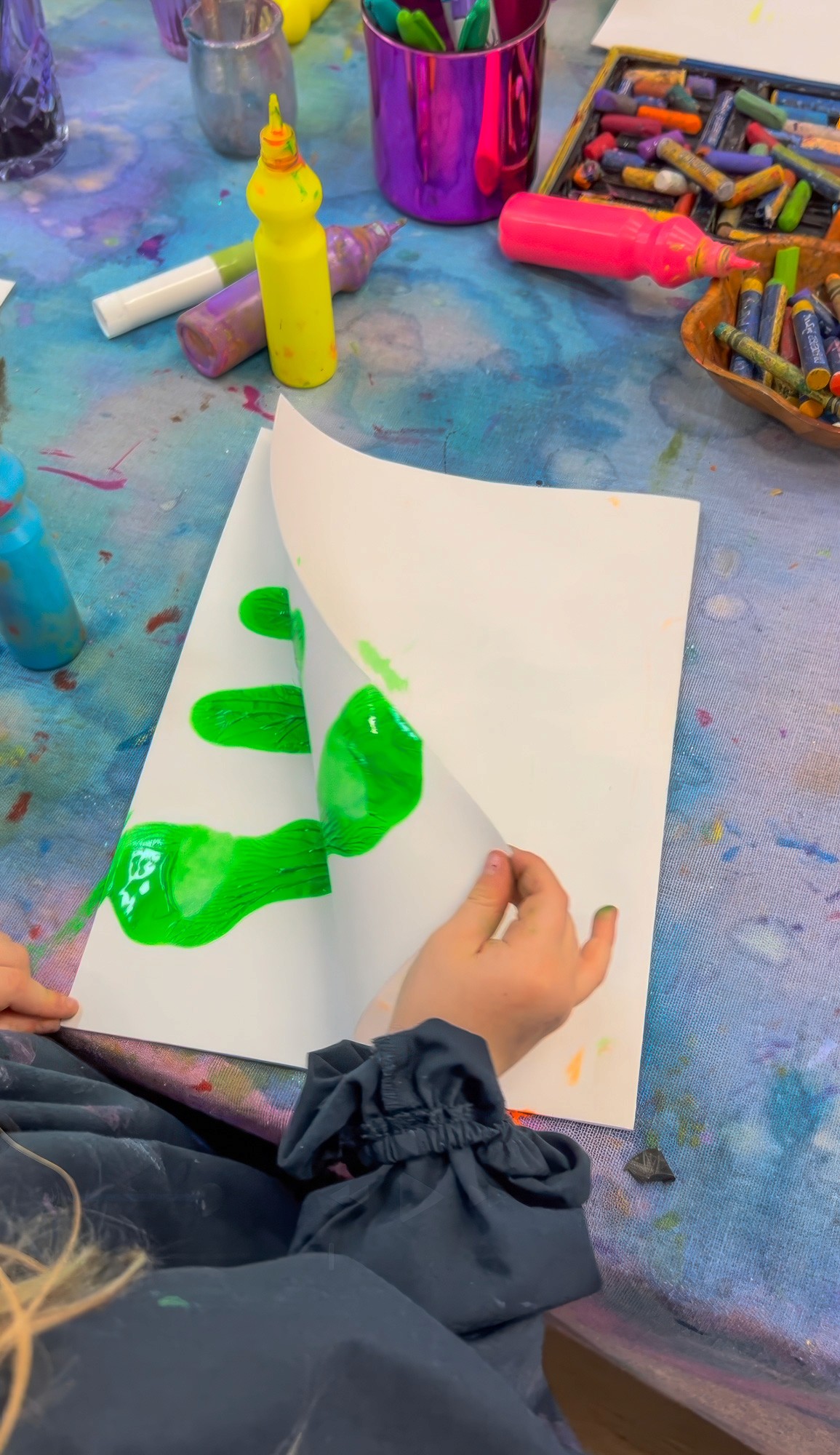
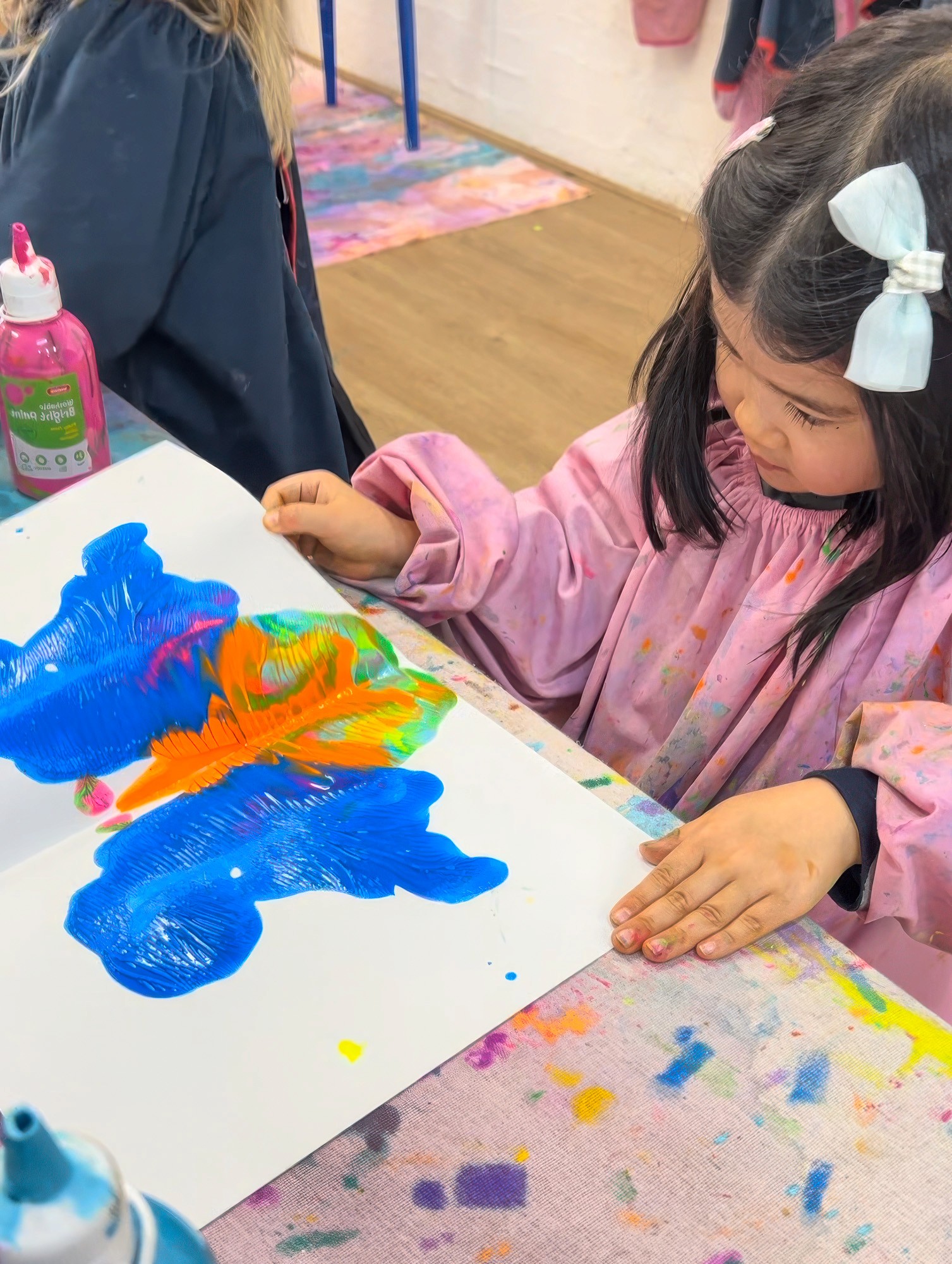
Fold the page closed and press gently with flat hands. Feel the paint move under the surface, then open it up to reveal the mirrored print. The reveal moment always lands with a quiet gasp.
Once dry, add legs, eyes, and patterns with oil pastels or markers. Encourage confidence in mark-making rather than accuracy. The aim is not a perfect bug but to notice rhythm, pattern, and symmetry.
Artist Study: Christopher Marley
Christopher Marley collects and arranges insects, shells, and minerals into dazzling geometric patterns. He focuses on balance, repetition, and colour harmony rather than the individual bug itself. His work helps us see that symmetry and pattern are everywhere in nature, even in things we might normally overlook.
When kids fold and print their bugs, they are exploring the same ideas as Marley, turning small details into big design, chaos into order, and colour into pattern.
Variations
Use fluorescent or metallic paint for glow.
Add collage elements like foil, sequins, or gelli print scraps once dry.
Try the same process on fabric for texture.
Label each species with a made-up name and create a classroom Bug Museum.
Materials
• A3 paper, 180 gsm or heavier
• Poster or tempera paint in bright and Halloween colours
• White paint for mixing
• Brushes, palettes, or trays
• Oil pastels or markers
• Optional: collage extras, fabric and images of Christopher Marley's work
Back to Top
Spooky Bugs
A simple process that turns paint into pattern and whole new species.
Bookmark
Painting & Drawing
The Set Up
Fold a stack of A3 paper in half before you start. Choose something sturdy, around 180 gsm or heavier, so it can hold wet paint.
Set out squeezy bottles of poster or tempera paint in Halloween colours such as orange, magenta, lime, and violet, and always add a pot of white to brighten and mix. The IKEA MÅLA bottles work beautifully because the paint moves slowly and gives kids control.
It helps to have a few close-up photos of beetles, butterflies, or moths nearby. Pattern and structure are clearer when you look at the real thing. You could also show a few images by Christopher Marley, who arranges real insects into bold symmetrical mosaics. His work celebrates colour, balance, and repetition, the same qualities that make this activity so satisfying.
The Making
Invite kids to squeeze small blobs of paint on one side of the folded paper. A few drops are plenty. The fold line becomes the body, so they can think about wings, shells, or new imagined species.
Fold the page closed and press gently with flat hands. Feel the paint move under the surface, then open it up to reveal the mirrored print. The reveal moment always lands with a quiet gasp.
Once dry, add legs, eyes, and patterns with oil pastels or markers. Encourage confidence in mark-making rather than accuracy. The aim is not a perfect bug but to notice rhythm, pattern, and symmetry.
Artist Study: Christopher Marley
Christopher Marley collects and arranges insects, shells, and minerals into dazzling geometric patterns. He focuses on balance, repetition, and colour harmony rather than the individual bug itself. His work helps us see that symmetry and pattern are everywhere in nature, even in things we might normally overlook.
When kids fold and print their bugs, they are exploring the same ideas as Marley, turning small details into big design, chaos into order, and colour into pattern.
Variations
Use fluorescent or metallic paint for glow.
Add collage elements like foil, sequins, or gelli print scraps once dry.
Try the same process on fabric for texture.
Label each species with a made-up name and create a classroom Bug Museum.
Materials
• A3 paper, 180 gsm or heavier
• Poster or tempera paint in bright and Halloween colours
• White paint for mixing
• Brushes, palettes, or trays
• Oil pastels or markers
• Optional: collage extras, fabric and images of Christopher Marley's work
Back to Top
Add this to your favourites
Add this to your favourites
Thoughts?
Would love to hear if youv'e tried this or have any ideas on how to make it even better!