String Stamps
Lines that print and repeat
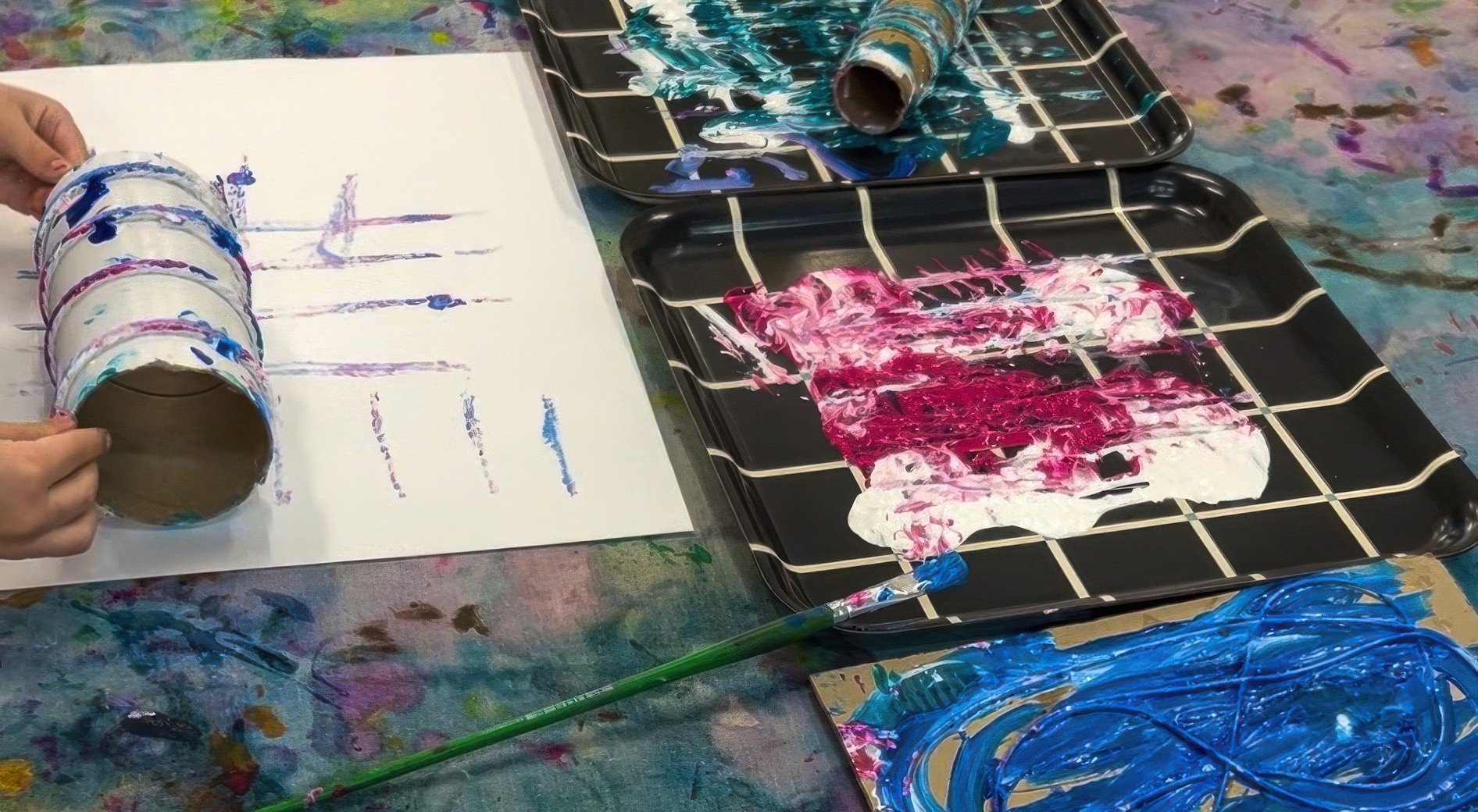
The Set Up
Make the stamps first so the energy can go into printing.
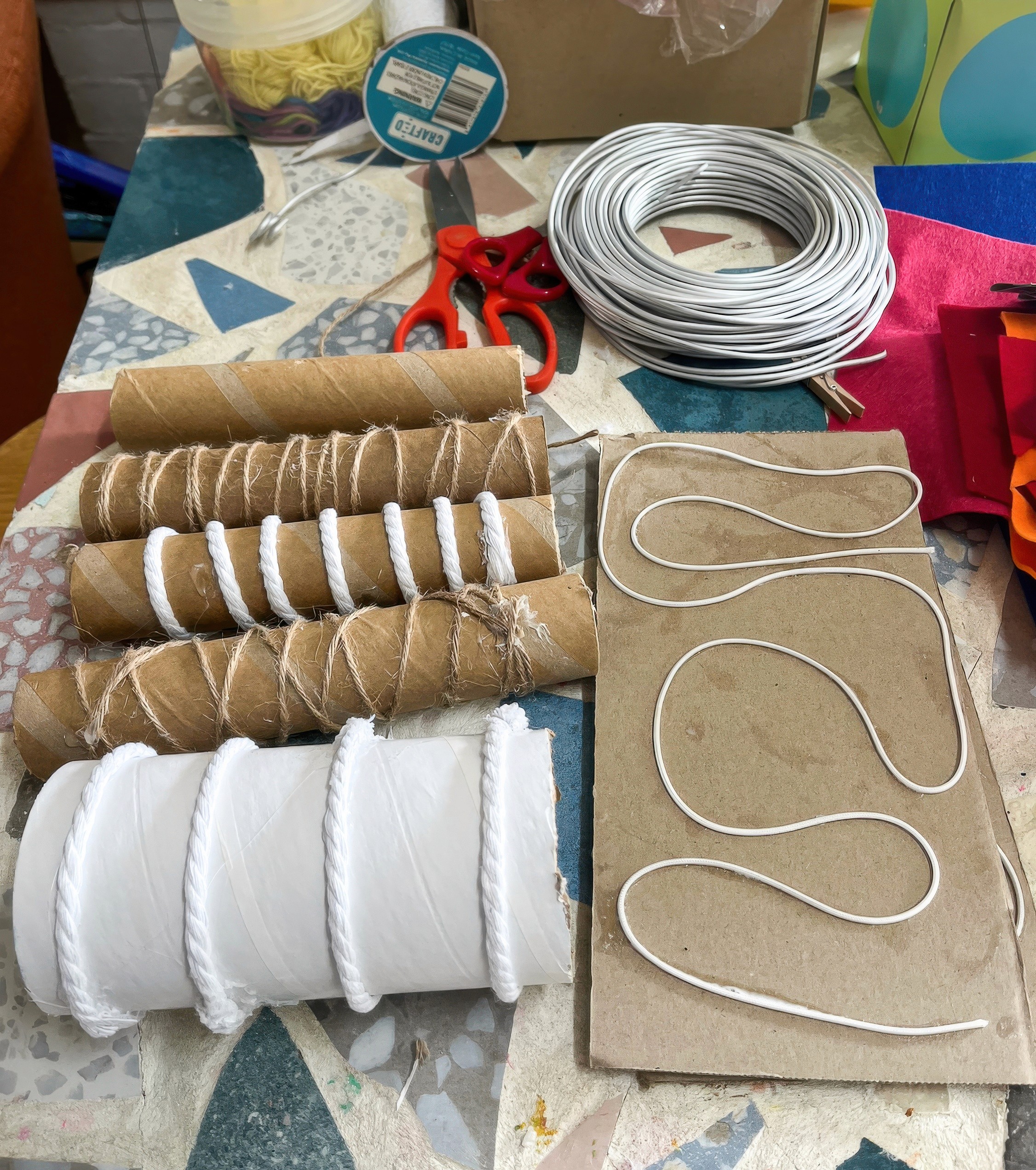
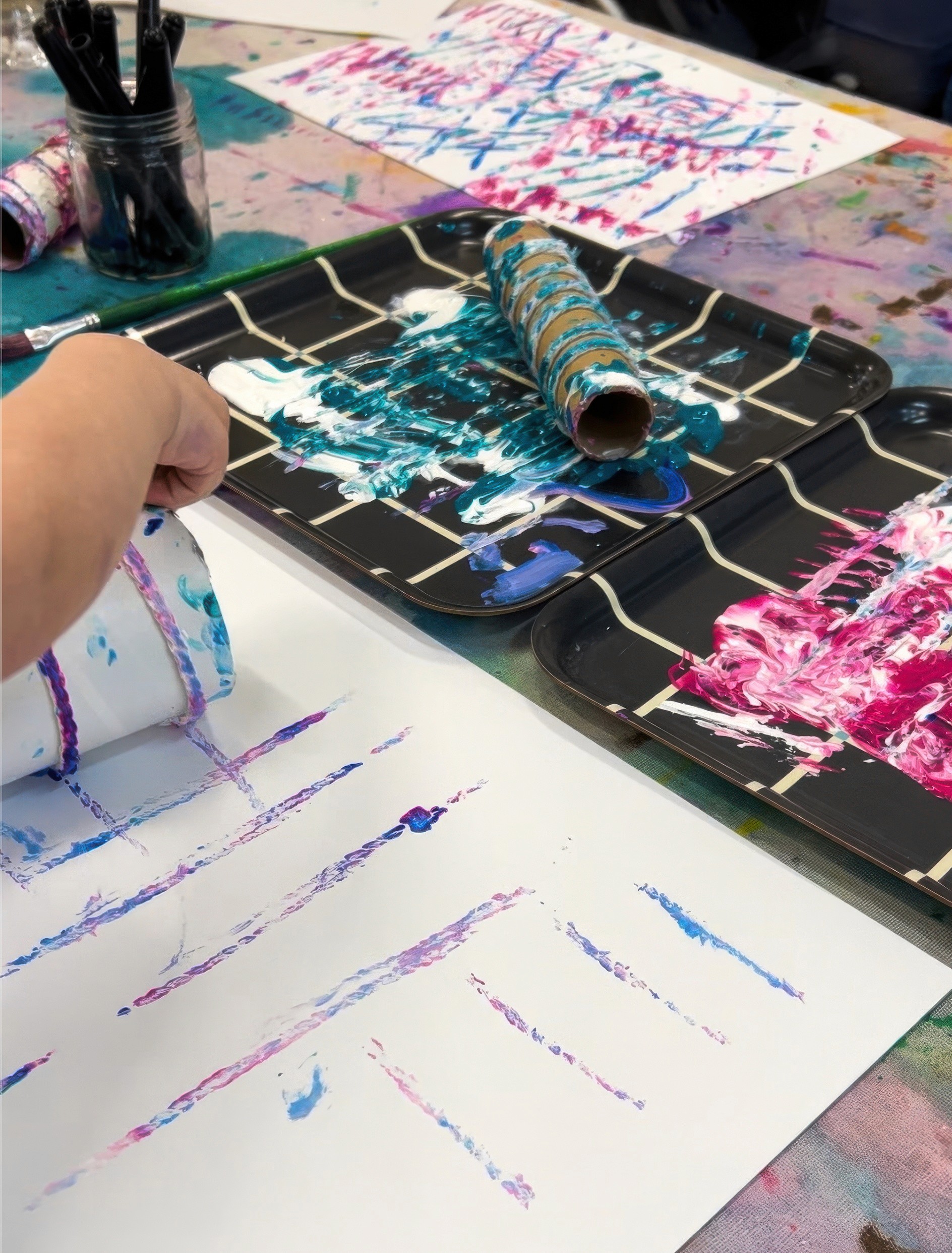
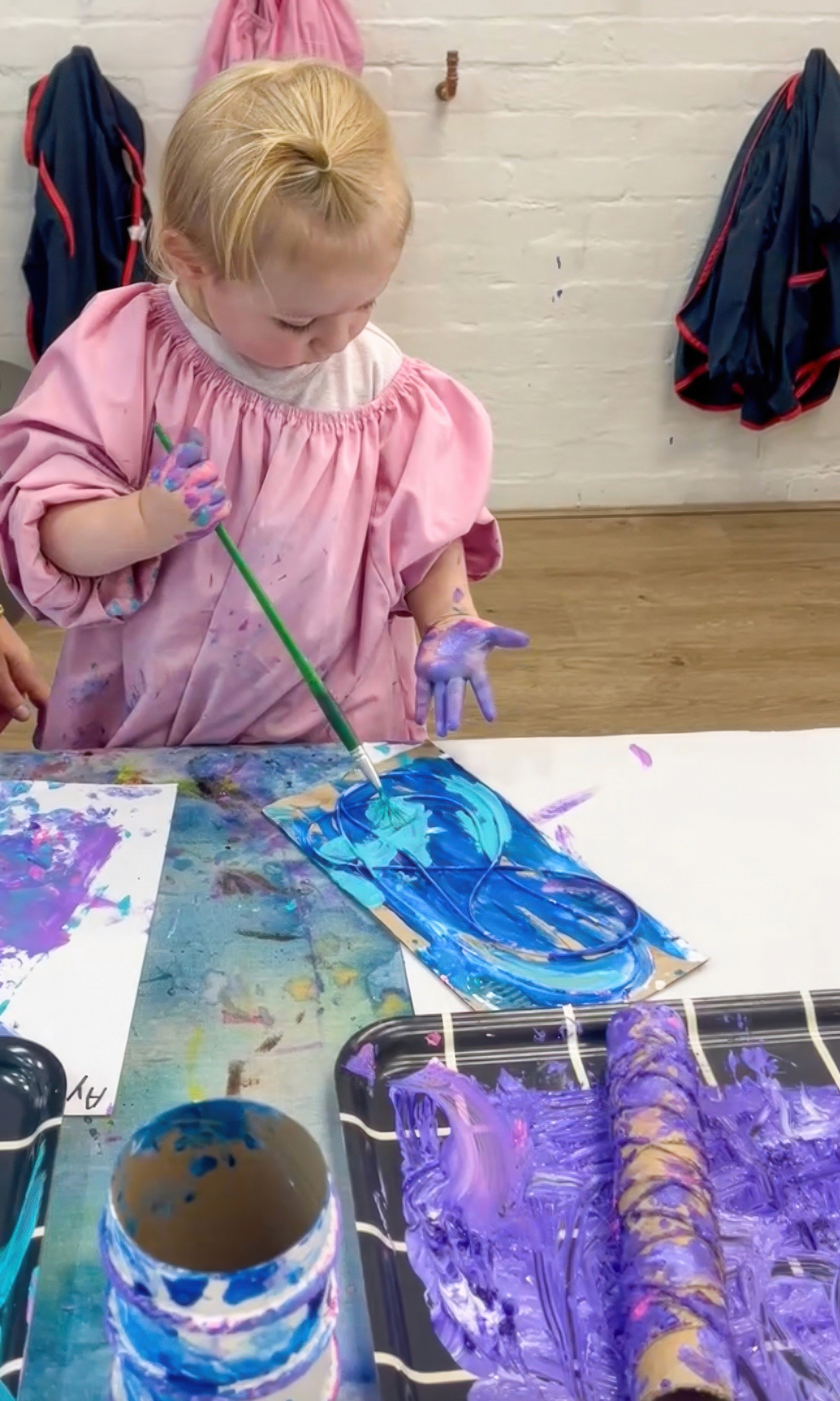
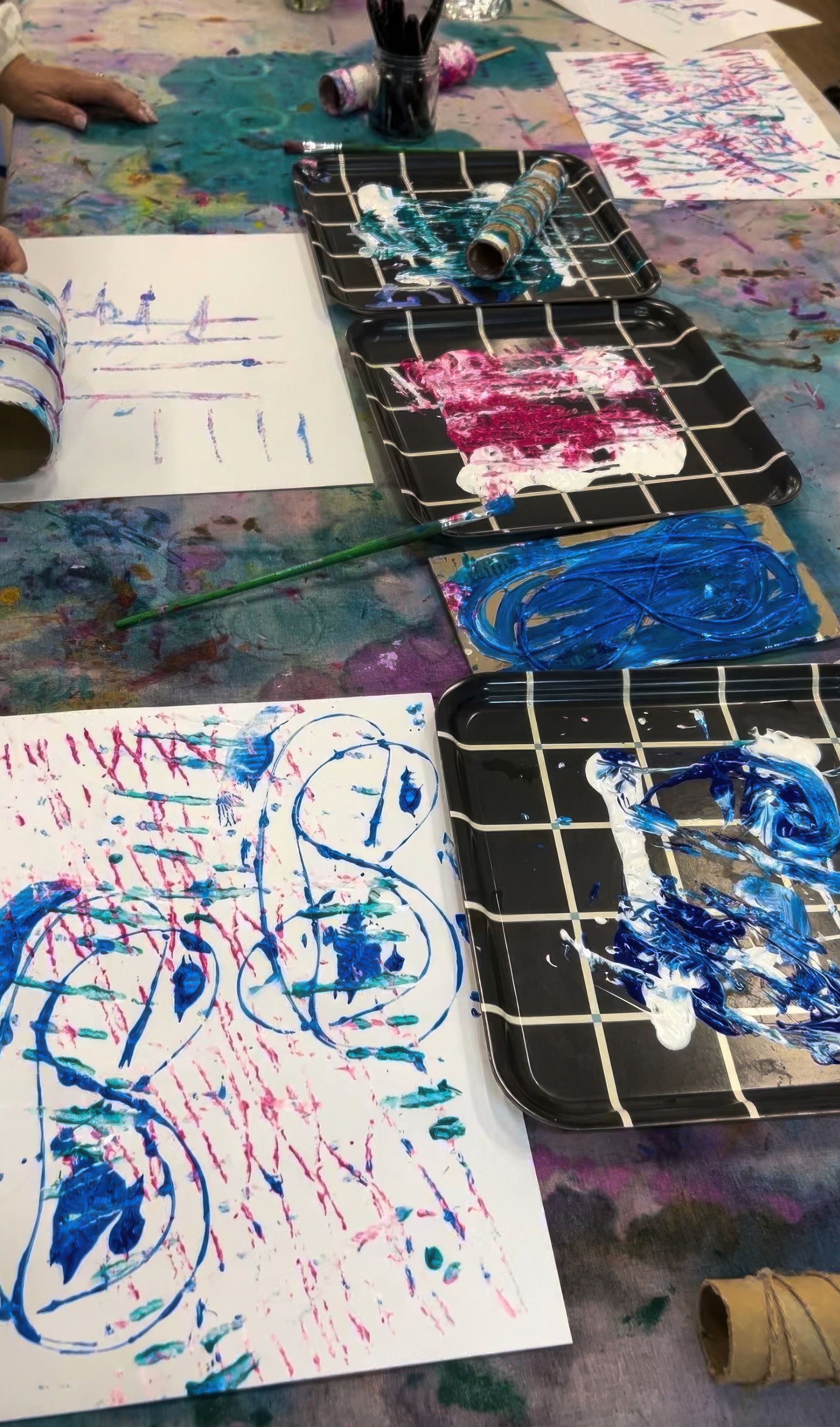
Wind string or wool around cardboard tubes and small wooden blocks, set it with hot glue, then leave them a minute to cool. At Smudge we pour poster paint into shallow trays (big enough to fit the whole cardboard tube stamp!), and stack heavy paper within reach. It's a good idea to have foam rollers or paintbrushes sitting close by, so kids can do touch ups to the paint coverage so it's smooth.
Artist Study: Anni Albers
Anni Albers treated line like a proper building block, not decoration. She helped shift textiles from “useful” to fine art and later carried those woven rhythms into printmaking.
Quick story to bring to the table. Anni studied and taught at the Bauhaus, landed in the weaving studio when women were nudged there, then made it her own. When the school closed, she and Josef Albers moved to Black Mountain College in the US, where she asked students to let materials lead and to learn by doing first (couldn't love this more!).
In 1949 Anni became the first textile artist with a solo show at MoMA, which tells you how boldly she worked.
She kept experimenting for decades, shifting into printmaking and designing smart patterns like Éclat that look random at first and then reveal an order when you stay with them.
The Making
As always, let the materials lead first and begin with play!
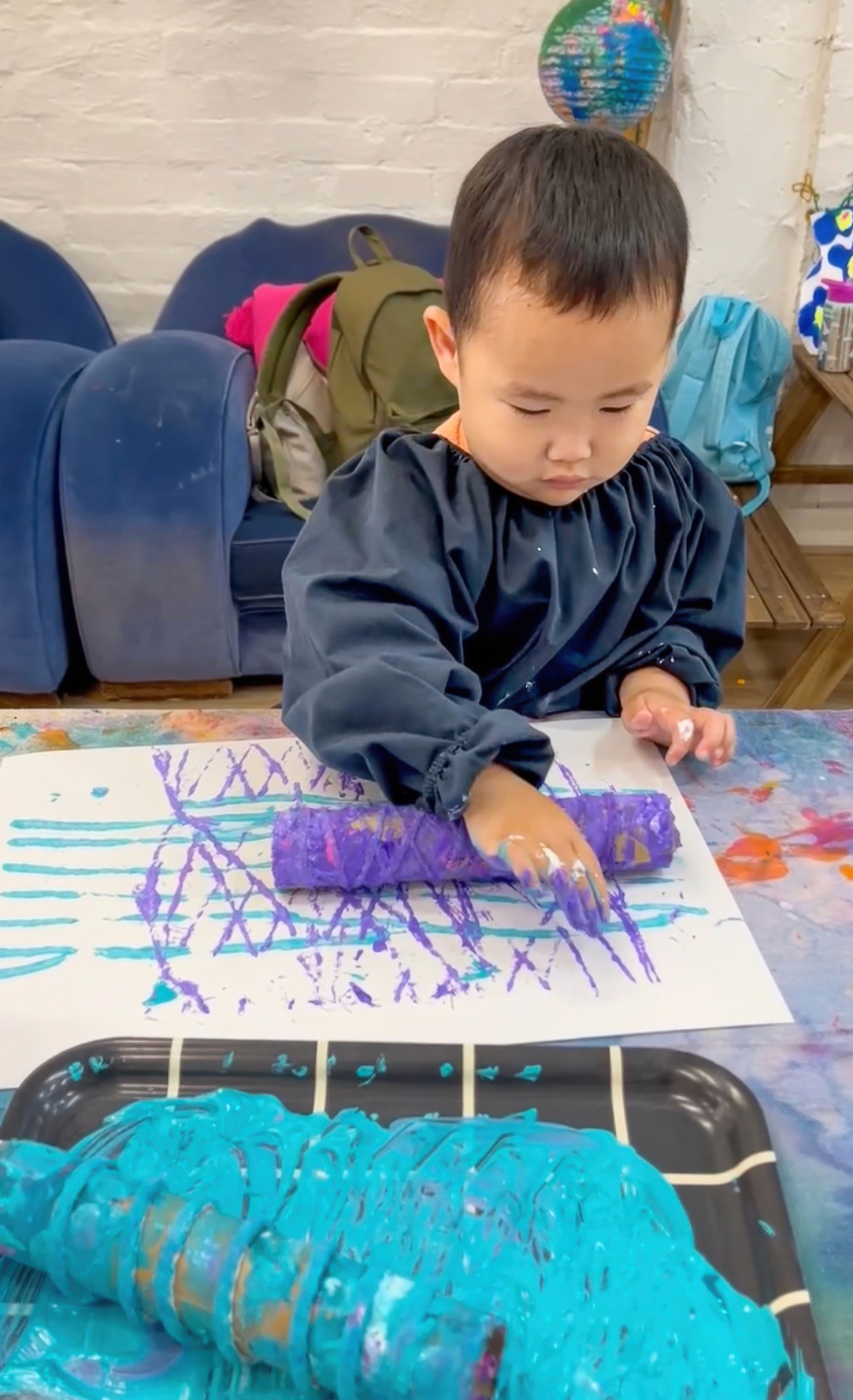
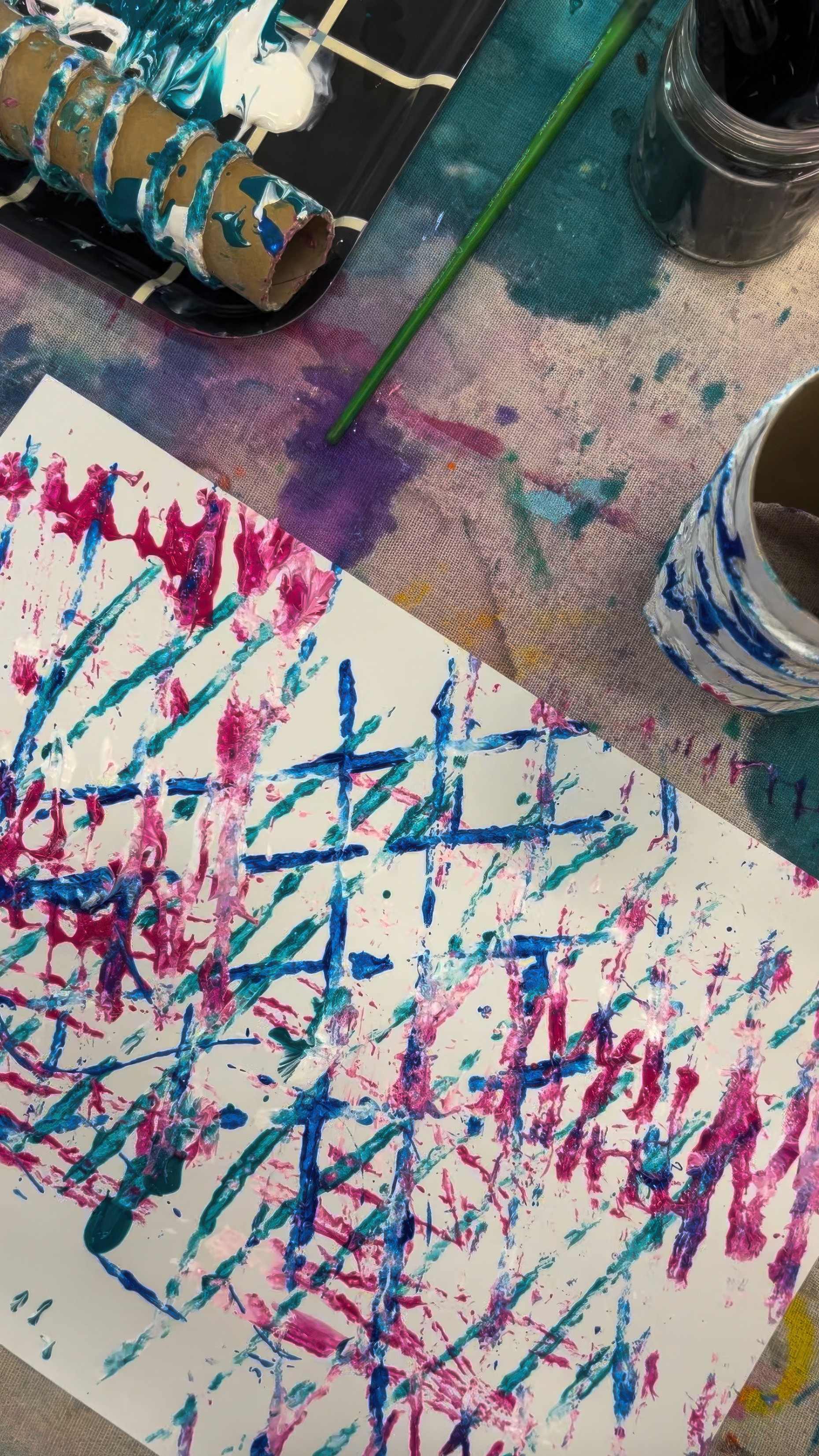
Press and roll the stamp into the paint and then experiment with the marks on the page. Lift and rotate and press again. You can try one stamp with many repeats or use two (or more!) stamps across the page. It's a good idea to clean the stamp face every now and then so detail stays sharp.
Variations
Work on one giant collaborative sheet, then cut it into tiles and build a new grid together.
Print onto a calico bag with fabric paint, then heat set when dry.
Materials
String or wool for wrapping
Cardboard tubes and small wooden blocks
Hot glue gun and glue sticks
Poster paint in shallow trays
Heavy paper
Rollers, painter’s tape, scrap paper for offloading
Damp cloths for quick wipe downs
Back to Top
String Stamps
Lines that print and repeat
Bookmark
Print Making
The Set Up
Make the stamps first so the energy can go into printing.
Wind string or wool around cardboard tubes and small wooden blocks, set it with hot glue, then leave them a minute to cool. At Smudge we pour poster paint into shallow trays (big enough to fit the whole cardboard tube stamp!), and stack heavy paper within reach. It's a good idea to have foam rollers or paintbrushes sitting close by, so kids can do touch ups to the paint coverage so it's smooth.
Artist Study: Anni Albers
Anni Albers treated line like a proper building block, not decoration. She helped shift textiles from “useful” to fine art and later carried those woven rhythms into printmaking.
Quick story to bring to the table. Anni studied and taught at the Bauhaus, landed in the weaving studio when women were nudged there, then made it her own. When the school closed, she and Josef Albers moved to Black Mountain College in the US, where she asked students to let materials lead and to learn by doing first (couldn't love this more!).
In 1949 Anni became the first textile artist with a solo show at MoMA, which tells you how boldly she worked.
She kept experimenting for decades, shifting into printmaking and designing smart patterns like Éclat that look random at first and then reveal an order when you stay with them.
The Making
As always, let the materials lead first and begin with play!
Press and roll the stamp into the paint and then experiment with the marks on the page. Lift and rotate and press again. You can try one stamp with many repeats or use two (or more!) stamps across the page. It's a good idea to clean the stamp face every now and then so detail stays sharp.
Variations
Work on one giant collaborative sheet, then cut it into tiles and build a new grid together.
Print onto a calico bag with fabric paint, then heat set when dry.
Materials
String or wool for wrapping
Cardboard tubes and small wooden blocks
Hot glue gun and glue sticks
Poster paint in shallow trays
Heavy paper
Rollers, painter’s tape, scrap paper for offloading
Damp cloths for quick wipe downs
Back to Top
Add this to your favourites
Add this to your favourites
Thoughts?
Would love to hear if youv'e tried this or have any ideas on how to make it even better!