Sunflower Still Life
Looking closely and letting yellow take the lead!
The Set Up
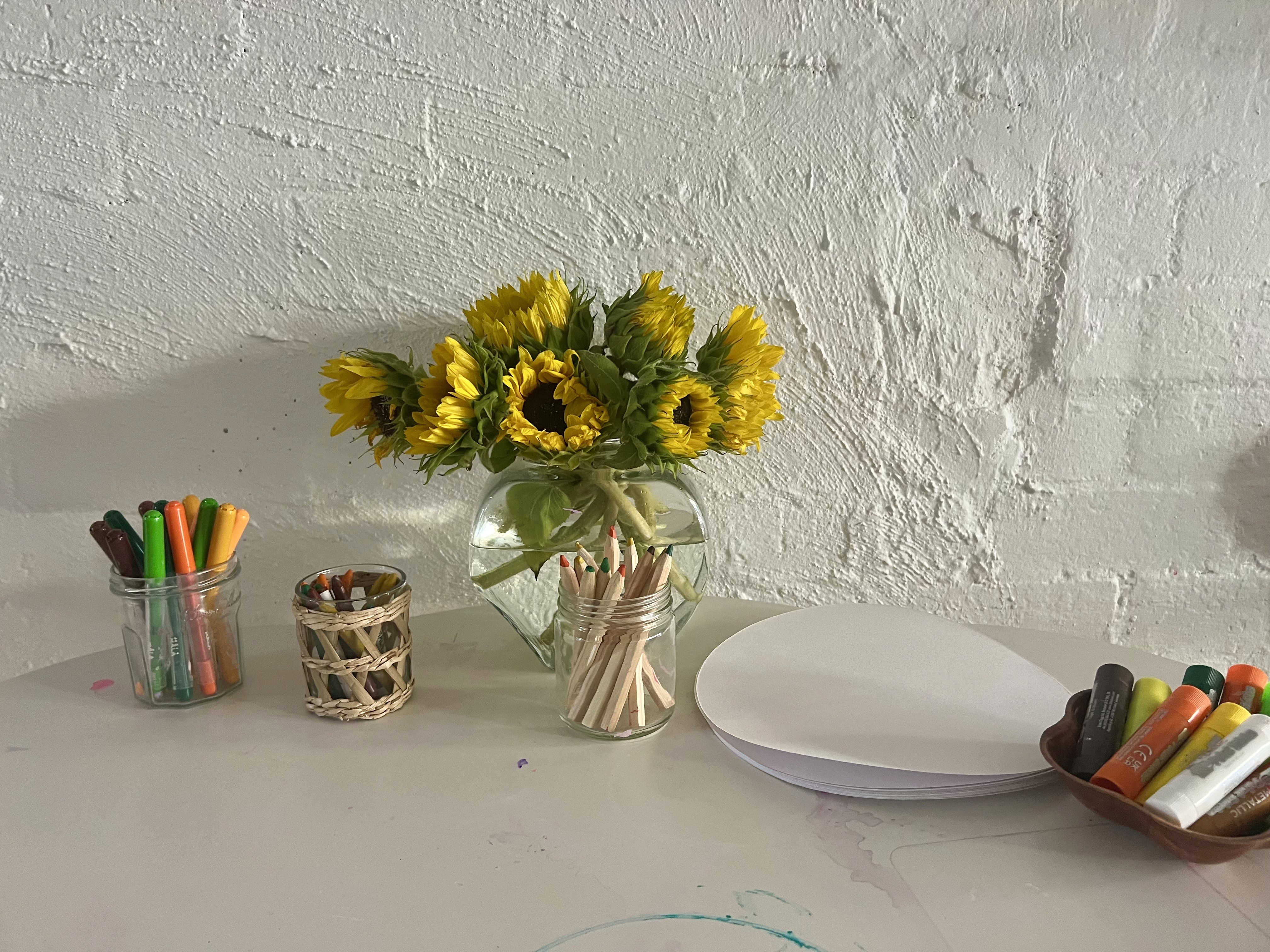
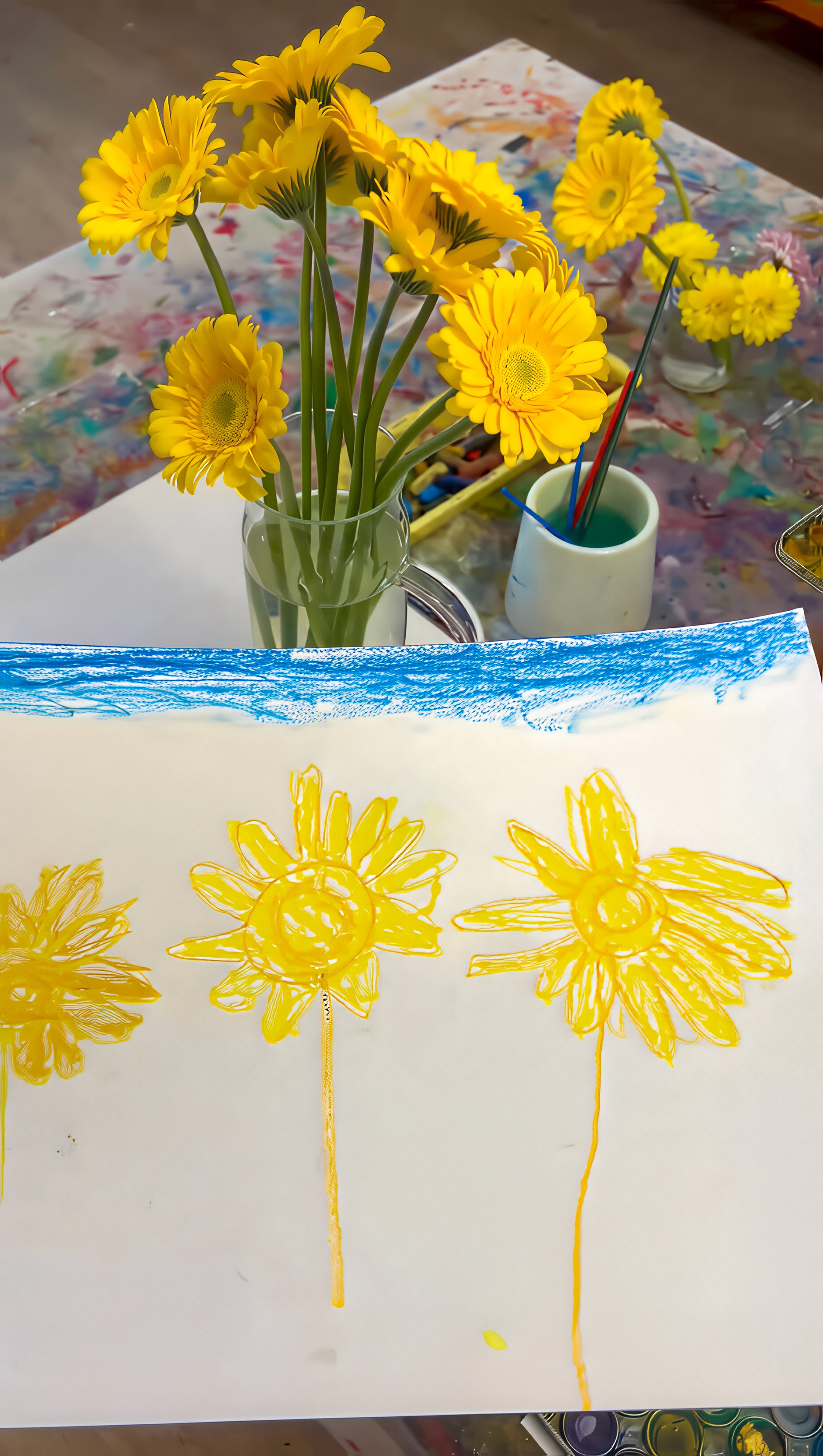
Sunflowers are such generous subjects. Big shapes. Strong centres. Petals that don’t sit still. They feel perfect for a summer still life.
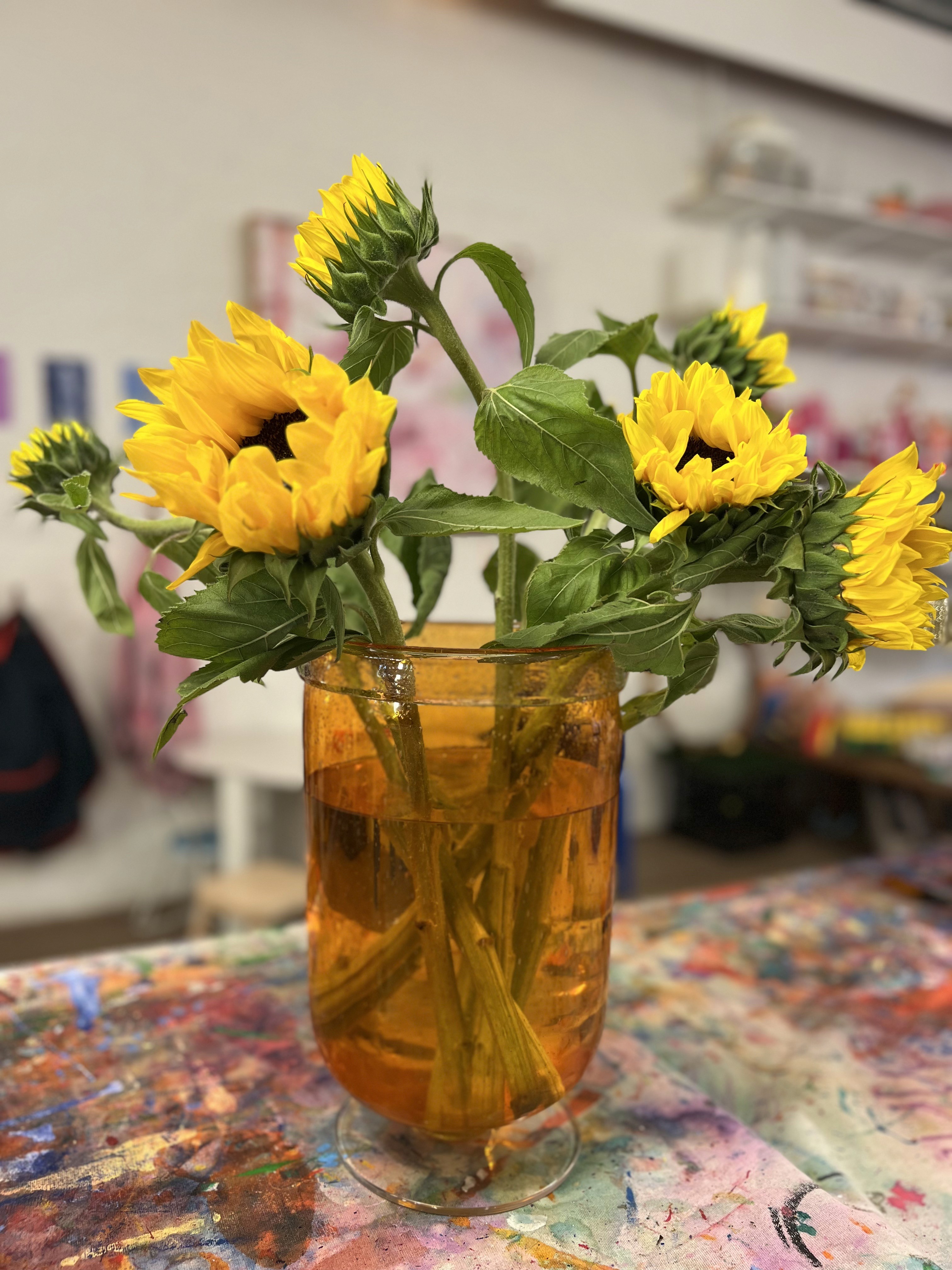
Set up one or more sunflower arrangements in the space. Real sunflowers are beautiful if you can get them, but dried sunflowers or high-quality artificial ones work just as well and last much longer. Or any Summery-type flowers are great too!
Vary the heights using jars, bottles, or small boxes so there’s something interesting to look at from every angle.
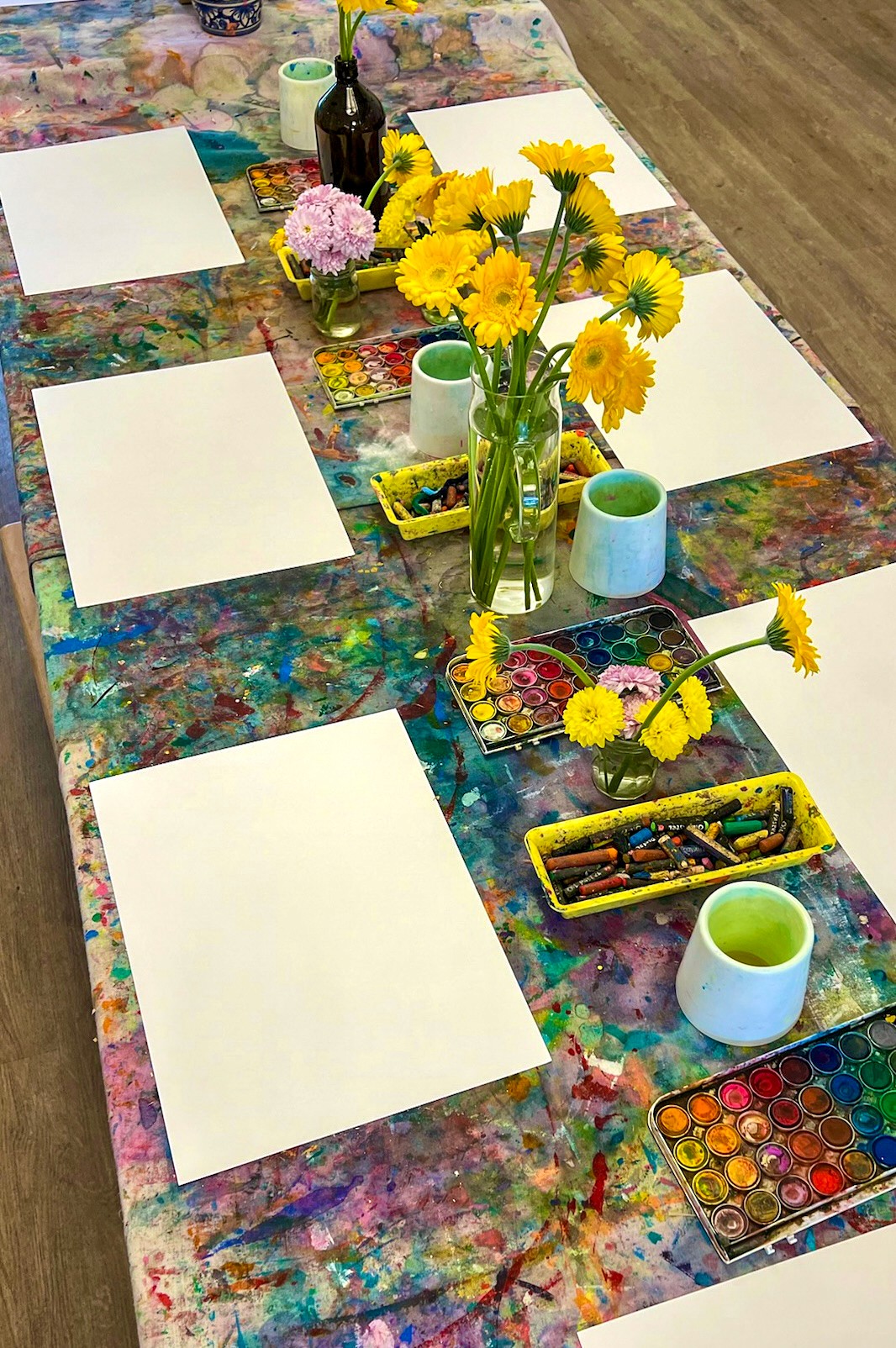
Keep the materials simple. Oil pastels, pencils, charcoal, and watercolour are more than enough here. Heavy paper is helpful, especially if you’re layering drawing and paint.
Place the still life where artists can move around it easily. Sitting, standing, leaning in close. This isn’t about everyone drawing the same view. It’s about noticing.
The Making
Begin with looking. Really looking. The centre. The petals. The way the yellow shifts. Where light hits and where shadows fall.
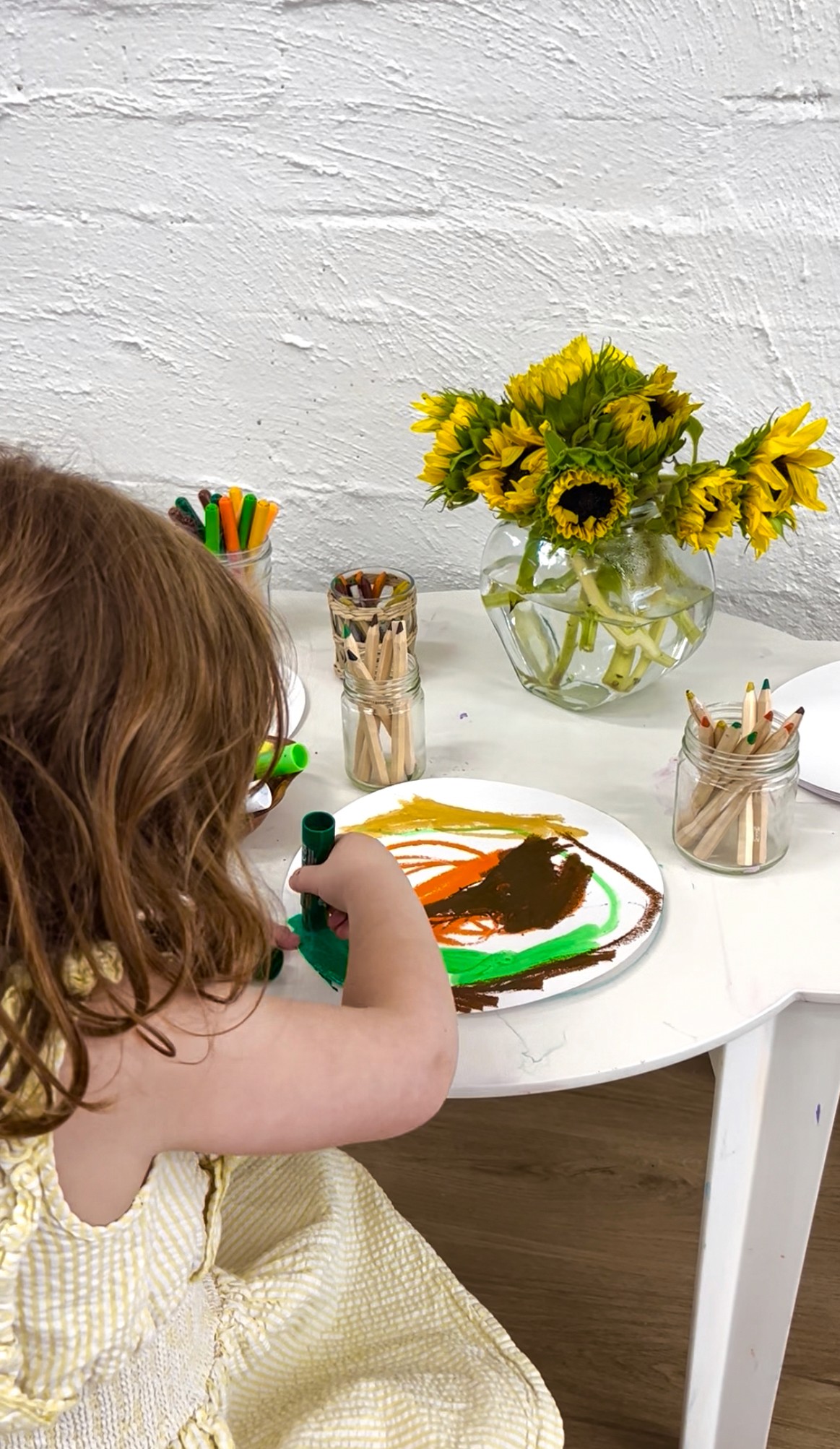
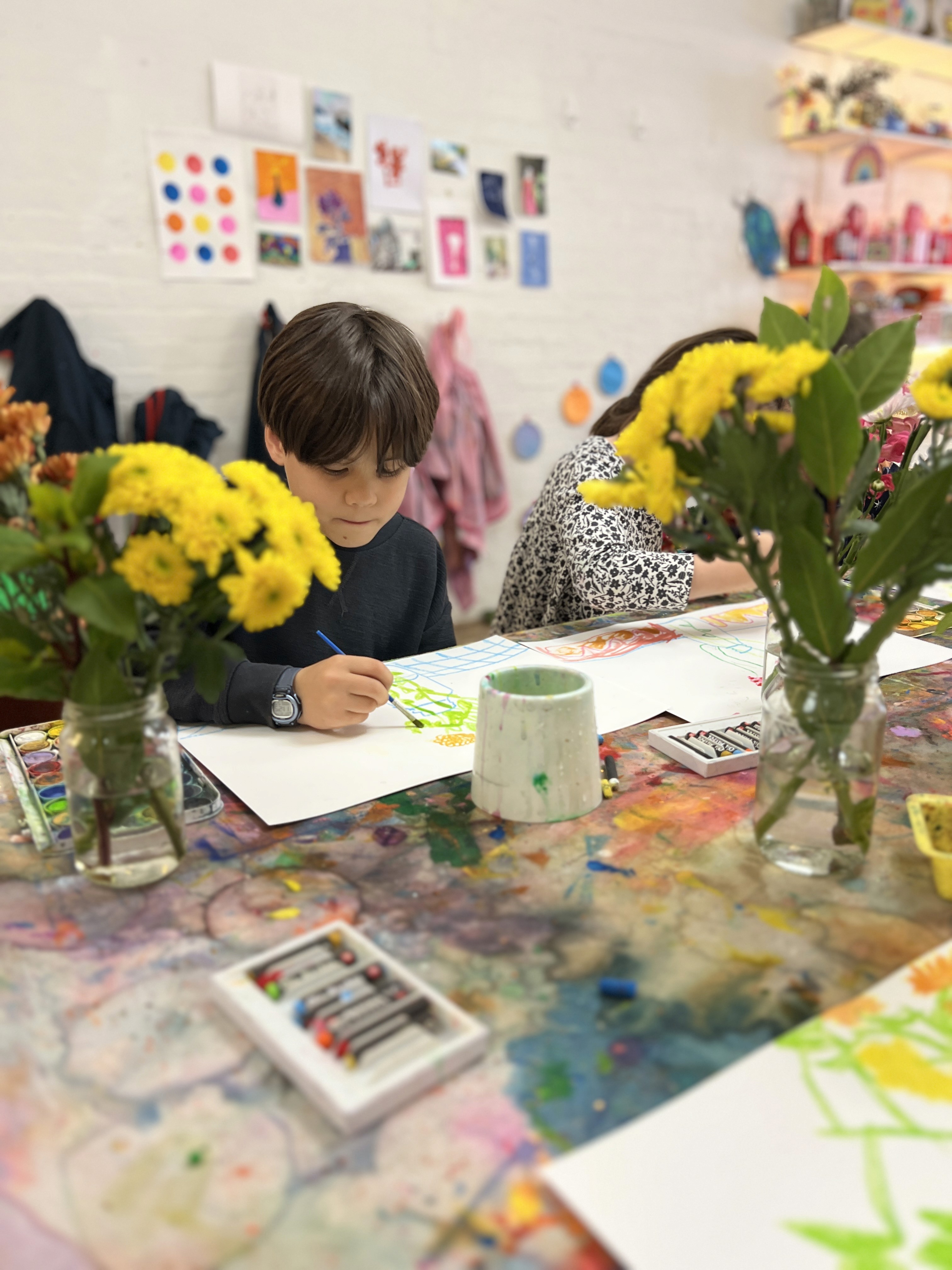
After that, it’s about trusting what each artist notices. Some might zoom right in on one part of the flower. Others might be drawn to the whole arrangement, or the vase, or the space around it. Occasionally, someone will look for a while and then choose to paint something completely different. That’s all part of it.
Materials are there to respond to whatever shows up on the page. Drawing tools, paint, or a mix of both. Marks can be bold or tentative. Pages can fill up quickly or stay spare. There’s no need to steer this beyond staying curious alongside them.
Prompting observation first tends to be enough. Once kids have really looked, they usually know what they want to explore. The still life becomes a starting point rather than a subject to copy, and the work that comes out of that place is always more interesting.
Artist Study: Vincent Van Gogh
Vincent van Gogh painted sunflowers many times, but not to capture them perfectly. He was interested in what he noticed, how colour felt, and how paint could move.
His sunflowers are full of marks. Thick paint. Scraped lines. Petals that twist and turn in different directions. Some feel bright and alive, others heavy and tired. He wasn’t trying to make one “right” sunflower. He was responding to what he saw and how it made him feel.
When looking at Van Gogh’s sunflowers with kids, it can be helpful to focus less on the subject and more on the choices he made:
The way he used lots of different yellows
How the paint sits thickly on the surface
How not every petal goes the same way
How the flowers don’t match each other
This study isn’t about painting sunflowers like Van Gogh. It’s about noticing that there are many ways to respond to what you see. Big marks, small marks, colour-first, shape-first, or something else entirely.
Just like in our still life work, looking comes first. What happens next is up to the artist!
Materials
Sunflowers (real, dried, or artificial)
Jars, vases, or containers for arranging
Heavy paper (cartridge or watercolour)
Pencils, charcoal, or oil pastels
Watercolour paints
Brushes
Water containers
Back to Top
Sunflower Still Life
Looking closely and letting yellow take the lead!
Bookmark
Painting & Drawing
The Set Up
Sunflowers are such generous subjects. Big shapes. Strong centres. Petals that don’t sit still. They feel perfect for a summer still life.
Set up one or more sunflower arrangements in the space. Real sunflowers are beautiful if you can get them, but dried sunflowers or high-quality artificial ones work just as well and last much longer. Or any Summery-type flowers are great too!
Vary the heights using jars, bottles, or small boxes so there’s something interesting to look at from every angle.
Keep the materials simple. Oil pastels, pencils, charcoal, and watercolour are more than enough here. Heavy paper is helpful, especially if you’re layering drawing and paint.
Place the still life where artists can move around it easily. Sitting, standing, leaning in close. This isn’t about everyone drawing the same view. It’s about noticing.
The Making
Begin with looking. Really looking. The centre. The petals. The way the yellow shifts. Where light hits and where shadows fall.
After that, it’s about trusting what each artist notices. Some might zoom right in on one part of the flower. Others might be drawn to the whole arrangement, or the vase, or the space around it. Occasionally, someone will look for a while and then choose to paint something completely different. That’s all part of it.
Materials are there to respond to whatever shows up on the page. Drawing tools, paint, or a mix of both. Marks can be bold or tentative. Pages can fill up quickly or stay spare. There’s no need to steer this beyond staying curious alongside them.
Prompting observation first tends to be enough. Once kids have really looked, they usually know what they want to explore. The still life becomes a starting point rather than a subject to copy, and the work that comes out of that place is always more interesting.
Artist Study: Vincent Van Gogh
Vincent van Gogh painted sunflowers many times, but not to capture them perfectly. He was interested in what he noticed, how colour felt, and how paint could move.
His sunflowers are full of marks. Thick paint. Scraped lines. Petals that twist and turn in different directions. Some feel bright and alive, others heavy and tired. He wasn’t trying to make one “right” sunflower. He was responding to what he saw and how it made him feel.
When looking at Van Gogh’s sunflowers with kids, it can be helpful to focus less on the subject and more on the choices he made:
The way he used lots of different yellows
How the paint sits thickly on the surface
How not every petal goes the same way
How the flowers don’t match each other
This study isn’t about painting sunflowers like Van Gogh. It’s about noticing that there are many ways to respond to what you see. Big marks, small marks, colour-first, shape-first, or something else entirely.
Just like in our still life work, looking comes first. What happens next is up to the artist!
Materials
Sunflowers (real, dried, or artificial)
Jars, vases, or containers for arranging
Heavy paper (cartridge or watercolour)
Pencils, charcoal, or oil pastels
Watercolour paints
Brushes
Water containers
Back to Top
Add this to your favourites
Add this to your favourites
Thoughts?
Would love to hear if youv'e tried this or have any ideas on how to make it even better!