Sweet Treat Still Life
Look closely and then enjoy together.
The Set Up
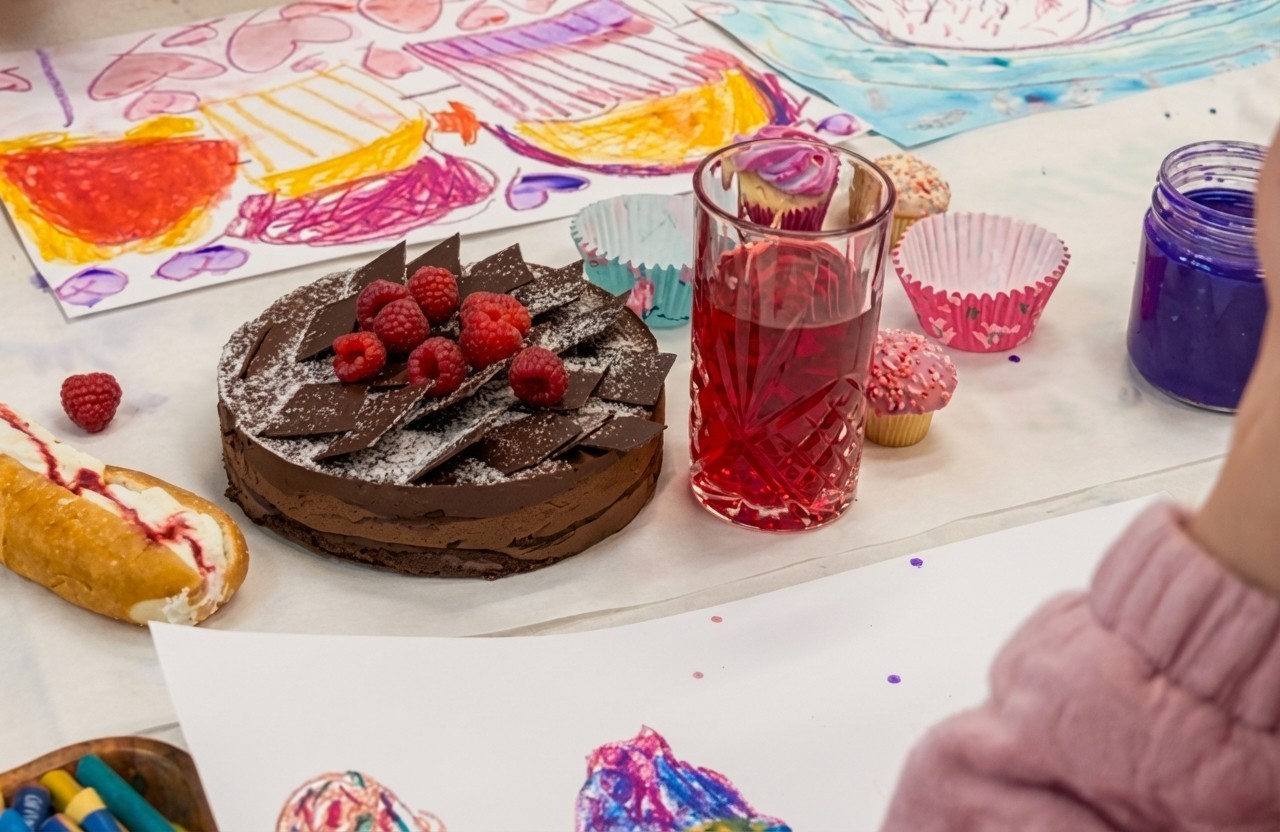
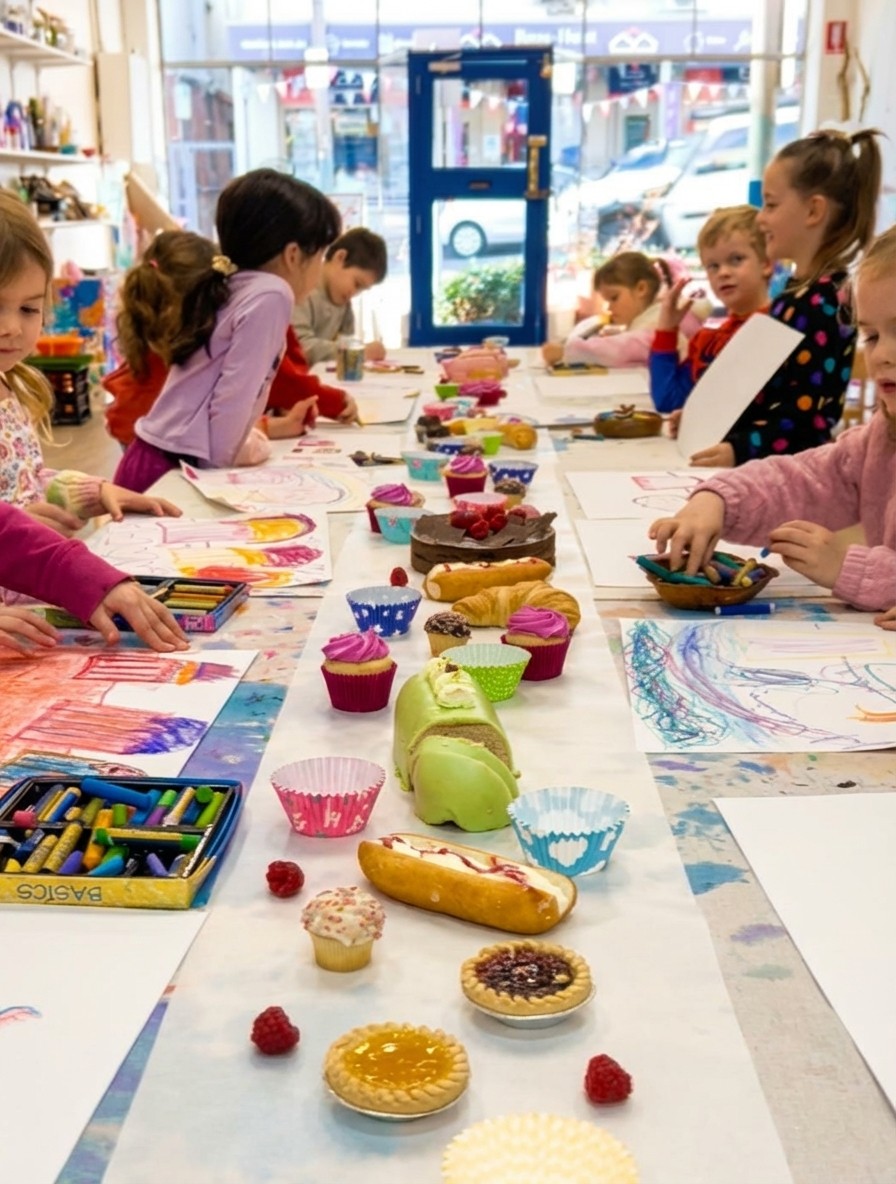
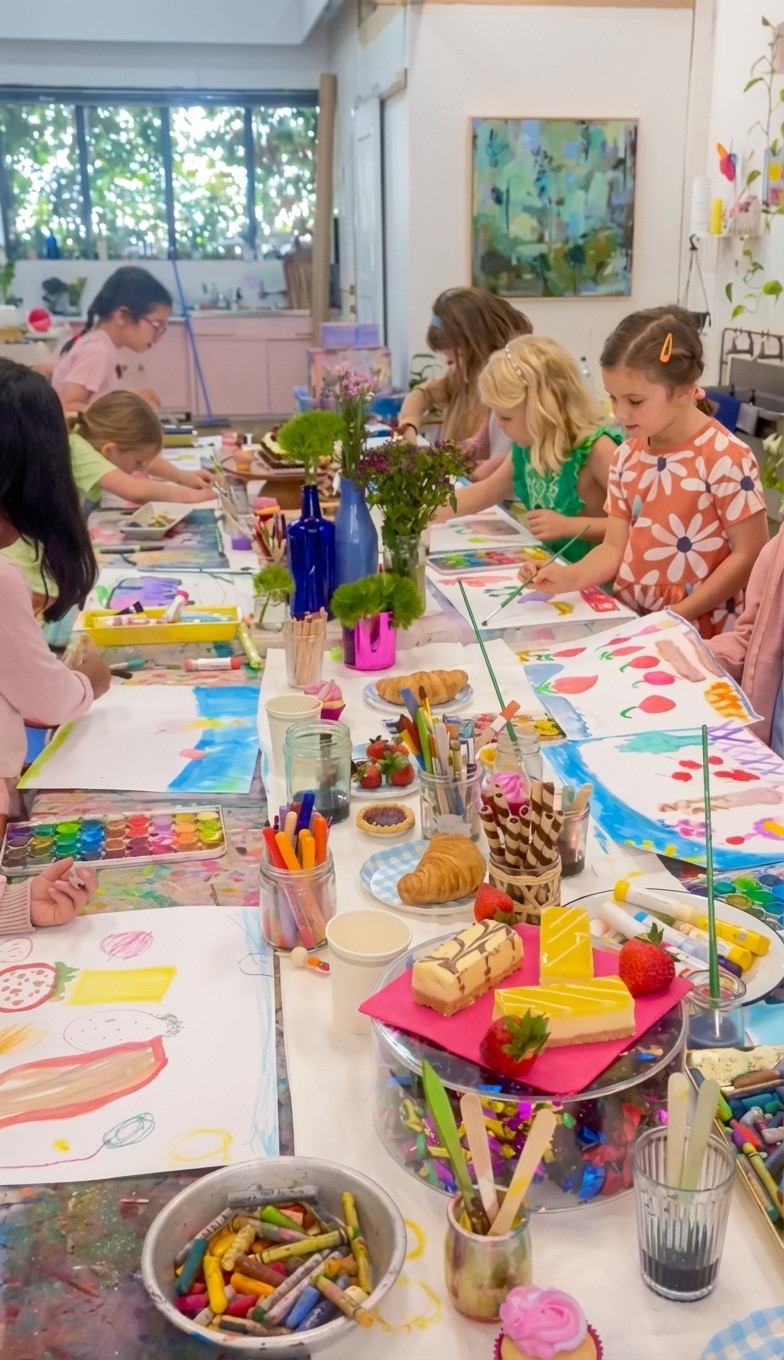
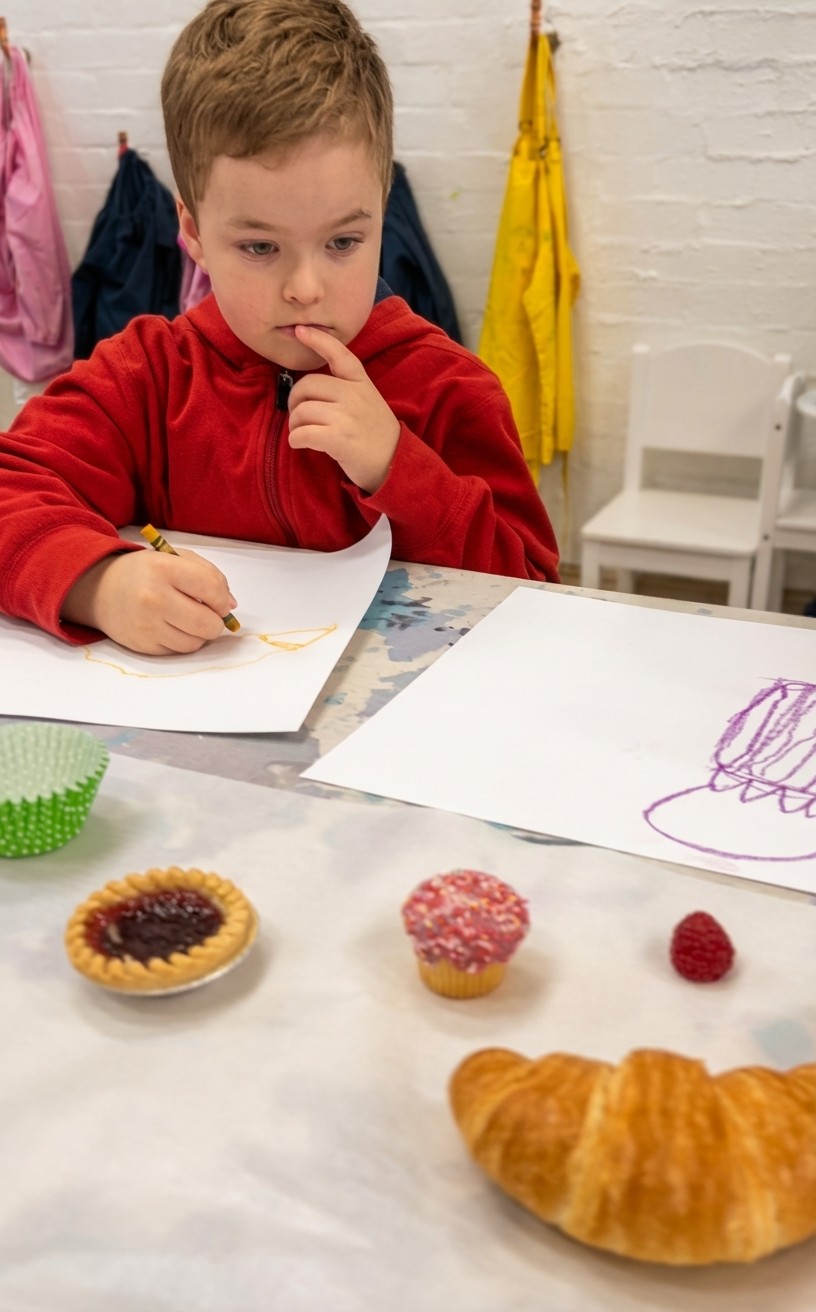
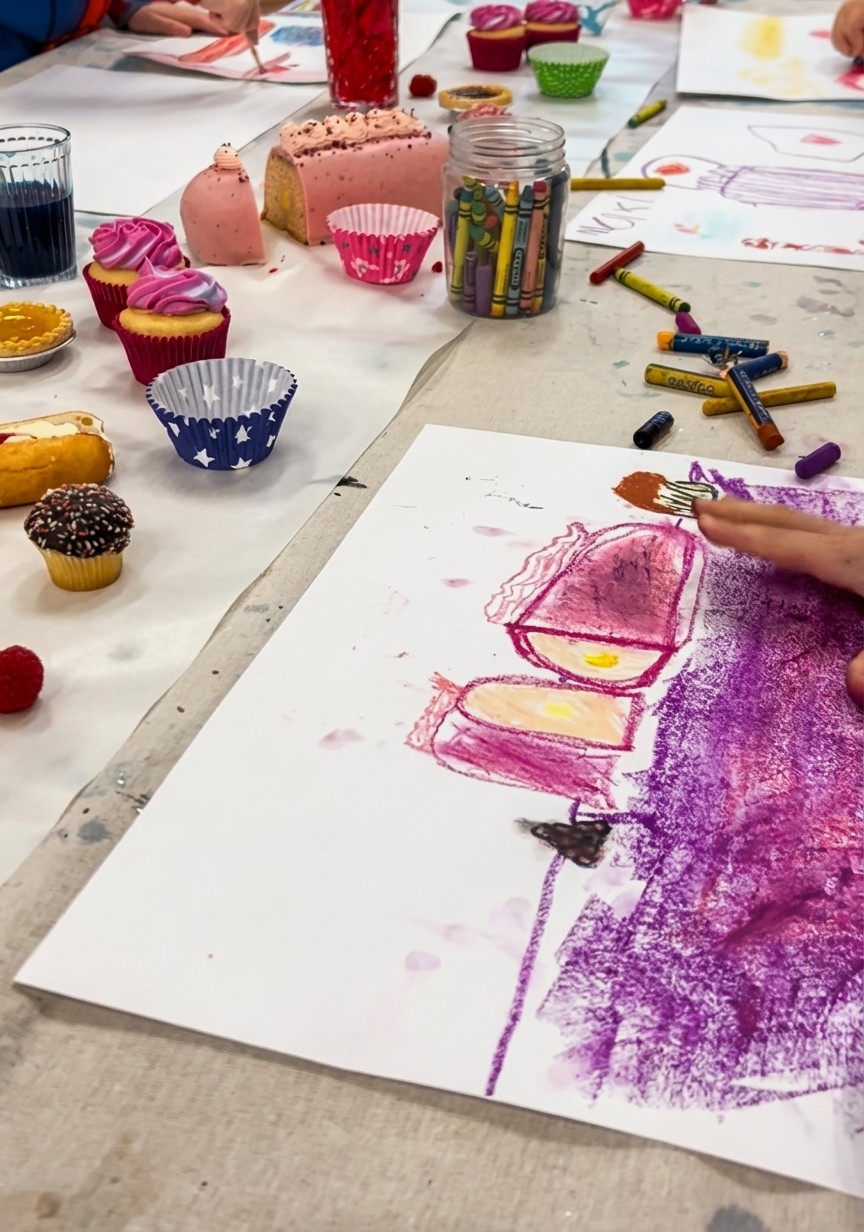
Sweet Treat Still Life days at Smudge are always a bit special! Set up the still life like you’re styling a table you’d actually love to sit at. Cake stands, plates, boxes, stacked boards. Different heights really make all the difference, and try to leave a little breathing room between each treat (especially for younger kids) so that it's a bit simpler to see the form and shapes.
Gather the kids around the table. I just love the noses close, pointing things out, chatting about flavours and layers and who wants which slice later.
It's a good idea to keep the materials simple so that the artists can be comfortable with the medium, and focus on observing closely and drawing what they see. Oil pastels, watercolours, paint markers.
The Making
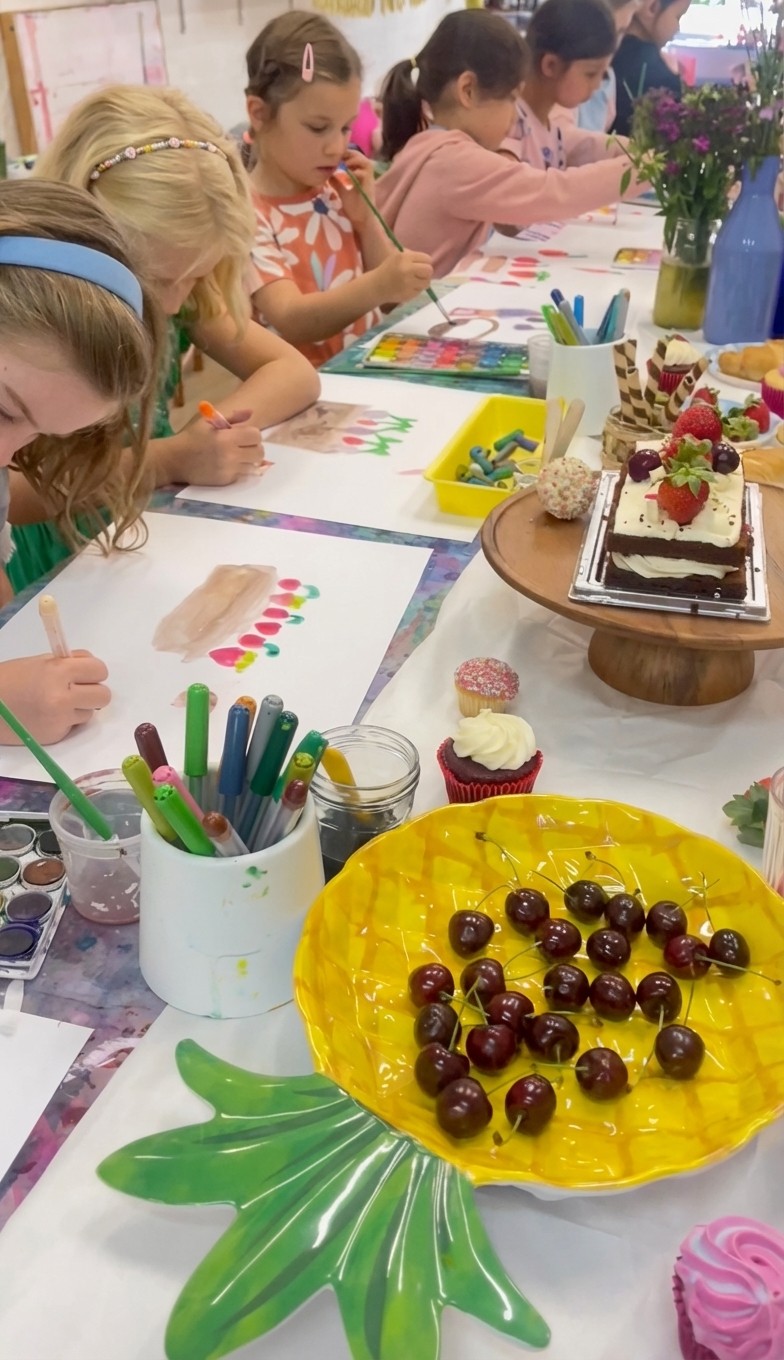
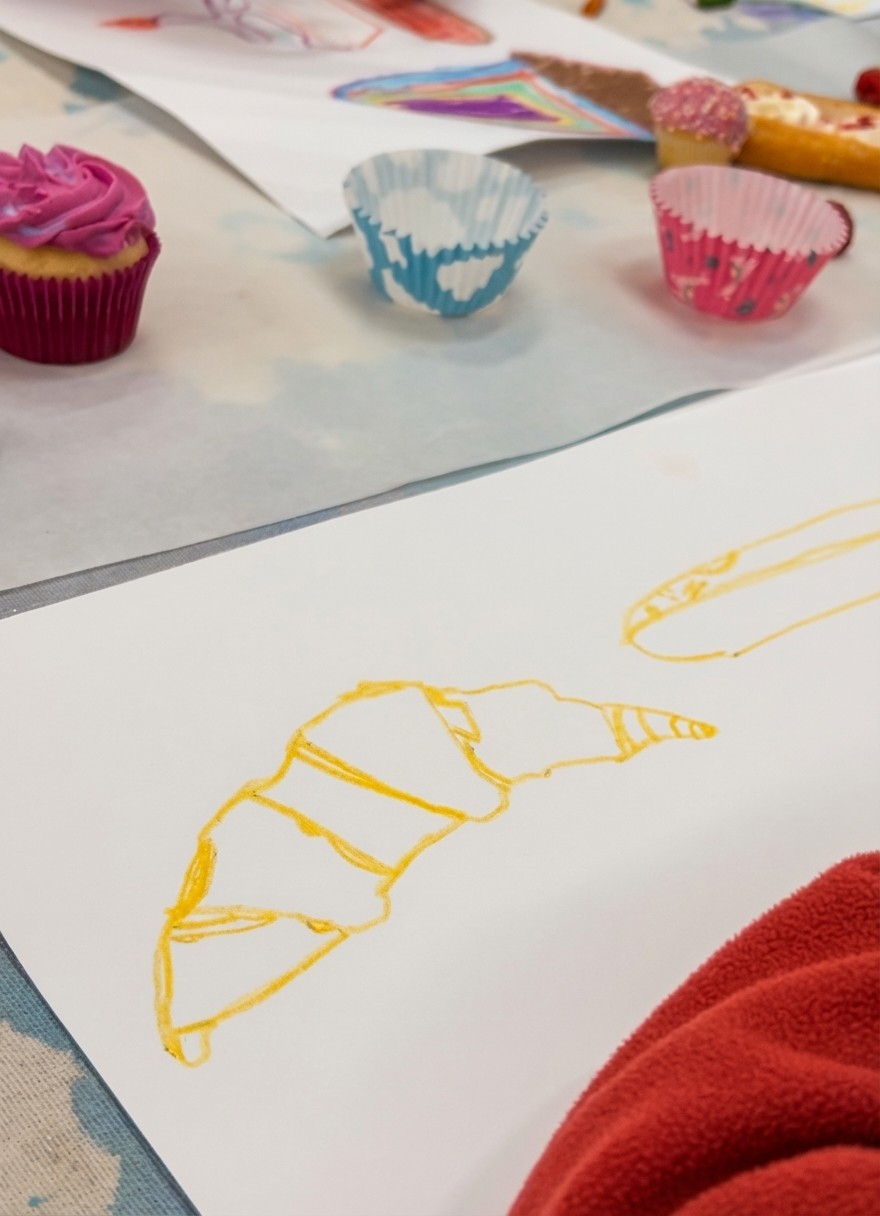
Start with oil pastel outlines. If you'd like to offer a little guidance, then try encouraging larger shapes first. It's also gorgeous when artists don't take their eyes off the cake, and trust their hands to sketch the shapes they see without looking at the page (or overthinking).
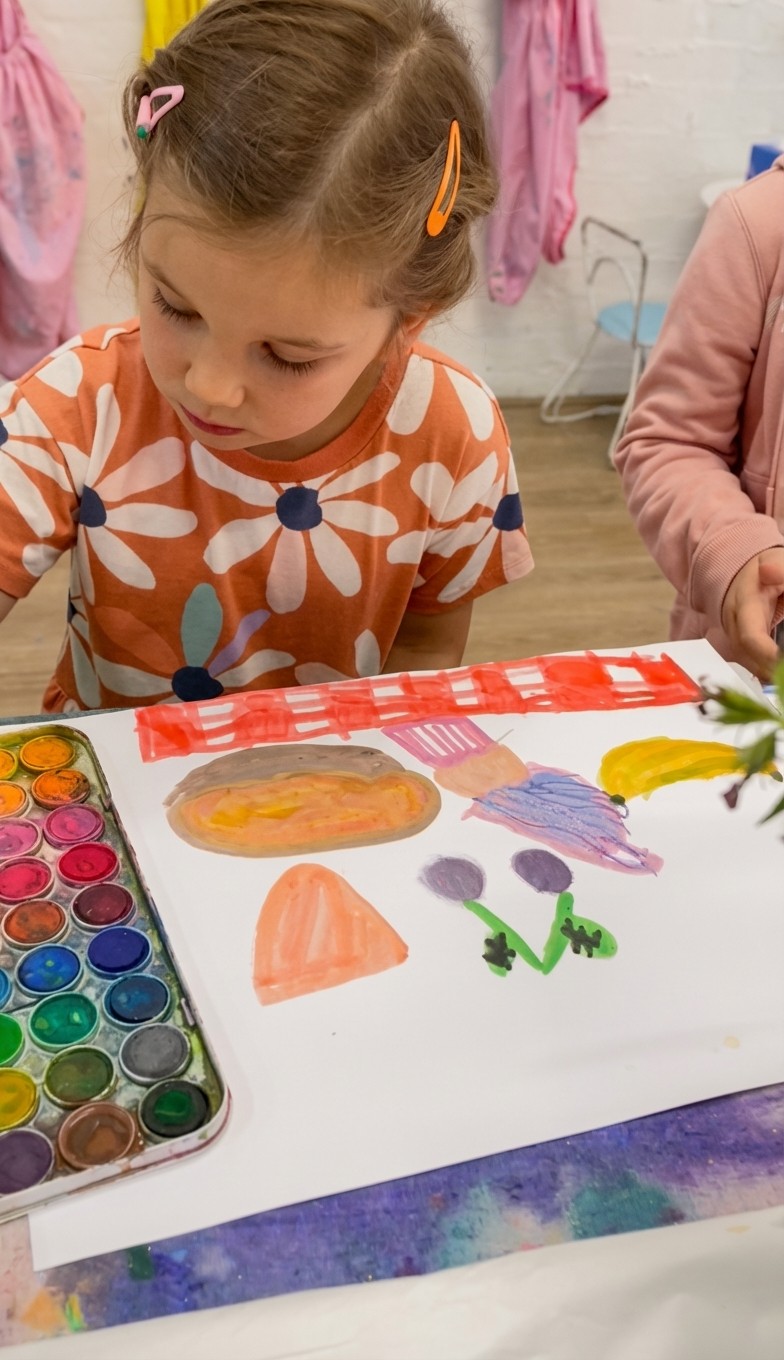
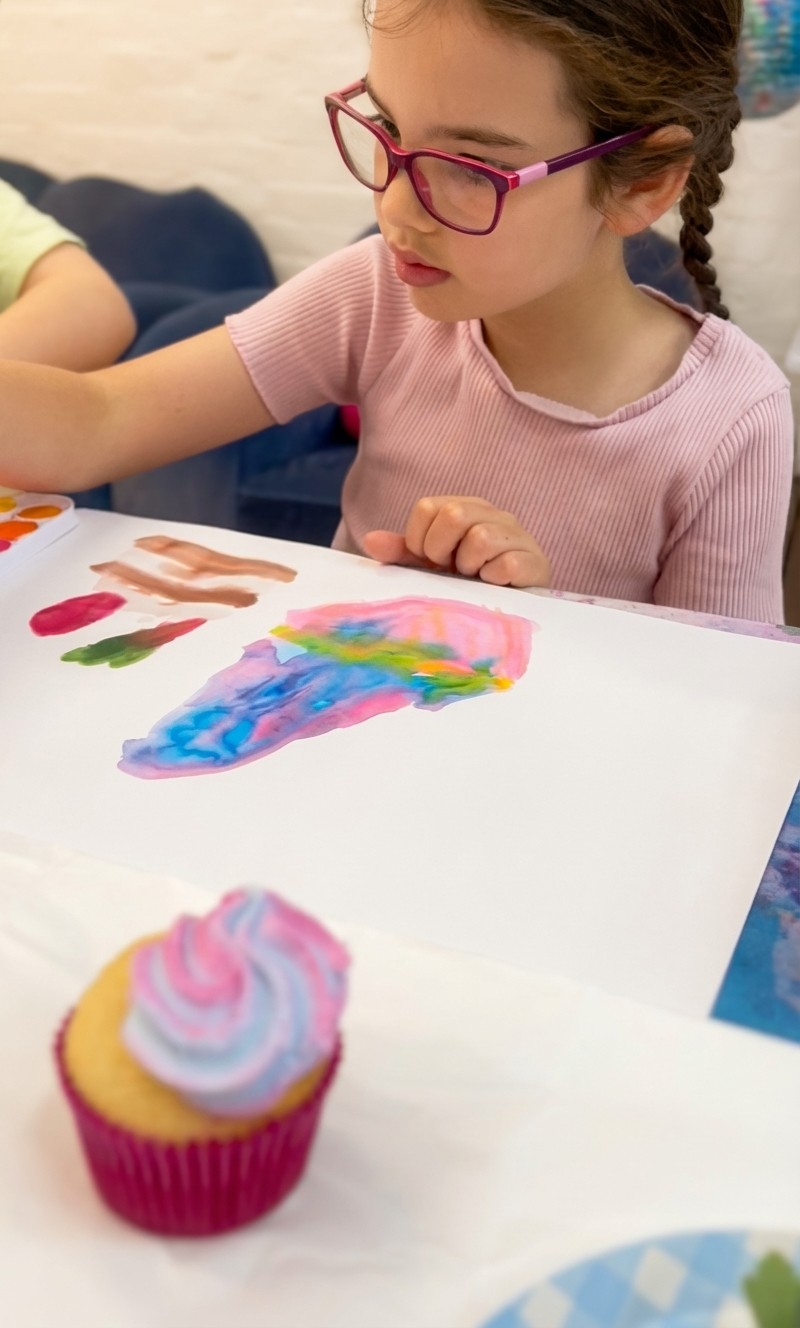
Bring in watercolour next. Loose washes, layering colour, letting things bleed a little. Oil pastel resists just enough to keep things grounded without becoming stiff. They might like to add in the table line and imagine a gorgeous design for the table cloth. Final details can be added once the paint dries.
Then the yummy part! Let them eat cake.
Materials
Real cakes, sweet treats, fruit
Cake stands, plates, boxes
Oil pastels
Watercolours
Brushes
Paint markers (optional)
Paper, A3 or larger (cold-pressed watercolour paper works wonders)
Back to Top
Sweet Treat Still Life
Look closely and then enjoy together.
Bookmark
Painting & Drawing
The Set Up
Sweet Treat Still Life days at Smudge are always a bit special! Set up the still life like you’re styling a table you’d actually love to sit at. Cake stands, plates, boxes, stacked boards. Different heights really make all the difference, and try to leave a little breathing room between each treat (especially for younger kids) so that it's a bit simpler to see the form and shapes.
Gather the kids around the table. I just love the noses close, pointing things out, chatting about flavours and layers and who wants which slice later.
It's a good idea to keep the materials simple so that the artists can be comfortable with the medium, and focus on observing closely and drawing what they see. Oil pastels, watercolours, paint markers.
The Making
Start with oil pastel outlines. If you'd like to offer a little guidance, then try encouraging larger shapes first. It's also gorgeous when artists don't take their eyes off the cake, and trust their hands to sketch the shapes they see without looking at the page (or overthinking).
Bring in watercolour next. Loose washes, layering colour, letting things bleed a little. Oil pastel resists just enough to keep things grounded without becoming stiff. They might like to add in the table line and imagine a gorgeous design for the table cloth. Final details can be added once the paint dries.
Then the yummy part! Let them eat cake.
Materials
Real cakes, sweet treats, fruit
Cake stands, plates, boxes
Oil pastels
Watercolours
Brushes
Paint markers (optional)
Paper, A3 or larger (cold-pressed watercolour paper works wonders)
Back to Top
Add this to your favourites
Add this to your favourites
Thoughts?
Would love to hear if youv'e tried this or have any ideas on how to make it even better!