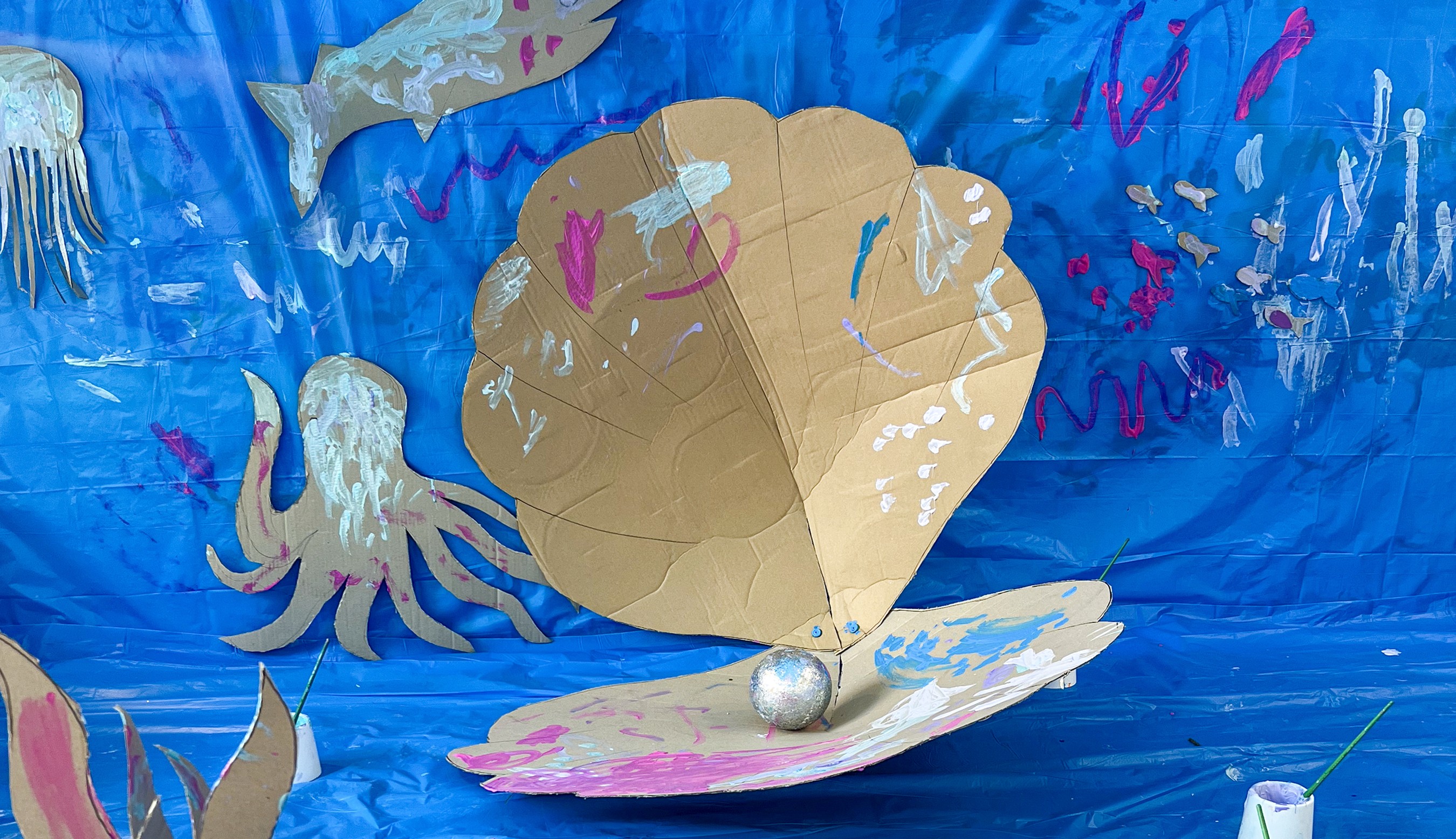
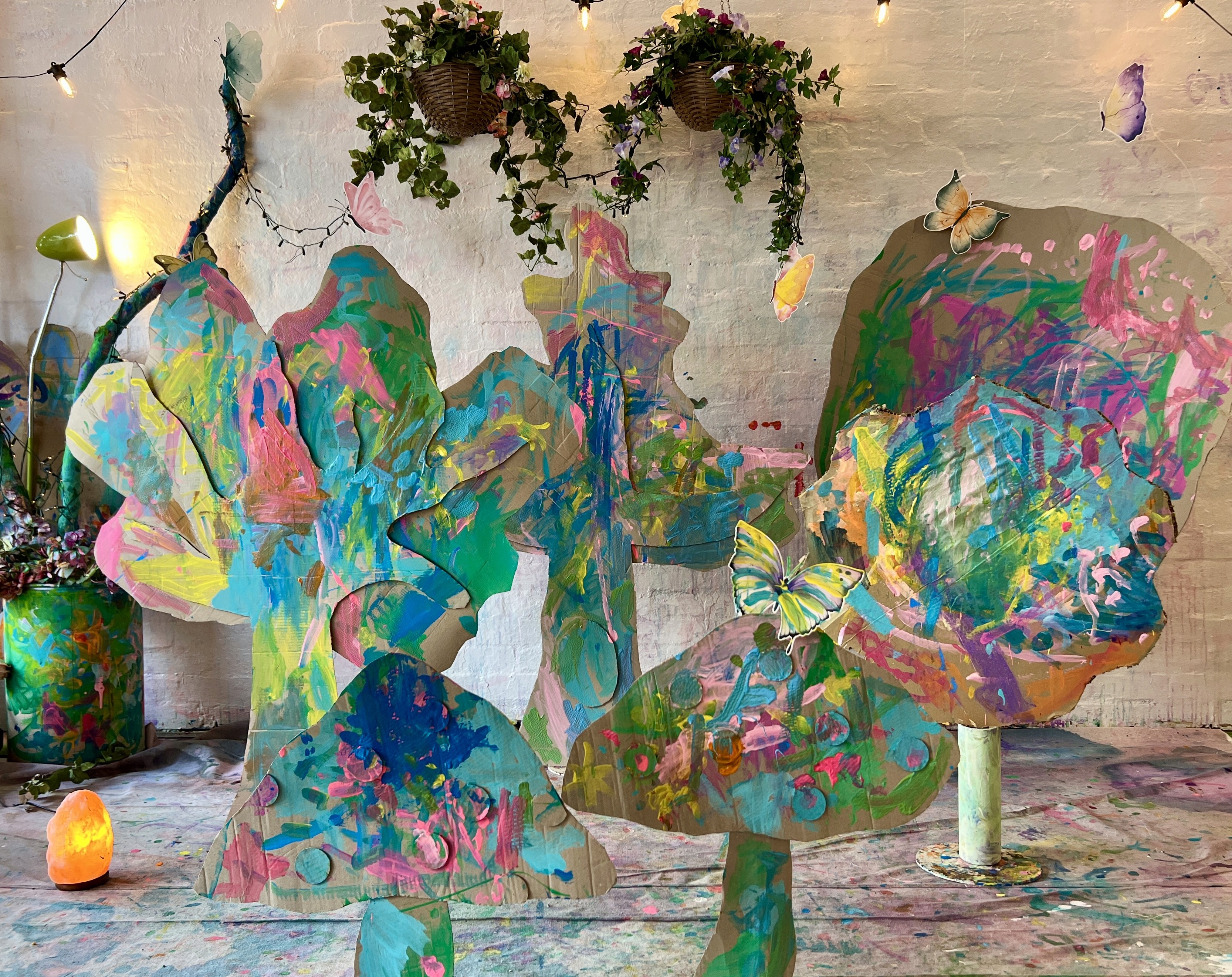
Why installation art? Because children deserve more than paper and tidy tables. They need walls and corners and floor space. They need room to move their bodies, to build, to explore, and to make something together.
This art form has a special kind of energy. It’s big, bold, and beautifully unpredictable. Kids don’t just make art. They step into it!
Art as space, not surface
Installation art has a way of changing the air in a room. It’s art that doesn’t stay still. It grows, it spills, it takes over. Kids get this immediately; they see space as something to play with, not just walk through.
At Smudge, we come back to installation again and again because it does what no other art form can. It brings movement, community, and colour together in real time! You can see ideas travel. You can feel collaboration.
Art that fills the room
Artists have always been drawn to that feeling; the moment when art stops being an object and becomes an environment.
Yayoi Kusama covers entire rooms in colour and pattern so that you lose the sense of where you end and the artwork begins.
Olafur Eliasson floods spaces with mist and light to make you notice your own senses.
Judy Chicago used installation to build community, turning the act of gathering into a feminist statement.
Hervé Tullet brings it to children, transforming galleries into playful laboratories of colour and rhythm.
These artists remind us that installation isn’t about scale, it’s about experience. It asks you to participate, to move, to pay attention.
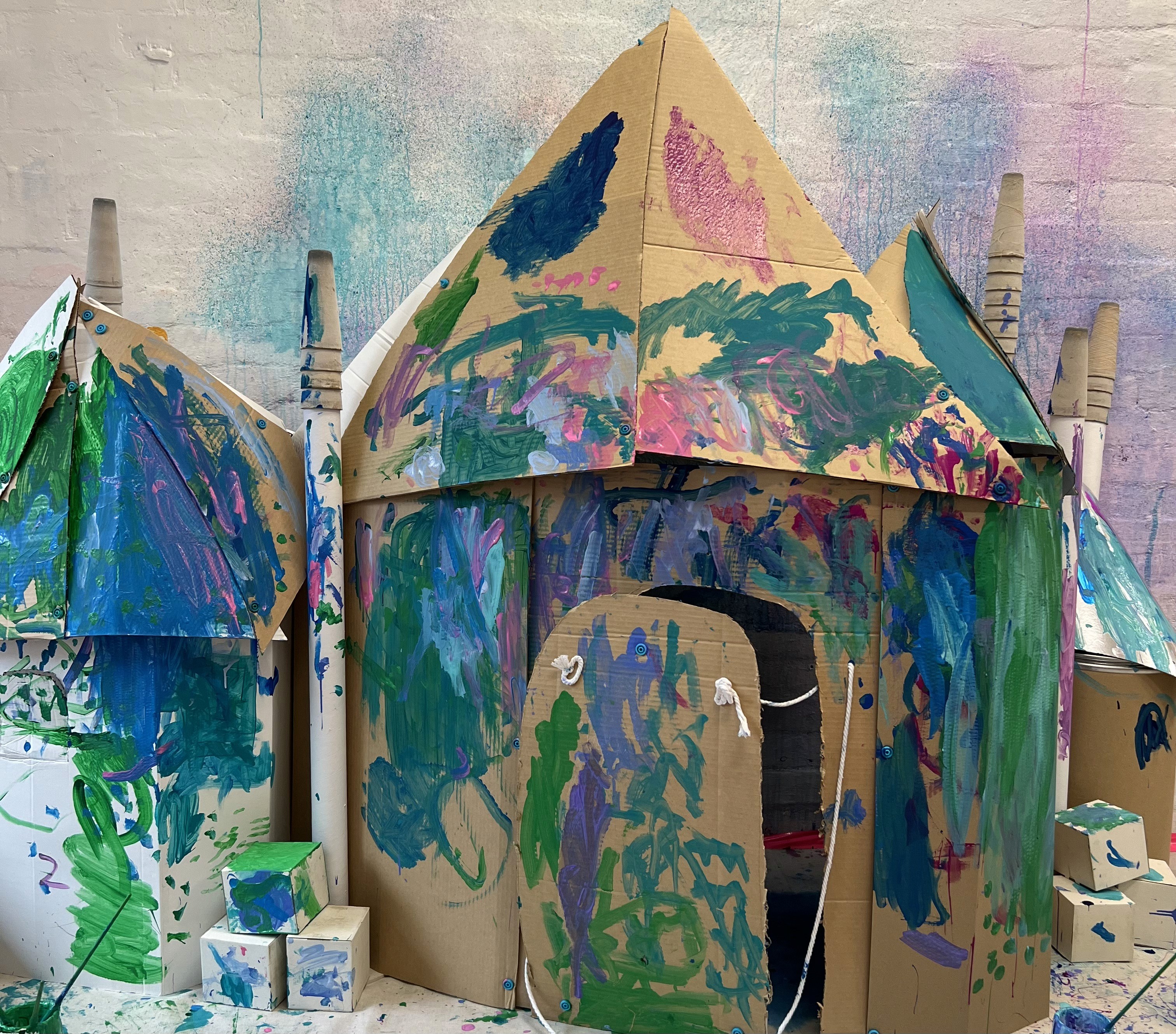
Kids already understand this. They turn corners into caves, boxes into mountains, paper into oceans. Give them room and they’ll fill it with imagination in the every best ways!
Why it matters for children
Large-scale, shared making gives kids agency. It invites them to move with purpose, to build with others, and to see how ideas connect. When kids work in a shared space, they learn to negotiate and to listen — not because they’re told to, but because they want their part of the artwork to fit with someone else’s. Collaboration becomes second nature.
Installation art also asks for flexibility. Paint drips, things fall, the work changes shape over time. Kids adapt. They problem-solve. They realise that art doesn’t have to last forever to matter! That meaning often lives in the moment, in the act of doing, in the discovery of what happens next.
And because installation fills a space, kids experience their own scale differently. They become aware of their bodies, how far their arms reach, how it feels to stretch or crouch or move around a piece they’ve built. It’s physical learning that connects directly to creativity.
What it looks like at Smudge Artspace
We change our installations every single week, but a few things always show up:
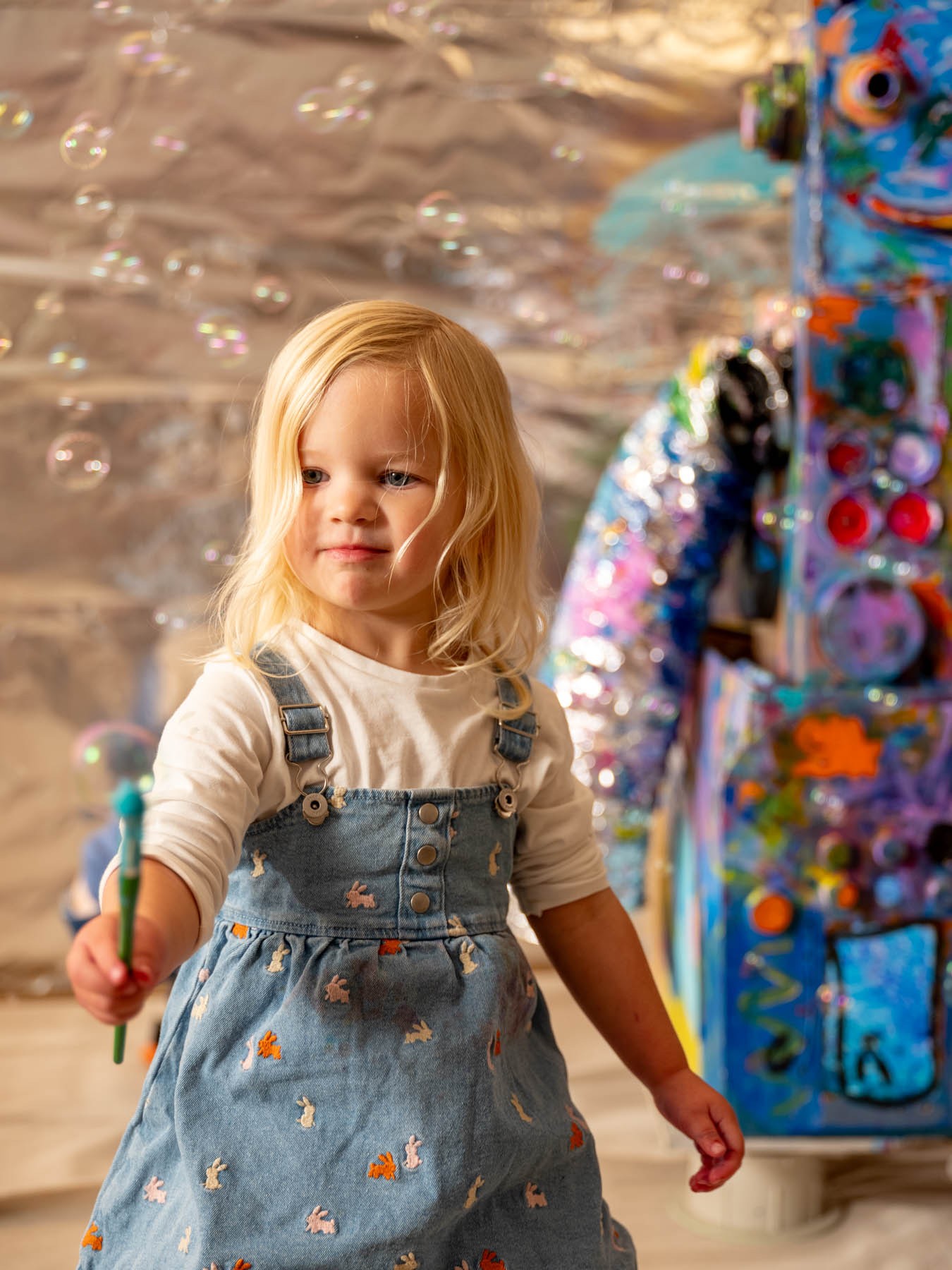
Hanging pieces that move and drip.
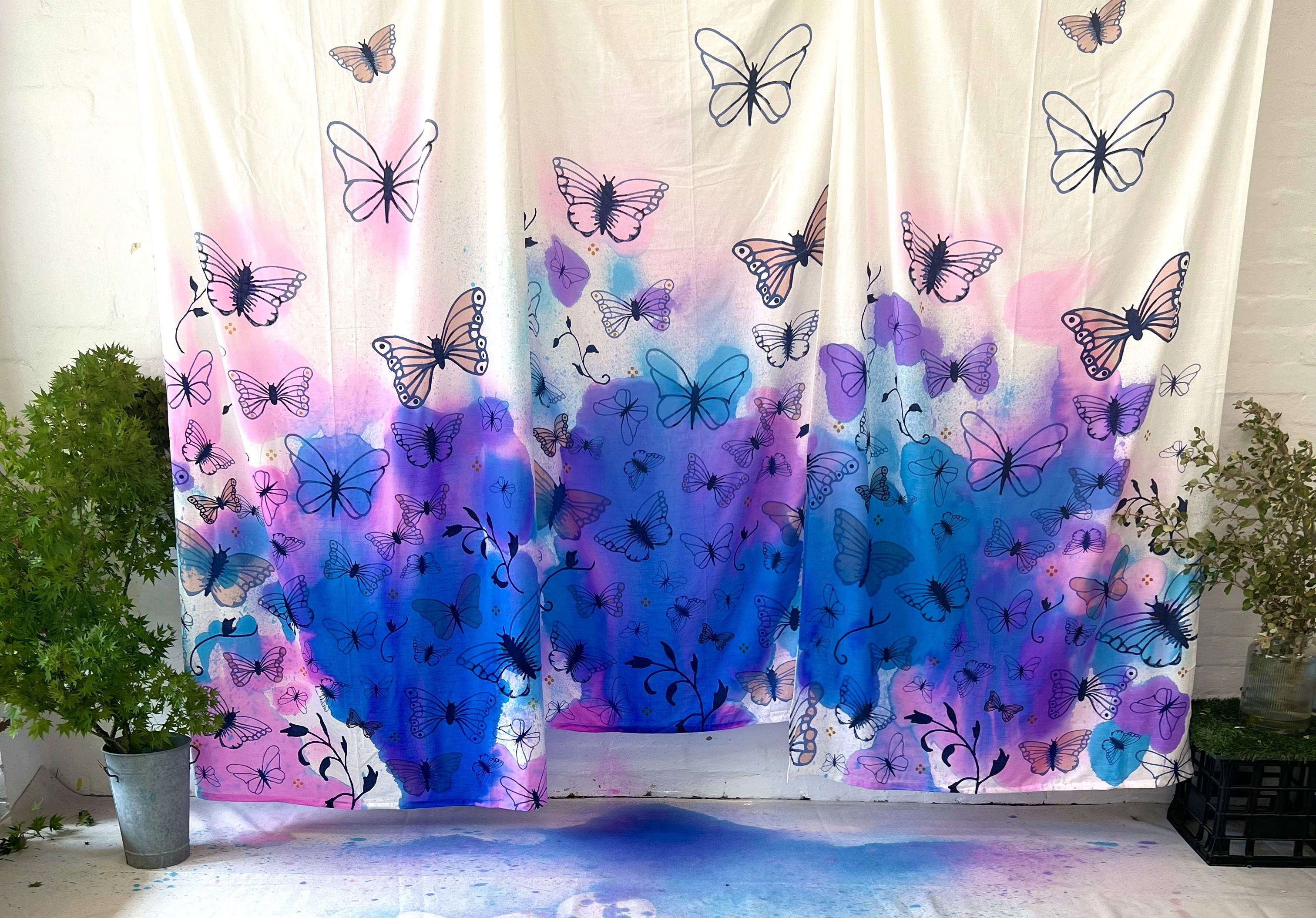
Paper lanterns, fabric, curtains (anything that sways with a brushstroke or breeze). It turns painting into a full-body experience.
Metal stands (the kind that hold velvet ropes at cinemas).
Perfect for keeping our big cardboard creatures upright. We’ve found ours through the Reverse Art Truck, always worth looking for treasures and your local thrift shop!
Curtain rods and cords.
Simple, practical, and magic for hanging materials from beams or bulkheads.
And of course, cardboard.
Every shape, every size, every rescued piece. Always cardboard.
We lay down a heavy canvas drop sheet (the plastic-backed kind). Monarch makes a great one, though any hardware brand will do. It becomes a living surface: kids walk, paint, spill, and suddenly the floor itself is part of the art. The space transforms in front of them. What started as blank walls and boxes ends up glowing with layers of colour and texture… proof that creativity grows best when we stop trying to contain it.
Try it in your space
You don’t need much. A wall, a corner, and a few brave ideas will do.
Start simple:
Hang paper from the ceiling.
Drape fabric across a doorway.
Add cardboard, light, sound, or found materials.
Offer large brushes, recycled pieces, and plenty of time. Let the work build over days instead of hours. Step back. Watch how collaboration reshapes everything.
Resist tidying too soon. The slow build is part of the magic. Each new mark, each shift in colour or shape, tells the story of shared creation and collective energy.
The bigger picture
Installation art reminds us that creativity doesn’t belong on the sidelines and it's not just something to stand back and look at. It teaches confidence, curiosity, and the courage to take up space. To listen, to adapt, to build and rebuild without fear.
And that might be the real lesson. The work will come down, the walls will be cleaned, but the memory of making something together, of filling a room with colour and courage, will stay long after the paint has dried!